Table of Contents
In August 2024, the board of directors at Starbucks made a massive move. They fired their CEO after just 17 months on the job. To replace him, they poached Brian Niccol out of Chipotle to come in and save the company.
The board was so incredibly desperate for a turnaround that they offered him an unbelievable perk. They let him commute from his home in Southern California to the corporate headquarters in Seattle by private jet, entirely at the company's expense. Investors were so thrilled to see a change of any kind that the stock jumped 24 percent immediately on the news.

Starbucks is widely considered one of the greatest miracles of modern wealth creation and entrepreneurship. The company went public in 1992 at just $17 a share. Over the following decades, the stock appreciated an astounding 27,800 percent.
But today, the iconic chain that basically taught all of America what a latte was is in deep trouble. Recently, the company reported six consecutive quarters of same-store sales declines. So, what exactly went wrong? Was it oversaturation, fierce competition, bad management, or something else entirely? This is the complete story of the rise and fall of Starbucks, including the key business lessons we can learn from their massive strategic missteps.
The Vision of Howard Schultz and the Third Place
To understand how things went wrong, you have to understand how Starbucks started. In 1971, three friends opened a small coffee shop in Seattle's Pike Place Market. For an entire decade, it was essentially just a single store that sold coffee and distributed roasted beans.
Everything changed in 1982 when a young, highly ambitious salesman named Howard Schultz walked through the door. Schultz had grown up quite destitute in Brooklyn. His father had been injured on the job as a young man, and a lack of health insurance led to incredibly tough times for his family. This difficult upbringing shaped how Schultz would eventually view corporate responsibility.
In 1983, Schultz took a trip to Milan, Italy, that would change the trajectory of the world. He visited coffee shop after coffee shop and noticed something special. Italians were congregating, drinking espresso, and socializing. These cafes served as a "third place" for people to exist outside of their home and their workplace.
Schultz came back to Seattle and pitched the Starbucks founders on completely changing their approach. He wanted to add seating, focus on the espresso experience, and build a community hub. The founders were not interested in the slightest.
Refusing to give up, Schultz famously went out and pitched 242 different investors to raise money for his own vision. Out of those 242 meetings, 217 people told him no. However, just enough investors said yes. He raised $4 million, which was exactly enough to buy all six existing Starbucks stores in 1987.
Remembering his father's struggles, Schultz immediately did something radical. He made Starbucks one of the very first companies in the world to offer comprehensive health insurance to part-time workers. This move created a fiercely loyal workforce.
The Golden Era of Incredible Expansion
Under the aggressive leadership of Howard Schultz, the company grew at an unbelievable pace. They went from six stores in 1987 to 140 stores by the time they went public in 1992.

The hyper growth continued into the new millennium. They opened 2,500 stores by the year 2000. This level of growth is staggering when you consider that, at the time, most of America had absolutely no idea what specialty coffee was. Americans were accustomed to drinking burnt, cheap diner coffee. When Starbucks opened its first location in New York City, the New York Times actually had to print an article explaining to readers that a latte was simply half coffee and half hot milk.
Starbucks leaned heavily into the concept of the third place. They provided warm armchairs, comfortable lighting, and eventually free Wi-Fi. It was an incredibly welcoming environment. While traditional fast food restaurants wanted to get you in and out as quickly as possible, Starbucks actually wanted you to stay.
This was the absolute magic of their early business model. They were selling a cup of coffee for four or five dollars that only cost them 25 to 50 cents to make. When a business can make a customer feel like they are paying for a premium lifestyle experience rather than just a beverage, they can command massive profit margins. By 2007, the company had exploded to over 15,000 locations worldwide.
The 2008 Financial Crisis and the First Turnaround
Growing that fast eventually creates massive operational messes. Starbucks started to hit a wall. They had built so many locations that people joked you could find a Starbucks on every single street corner.

By this time, Howard Schultz had stepped aside from the CEO role. As the 2008 financial crisis hit the global economy, he realized the company had become a shadow of its former self. If you walked into a store, it smelled like microwaved breakfast sandwiches instead of fresh coffee. The menu had become incredibly bloated, and the brand was losing its soul.
Schultz returned to the helm to bring the chain back to basics. In a highly famous leadership move, he shut down every single Starbucks location across the entire country for three hours. He did this so every single staff member could be retrained on exactly how to pull a proper shot of espresso. They had fallen that far from their core product.
He also aggressively trimmed the fat, cutting over $400 million in bloated corporate costs. The turnaround worked brilliantly. By 2010, the company's profits surged from roughly $315 million up to nearly a billion dollars a year. From 1992 to 2018, the stock appreciated a mind blowing 21,000 percent.
How Mobile Apps and Drive-Thrus Killed the Culture
Conventional wisdom says that Schultz perfectly saved the chain in 2008. However, the strategies they used to drive that new growth eventually planted the seeds for the massive struggles they face today. To boost revenue, Starbucks doubled down on two specific things: mobile ordering and drive-thrus.
Starbucks became one of the most forward-thinking companies in the world regarding e-commerce. Year after year, their mobile app ranked as the number one most downloaded retail app. Customers loved the reward points system.
From a purely financial perspective, the app was a masterpiece. When millions of customers load gift card balances onto their phones, Starbucks basically gets to sit on billions of dollars of unused cash. In the finance world, this is called "float". Starbucks could earn interest on other people's money before a single cup of coffee was ever poured.
At the same time, they started installing drive-thrus at a rapid pace. By 2022, 90 percent of their locations featured a drive-thru window. Today, over 70 percent of their total transactions involve either the mobile app or the drive-thru.
But there is a glaring problem with this strategy. There is no such thing as a "third place" in a drive-thru lane. People simply sit in their cars and go home.
Starting in 2020, Starbucks began pulling back from urban locations that could not support a drive-thru. They closed over 400 traditional cafes. Inside the remaining stores, they replaced the plush armchairs with highly uncomfortable metal stools. They started closing public bathrooms. In some cities, they began building locations that were literally just a drive-thru window with zero interior seating at all. Former CEO Laxman Narasimhan even publicly admitted that the core concept of the third place was no longer relevant to their modern business model.
The Chaos of Franken-Drinks and the Mosh Pit
While the mobile app looked great on a financial spreadsheet, it created an absolute nightmare inside the actual stores.
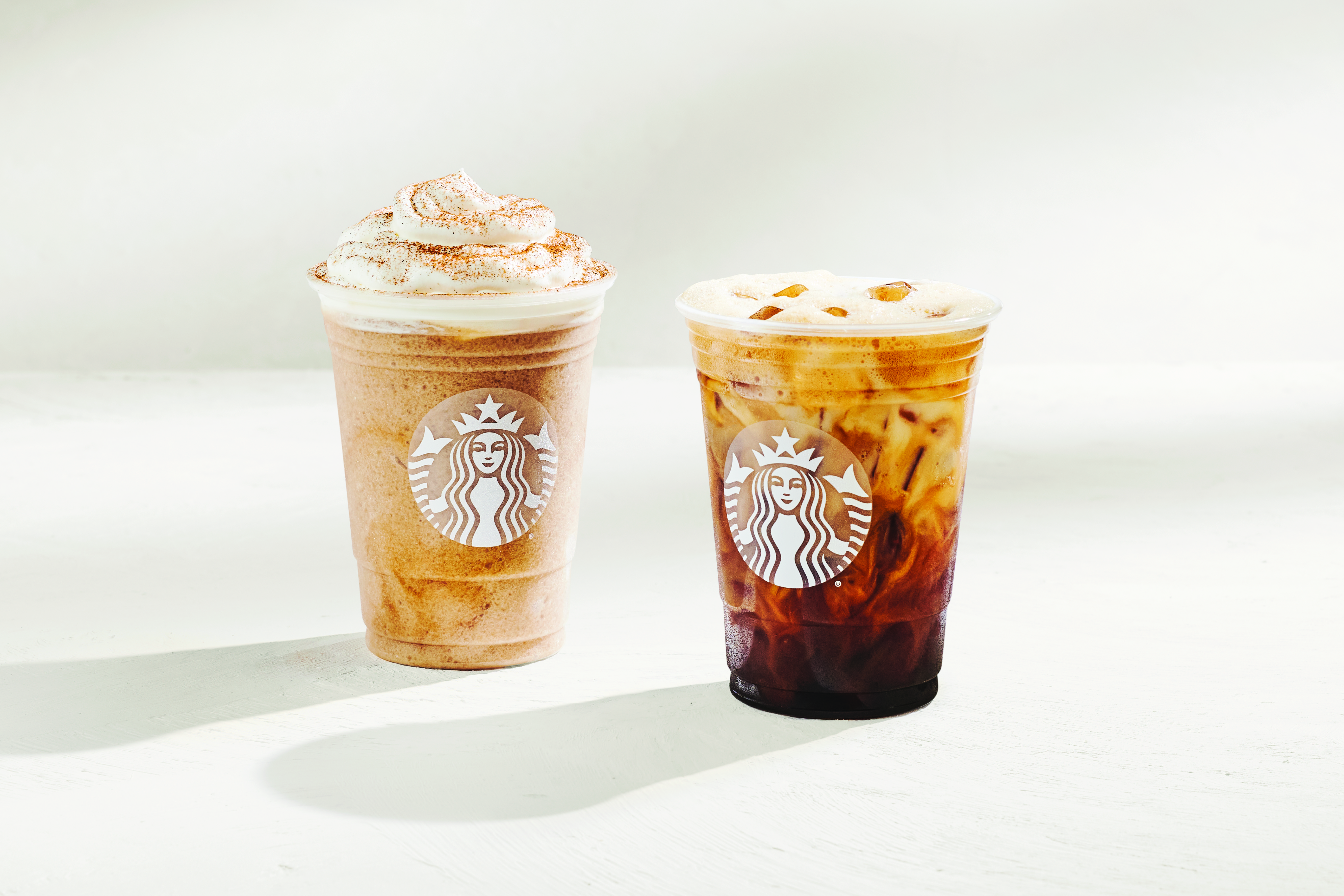
There is an inherent conflict of interest between a frictionless mobile app and a pleasant cafe experience. Customers would submit a flood of mobile orders, all expecting their drinks to be ready the second they walked through the door. This created what employees called a "mosh pit" near the pickup counter.
To make matters worse, the app allowed customers to customize their orders to an absurd degree. The app offered roughly 170,000 different drink combinations. Customers were ordering highly complex "Franken-drinks" that took baristas a massive amount of time to prepare.
Suddenly, a regular customer who just wanted a simple black coffee would walk into a store, stand in a physical line, and find themselves waiting behind a massive virtual line of people who were not even in the building yet. By 2019, it was highly common for a customer to wait 15 to 30 minutes just to get a basic coffee.
Because the reward system was so deeply integrated into customer habits, the company felt completely trapped. They were stuck with an app that was destroying their store operations, but they could not change it without making their most loyal customers incredibly angry.
Politics, Safety, and the Loss of Identity
Operational issues were not the only thing hurting the brand. Starbucks also waded deeply into a massive identity crisis regarding social issues and politics.
Howard Schultz felt highly comfortable sharing his personal thoughts on almost every divisive political topic in America. He weighed in on same-sex marriage, gun control, and government policies. If an issue was part of the cultural zeitgeist, Starbucks had an official corporate opinion on it. When a concerned shareholder pointed out that taking divisive political stances might be hurting sales, Schultz famously told the investor that they were free to sell their shares and invest in a different company.

In 2015, the company launched the "Race Together" campaign. They encouraged baristas to write phrases on coffee cups to spark conversations about race relations with customers at the cash register. It faced enormous public backlash. Most people simply want to enjoy a quiet cup of coffee before work, completely free from heavy political discussions.
Then, a massive crisis hit in April 2018. Two Black men were arrested at a Philadelphia Starbucks while simply waiting for a friend. One of the men had asked to use the restroom, and management refused. The resulting protests were immense.
In response, Starbucks closed 8,000 stores to put employees through racial bias training. They also announced a radical new open door policy. Anyone was allowed to come into a Starbucks, use the bathroom, and sit in the lobby for as long as they wanted, even if they never purchased a single item.
This well-intentioned policy severely backfired in urban areas. Time spent in stores dropped by an astounding 6 percent. That drop was 84 percent higher if the location happened to be near a homeless shelter. Stores effectively turned into day shelters. It became an unwelcoming and unsafe environment for paying customers.
The safety issues became so severe that some locations had to install needle disposal boxes in their bathrooms. Others installed blue lighting to make it harder for drug users to find their veins. In the summer of 2022, the situation was so dire that Starbucks had to permanently close locations in cities like Portland, Philadelphia, and Chicago simply because they could no longer operate them safely.
Struggles in China and Union Battles
While growth was stalling in the United States, Starbucks was also losing its grip globally. They had originally entered the tea-drinking market of China in 1999 and spent decades educating the population on coffee.
By 2017, Starbucks held a massive 42 percent market share in China. But local competitors quickly figured out the game. A company called Luckin Coffee began offering drinks for under half the price of a standard four-dollar Starbucks cup. Luckin totally gamified the ordering experience for younger consumers. Today, Luckin has over 22,000 stores in China compared to just 7,000 for Starbucks.
By 2025, Starbucks essentially threw in the towel on their Chinese dominance. They sold their massive retail footprint to local investors, retaining only a 30 percent stake in the operation.

Back at home, the progressive political image that Schultz had heavily promoted started to clash with actual corporate practices. That progressive branding attracted a very specific type of young worker to the company. In December 2021, those workers started demanding better conditions, and the very first store officially voted to unionize.
Over 500 stores quickly followed suit. Ironically, Schultz, the man who pioneered part-time health benefits, aggressively fought the unionization efforts. The National Labor Relations Board openly described some of the company's anti-union practices as egregious. Even four years after the movement started, those workers still do not have an official contract.
The 2024 Reckoning and the Path Forward
By 2024, all of these bad decisions finally caught up with the company. Revenue declined by 6 percent. Overall customer transactions fell by 10 percent, meaning millions of people simply stopped visiting the stores.
The situation was so bleak that the company completely suspended its financial guidance to the stock market. CEO Laxman Narasimhan was fired after a brief 17-month tenure. The stock lost $34 billion in total valuation.
Activist investors like Elliott Management stepped in and demanded a complete overhaul. This led to the hiring of Brian Niccol.
Niccol's ultimate turnaround plan is simply a return to basics. He immediately cut 30 percent of the corporate staff, eliminating over 1,000 jobs. In January 2025, he completely reversed the open-door lobby policy to make stores safe and welcoming for paying customers again. He simplified the bloated menu to speed up wait times. He even brought back the classic ceramic mugs for inside dining, a small but powerful nod to the original cafe experience.
However, turning around a massive global ship takes a lot of time. Profits are still down 47 percent, and Niccol has warned Wall Street that true positive changes might not materialize until 2026.
Frequently Asked Questions
Why did Starbucks fire their CEO in 2024?
What was the "third place" concept?
How did the mobile app hurt Starbucks?
Why did Starbucks close stores in major cities?
Who is Brian Niccol?
Conclusion
The rise and fall of Starbucks provides a highly valuable lesson for any business owner. You have to constantly remember the core reason why your business exists. Starbucks built an empire by focusing on the customer experience and providing a welcoming community destination.
Over time, they became heavily distracted by the shiny objects of mobile app revenue, drive-thru efficiency, and divisive political messaging. By forgetting that they were fundamentally a coffee company built on human connection, they alienated their core audience. While their new leadership team is working hard to bring back the original magic, it remains a difficult journey to win back the trust of millions of customers.