Table of Contents
You have probably read the headlines recently. Mark Zuckerberg is finally giving up the weird Metaverse dream, and it feels like everyone else saw it coming a mile away.
This massive experiment cost Meta an estimated $70 billion. Now, the company is laying off thousands of employees and shutting down major virtual reality projects. It leaves a lot of people wondering how anyone thought this was going to work in the first place. More importantly, after the spectacular Meta Metaverse failure, has Zuckerberg actually learned his lesson?
Before we can answer what comes next, we need to take a hard look at just how bad things really got inside Reality Labs.
The Reality Labs Reset and Massive Layoffs
Meta recently announced they are cutting about 10 percent of their Reality Labs staff. We are talking about roughly 1,500 people who were previously told they were building the direct successor to the internet. This massive cut also included disbanding their various VR game studios.

Internally, the company is calling this the "Reality Labs reset." However, that is really just a polite, corporate way of labeling giant layoffs.
It is not just the employees who are disappearing. The products themselves are on the chopping block. Meta announced that Horizon Workrooms is being permanently discontinued on February 16, 2026. This was supposed to be their flagship work and enterprise branch of virtual reality. If you had any business data or meeting notes saved in there, too bad. The company is deleting it all.
You might be just as confused as I am about VR headsets being used for daily office work. Virtual meetings sound interesting in theory, but regardless of the potential, that tool is officially gone.
The Collapse of Horizon Worlds
The biggest casualty in all of this is Horizon Worlds. This was Meta's ultimate big bet. It was designed to be the new social town square for the internet, and Zuckerberg desperately wanted it to become the new normal for human interaction. Now, the company is pulling back from that massive project too.
When you look at the numbers, it is not hard to see why they are retreating.
In October 2021, Zuckerberg released a famous "Founder's Letter" where he described his grand vision. He called the Metaverse an embodied internet. It was not something you simply look at on a flat screen, but rather something you physically step inside. He wanted a place where you are actually in the experience instead of just observing it. He even claimed this concept would eventually touch every single product the company built.
This was not just a new product line for Facebook. Zuckerberg wanted to own the foundational platform that would eventually replace smartphones. Virtual reality was simply the engine to get there. He wanted to be the very first person to claim this new internet, and he went all in. He even renamed one of the most recognizable companies in history, officially changing Facebook to Meta.

At the time, the rebrand seemed like it could be a smart move to distance the company from endless privacy scandals. But leadership made it clear that the rebrand was explicitly tied to a new thesis. They genuinely believed the mobile internet era was ending, and presence-based social connection was the new king.
The flagship of this new reality was Horizon Worlds. You would put on a Quest headset, create a digital avatar, and hang out with friends. You could attend live events, play games, and build your own custom environments. Meta was betting everything that regular people would spend hours there socializing and living a second life.
But as soon as the digital doors opened, the problems were incredibly obvious. It was a buggy mess from day one. Shortly after launch, Horizon went into a strict quality lockdown mode. Developers had to fix massive quality gaps and performance issues before they could confidently let more people onto the servers.
The $70 Billion Financial Black Hole
The software bugs were only the tip of the iceberg. The physical hardware was holding the entire vision back.
Industry analysts at IDC forecasted that AR and VR headset shipments would actually decline by 8.3 percent in 2023, dropping to just 8.1 million units globally. This drop happened despite multiple new device launches from major tech companies. This was the exact moment when you would expect adoption numbers to go up, not down. The market simply was not compounding the way a "next platform" narrative needs to in order to survive.
Meta owned 77 percent of the VR market at the time. That sounds fantastic until you realize they were just the king of a tiny, rapidly shrinking island. It really does not matter how much market share you hold if there is no underlying market to begin with.
The user adoption numbers painted a bleak picture. Meta initially aimed to have 500,000 monthly active users in Horizon Worlds by the end of 2022. They fell drastically short, hitting just 300,000. Later that same year, the number plummeted to around 200,000. People were willing to try it once, but they would log in, look around at the empty digital plazas and the weirdly corporate art style, and simply never come back.
By 2025, reports indicated that Horizon Worlds had fewer than 900 active users left. It was a complete disaster, and it was costing an absolute fortune.
Why Angry Investors Could Not Stop Zuckerberg
Even stranger than the lack of users was how obvious the failure was to everyone on Wall Street. Investors were absolutely furious. They watched the company stock crater while Zuckerberg kept doubling down on his spending. And for the most frustrating part of all, the investors could not do a single thing to stop him.
Zuckerberg holds a unique grip on his company. He controls about 58 to 61 percent of Meta's total voting power, despite only owning around 13 to 14 percent of the actual equity. This is because Meta has two distinct classes of stock. Class A shares come with one vote per share. Class B shares come with ten votes per share. Zuckerberg owns 99.8 percent of all the Class B stock.
He is the CEO, the chairman of the board, and the absolute majority voter. It is entirely his sandbox. If he wants to spend $70 billion digging a digital hole, the investors just have to sit back and watch.
Sometimes, it is perfectly fine for a business visionary to ignore the critics while building something revolutionary. But this situation was entirely different. Zuckerberg seemed to be ignoring every blaring warning sign.
Meta itself even warned investors in its SEC filings that Reality Labs had produced only limited revenue. They transparently stated the division would continue harming overall profitability for the foreseeable future. By 2024, the numbers were staggering. In their annual report, Meta stated that Reality Labs reduced the company's overall operating profit by $16.12 billion in 2023 alone.
By the end of 2024, Reality Labs was losing $17.7 billion while only bringing in about $2.14 billion in revenue. The Metaverse had become a financial black hole.
Losing to Fortnite and Roblox
What makes this entire saga even stranger is that Zuckerberg's grand vision for a digital social space was already being achieved by smaller, more nimble companies.
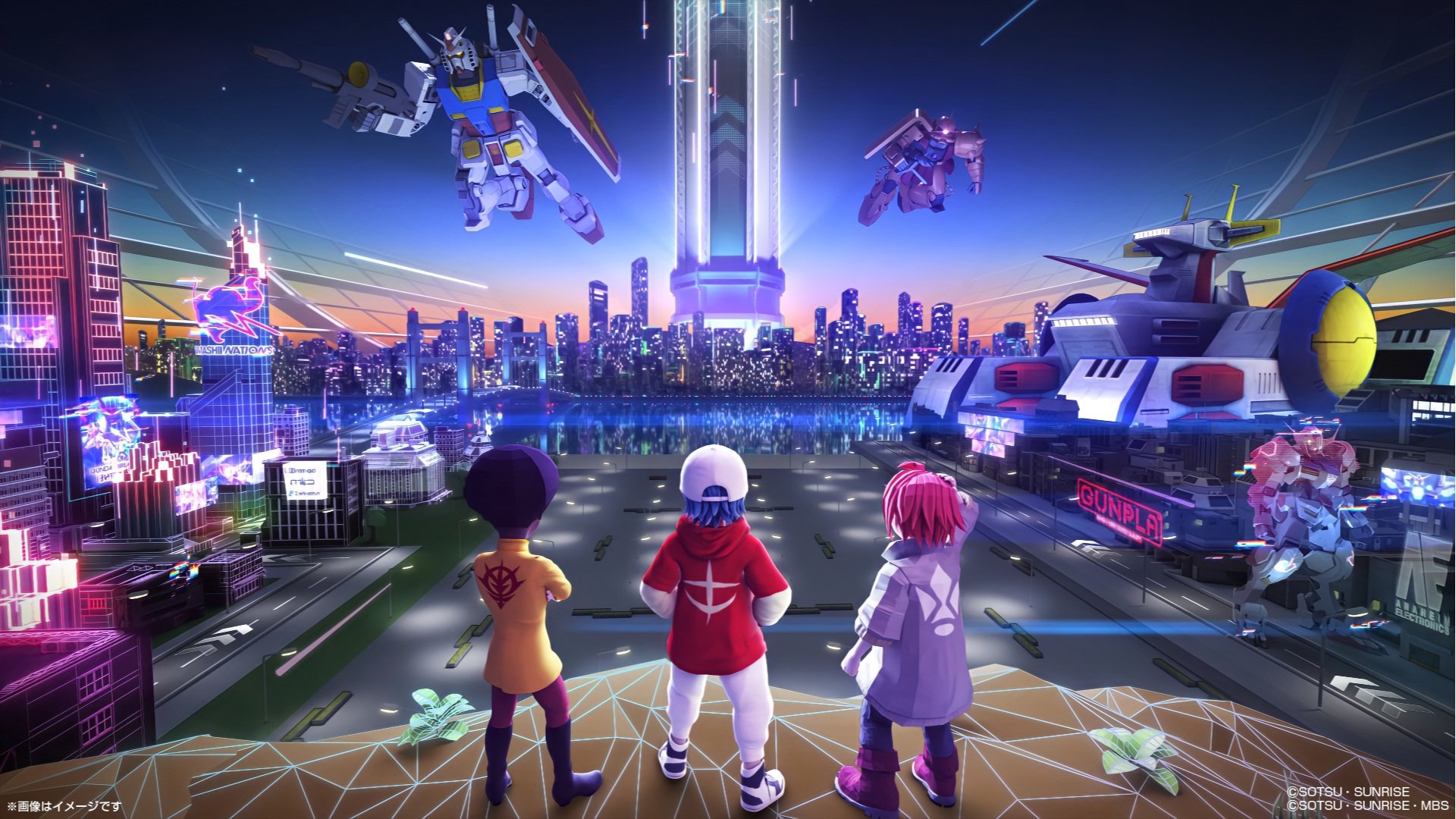
While Meta was burning billions on clunky VR headsets, games like Fortnite successfully moved out of the Battle Royale genre and into something entirely new. They created purely social spaces and hosted massive live events with huge artists like Travis Scott, Ariana Grande, The Weeknd, and Eminem. The adoption was so massive that Netflix even admitted in a shareholder letter that they compete with, and lose to, Fortnite more than HBO.
Platforms like Roblox, Fortnite, and even VRChat on Steam saw far more social adoption and genuine user loyalty than Meta ever did. It was an extremely humbling reality check for Zuckerberg.
The Pivot to AI Smartglasses
So, what does Meta do now with this massive $70 billion hole? Surprisingly, Reality Labs is not actually shutting down. A Meta developer advocate recently posted online stating that the company is definitely not getting out of the hardware game entirely.
They are pivoting. They are shutting down the clunky enterprise tools and moving away from the virtual world pitch. The recent layoffs in Reality Labs are being framed internally as a strategic shift toward artificial intelligence, specifically focusing on AI wearables.
These new devices are not bulky VR headsets. They are regular-looking Ray-Ban frames with built-in cameras, speakers, and deep AI integration. You can take photos, record video, ask the AI questions, and get navigation assistance completely hands-free. Think of them as a smartphone you wear on your face, but way less intrusive than a traditional headset.
To be completely fair, they seem really good.
Zuckerberg told his staff that Meta sold over a million pairs of these smartglasses in 2024, with an aggressive target of up to five million pairs for 2025. The company that manufactures Ray-Bans reported that their Meta AI glasses saw a 200 percent increase in sales in the first half of 2025 alone. Some financial projections even suggest Meta's smartglasses could generate $10 billion in revenue by 2030.
People already wear glasses every single day. They are light, they look perfectly normal, and they do not make you look like you are trying to escape reality while sitting in public. It is a massively better form factor. Zuckerberg actually noted back in 2022 that the long-term roadmap was always heading toward AR glasses, so this evolution makes sense.
However, there are still major hurdles. In January 2026, Meta and their manufacturing partner were sued over smartglasses technology for patent infringement. The plaintiffs are seeking massive damages and potentially an injunction that could stop production entirely.
Has Zuckerberg Learned His Lesson?
Is Zuckerberg just making the exact same mistake and strong-arming Meta into another massive loss based on fake demand? It really depends on how much credit you want to give him.
On one hand, he finally seems to be listening to the friction points of his users. Moving from a heavy, isolating headset to a stylish pair of Ray-Bans is a massive improvement in user experience. It is finally grounded in how normal people actually live their daily lives.
On the other hand, it is still the exact same Mark Zuckerberg. During Meta's Q4 2025 earnings call in January 2026, he confidently compared AI glasses to the historic evolution from flip phones to smartphones. He stated that it is hard to imagine a world in several years where most glasses that people wear are not AI glasses.
He is still making a massive, high-stakes gamble. The Metaverse was originally built on a stubborn philosophy that has guided him for years. He believes that if you just build the foundation, the business will eventually be fine. But as we saw with the Metaverse, building it does not mean people will actually show up.
Frequently Asked Questions
What is the Meta Reality Labs reset?
Why did Horizon Worlds fail?
How much money did Meta lose on the Metaverse?
Why couldn't investors stop Mark Zuckerberg from spending on VR?
What are the Ray-Ban Meta AI glasses?
When is Horizon Workrooms shutting down?
Conclusion
The incredible Meta Metaverse failure will likely go down as one of the most expensive blunders in corporate history. After burning through $70 billion and laying off thousands of Reality Labs employees, Mark Zuckerberg has finally accepted that the bulky virtual reality dream is dead. Now, he is betting the future of the company on lightweight AI smartglasses. Only time will tell if this new pivot will finally capture the market or if it will be another incredibly expensive lesson in consumer demand.