Table of Contents
In 2002, three American friends set out on a sailing trip in the Gulf of Mexico. During the trip, one of them went down to the deck and came back holding a pair of black foam shoes in his hands. There was a gleam in his eyes, as if he had found a treasure. But his friends could not control their laughter. They said the shoes were extremely weird and ugly.
At that time, in the middle of the sea, no one could have imagined that one day the President of the United States himself would wear these ugly shoes. No one could have guessed that these very shoes would later turn into a massive global company worth nearly ₹37,000 crore.
This is the incredible history of Crocs.
It is a story of explosive growth, a catastrophic near-collapse, and one of the most iconic turnarounds in modern business history. To understand the Crocs comeback story, we have to look at how a simple foam boating shoe became the most hated brand in the world before ultimately winning over an entire generation.
The Boat Trip That Started It All
Duke Hanson, who lived in the United States, had hit rock bottom. Despite years of dedicated work in sales and management, he had lost his job. His wife had filed for divorce, and cancer had taken his mother away from him. He was feeling completely hopeless when he received a call from two old friends, Scott Seamans and George Boedecker.
All three had studied together at the University of Colorado. To cheer Duke up, Scott and George planned a boating trip in the Gulf of Mexico. It was a trip that would change all of their lives forever.
In the summer of 2002, the three friends set sail on a schooner. The ship belonged to 48-year-old Scott Seamans, who had a tinkerer’s mind since childhood. The moment he saw anything new, he would open it up and start modifying it. At the age of 27, he had actually started a company that made professional photography equipment and medical devices. A few years later, he sold that company and made a big exit.
During one of his recent trips, Scott had learned about a company in Canada called Foam Creations. They used a unique material called Croslite and an injection-moulding technology to make things like spa cushions, pillows, and kayak seats. But a few years earlier, they had casually made a shoe as well. However, they only sold that shoe locally in Quebec City, Canada.
When Scott tried these shoes, he saw huge potential in them. He bought several pairs and, as usual, started tinkering with them. He punched two holes in the sides and added a heel strap made from the exact same material.
During the boating trip, Scott showed these modified shoes to Duke and George. They were black foam shoes with Swiss-cheese-style holes and a caterpillar-shaped strap. For a moment, the boat went silent. Then, the other two friends could not stop laughing. Duke famously told him that the shoes were ugly and he was definitely not going to wear them.
But over the next few days, when they actually tried the shoes on the boat, they were completely surprised.
The Secret Magic of Croslite Foam
Each shoe weighed only 170 grams. That was two to three times lighter than traditional alternatives. This incredible lightness was all thanks to the Croslite material.

Croslite had one truly remarkable quality. After wearing it for a while, the body heat from your feet actually softened the foam. It moulded itself perfectly according to the shape and size of the user’s feet. That custom fit made it extremely comfortable for long hours of wear.
Also, Croslite is a closed-cell foam. That is exactly why it was water-friendly. It dried instantly. Unlike leather or fabric shoes, it did not absorb bad smells. Finally, it had a very strong grip on wet surfaces and did not leave scuff marks. That made it the absolute most practical shoe for areas like boat decks, sandy beaches, and wet pool decks.
After returning from the trip, all three friends were fully convinced that these shoes were unique enough to build a real business around. They created a startup, and George Boedecker became its CEO. George was already operating more than 100 Domino’s franchises and was a top executive at a company called Quiznos, so he had long experience running large companies. He was also ready to become the first major investor in this new shoe business.
Scott Seamans was assigned to lead product development, and Duke Hanson was made responsible for the daily operations.
They approached several venture capitalists for funding. But as soon as the investors saw the shoes, they immediately dismissed them. Because traditional funding failed, they raised money wherever they could. Their initial investors included Duke’s father, who was a bodybuilder, and a few close friends.
Launching at the Boat Show
Their initial business plan was incredibly simple and highly targeted. In November 2002, the world’s biggest in-water boat show was going to be held in Florida. Thousands of serious boating enthusiasts were expected to attend. That made it the absolute best event to launch a new boat shoe.
They set up a stall there and displayed their foam shoes. They originally gave the shoes a very simple name: The Beach.
The initial reaction from the crowd was familiar. People laughed at them and called them ugly. But the interesting thing was that no one could ignore such a unique looking shoe. In fact, so much of a crowd gathered in front of their stall that the walking path got completely blocked. The local fire marshal actually had to make announcements over a megaphone just to control the crowd.
That was the exact moment the founders realised that the ugliness of these shoes was not a disadvantage. It was actually their main marketing strategy.
Every time someone stopped by the stall, the founders would toss them a pair and simply ask them to try it on. Once people tried them, they instantly became fans of the comfort and the practical features. Plus, the price was only $30. That was much lower than traditional, expensive leather boating shoes. During that single boat show, they sold 1,000 pairs and successfully proved that real consumer demand existed for their product.
Why Are They Called Crocs?
During this early growth phase, the founders made some very interesting observations about their product. There were actually many similarities between their foam shoes and crocodiles.
Just like a crocodile, their shoes were highly comfortable in the water, above the water, and on dry land. A crocodile’s tough skin makes it strong and durable. Similarly, the unique Croslite material made these shoes incredibly strong and durable. Crocodiles live for several decades, and these shoes were also designed to last a very long time.
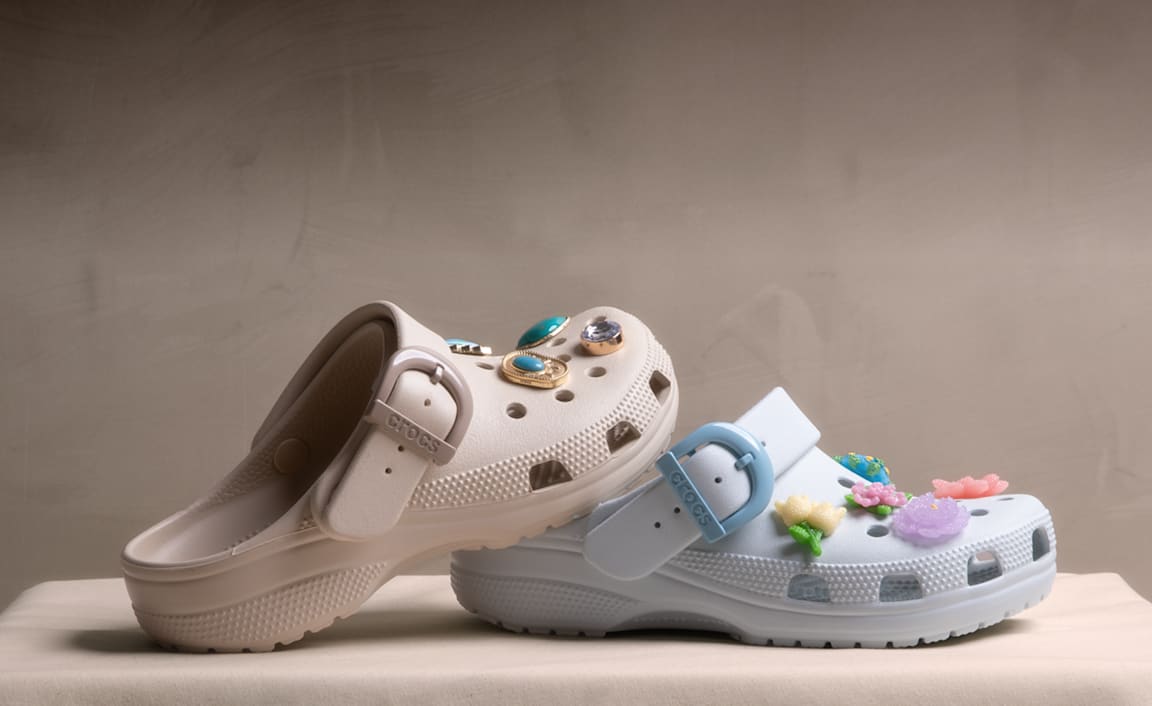
But most importantly, because of their wide shape and the holes near the toe, the shoe visibly resembled a crocodile’s head. That is exactly why they officially named the shoe Crocs, which is just a short form of crocodile. Even their official logo and mascot feature a smiling crocodile face, and their very first marketing tagline was simply "Get a Grip."
In 2003, which was their first full year of operation, they sold 76,000 pairs and generated $1.2 million in revenue. The Crocs story had officially taken off.
The Rocket Ship Growth and The IPO
Despite the early success, in front of the world’s top footwear brands like Nike and Adidas, Crocs was still a very small operation. That is when a man named Ron Snyder entered the story, and he would prove to be high-octane fuel for the Crocs rocket ship.
Ron was a retired entrepreneur who had already successfully built and sold a multi-billion-dollar company. In 2004, he joined Crocs as an official advisor. He gave the three founders only two simple words of advice. Think huge.
The founders realised that they were still technically just middlemen. The actual chemical formula and the manufacturing technology for making the shoes were still owned by the Canadian company, Foam Creations. To secure their future, they officially acquired Foam Creations in a $5.2 million deal.
In addition to securing the manufacturing, they started launching the shoes in many new bright colours. With slight design variations, different models were also introduced to the market.
Very soon, the target market for Crocs began expanding way beyond just boaters. Nurses and medical staff, who had to work grueling 12-hour shifts, found them incredibly comfortable to wear for long hours. They were highly reliable because of the heel strap, they were easy to clean with bleach, and they provided a great grip on slippery hospital floors.
Cooks and professional chefs found comfort in them because the holes provided ventilation in hot kitchen environments, and they also got a safe grip on greasy kitchen floors. Similarly, they became the absolute best choice for young children, gardeners, and elderly customers.
Their sales were literally doubling and tripling every few months. By 2004, they reached $1.5 million in revenue.
Looking at these incredible results, Ron Snyder was officially made the CEO of Crocs in January 2005. Over the next few years, the three original founders handed over full control to professional management and retired one by one.
As soon as Snyder took charge, he began introducing many new models and launched Crocs’ first-ever major marketing campaign, brilliantly titled “Ugly Can Be Beautiful.”
In 2006, Crocs officially went public on the stock market. As soon as trading opened, its market cap hit $1.15 billion. By successfully raising $28 million, it became the largest footwear IPO in American history. All three original founders instantly became multimillionaires.
But the most astonishing story was that of the boat captain, Ron Oliver. The same Ron Oliver, who was just the captain during their original boating trip, suddenly had a net worth of more than $10 million. That massive wealth was because he had also invested a small amount of money in Crocs right at the very beginning.
The next year turned out to be even more of a blockbuster. The company revenue touched $847 million. By the end of 2007, their total team size had reached 5,300 employees. Even US President George Bush was publicly spotted wearing a pair. Crocs had literally reached its peak.
But there was a massive problem looming. What Crocs believed was the peak of a mountain was actually the edge of a very steep cliff. Very soon, a painful downfall was about to begin.
The Great Expansion and The Inventory Nightmare
By 2007, Crocs had aggressively started offering golf shoes, flip-flops, dress loafers, boots, sneakers, rain boots, backpacks, sunglasses, and even clothing. They totally lost focus. They even launched a luxury women’s fashion line called “You by Crocs.” Under this luxury line, they were offering high heels with bizarre names like “Racy Rocker,” “Dangerous Diva,” and “Impossible Girl” at an insane price point of $280.
Unsurprisingly, people had absolutely zero interest in buying luxury heels from a brand known strictly for making simple foam shoes.
After launching 250 different shoe models worldwide, expanding into hundreds of retail stores, and promising exponential growth to their Wall Street investors, slowing down was no longer an option for the leadership team. That is exactly why their assembly lines kept continuously churning out new products at an incredibly high speed.
But the massive problem was that customers were not buying these new products at the same pace. As a result, by 2007, the financial value of their unsold inventory had reached a staggering $248 million. That meant Crocs had nearly 30 million pairs of unsold shoes just lying around in warehouses.
This inventory nightmare was only the beginning of their massive problems.
Many brands fail because they are not visible enough to reach their customers. But Crocs’ problem was the exact opposite. It had become way too visible. It was literally everywhere. You could find them in shoe stores, sporting goods stores, department stores, 7-Eleven convenience stores, airport kiosks, petrol pumps, and even local garden supply stores.
Also, whether it was the US President or a gardener, a grandmother or grandchildren, a celebrity chef or a petrol pump attendant, literally everyone was seen wearing them. Eventually, the general public started developing intense fatigue toward the brand. Over time, that brand fatigue turned into outright hate.
Two Canadian teenagers literally created a real website called IHateCrocs.com. Their official tagline was “Dedicated to the Elimination of Crocs.” They posted videos blowing the shoes up with firecrackers. They made videos cutting them into pieces with scissors and wrote multiple hateful blogs against the brand. They even successfully sold more than 1,000 “I Hate Crocs” T-shirts.
Finally, Time Magazine officially included Crocs in its famous list of the “50 Worst Inventions.” By now, they had easily become the most hated footwear brand in the entire world.
The Escalator Crisis and the 2008 Crash
During this exact same time, something else happened that made the public relations situation even worse. Several incidents came to light where the soft Croslite foam actually got stuck in the gaps of moving escalators. This caused severe foot injuries to many people, especially young children.

There were 186 official complaints regarding these escalator incidents. The country of Japan even issued a formal government warning regarding the shoes.
By 2008, the company was somehow trying to manage all these separate crises when something happened in the outside world that shook them to the absolute core. The 2008 Global Financial Crisis hit the global economy.
The same company that had made a healthy profit of $168 million the previous year suffered a massive loss of $185 million that year. The company that had been worth ₹24,000 crore the previous year was now valued at a measly ₹300 crore.
The final, devastating blow came in 2009. The company's external financial auditors, Deloitte, officially wrote that the company's ability to continue as a going concern was highly doubtful. In simple business language, the auditors were publicly stating that the company could financially collapse at any moment. Investor Damon Vickers bluntly stated that the company was acting like a zombie. It was already dead. They just didn't know it yet.
By this time, the leadership had shut down its Canadian factory. This was the very factory where the shoes had originally been invented. 2,000 corporate employees had already been laid off, and financial experts around the world had already prepared the brand's death certificate.
The Turnaround Strategy and Andrew Rees
But as they always say in business, it is not over until it is over. Something was about to happen next that would become one of the most iconic comebacks in corporate history.
For the next few years, the company kept suffering heavy financial losses. And just when absolutely no hope was visible, Blackstone entered the story. Blackstone is one of the world’s largest private equity firms. They saw something hidden in the company that everyone else on Wall Street had ignored. Crocs was still a globally recognised brand, and they firmly believed the company could still be turned around with the right management.
That is exactly why Blackstone invested $200 million and gave the struggling company a massive financial lifeline.
At the same time, a top management consultant named Andrew Rees was put in charge of the turnaround strategy. Later, he himself would become the official CEO.
Rees spent months deeply analysing every single product line, every individual retail store’s profitability, and the company’s overall business model. What he ultimately discovered was completely shocking. The original foam shoe, on the strength of which the entire multi-billion dollar company had been built, was now contributing only 16 percent of the company’s total revenue.
The company had actively suppressed its own hero product. It was almost as if the previous management was embarrassed by the original design.
But according to Rees, those original foam shoes were their true, authentic identity. So he began aggressively killing off several other distracting product categories one by one. He shifted the entire marketing focus back to the original silhouette.
By 2018, the original design had made a massive comeback. 52 percent of the company’s total sales now came strictly from the Classic line.
Apart from simplifying the product line, Rees also shut down nearly 160 underperforming, loss-making retail stores. And finally, he closed all their expensive internal factories and outsourced all manufacturing to contract manufacturers based in countries like Vietnam and China. He had learned this specific asset-light strategy from Nike, which does not manufacture its own shoes but strictly handles the design and marketing. This asset-light model resulted in massive financial savings for the brand.
Because of all these aggressive changes, the company finally began surviving again. But Rees’ ultimate objective was not just basic survival. It was thriving.
The Billion Dollar Secret: Jibbitz
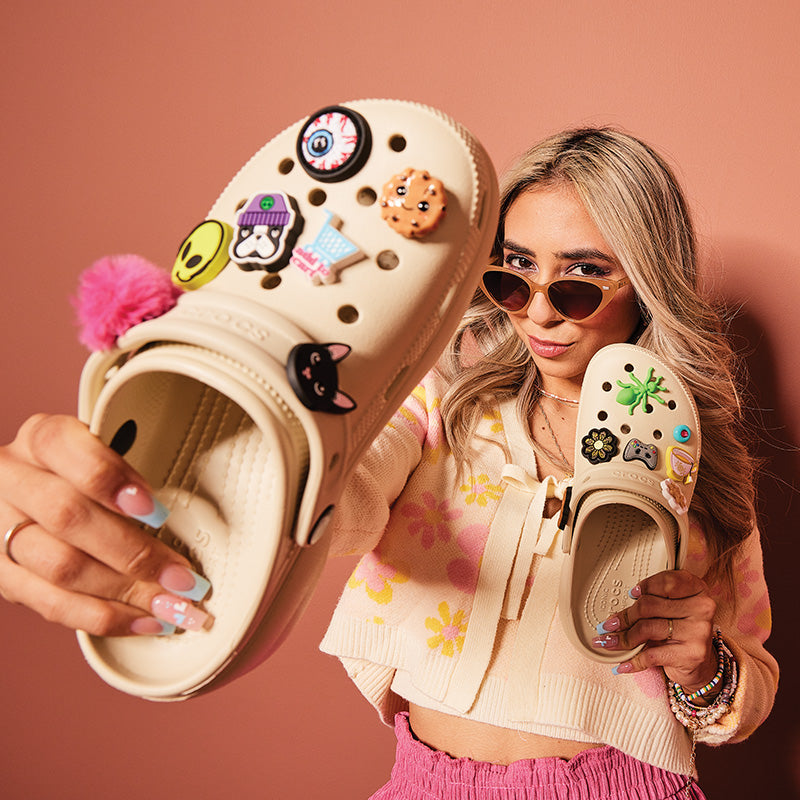
Surprisingly, the absolute biggest role in the Crocs comeback story was played by a very small plastic thing. These small things are called Jibbitz.
Jibbitz are basically small plastic decorative accessories that can be snapped directly into the holes of the foam shoes. Back in 2005, a mother named Sheri casually decorated her children’s shoes with plastic flowers and rhinestones and named them Jibbitz. Her husband quickly created a website and turned it into a small family business. Within a very short time, they were generating crores in sales. The corporate team noticed this massive success and successfully acquired the small family company for $20 million.
But for many years after that acquisition, the corporate team did not innovate much with the Jibbitz product line.
However, CEO Andrew Rees noticed a massive mathematical opportunity. Every single pair of Classic Crocs had exactly 26 holes. That meant if a customer bought a pair of shoes for $50 and added a $5 Jibbitz charm to every single hole, the company could easily earn an additional $130 per pair.
But Jibbitz was not just a massive profit opportunity. According to Rees, the foam shoes were essentially like a blank canvas. Customers could physically express themselves and show their personality using different Jibbitz charms.
He decided to collaborate with top American brands and launch exclusive, highly limited-edition shoes with customised Jibbitz.
In 2018, they launched a massive collaboration with popular rapper Post Malone. The retail price was $60. And guess what happened? The entire global stock completely sold out in just 10 minutes.
After that massive success, collaborations were rapidly launched with Bad Bunny, Justin Bieber, KFC, and even the luxury brand Balenciaga. Every single one of them sold out instantly. Then they signed massive global licensing deals with huge franchises like Harry Potter, Marvel, Disney, Star Wars, Pokemon, and the NBA. They made their custom franchise Jibbitz generally available in all retail stores.
Now, a Harry Potter fan could completely turn their foam shoes into a customized Hogwarts-themed pair. A Marvel fan could attach the Hulk’s face. A basketball fan could show support for their favourite team.
As a direct result of this personalization strategy, more than 70 percent of their customers, especially young customers, started buying Jibbitz charms along with their shoes. Very quickly, Crocs became the absolute favourite footwear brand of Gen Z customers. Because of this massive shift, their total revenue crossed a record $1.2 billion in 2019.
The Pandemic Boom and TikTok Fame
But then an unprecedented global event occurred that shocked the entire world. The COVID-19 pandemic hit.
Like every other major retail industry, the global footwear industry started crashing hard. But something truly unbelievable happened with this specific brand. Instead of crashing, their global sales absolutely exploded.
That was because it was naturally the absolute perfect shoe for a global pandemic. During the strict home lockdowns, it was extremely comfortable to wear all day while walking around the house. Plus, the closed-cell foam could be sanitised easily with bleach and water. And just like always, frontline healthcare workers, who worked the hardest during the entire pandemic, overwhelmingly chose them for their long hospital shifts.
The company itself launched a highly successful charitable program called “Free Pair for Healthcare.” Under this initiative, they donated 860,000 pairs worth a staggering $40 million to frontline healthcare workers. This massive donation created a very positive, lasting brand image for the company.
But during the pandemic, along with the virus, another massive cultural force was spreading rapidly. Short-form video content, specifically the app TikTok.
Without the corporate marketing team doing much at all, the shoes completely exploded on TikTok. Gen Z kids were naturally showing off their unique creativity using Jibbitz charms. Before-and-after cleaning videos, intense Jibbitz customisation videos, and ASMR unboxing videos were getting millions of organic views. The brand was suddenly receiving crores worth of completely free, highly engaging publicity.
The marketing team smartly leaned into this trend. They officially launched a massive campaign called the “$1000 Crocs Challenge.” Fans were publicly challenged to spend $1000 customising their shoes. With an incredible 30 billion cumulative views, it officially became one of the most successful marketing campaigns in TikTok history.
The Ultimate Business Lesson
All these brilliant strategies not only gave the company a second life but also completely transformed the financial reality of the business. Its total revenue started growing exponentially year after year, ultimately reaching a staggering $4.1 billion by the year 2024.
The incredible Crocs comeback story teaches us deeply important lessons not just about corporate business, but also about personal life and authenticity.
Throughout its long journey, many people laughed at the brand. They called the design ugly and even officially labelled it one of the absolute worst inventions in history. Perhaps heavily influenced by this loud public criticism, the previous corporate leadership tried to become something completely different from its core identity. They tried to sell luxury high heels and leather boots. And that forced identity shift became the exact reason for its near fatal downfall.
But when the company finally stopped apologizing, killed off the distracting products, and once again fully accepted its true, weird identity without any shame, it made an incredible comeback.
Because whenever something is truly different and unique, the world first laughs at it. Then, as it becomes more familiar, the world accepts it. And finally, if you stay true to yourself long enough, the world celebrates it.