Table of Contents
Monday.com was recently one of the fastest growing software companies in the world. You probably remember a time when this company was everywhere. They advertised on basically every YouTube video and every Google search. They grew from a startup into a massive enterprise with a $15 billion market cap.
Now, the situation looks incredibly different. In less than a year, their market cap plummeted from $15 billion down to just $3 billion. The company is facing lawsuits, dealing with the fallout of massive marketing expenses, and quietly walking back a billion-dollar revenue promise.
But this story is not just about one company struggling. Something massive is happening in the software industry itself, and the entire landscape may never be the same again. Let's look at how Monday.com built an empire, why it is suddenly falling apart, and how the rise of artificial intelligence is forcing them to completely reinvent their business.
The Early Days: Fixing Corporate Chaos
To understand how Monday.com got here, you have to look back at the early 2010s. Back then, corporate work was very different and often incredibly messy. Collaboration, project management, and daily tasks were scattered all over the place. Teams relied on clunky Excel spreadsheets, complicated Gantt charts, email chains that were forty replies deep, and endless weekly meetings.
There were a few software products trying to solve this, like Trello, Asana, and Microsoft Project. But these tools were often very technical. They felt like they were built mostly for human resources departments or upper management, rather than the everyday worker.
At the time, two developers named Eran Zinman and Roy Mann were working at a website-building company called Wix. Wix was rapidly scaling, and with that growth came major organizational pains. Eran and Roy were simply looking for a clear, simple way to track their coworkers' projects.
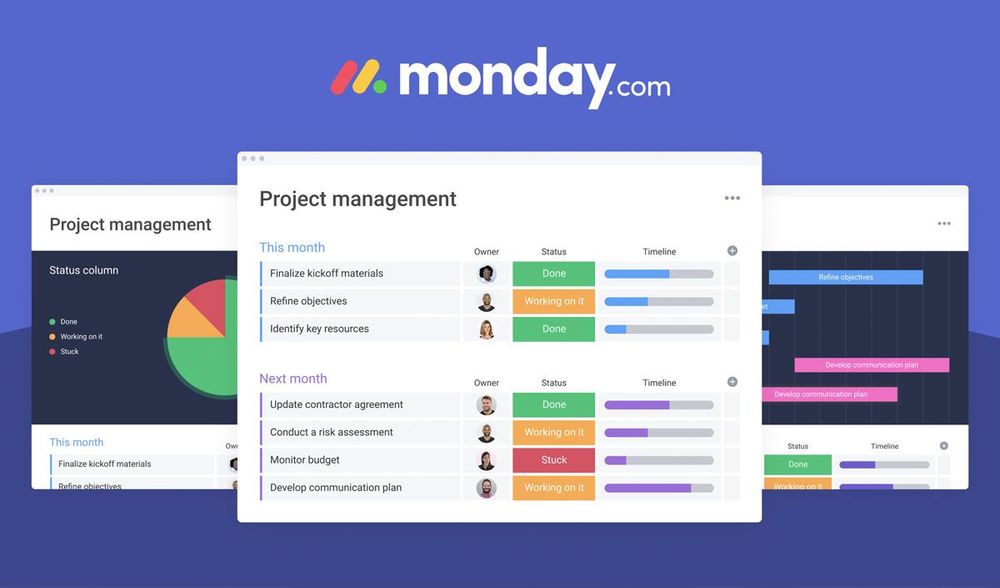
To solve their own problem, they built a visual, no-code software tool. It allowed different teams to build custom workflows for their specific projects. It was a great product, but it had two massive problems right out of the gate.
First, it was not called Monday.com. It was called Dapulse. A bad name might not sound like a huge issue, but it absolutely was.
Second, when it came time to break into the Western market, Dapulse faced major obstacles. In the world of project management, companies are rarely quick to switch tools. Even if their current system is terrible, retraining an entire staff is a headache. Furthermore, established players like Asana and Microsoft Project were already dominating the space.
The Rebrand and a Radical New Strategy
Even when Dapulse did manage to get people's attention, the name actively worked against them. In Silicon Valley, it was incredibly hard for Dapulse to be taken seriously. Every sales call inevitably focused on the weird name instead of the actual product.
For the marketing director at the time, Joel Goldstein, the situation became deeply frustrating. He realized just how bad the branding was when he went on television for the first time in his life, and the news anchor could only focus on making fun of the name Dapulse.
They knew they had to change the name. They had a strong, useful product, but the branding was blocking their success. They needed a name that sounded universal and synonymous with the concept of work itself. They chose Monday.com.
Along with the new name came a radical shift in their business strategy. Instead of competing directly with Asana and Microsoft for the attention of tech managers, developers, and engineers, Monday.com went wide. They decided to target non-technical teams. They went after marketing departments, creative agencies, and HR teams. Eventually, they would go even broader, targeting real-world industries like construction companies, wedding planners, and even churches.
This strategy worked brilliantly. Before the rebrand in November 2017, the company had a respectable 18,000 paying customers. By 2018, that number had grown to 35,000. By 2019, it hit 80,000.
With more users came massive rounds of funding. They raised $25 million in 2017, then $50 million a year later, and eventually secured a $150 million round that valued the company at $1.9 billion. Monday.com was suddenly a massive player in the tech space.
The Pandemic Boom and Massive Ad Spend
While the company was growing fast, their real big break came during the global pandemic. As the world shifted to remote work, companies desperately needed software to manage their teams and tasks without being in the same building.
Before the pandemic, a lot of management happened organically in person. People talked at desks, sketched on whiteboards, and held physical meetings. Because everyone was in the same room, the software did not need to be perfect. But when everyone suddenly went remote, all those natural touchpoints disappeared.
A unified visual platform like Monday.com was the perfect solution. It kept everyone on the same page, even when no one was in the same room. Sign-ups completely exploded. During this period, revenue climbed 85 percent year over year, hitting $58 million in a single quarter.

Seeing this massive wave of momentum, the company prepared for an Initial Public Offering. Tech giants Zoom and Salesforce poured $150 million into the company right before the IPO. When they went public, shares were priced between $125 and $140, allowing the company to raise $574 million at a valuation of roughly $7 billion. By late 2021, the stock climbed to an incredible $400 per share.
Everything looked perfect on the surface. But there were massive gaps in this success story. Namely, Monday.com was losing a staggering amount of money to achieve this growth.
If you look closely at their strategy, you start to understand why. If you check their YouTube channel, you will see over a billion views. But the vast majority of those views were entirely paid for. Monday.com was spending an unbelievable amount of money on advertising.
Their marketing strategy was completely different from their competitors. The leader of their AdWords team once explained that their target decision-maker was basically anyone who used a computer to work with a team. They took a business-to-business product and marketed it like a business-to-consumer product. They called it a human-to-human approach.
To achieve this, they took data from their existing customer database and uploaded it into Facebook's lookalike audience feature. This allowed their ads to target millions of people with similar profiles. They then expanded this aggressive strategy to Google and poured massive resources into YouTube ads.
While the strategy worked to drive sign-ups, Monday.com slowly turned into that one annoying ad that you could not escape on the internet.
The Math Behind the Growth
The financial reality of this marketing blitz was staggering. In 2020, Monday.com spent 118 percent of their total revenue on sales and marketing. They spent $191 million on sales and marketing while only bringing in $161 million in revenue. In the first quarter of 2021, right around their IPO, they spent $63 million just on advertising.
They were burning cash to capture as much market share as quickly as humanly possible. To be fair, the underlying economics of the product were strong. Monday.com boasted a gross margin of 88 percent, meaning the software itself was very cheap to deliver and inherently profitable.
But when you factored in the massive marketing costs, the company was bleeding money. Some analysts estimated that Monday.com had an operating margin of negative 86 percent, making it one of the lowest in the entire software industry. Essentially, every dollar they made cost them one dollar and eighty-six cents to generate.
The leadership team knew this was not a sustainable long-term strategy. In their official IPO filings, they stated that as the business scaled and market awareness grew, they anticipated their sales and marketing expenses would eventually decline as a percentage of total revenue.
The entire gamble was based on the hope that this aggressive upfront spending would eventually pay off in long-term, highly profitable customer relationships.
The Cracks Begin to Show
By November 2024, it looked like the massive gamble had actually worked. Monday.com officially passed $1 billion in annual revenue. They maintained incredible 90 percent gross margins, reported $45 million in net income, and generated over $82 million in free cash flow. The company was finally making a real profit.
And then, something strange happened. Despite these great numbers, the stock fell 20 percent in a single day. Their market cap dropped by $3 billion overnight.
Wall Street had started to sense that there were major problems ahead. Analysts lowered the company's expected growth rate from 33 percent down to 28 percent. CEO Eran Zinman tried to calm the markets, stating that the company was performing exactly as planned and that they simply had no control over the market's overly aggressive expectations.
He was right that the company was still performing well on paper. In the second quarter of 2025, they beat revenue expectations, reaching $299 million. But if you looked closely at the data, growth was clearly slowing down among small businesses, which had always been their core market.
Monday.com blamed this slowdown on changes to Google's search algorithm, specifically the introduction of AI overviews that were dropping their web traffic. Investors grew highly concerned. During an earnings call, analysts pressed the leadership team hard on exactly how much the Google changes were impacting the business.
The responses did not inspire confidence. The leadership team admitted they did not fully understand the implications of the Google changes and that they were trying to optimize their ad budgets in real time. This implied they were largely unaware of the problem until they saw the actual quarterly results.
Even though they had slightly beaten their revenue projections, stock performance is always about predicting the future. The uncertainty caused the stock to drop 26 percent.
Broken Promises and Lawsuits
To combat the growing doubt, the company made a massive public promise at their Analyst and Investors Day in September 2025. They projected they would hit $1.8 billion in annual revenue by 2027. Given their current revenue was around $1.2 billion, this was a massive leap, especially considering how saturated the project management market had become.
Just a few months later, they quietly pulled back those expectations. They lowered the target from $1.8 billion down to $1.45 billion, signaling much slower growth than previously promised. The company blamed a choppy demand environment and longer sales cycles for their larger enterprise clients.
Investors were furious, sending the stock down another 21 percent in a single day. When a company makes a specific financial promise that encourages investment and then abruptly changes their mind, people get angry.
The situation quickly escalated into legal trouble. Multiple law firms came forward with class action lawsuits. They alleged that the management team actively hid slowing customer growth, weaker expansions, and longer sales cycles from the public. The lawsuits argued that the leadership knew the $1.8 billion target was unrealistic but continued to publicly reaffirm it anyway. The gap between what Monday.com projected in September and what they disclosed in February raised serious questions about what the executives knew and when they knew it.
The SaaSpocalypse and the Pivot to AI
But there is a much bigger question here. Why was Monday.com's growth slowing down so drastically in the first place?
As it turns out, it was not just a Monday.com problem. The entire software industry was, and still is, going through a massive metamorphosis. In early February 2026, roughly $285 billion was wiped from software stocks in just 48 hours. Tech giants across the board took massive hits. Salesforce fell over 30 percent, Workday dropped 33 percent, HubSpot lost 39 percent, and Figma fell 40 percent.
Over the past year, roughly $2 trillion in market value has been erased from the sector. People are calling it the SaaSpocalypse.

The root cause of this massive contraction is artificial intelligence. Small and medium-sized businesses are pulling back from traditional software tools. Companies are leaving these platforms entirely, or they are downgrading their plans and paying for far fewer user seats.
Tools like ChatGPT, Cursor, and Claude Code now allow companies to easily build their own customized internal tools. These custom tools might not be polished enough to sell to the public, but for internal management, they work perfectly. Why pay thousands of dollars a month for a project management tool when an AI can help your team build a custom solution for free?
For the first time ever, Atlassian, a giant in the enterprise software space, reported a decline in enterprise seats. The traditional software business model is under direct threat.
So, what is Monday.com doing to survive? They are making a radical pivot. They are essentially killing the seat-based pricing model that built their empire.
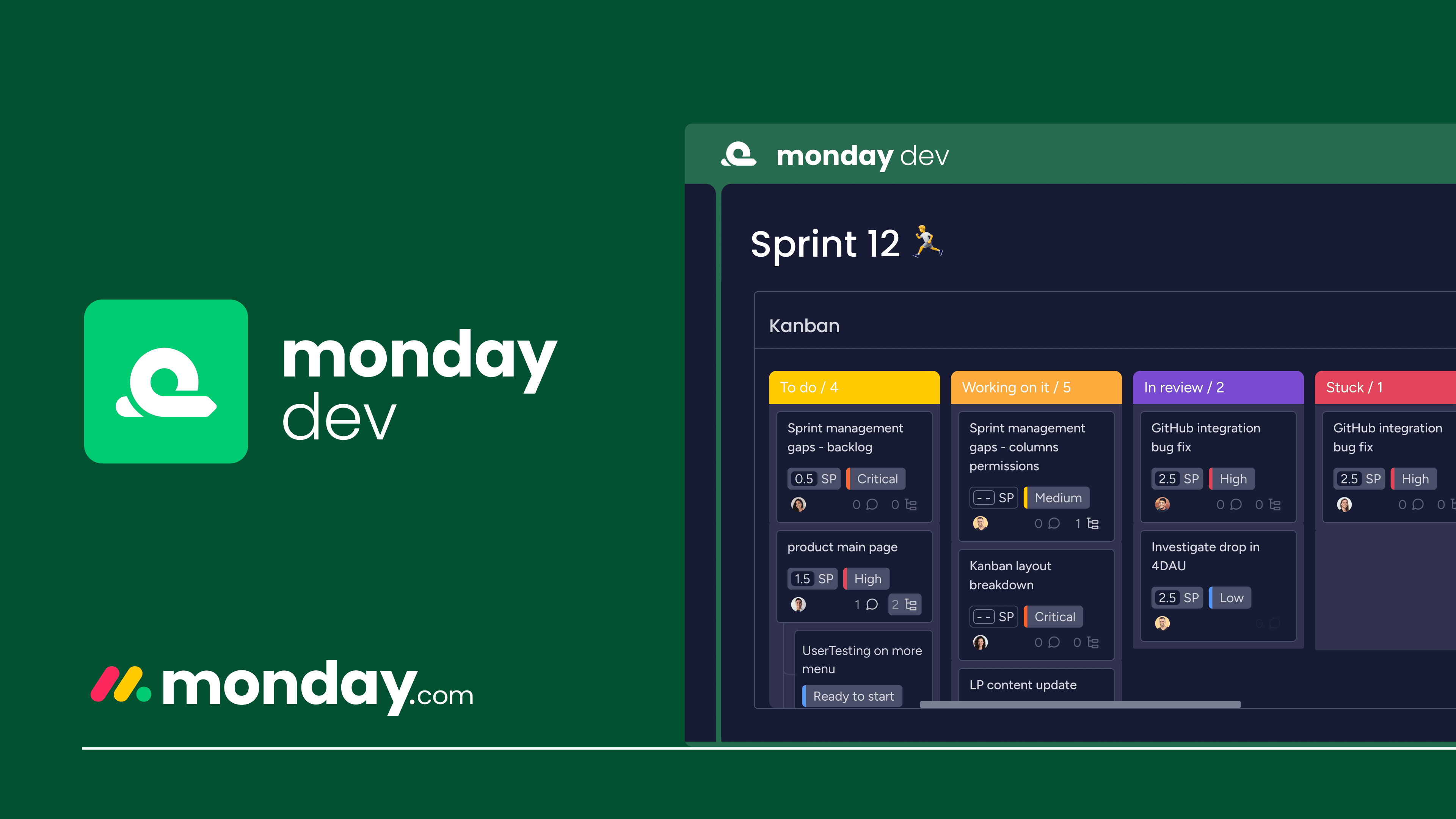
They are transitioning from a traditional work management platform into an AI Work Platform. Instead of charging per user seat, they are moving toward a per-credit pricing model based on automation, AI credits, and AI agents.
They are also fundamentally changing their core product. The traditional boards and spreadsheet grids used for tracking work are being replaced by AI agents with names like Monday Sidekick, Magic, and Vibe.
While it might sound like just another tech company desperately throwing the word AI into their marketing, for Monday.com, this is a matter of sheer survival. The market has spoken clearly. The old business model no longer works. They have to adapt to an AI-driven world, or they risk disappearing entirely.
It is worth noting the commitment of CEO Eran Zinman during this crisis. Unlike many tech founders who cash out at the first sign of trouble, he still holds about 80 percent of his shares from the IPO. He is not abandoning ship; he is staying to figure out how to solve this massive new industry problem.
Frequently Asked Questions
Why did Monday.com's stock drop so much recently?
What was Monday.com originally called?
How did Monday.com grow so fast?
Why is Monday.com facing lawsuits?
How is AI changing software companies like Monday.com?
What is Monday.com's new business model?
Conclusion
The story of Monday.com is a fascinating look at how quickly the technology landscape can shift. They used massive ad spending and a brilliant rebrand to hack their way to a $15 billion valuation, proving that targeting non-technical teams was a highly lucrative strategy. However, their recent struggles highlight a much larger trend. As businesses turn to artificial intelligence to build their own internal tools, the traditional software industry is facing an existential crisis. The rise and fall of Monday.com shows that in the tech world, past success never guarantees future survival, and adapting to the AI revolution is no longer optional.