Table of Contents
In 2003, two European entrepreneurs launched a simple application that helped you make free phone calls across the internet. By 2011, this app had 170 million users. It was so massive that Microsoft paid $8.5 billion to buy it, marking their largest acquisition ever at the time.
By the year 2020, the entire world was forced indoors due to a global pandemic. Suddenly, every single person on the planet needed reliable voice and video calling over the internet. It should have been this company's absolute finest hour. Instead, the app fell flat on its face, and a newcomer named Zoom completely took over the crown.
Fast forward to 2025, and Microsoft officially announced that the service was going to be shut down forever.
How does a company go from defining an entire era of internet communication to being completely wiped out by newer competitors? What explains the incredible rise and fall of Skype? The story involves brilliant tech founders, massive corporate misunderstandings, and billions of dollars in wasted acquisitions. Let us look at exactly what happened.
From Kazaa to Free Global Phone Calls
The story starts with two entrepreneurs named Niklas Zennström and Janus Friis. These two men originally met while working at a telecom startup in Copenhagen back in 1997.
Their very first venture together was a peer-to-peer file sharing network called Kazaa. By 2003, Kazaa had become the most downloaded application in the history of the internet. However, people were mostly using Kazaa to do highly illegal things, like sharing copyrighted music online. The major music labels came after Zennström and Friis relentlessly. Eventually, Kazaa was forced to shut down. The recording industry claimed the platform cost them millions in lost revenue.
But despite the legal trouble, these two founders learned a highly valuable skill. They learned exactly how to build massive peer-to-peer digital systems.
Back in 2003, making an international phone call still cost an absolute fortune. Massive traditional telecom companies like AT&T would charge you a steep per-minute rate just to call someone across the globe. Zennström and Friis looked at this landscape and asked a brilliant question. What if they could make phone calling just as simple and free as they did with digital file sharing? They recruited a team of talented Estonian programmers, many of whom had previously worked on Kazaa. Their clear mission was to build a system that allowed people to make phone calls across the internet for absolutely free.
The Genius of Peer-to-Peer Growth
On August 29th, 2003, the team officially launched the public beta for Skype. The response was miraculous. Ten thousand people downloaded the application on the very first day. Within two months, they had reached one million users. By August 2006, they boasted an incredible 100 million registered users.
Skype did not just work. It worked significantly better than anything else available at the time. The true genius behind Skype was its peer-to-peer architecture. By letting people connect directly with one another across the internet, the system completely bypassed central servers. This meant that the more people who joined the network, the better and more stable the system actually seemed to work.
Most critically, using Skype was fundamentally free. You only had to pay if you wanted to make a call to an actual traditional landline phone number. Traditional telecom companies were officially put on notice. This invention marked the beginning of the end for giants like AT&T and Sprint, who had built massive fortunes selling expensive long-distance phone calls.
By 2005, Skype was growing faster than any other startup in recorded history, logging 54 million registered users in that year alone. They had tapped into the incredible power of virality. The product naturally grew because people had to tell their friends about it in order to use it. If you wanted to talk to a friend overseas, you simply told them to download Skype so you could chat for free. It grew like an absolute wildfire. However, there was one massive glaring problem. Back then, only 3.7 percent of their user base actually paid to use the service. Skype simply did not make much money.
The Disastrous eBay Acquisition
Because of this massive audience, huge tech players like Google, Yahoo, and News Corp all came knocking, hoping to buy the company. Despite the interest from traditional tech giants, a surprise bidder actually won the auction. It was eBay, the very same platform that helped you sell Beanie Babies on the internet.

On September 12th, 2005, eBay CEO Meg Whitman proudly announced they had won the auction for Skype. The deal was valued at up to $4.1 billion, with $2.6 billion of that paid in pure cash. Most of the business world, including Wall Street investors, was completely confused by this move. In fact, eBay's own stock fell 4 percent immediately following the announcement.
On the surface, Meg Whitman tried to explain her rationale. She claimed that buyers and sellers could use Skype to coordinate and communicate better across the eBay platform. The idea was that for complex transactions like real estate or automobiles, buyers could simply place a voice call to the seller to close the deal faster.
In reality, people using eBay already had communication systems that they preferred. Nobody actually wanted to get on a live phone call to buy a used item. The entire magic of the eBay platform was asynchronous communication. You could bid and transact whenever it made sense for you without having to speak to a stranger. Whitman's proposed synergy only made sense in corporate PowerPoint presentations.
To make matters worse, eBay was a mature, corporate American environment. Skype was a scrappy, European technology startup. It was a massive culture clash. The original founders left the company in 2007, and Skype cycled through a chaotic series of different strategic initiatives and leaders under eBay's control. By October 2007, eBay had to face the music. They wrote down the entire purchase by $1.4 billion, admitting they had vastly overpaid.
The Smartest Founders in Tech and Silver Lake
Here is where the story gets incredibly interesting. It turns out that Zennström and Friis were remarkably smart businessmen. When they originally sold the business to eBay, they had managed to retain the actual ownership of the underlying core technology.
When eBay finally went to the market to try and sell Skype to a new buyer to get out of their mess, the two founders stepped right back up. They told eBay that they needed to be paid before any new transaction could happen, and they filed a lawsuit to prove it. Eventually, eBay was forced to settle with the founders, giving them a 14 percent stake just to drop the suit and allow the sale to go through.
In September 2009, a consortium led by the private equity firm Silver Lake Partners put together $1.9 billion to buy 65 percent of Skype from eBay. Silver Lake executed an aggressive turnaround. They replaced 29 out of the 30 top managers at Skype. Under their guidance, the app experienced massive growth. The total user base jumped from 405 million to 660 million, and revenue increased from $551 million to $860 million.
The private equity firm doubled the engineering team and drastically sped up product releases. Most importantly, they made the platform multiplatform, aggressively moving from desktop computers onto the newly prevalent smartphones. Like most private equity firms, Silver Lake had no intention of holding the company forever. Their goal was to package Skype up and flip it for a profit. And they succeeded beyond their wildest expectations.
Microsoft's $8.5 Billion Misstep
On May 10th, 2011, Microsoft CEO Steve Ballmer announced that Microsoft was purchasing Skype for a staggering $8.5 billion. It was the largest acquisition in Microsoft's history at that time.
Steve Ballmer, who was fundamentally a sales guy rather than a deep tech guy, declared that Skype was a beloved product used by millions. His grand ambitious vision was to integrate Skype into absolutely every Microsoft product, from the Xbox to Microsoft Exchange and Outlook. It was supposed to be the ultimate voice hub.
Because of this massive deal, the original founders, Zennström and Friis, walked away with an additional one billion dollars each, on top of the fortune they had already made from eBay.
Microsoft was paying a massive premium. They bought the company at 32 times its profit, which was roughly three times what Silver Lake had paid just 18 months prior. At the time, one analyst warned that while Skype was a great concept, the heavy bureaucracy and corporate culture at Microsoft would ultimately kill it. It turns out that analyst was absolutely correct.
First, Microsoft decided to entirely discontinue their own competing product, Windows Live Messenger, and force everyone over to Skype. On paper, this looked like massive growth. In reality, it sparked a deep identity crisis. Nobody knew what Skype was supposed to be anymore. Was it a text-based social network? Was it a business voice platform? Who was the actual target buyer?
More importantly, Skype's original core genius (the peer-to-peer system) became its ultimate Achilles heel. The original architecture was built for an era of desktop computers. It simply was not ready to handle a modern world where people were jumping between smartphones, tablets, and laptops with spotty cell service. Microsoft had to completely rebuild the airplane while it was flying. The transition was incredibly painful, plagued with error messages, dropped calls, and severe reliability issues.
The Rise of Competitors and the Snapchat Clone
While Microsoft was busy completely rebuilding the backend architecture, the competition did not wait around. In 2010, Apple launched FaceTime. In 2014, Facebook purchased WhatsApp for billions of dollars and immediately added easy voice calling. Google also jumped into the ring with Google Hangouts, giving users free group video calls.
Each of these new competitors was mobile-first, user-friendly, and highly reliable. Skype was increasingly none of those things. Microsoft was eventually forced to start giving Skype away for free to compete. By 2013, Skype was generating nearly $750 million in revenue. Over the following eight years, that massive revenue number would plummet by more than 80 percent.

In a desperate panic in June 2017, someone at Microsoft decided the best way to win was to target younger users by completely copying Snapchat. They rolled out a massive, terrible redesign. The new Skype featured "highlights" (which were just Snapchat stories), bright colorful backgrounds, and weird notification systems.
Users absolutely hated it. People just wanted to make reliable phone calls without getting disconnected, and instead, Microsoft was handing them fancy emojis. The UK App Store rating for Skype plummeted from 3.5 stars down to a miserable one star. By 2018, Microsoft admitted complete defeat and rolled back all of the Snapchat-style changes. But the damage was done.
How Zoom Stole the Pandemic Crown
Then, the world changed forever. In early 2020, the COVID-19 pandemic forced everyone indoors. Face-to-face meetings disappeared overnight. Video calling went from being a nice luxury to an absolute piece of essential global infrastructure.
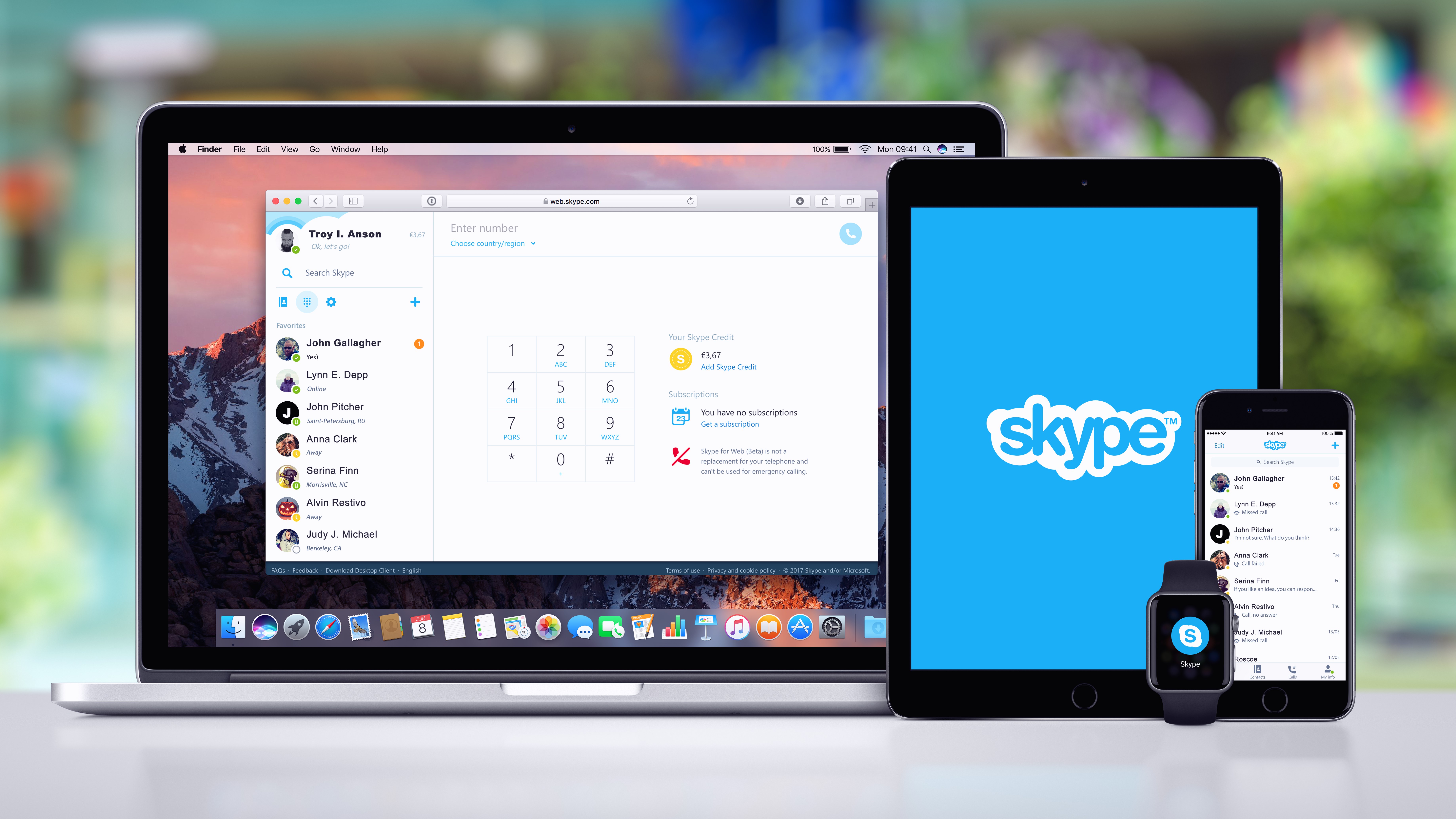
Skype should have been perfectly positioned to win. Before the pandemic, they held 32 percent of the internet video calling market. At the start of the lockdowns, Microsoft reported a 70 percent surge in Skype usage. But then Zoom entered the picture.
In December 2019, Zoom had a modest 10 million participants. Just four months into the pandemic, they exploded to nearly 300 million users. Their revenue skyrocketed from $650 million to over $2.5 billion. The cultural phrase "Skype me" was instantly replaced with "Let's hop on a Zoom." By early 2021, Zoom controlled over 50 percent of the voice calling market, while Skype's share crashed into the low single digits.
Zoom won because its founder, Eric Yuan, built a frictionless masterpiece. You could join a Zoom meeting with a single click. You did not even need an account to join a call. It worked flawlessly even on poor internet connections. Meanwhile, Skype was a total disaster to use. It required users to create confusing accounts, featured a deeply cluttered interface, and still had no clear identity.
The Final Shutdown
The hardest truth for loyal Skype users is that Microsoft had already decided to let the platform die long before the pandemic even started.
In March 2017, Microsoft decided they wanted to compete directly with Slack. They launched a corporate clone called Microsoft Teams, and they decided that all future video calling features would live entirely inside of Teams. Because of this strategic shift, Skype was left to completely languish. When the massive blizzard of user demand hit in 2020, Skype had already been structurally set up to fail.
By 2024, Microsoft Teams boasted 320 million users. Microsoft CEO Satya Nadella had not even mentioned the word "Skype" on a corporate earnings call since 2017.
In July 2021, Microsoft took the first major step by shutting down "Skype for Business" and redirecting all of those corporate customers to Teams. While competitors like Zoom and Google Meet continued to thrive post-pandemic, Skype continued to heavily shrink. Annual profit plummeted from $90 million in 2013 to a pathetic $8 million by 2022.
Finally, in February 2025, Microsoft made the final call. They announced that on May 5th, 2025, exactly 21 years after its original beta launch, Skype would be officially shut down for everyone, forever.
Microsoft's massive $8.5 billion purchase really only accomplished two things. It successfully kept the technology out of the hands of their competitors, and it taught Microsoft a very expensive lesson about the video calling space. However, it is clear that the vast majority of that $8.5 billion was simply burned up through years of severe corporate mismanagement.
Frequently Asked Questions
Why did Skype fail?
Is Skype shutting down?
Why was Zoom better than Skype during the pandemic?
How much did Microsoft buy Skype for?
Who originally created Skype?
Conclusion
The rise and fall of Skype is a classic business tragedy. It was a revolutionary application that completely disrupted the traditional telecom industry and changed the internet forever. However, the greatest lesson from this entire saga is the difference between buyers and sellers. The founders and the private equity firm that truly understood the underlying technology walked away with billions. Meanwhile, massive corporate buyers like eBay and Microsoft, who failed to understand the product and its users, were left deeply burned. In the end, the company that defined internet calling was quietly retired to the digital graveyard, easily replaced by competitors who simply cared more about making the customer happy.