Table of Contents
If you are a part of my generation, and I am 51 years old, there is a one hundred percent chance that you went to a kid's birthday party at Chuck E. Cheese. It was an absolute beloved institution for games and pizza. It was virtually guaranteed to leave you with a massive sugar high, or at the very least, a deep pizza food coma.
But believe it or not, the entire concept of Chuck E. Cheese was not actually about games, or cheese, or pizza, or anything involving that stuff on the surface. The brand had an entirely different secret and a deeply psychological reason to exist.
It turns out that this beloved childhood institution actually went bankrupt twice since it was founded back in 1976. Both of these massive financial failures were caused by owners who simply did not understand the real reason behind why the business worked.
Today, the chain has emerged from the ashes as something very different in a post pandemic world. Let us look at the fascinating rise, fall, and modern redemption of Chuck E. Cheese.
A Frustrated Dad and the Atari Connection
The story of this massive pizza empire actually starts back in 1976 with a highly visionary entrepreneur named Nolan Bushnell. Bushnell had just sold his highly successful video game company, Atari, to Warner Communications.
Suddenly, his whole idea of being an entrepreneurial swashbuckler was thrown out the door. The corporate suits were now in charge of Atari, and they were running absolutely everything strictly by spreadsheets.
At the time, Bushnell was a young dad. He had money, he had time, and he had kids. Like most kids, they were incredibly unruly. He quickly realized he had absolutely no place to take them to burn off that energy.
Going to a major theme park like Disneyland was entirely too far for a simple afternoon trip. Movie theaters absolutely did not want screaming kids running up and down the aisles. Furthermore, his kids were certainly not going to sit quietly still for two hours anyway just to watch Raiders of the Lost Ark. He knew there had to be something else.
He asked a simple question. What if there was a place where a kid could simply be a kid? He envisioned a place where they could run around, scream, move, and eat good food in a safe environment.
He actually took this grand idea and pitched it directly to Disneyland. They absolutely hated it. The reason Bushnell thought Disney might be interested was that he envisioned this localized family restaurant having elaborate animatronic shows inside of it. Disney flatly rejected the pitch because they did not want to cannibalize their massive Disneyland and Disney World businesses by placing localized parks with animatronics in neighborhoods across the country.
Bushnell was completely unfazed by the rejection. He decided to go ahead and build his grand vision himself anyway. In May 1977, in San Jose, California, located at the southern end of Silicon Valley, Bushnell built the very first location.
It had giant, five foot tall dancing animatronic robot shows. It had fresh pizza, and it had arcade games. By all conventional business wisdom of the era, it should have flopped immensely. But it did not. It was an absolute, immediate cultural hit.
The Secret Business Model: A Casino for Kids
I often talk about how if you want to predict the future outcome for any individual business leader, you just need to look at the patterns of their past.
Nolan Bushnell had a past filled with visionary ideas. He would come right out the gate with incredible inspiration and put amazing things into the world. But when it came time to actually operate whatever he had built, it would turn into a massive mess. That operational mess would inevitably cause him to lose control, just exactly like he had done at Atari. Chuck E. Cheese would perfectly follow the exact same arc of Nolan's personality.
But right out the gate, the business experienced explosive, unprecedented growth. By 1981, they had scaled to 200 locations across the country. They successfully went public, valuing the company at half a billion dollars. That was a staggering amount of money back then. In today's dollars, that translates to roughly 1.7 billion dollars for a chain of pizza restaurants, skee ball lanes, and dancing robotic mice.
Parents absolutely loved the concept because they could finally show up, sit down, and relax in a perfectly safe environment. Their kids were busy running around being completely goofy, jumping in plastic ball pits, and staying out of trouble. Kids obviously loved it because they could run around without mom and dad constantly hovering over them.
But beneath the surface, Nolan had quietly hit on one of the absolute best business models in the entire history of the restaurant industry.
First, you sell people pizza. Pizza inherently has insane profit margins because the core ingredients are heavily subsidized and cheap to produce at scale. But the pizza margins were nothing compared to the even better margins hidden inside the arcade game business.
The genius was in the token system. Parents would come in and buy their kids plastic tokens.
The kids would go spend those tokens on games, and then they would get a massive dopamine hit at the end when the machine spit out a string of paper tickets. The kids would then take those tickets and excitedly redeem them at the little gift store.
These plastic tokens utilized the exact same behavioral psychology that major casinos use on adults. Casinos do not use real money at the poker tables for a very specific reason. If you are handling real, physical cash, your brain registers the value and it causes you to be much more risk averse. The same exact psychology applies to children.
If you handed a kid five real dollars, they would realize there is real, tangible value there. But if you give them a cup full of cheap plastic tokens, they will blindly throw them into arcade machines like a gambler who has had way too many drinks at a Vegas casino.
Bushnell was essentially running a highly legal casino designed specifically for kids. You go play a game of skee ball, and you have absolutely no idea if the machine is going to spit out two tickets or twenty tickets. At the end of the night, you might have enough tickets to win a massive prize, or at the very worst, you get a cheap little plastic trinket to take home as a dopamine reward.
Psychologists have heavily studied this phenomenon. The absolute best way to get a human being addicted to a game is to utilize variable rewards. When you spin the wheel on a slot machine, you do not know if you are going to lose all your money, win a million bucks, or get a small payout in the middle. That unpredictable variance is the greatest way to keep people playing. It works beautifully on adults, and it works flawlessly on kids too.
The Showbiz Pizza Arms Race and the First Bankruptcy
The primary reason Bushnell would go on to lose so many of the massive ventures he created was simply that he sucked as a daily operator. He was brilliant with grand vision, but he was terrible with finances. When you are not good with finances, you stop watching the daily dollars and cents the way a CEO should.
Bushnell was an early genius at aggressive franchising. Franchising enables a business to grow incredibly fast by using other people's money. The corporate parent simply takes a percentage royalty on what the local owners sell, alongside collecting hefty franchise fees upfront. Bushnell leaned totally into this model, and franchises started to aggressively pop up all over the country.
However, there is one massive, hidden problem with franchising. When you franchise, you open up your entire operational playbook so that outsiders understand exactly how your secret business actually works.
One of those early franchise owners was a man named Aaron Fechter. He watched the entire Chuck E. Cheese operation very closely. In 1980, Fechter took everything he learned and launched a direct competing chain called Showbiz Pizza Place. It was an absolute, direct ripoff of Chuck E. Cheese, except it did one specific thing much better than the original. The animatronic shows at Showbiz were over the top and truly amazing.
This created a massive business problem. Suddenly, there was an expensive arms race in the kid casino business. Chuck E. Cheese and Showbiz were suddenly duking it out in local markets, forcing both companies to invest tons of capital just to outdo each other's robotic entertainment. You can easily see where this leads. When two companies constantly spend to beat each other, they both start to lose their profit margins. Both sides suffer from the heavy competition because there are only so many parents in a given neighborhood willing to take their kids out for pizza and games.
Then, in 1983, something truly horrible happened to the entire entertainment industry. A confluence of massive economic factors all hit the video game industry at the exact same time.
The first major issue was that the industry was producing way too many low quality arcade games, flooding the market and boring consumers. At the exact same time, home entertainment consoles were finally becoming a mainstream reality. Families could simply buy an Atari console for their living room, meaning they no longer needed to drive to an arcade in the local mall or visit a Chuck E. Cheese to play video games.
With those industry headwinds alone, the chain probably would have survived and been okay. But Bushnell's poor operational management caught up with him. He had expanded the footprint way too fast, and their corporate balance sheet was absolutely not ready to handle a severe downturn in the arcade industry.
In March 1984, Chuck E. Cheese was forced to declare bankruptcy for the very first time. Bushnell had gone out and basically done the exact same thing that he had done with his first company. He grew a visionary idea incredibly quickly, failed to manage the finances, and completely lost control of his creation.
Normally, when there is a major retail bankruptcy, the company either reorganizes its debt or disappears entirely. If you are a restaurant brand, you almost always disappear entirely, especially back in the brutal economic environment of the 1980s. But that is not what happened here.
In a bankruptcy proceeding, it is entirely possible for a rival competitor to swoop in, buy the distressed assets, and pay off a portion of the creditors. Bankruptcy courts are basically the wild west of the business world. And you can probably guess exactly who showed up inside that specific bankruptcy court.
Aaron Fechter, the guy who had created the rival Showbiz Pizza, bought the bankrupt assets. By 1985, the former franchisee was suddenly the proud owner of the entire Chuck E. Cheese empire.
The new management team quickly realized that the Chuck E. Cheese brand name actually held much better cultural value than the Showbiz name. Showbiz had a famous animatronic band, but many kids found the characters slightly intimidating. Chuck E. Cheese, on the other hand, felt like a kindly, cool country mouse.
So, they smartly rebranded all the existing Showbiz locations to fly under the Chuck E. Cheese banner. Because they now owned a total monopoly on the space, there was absolutely no reason to spend money on great animatronics anymore. The new owners were strictly trying to run the business for maximum profit margin. They aggressively started ripping out Aaron Fechter's over the top, expensive animatronics in favor of far cheaper ones.
By this point, the corporate restructuring had caused Fechter to lose total control of the combined company. Believe it or not, he would spend the rest of his career basically working to maintain a lot of those original, elaborate animatronics for private nostalgia collectors.
The Uncanny Valley: Why the 1990s Went Wrong
While the company had survived bankruptcy, there was a hidden psychological time bomb quietly ticking underneath Chuck E. Cheese. It is something business analysts rarely talk about, but it involves the animatronics themselves and the deep roots of human nature.
If the Chuck E. Cheese executives had bothered to call in some child psychologists during this era, they might have known exactly why the 1990s proved to be such a difficult time for the brand.
The chain was on a slow, confusing decline, and corporate leadership simply could not figure out why. In theory, the 1990s should have been the absolute peak era for a chain like Chuck E. Cheese. The baby boomers were now parents, and they loved nothing more than to host big, lavish birthday parties and spend significant money on their kids. The economy was doing incredibly well following the minor setbacks of the early 90s. Families had disposable income. Yet, Chuck E. Cheese was struggling.
Unwittingly, the company had stepped directly into a deeply rooted psychological phenomenon. When the animatronics were brand new in the 1980s, they looked obviously fake and cartoonish. They were not disruptive or scary. But as those cheap animatronics started to age, and as the chain started to cut costs, the mechanical movements became herky jerky. The fur became faded, the robotic eyelids drooped, and they just started to look entirely off.
Psychologists refer to this specific feeling as the uncanny valley. It is the exact same uncomfortable feeling you or I have when we see a weird clown or an old, creepy carnival attraction. It does not feel cool anymore. It actively scares us and makes us feel deeply uncomfortable.
The uncanny valley occurs when something looks almost alive, and almost human, but is just slightly off. It basically freaks out our brains. It triggers the exact same evolutionary biological response that makes human beings freak out when we see corpses. A corpse looks close to human, but the brain knows something is fundamentally wrong. To us, that feels dangerous, and our natural instinct is to get away from it.
While a perfectly maintained robotic mouse is charming, a degraded, twitching, half broken animatronic might as well be a terrifying horror movie clown. The filmmakers behind the massively successful horror movie franchise "Five Nights at Freddy's" perfectly understood this exact premise and built an entire terrifying universe around it. The executives behind Chuck E. Cheese, however, did not understand it at all.
This creeping sense of dread would set the foundation for what would happen to the brand next. By the early 2000s, home entertainment consoles like Nintendo and Xbox had become incredibly advanced. It became basically impossible for Chuck E. Cheese to compete in terms of supplying a return on investment for digital entertainment.
At the exact same time, the generational guard was shifting. We went from having baby boomer and Gen X parents to millennials becoming the primary parents of young children. The absolute last thing these new parents wanted to do was take their kids to a Chuck E. Cheese. They vividly remembered a bunch of scary animatronics from their own childhoods. They viewed the venues as deeply unhealthy places that smelled strongly of chemicals and feet, and at worst, were practically guaranteed to get their kids sick from playing in stinky, germ filled plastic ball pits.
As the 2000s marched on, these cultural and technological headwinds severely affected the chain. They started to see a harsh degradation in overall revenue per location. This triggered the classic downward retail spiral that destroys so many beloved legacy brands.
When fewer customers come in, revenue drops. When revenue drops, corporate leadership spends less money on improving the physical business. Your prize inventory gets worse. Your pizza ingredients get cheaper because you have to mercilessly cut costs to survive. Because the maintenance budget is slashed, the aging animatronics get even scarier. Because the experience is now terrible, even fewer people come in the door. The downward spiral ruthlessly continues and compounds until the business eventually dies.
The Private Equity Trap and the Downward Spiral
However, there is one specific group of people in the United States who absolutely loves a struggling retail bargain. They love an opportunity to aggressively inject borrowed money into a failing brand to see if they can orchestrate a turnaround and flip it for a massive profit. That group goes by the initials PE, which stands for Private Equity.
In 2014, Apollo Global Management, one of the largest and most powerful private equity funds in the entire world, bought Chuck E. Cheese for 1.3 billion dollars.
The standard private equity playbook is highly aggressive and pretty straightforward. The firm puts up a small fraction of the purchase capital from their own fund, which they have gathered from university endowments or massive pension funds. They then borrow the vast majority of the purchase price using heavy corporate debt. They forcefully place that massive new debt burden directly onto the balance sheet of the company they just bought. Ideally, they fix the operational issues, make the company highly profitable, and then turn around and sell it to another buyer a few years later.
There is a fundamental, structural problem with private equity ownership. It is exactly why you see so many classic American retail horror stories associated with it. Private equity funds have a strictly limited life cycle, usually operating on a three, five, or seven year timeline. That means you are bringing in corporate owners who are absolutely not thinking about the long term health or cultural legacy of the brand. They are only thinking about how to extract value and flip the asset to the next buyer as relatively quickly as possible.
The very first thing Apollo did was load the struggling pizza chain up with a staggering 900 million dollars in debt. Next, they looked at whatever physical real estate the company actually owned. Real estate provides a massive safety net for a retail brand. Apollo immediately sold off that valuable real estate to generate quick cash.
Unsurprisingly, these wealthy private equity executives also failed to understand the uncanny valley phenomenon. One of the very first things they slashed to save money was the physical store maintenance budget. They took the already aging, scary animatronics and effectively made them even worse.
Believe it or not, Apollo actually had the grand vision that they were going to elevate Chuck E. Cheese and take the brand upmarket. They wanted to make it fancier. You see this specific, fatal playbook incredibly often in corporate America. Private equity investors are very rich people. Their natural instinct is to try and turn a working class business into something designed for somebody exactly like them.
In reality, the vast majority of the country is not made up of rich people. We are just normal, working class families out looking for a safe, affordable place to take our kids. This is the exact same disconnect that destroyed massive legacy brands like JC Penney and derailed the original appeal of Panera Bread. The investors simply did not understand the daily reality of their core customers.
By 2019, Chuck E. Cheese was choking on 1 billion dollars in total corporate debt. Barely enough cash was coming in the door just to service the massive monthly interest payments. That meant any external economic shock at all was going to instantly push the chain straight over the edge and into total financial disaster.
The Pandemic Shock and Pasqually's Pizza
That exact, fatal economic shock arrived in the first quarter of 2020. The COVID-19 pandemic swept across the globe.
Everything about the reality of a global viral pandemic and the Chuck E. Cheese business model was a total, disastrous mismatch. Remember, this is a business where dozens of kids gather in a tightly enclosed environment, rub their unwashed hands all over the same plastic arcade buttons, and cough and sneeze inside enclosed plastic tubes.
Immediately, the entire physical business model for Chuck E. Cheese collapsed overnight. Furthermore, because families were locked down, the entire concept of hosting a massive, in person birthday party vanished. Every single Chuck E. Cheese location in the country closed its doors.
But there was a massive, looming problem. Even though their physical doors were locked, they still had to make the staggering monthly debt payments on that 1 billion dollars they owed to Wall Street. The company was suddenly bleeding an astonishing 20 million dollars a month in pure cash with absolutely zero revenue coming in the front door.
In a desperate, almost hilarious attempt to bring in at least some trickling revenue during the lockdowns, Apollo tried to pivot the business to food delivery. They started selling their pizzas on apps like DoorDash. However, they knew that the Chuck E. Cheese brand name was so deeply tainted and associated with low quality food that adults would never willingly order it for dinner.
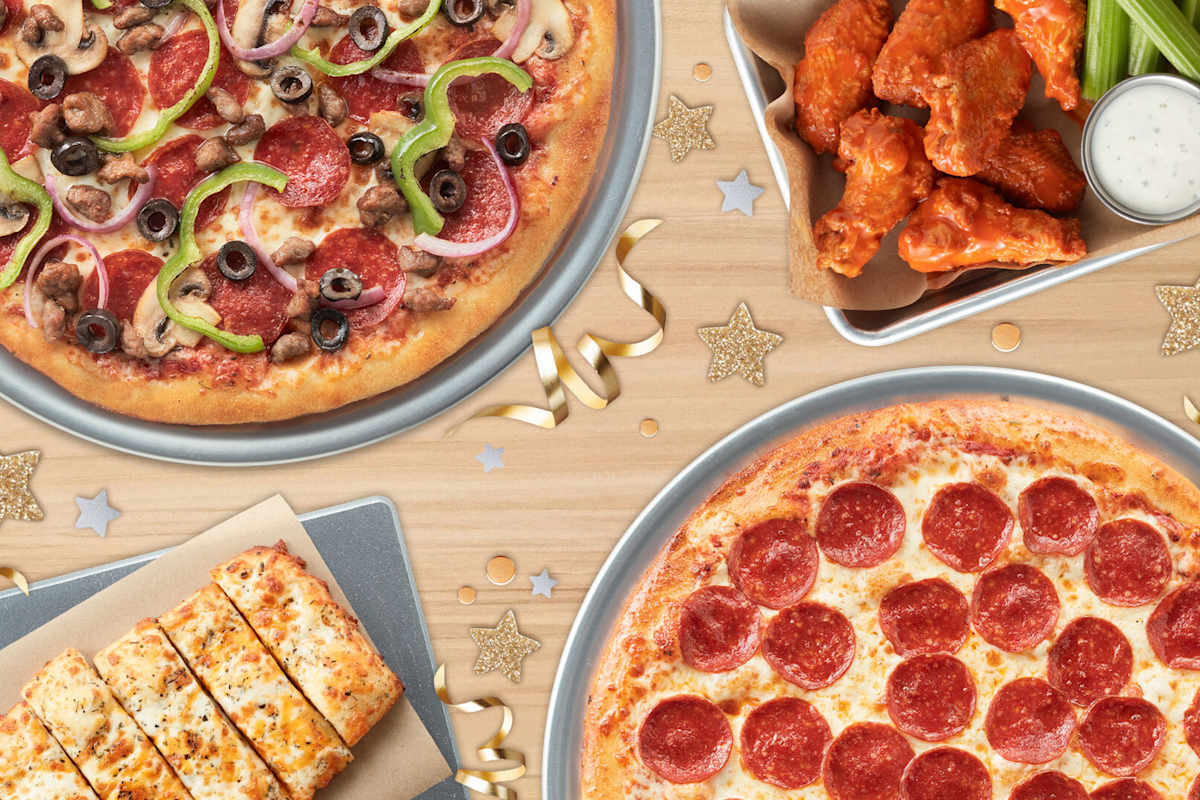
To trick the public, they set up a digital ghost kitchen. They listed their pizzas on delivery apps under the alias "Pasqually's Pizza Company."
Pasqually was actually the name of the fictional chef character in the Chuck E. Cheese animatronic band. That is exactly how toxic the brand had become. A company that had industrialized the American birthday party in the 80s and 90s was now forced to hide its own identity just to sell a pepperoni pizza on the internet.
The ghost kitchen trick was not nearly enough to save them. In June 2020, they officially declared bankruptcy for the second time in the history of the company.
The Post-Pandemic Redemption and Killing the Animatronics
There are generally two types of corporate bankruptcy. Chapter 7 is where a business completely liquidates its assets and ceases to exist. Chapter 11 is where a company reorganizes its structure, attempts to make its massive debt load manageable, and tries to come out the other side as an ongoing, functional business. Chuck E. Cheese pursued Chapter 11.
In December 2020, they officially emerged from bankruptcy. They had a brand new cap table, meaning the private equity debt was cleared out and new equity owners were in charge. They had a new, manageable debt stack and a radical new survival plan.
The absolute linchpin of that new survival plan was surprisingly simple. They had to completely kill the animatronics.
Finally, decades after the uncanny valley effect began destroying their foot traffic, somebody in corporate leadership had actually figured out what was creeping out their customers. They had quietly started testing this idea a few years prior, removing the aging robotic shows and replacing them with massive digital screens and interactive, light up dance floors. By the end of 2023, the creepy animatronics were officially retired across the entire network.
But the scary robots were not the only massive liability they desperately needed to fix. They completely overhauled the arcade floor. They upgraded the games to be highly experiential, focusing entirely on massive, physical attractions that kids simply could not replicate on a home Xbox or iPad.
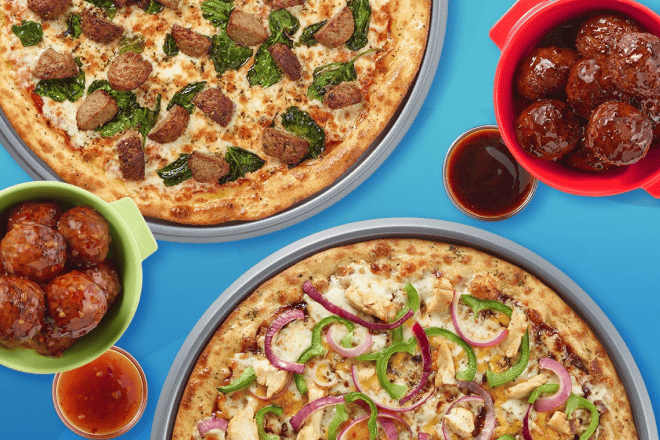
They also finally went back to the drawing board to fix the actual food. Remember how terrible the pizza was viewed during the pandemic? Management realized that if they wanted parents to actually enjoy the experience and spend money, they needed to serve a genuinely decent, high quality pizza.
Today, a modern Chuck E. Cheese features indoor trampolines, interactive digital dance floors, and massive arcade installations. As we move deeper into a post pandemic world, the brand is still working hard to figure out exactly what it wants to be when it fully grows up. But they finally learned a highly valuable lesson. The specific, robotic entertainment model that worked perfectly in 1980 is absolutely not what works for modern families today.
Frequently Asked Questions
Why did Chuck E. Cheese go bankrupt?
Did the guy who founded Atari create Chuck E. Cheese?
Why did Chuck E. Cheese get rid of the animatronics?
What is Pasqually's Pizza Company?
How does the Chuck E. Cheese token system make money?
Conclusion
The wild history of Chuck E. Cheese is a masterclass in understanding the psychology of the consumer. Nolan Bushnell built a massive empire by brilliantly recognizing that a "kid casino" model paired with high margin pizza was a license to print money. However, corporate owners repeatedly failed the brand by losing touch with the daily reality of their customers.
From private equity firms slashing budgets in New York boardrooms to executives ignoring the terrifying reality of aging animatronics, the company nearly died because leaders stopped listening to the people actually visiting the stores. Ultimately, whether you are running a software startup or a massive pizza arcade, a business will only survive if its leaders make a systematic, daily effort to truly understand exactly what their customers want.