Table of Contents
Aldi went from a single grocery store opened in America in 1976 to becoming the third largest grocery chain in the country by 2024. Along the way, they absolutely terrified massive retailers and executives at companies like Amazon and Walmart.
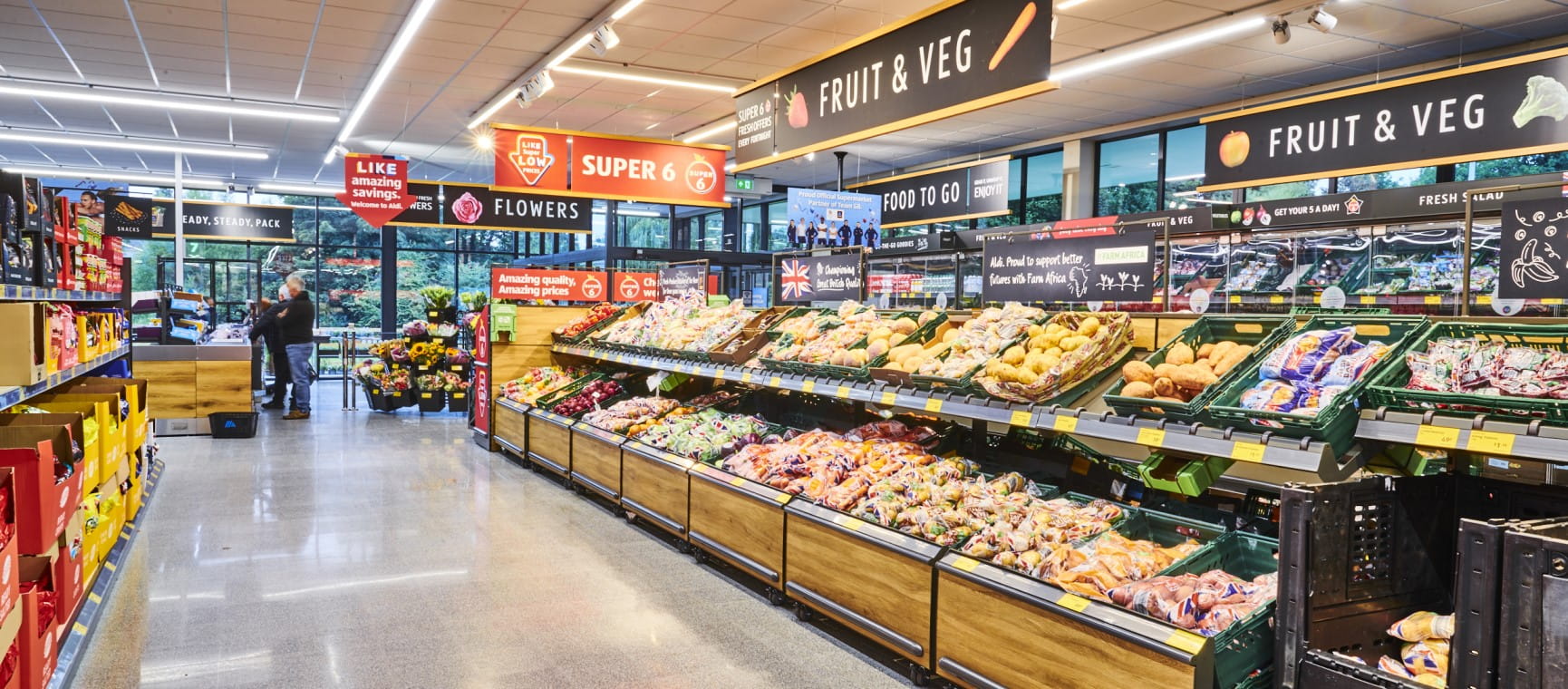
They did it all by running a playbook that seemingly broke every single rule of how to do business in America. They didn't offer bags, they made you rent your shopping cart, and they offered virtually zero name brand products. Yet, Americans fell in love with them.
This is the fascinating story of the rise of Aldi. We will look at how two highly frugal German brothers built an empire, the psychological tricks they use in their stores, and the brilliant business strategy that makes them impossible to beat on price.
The Frugal Brothers and the Cigarette Split
The story of how this massive grocery empire started actually begins back in 1946 in bombed out, post-World War II Germany. Two brothers, Karl and Theo Albrecht, took over their mother's small corner store.
The brothers were notoriously frugal, even for a culture already known for its great savers. They were entirely obsessed with cost. They did everything they could to strip expenses out of their stores so they could keep prices as low as humanly possible for their customers.
They kept costs down by having no fancy displays, absolutely zero frills, no expensive signage, and they didn't even play music in the stores. It turns out, the German public absolutely loved it. By the 1950s, they had successfully expanded to over 300 stores across the country.
Then, in 1960, the two brothers had a massive argument that would change the trajectory of their business forever. The cause of this massive rift was simple: cigarettes.
Brother Karl wanted to sell them because cigarettes are a super high-margin product. Most of the cost of a pack of cigarettes goes to taxes, while the rest is almost pure profit. Theo disagreed. Most brothers in this situation would have destroyed the company, hired expensive lawyers, and ruined their relationship. But Karl and Theo were incredibly clear-headed about the whole thing.
To solve the dispute, they simply decided to split the entire country of Germany in two. Above a certain geographic line, one brother would operate Aldi Nord (North), and the other would operate Aldi Sud (South).
This split explains so much about their business philosophy. It was all about ruthless efficiency. The brothers simply did not have the time to argue, and they certainly did not have the time or money to waste on lawyers.
Entering the American Market
Eventually, Aldi got so incredibly big and dominant in Germany that they needed to find a new massive market to grow into. That place was the United States.

Today, the United States represents nearly 25 percent of the entire world's economy by GDP. If a company wants to do truly big business, they eventually have to figure out how to sell to the American consumer.
The brothers took a two-pronged approach to entering the US market. In 1979, brother Theo came into the United States by purchasing a quirky little California grocery chain that you might know today as Trader Joe's. Meanwhile, Karl, who owned Aldi Sud, came in and began building out traditional Aldi stores across the country. Ironically, both of these massive brands would use variations of the exact same hyper-efficient playbook to eventually dominate the American market.
To truly understand how these brothers operated, you have to hear a famous story from 1971. That year, Theo was actually kidnapped. The kidnappers demanded a massive ransom, and he reportedly paid 7 million Deutsch marks to be released from the closet where they were holding him.
Remember, these are two brothers for whom every single penny was valuable. They had spent decades obsessing over how to wring pennies out of their business. Yet, here they were, handing over millions. But Theo and his family had a brilliant financial angle.
The next year, after his release, he went to the German government and claimed the entire 7 million ransom as a valid business tax write-off. He argued it was a necessary business expense in order to get him back to work running the company. The family argued with the government for decades over this. Every penny mattered. This was not just casual frugality. This was an entire way of living that influenced every single business decision they ever made.
Breaking the Rules of American Grocery
In 1976, the very first store branded as Aldi in the United States officially opened in Iowa. There was no massive press release and no grand fanfare.
Right out of the gate, there was a major problem. Americans simply did not know what to make of the store. Being familiar with classical, full-service grocery stores, American shoppers expected someone to give them free plastic bags, bag their groceries for them, and let them use a shopping cart for free. Aldi did none of those things.
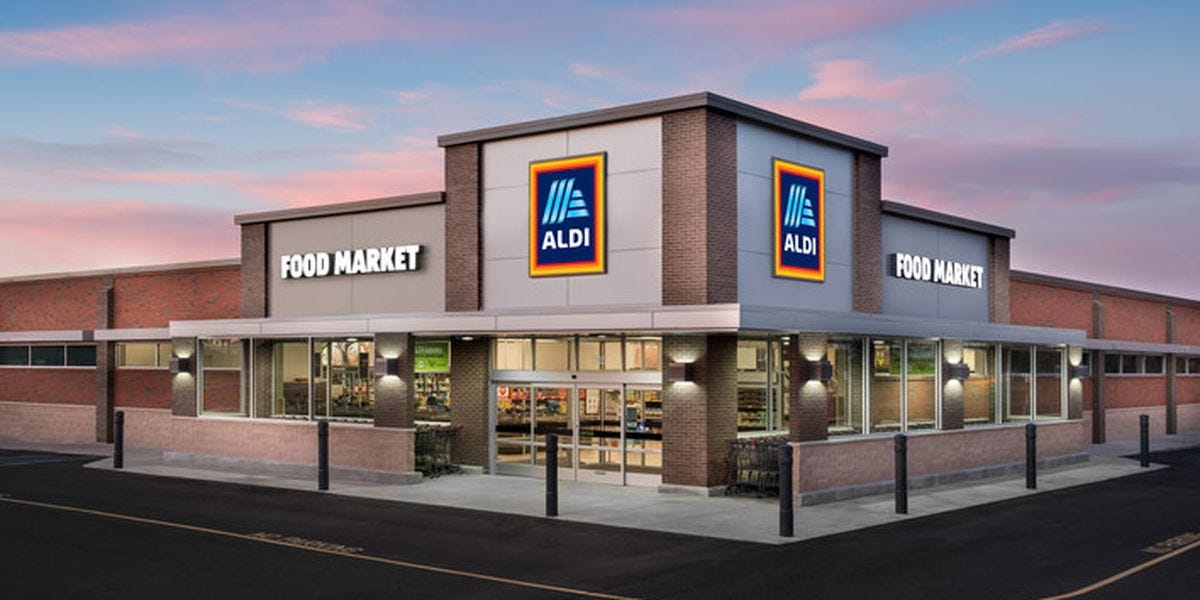
To make it even worse for the American consumer, the store didn't carry any of the classic brands people expected to see. You weren't going to find Kraft Macaroni and Cheese or recognizable cereal boxes. People would walk in, get completely confused by the bare-bones setup, and immediately walk out. Aldi was asking Americans to change their entire worldview of what grocery shopping was supposed to be.
When a business wants to change how people think, there are generally two ways to do it. You can pay massive amounts of money for marketing and advertising, or you can just be incredibly patient. Aldi chose patience.
For the next 30 years, Aldi grew very slowly, essentially opening one store at a time. Their incredibly low prices were doing all the talking. It would take time for a new market to understand how the store worked, but once customers realized how much money they could save, they kept coming back. By 2008, Aldi had quietly grown to a thousand stores.
While Walmart had 4,000 massive supercenters at the time, Aldi seemed like a small rounding error. But Aldi was playing a brilliant, long-term game.
The Power of Counterpositioning
Your typical American grocery store runs at razor-thin profit margins of just two, three, or maybe four percent. Because the margins are already so tight, there is very little room for traditional grocers to compete on price.
Aldi doesn't compete by taking smaller margins. They compete by being drastically more efficient than everyone else.

A typical Kroger, Safeway, or Walmart might stock anywhere from 40,000 to 120,000 different individual items. Aldi turns this entire concept on its head. In a standard Aldi store, you will typically only find 1,200 to 1,400 items.
While this might sound like a massive weakness to an American consumer used to endless choice, it is actually a brilliant competitive advantage. Take ketchup, for example. If you walk into a typical grocery store, there might be 40 different versions of ketchup. You have low salt, organic, different brands, and different sizes. Aldi takes a different approach. They simply offer one version of ketchup.
This strategy gives Aldi enormous buying power. They can go to a single supplier and demand massive quantities of just one specific item. This extreme buying power allows their overall costs to be 15 to 20 percent lower than typical grocers.
Furthermore, 90 percent of the products inside an Aldi are made specifically for them under their own private label brands, much like Trader Joe's. This means Aldi completely controls their supply chain. Massive corporate brands like Procter and Gamble don't get to dictate packaging or pricing. The secret is that many of these Aldi private label products are made in the exact same factories as the expensive name brand items. Aldi just strips away the marketing costs.
In the business world, this brilliant strategy is called counterpositioning. Traditional grocers built their entire identity around offering tens of thousands of items. If Kroger or Walmart tried to copy Aldi's ultra-limited inventory model, they would completely alienate their own customer base. Aldi positioned themselves perfectly where the big giants simply could not attack them.
This efficiency theme runs through the entire store. They have very few employees working the floor. You have to bag your own groceries, and you have to bring your own bags.
Even the famous quarter system for the shopping carts is brilliant. By requiring a 25-cent deposit to unlock a cart, customers naturally return the carts to get their money back. This saves Aldi from having to pay an employee to round up carts in the parking lot. Psychologically, it also gives the shopper a tiny dopamine hit on the way out, making them feel like they won a little game.
Because of all these extreme efficiencies, Aldi can offer prices 15 to 20 percent cheaper than a massive Walmart, without having to sacrifice their own profit margins.
The 2017 Explosion and the Pandemic Boom
For decades leading up to 2017, Aldi expanded very slowly. But then, something radical changed. The company announced they were investing $3.4 billion to aggressively expand from 1,000 stores to 2,500 stores by 2022. Seeing early success, they eventually upped that massive investment to $5 billion.
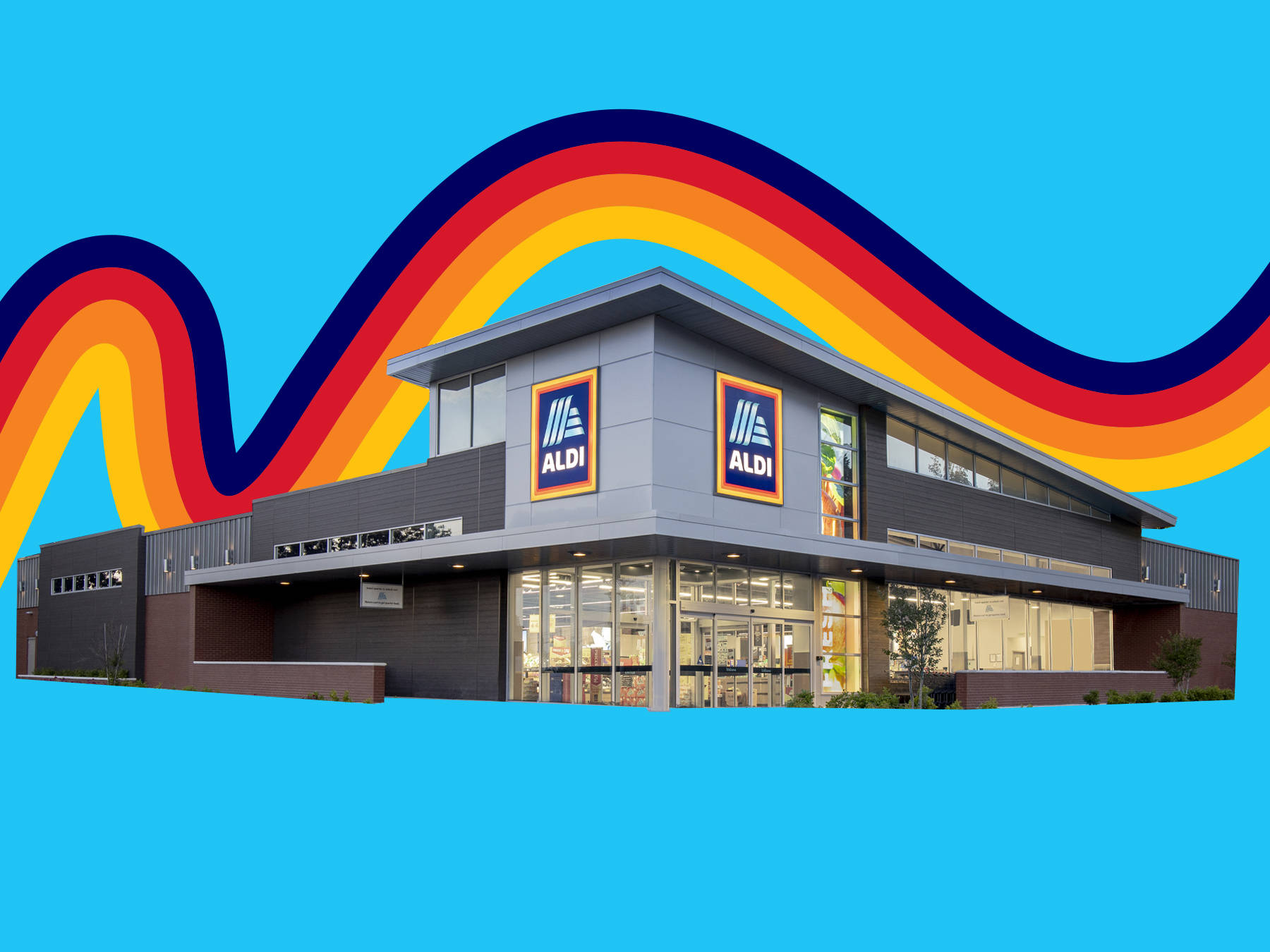
They started adding more refrigerated sections and organic options to meet modern consumer demands, but they kept the core, highly efficient model exactly the same. This aggressive move sent absolute shockwaves through the traditional grocery industry. Giants like Kroger and Safeway began to panic.
For years, traditional grocers tried to compete by offering more elaborate experiences, adding sushi bars, coffee shops, and massive deli counters. But that extra overhead meant they bled money when they tried to lower prices to match Aldi. Between 2018 and 2023, roughly 2,200 traditional grocery stores closed in the United States. During that exact same period, Aldi successfully opened 500 new locations.
But this massive growth was not just fueled by corporate investment. American culture was fundamentally shifting.
For decades, shopping at Aldi was almost seen as a negative social signal, suggesting you shopped there out of sheer financial desperation rather than choice. However, as the 2010s rolled on, younger generations began feeling the intense pressure of rising housing and education costs. Being frugal and smart with money became socially acceptable. Then, the internet and social media accelerated this shift. People started proudly sharing their cheap Aldi hauls on Instagram and TikTok. Thrift officially became a flex.
When the 2020 pandemic hit, Aldi's limited inventory model became a superpower. While a massive Walmart struggled to keep its 150,000 items in stock due to broken global supply chains, Aldi only had to worry about securing its core 1,400 items. When desperate customers tried Aldi for the first time during the lockdowns, they realized the quality was great and the prices were unbeatable. When the pandemic ended, those new customers simply never left.
Frequently Asked Questions
Why is Aldi so cheap compared to other grocery stores?
Does the same company own Aldi and Trader Joe's?
Why do you need a quarter to use an Aldi shopping cart?
What does counterpositioning mean in business?
Are Aldi brands the same as name brands?
Conclusion
The massive rise of Aldi proves that you do not have to follow the standard rules of an industry to dominate it. By leaning heavily into extreme efficiency and ignoring the American demand for endless choices and fancy store displays, Aldi built an unstoppable business model.
They successfully counterpositioned themselves against massive giants like Walmart and Kroger, offering high quality groceries at a price that traditional stores simply cannot match. Aldi is a perfect example that a business can achieve incredible success by picking a very specific target audience and delivering exactly what they want better than anyone else.