Running a moving business is tough, but the hassle of paying for expensive, low-quality leads is just annoying. It is fine if you are getting a few good jobs during the busy summer season, but during the slower months, empty trucks are an extra financial burden. Most movers rely entirely on word-of-mouth or dump all their budget into one search platform, only to watch their Cost-Per-Acquisition (CPA) skyrocket.
Luckily, there is a better way to advertise a moving company. A balanced omnichannel paid ads strategy acts as a savior for moving business owners. By linking Google Ads, Meta, LinkedIn, and TikTok, you can capture high-intent buyers while building awareness. If you plan to get more booked moves, you should take these advertising considerations seriously.

💡 The Marketing Trifecta
While Paid Ads generate instant high-intent leads, they should always be paired with strong organic foundations. Don't forget to implement our Complete Moving Company SEO Guide for long-term free traffic, and utilize our Moving Social Media Strategy to build undeniable local community trust!
📊 The Current Omnichannel Ads Landscape for Moving Companies
The days of relying on a single billboard or just one online platform are over. Today, the media buying environment requires a smart balance. You need Google Ads to capture people who are actively searching for immediate help, but you also need social platforms like Meta and TikTok to build brand awareness long before they decide to pack their boxes.
A modern moving company must build a complete digital ecosystem. This means combining Google Local Services Ads (LSAs) for local trust, exact match high-intent Search campaigns to capture commercial moves, and Meta Lead Gen ads featuring striking before and after transformations. This balance keeps your pipeline full.
However, attribution is also shifting. Because moving requires planning, there is often a lag of two to eight weeks between a user clicking your ad and finally paying their deposit. You need a setup that tracks this entire journey securely and accurately.
Is there a way to prevent "spam" quote requests?
If you are paying for ads, getting fake or spam form submissions is highly frustrating. Yes, there are proven ways to stop this. You can add invisible reCAPTCHA to your forms and set required fields, like a valid US phone number or an exact move date, to filter out bots.
Furthermore, by adjusting your paid ads targeting to exclude people outside your specific service radius, you ensure your budget is only spent on real, local customers who actually need a truck.
The 10-Step Paid Ads Marketing Blueprint for Moving Companies
Step 1: Omnichannel Synergy
Balancing Google Intent + Social Awareness
Spending money on just one platform is a massive risk. If you only use Google Search, your ad costs keep rising every time competitors bid against you. This leaves your moving company paying top dollar for leads while completely ignoring the cheaper traffic available on social media.
The fix is to use a balanced omnichannel approach. Combine Google Ads to capture high-intent searches with Meta and TikTok ads to build local brand awareness. You can show engaging videos of your crew wrapping furniture on social media, so when users finally search for movers on Google, they recognize your name and click your link instead of the competition.
Using multiple channels lowers your overall customer acquisition cost. It helps you capture affordable traffic on social networks while using search campaigns to close the deal. This keeps your lead generation stable and easy to manage throughout the entire year.
Step 2: Search Campaign Architecture
Google/Bing Targeting
Wasting money on broad search terms like "cheap movers" is a common trap. These keywords trigger your ads for people who just want the lowest price possible, leaving you with low-quality leads and wasted ad spend.
To fix this, structure your Search campaigns using exact match and phrase match keywords with high commercial intent, such as "commercial office movers near me" or "long-distance moving company." Along with this, you must build a strict negative keyword list to block terms like "jobs," "truck rental," or "free boxes."
This simple structural change drastically increases your lead quality. By only showing up for people ready to hire a full-service moving crew, you scale your Return on Ad Spend (ROAS) and stop paying for useless clicks.
Step 3: Paid Social Audience Targeting
Meta/LinkedIn Strategies
Targeting everyone within a 50-mile radius on Facebook wastes your ad spend on people who have no plans to move. Broad targeting drains your daily budget fast and delivers poor results.
Instead, use Meta Lead Generation ads tailored to specific life events. Target users categorized under "newlyweds," "new job," or "recently sold house." If you offer commercial services, use LinkedIn Ads to target Office Managers and Facility Directors. Make sure your creatives highlight clear before and after transformations of a stress-free move.
Better targeting stops wasted impressions and gets your brand in front of actual buyers. When you show the right message to a highly targeted audience, your ad relevance scores go up, and your cost per lead goes down.
Step 4: Automated Bidding Strategies
PMax/Advantage+
Manual bidding is too slow to react to how users behave across different platforms. If you try to guess the perfect Cost-Per-Click (CPC) every hour, you will lose out to competitors who use faster technology.
You need to implement Google Performance Max (PMax) and Meta Advantage+ campaigns. These systems use machine learning to bid automatically. Set a Target CPA (Cost-Per-Acquisition) based on what you can afford to pay for a booked move, and let the platforms adjust bids in real-time.
Algorithms find the cheapest conversions faster than any human can. This maximizes your budget, ensures you win auctions for the most qualified users, and saves you hours of manual account management.
Step 5: Ad Copy & Creative Testing
Search vs. Video
Boring text ads and generic stock photos do not build trust. Moving is highly personal, and a family will not hand over their life possessions to a company that looks fake or unprofessional online.
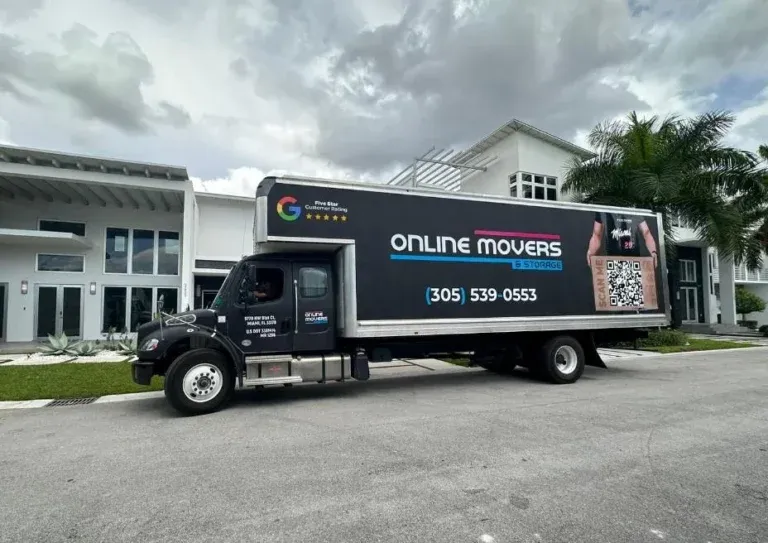
For Search ads, write clear copy that highlights your specific benefits, such as "Fully Licensed & Insured" or "No Hidden Fees." On social platforms like TikTok and Meta, use User Generated Content (UGC). Show short, authentic videos of your team carefully packing delicate items or a customer giving a thumbs-up.
Authentic ad creatives lower your cost-per-click and drastically improve your click-through rates. When people see real humans doing great work, they feel safe booking your services.
Step 6: Landing Page CRO
People often click a moving ad but leave the landing page because it is confusing or asks for too much information right away. If your form requires 15 different fields, the user will abandon the page.
Should I include a "Moving Checklist" on my homepage?
Yes, you should include a free "Moving Checklist" on your page. Offer it as a free download in exchange for their email address to capture early-stage buyers. For immediate leads, keep your main quote form short—just name, phone, email, and zip codes.
These small landing page tweaks can double your conversion rate without spending a single extra dollar on ads. Making the process simple guarantees more inquiries.
Step 7: Cross-Platform Retargeting Sequencing
Most people do not book a move the very first day they search. They shop around, compare prices, and often forget your company's name by the next morning, meaning your initial ad spend is lost.
Set up a structured 30-day cross-platform retargeting sequence. If a user visits your website via a Google Ad but does not fill out the form, retarget them on Meta with an ad highlighting your safety guarantees. A week later, show them a YouTube video ad featuring a happy customer review.
Retargeting brings back warm leads at a fraction of the initial search cost. It keeps your moving company top-of-mind so that when they are finally ready to book, you are the only company they call.
Step 8: Server-Side Tracking/Attribution
Recent privacy updates and ad blockers stop standard website pixels from tracking user actions properly. This makes it look like your Meta and Google ads are failing, even when they are actually driving phone calls.
You must install Server-Side Tracking and tools like the Facebook Conversions API (CAPI). Instead of relying on the user's browser, server-side tracking sends conversion data directly from your website's server to the advertising platform securely.
Accurate data feeds the bidding algorithms perfectly. When Google and Meta know exactly which ads lead to booked moves, they can optimize your campaigns properly, ensuring you scale your ad budget safely.
Step 9: Google Local Services Ads (LSAs) for Trust
Standard text ads force you to compete directly with cheap, spammy moving brokers. This makes customers hesitant to call, as they worry about hidden fees or unreliable crews showing up late.
You need to apply for and run Google Local Services Ads (LSAs). This program requires background checks and insurance verification. Once approved, you get a green "Google Guaranteed" badge, and your business appears at the very top of the search results page.
High trust means higher conversion rates. Best of all, with LSAs, you pay per lead, not per click. This means zero money is wasted on accidental clicks or competitors clicking your ads.
Step 10: CRM Lead Routing
Where do the inquiries go once a customer submits a form?
Leads often get lost in messy email inboxes. If you do not call a new lead within five minutes, they will simply call the next moving company on their list, and your ad spend is entirely wasted.
All form submissions must be sent directly into a moving-specific Customer Relationship Management (CRM) system. From there, set up an automated text message that replies to the customer instantly, letting them know a dispatcher will call them shortly.
Faster follow-ups increase your lead-to-booking ratio dramatically. Organizing your leads secures your revenue and ensures your sales team never misses an opportunity to quote a job.
The Essential 5-Tool Paid Media Stack 🛠️
If you want to execute this strategy perfectly, you need the right tools. Here are the 5 essential software platforms for a moving business:
I. CallRail
Type: Call Tracking
If you frequently get phone calls from your ads, you need to know exactly which campaign made the phone ring. CallRail assigns unique phone numbers to your different ads.
- • Provides exact proof of which ads work.
- • Features keyword-level tracking and seamless CRM integration.
- • Extra monthly subscription cost. Setup requires a bit of technical knowledge.
II. Triple Whale
Type: Advanced Tracking Dashboard
If you are running ads across Google, Meta, and TikTok, figuring out true ROI is difficult. Triple Whale centralizes your data for easy reporting.
- • Gives you a clear, single dashboard to view all your ad performance.
- • Primarily built for e-commerce, so moving companies need to customize the lead tracking features.
III. Instapage
Type: Landing Page Builder
Sending paid traffic to a slow, confusing website is a bad idea. Instapage is designed specifically to maximize conversion rates with fast mobile loading speeds.
- • Makes creating high-converting pages incredibly easy without writing code.
- • It is an expensive tool compared to basic WordPress plugins.
IV. ClickCease
Type: Click Fraud Protection
Competitors clicking your Google Ads will drain your daily budget fast. ClickCease is a software that monitors your traffic in real time and blocks fake clicks.
- • Saves you money by instantly blocking fake clicks and bot traffic.
- • Can occasionally block a legitimate user if they are using a shared IP network.
V. SmartMoving
Type: Moving CRM
If you want to keep your moving leads, scheduling, and dispatching organized, you need a proper CRM built exclusively for the moving industry.
- • Streamlines your entire sales process and links directly to your ad lead forms.
- • There is a learning curve for your sales staff to use it efficiently.

Case Study 1: How Veterans Movers Scaled ROAS on Google Ads
Veterans Movers in NYC was struggling to generate consistent leads at a profitable return. They were bidding on very broad, generic terms, which caused their ads to show for irrelevant searches. Because of this poor targeting, their CPC was high, their conversion rate was low, and their CPA was completely unprofitable. They needed a rapid turnaround.
Action The Execution:
The execution focused entirely on Search campaign architecture. The ad accounts were fully rebuilt. Broad match terms were tightened, and a massive negative keyword list was added to block bad traffic. They also repositioned their ad messaging to focus heavily on their veteran-owned differentiation, building instant trust.
📈 The Results:
The results were incredible. By cleaning up the traffic and focusing on high-intent exact match keywords, they secured 90 high-quality leads at just $27 per lead. Their landing page conversion rate jumped to an impressive 44%. This strict Google Ads execution slashed their acquisition costs and allowed them to scale their budget confidently.
Case Study 2: How H2H Movers Slashed Acquisition Costs with Paid Social
H2H Movers, a Chicago-based moving company, realized that relying on word-of-mouth and standard search ads was not enough to scale their business. They were facing steep competition on Google and needed to find a way to reach local audiences before those users even started actively searching for a mover. The challenge was building a predictable flow of leads outside of the traditional search engine.
Action The Execution:
They pivoted by executing a multichannel social strategy. They launched Meta Advantage+ campaigns to reach local audiences with absolute precision. By using engaging imagery and placing their brand in active community feeds, they generated massive local awareness. They also set up strict retargeting sequences to capture people who had shown interest but had not yet booked.
📈 The Results:
The campaign was a massive success. H2H Movers saw a 135% rise in paid conversions and a 136% boost in site visits directly from Instagram and Facebook. By branching out into Paid Social, they dropped their average CPA and built a steady, scalable engine that kept their trucks booked.
Future-Proofing Your Ad Campaigns
The advertising industry is changing rapidly, and moving companies must adapt to survive. With strict privacy laws and the phase-out of third-party cookies, tracking users is becoming much harder.
Implement Clean First-Party Data:
To future-proof your business, you must focus on collecting First-Party Data. This means prioritizing your own CRM lists and email databases. Building an audience you own ensures you won't rely entirely on renting access from big tech platforms.
Embrace AI Automation:
Furthermore, you must embrace AI automation. By feeding clean data into platforms like Google Performance Max, you allow the algorithm to do the heavy lifting, ensuring your moving business stays profitable no matter what technical changes happen next.