
Are You Wasting Your Ad Budget?
Marketing your bathroom remodeling business is fun, but the hassle of watching your ad budget disappear without getting a single lead is just annoying. It's fine if you have a massive referral network to lean on, but for a growing company, stagnant lead flow is just an extra burden.
Luckily, there is a balanced omnichannel strategy, a saviour for contractors who need consistent high-ticket projects. Much like a well-organized backpack, a modern advertising campaign must be lightweight, secure, and capable of carrying your entire business toward its growth goals.
💡 The Marketing Trifecta
While PPC delivers high-intent leads instantly, it should always be supported by strong organic search and community presence. Ensure you read our Complete Bathroom Remodeling SEO Guide to capture free local traffic, and implement our Remodeling Social Media Strategy to foster trust and showcase your portfolio!
📊 The Current Omnichannel Ads Landscape for Bathroom Remodelers
The modern media buying environment is no longer a single-platform game. Today, homeowners don't just search on Google and click the first link; they research on Instagram, watch "day in the life" clips on TikTok, and check professional credentials on LinkedIn.
To win, you must balance capturing "bottom-of-funnel" intent on Google Search with building "top-of-funnel" awareness on Social. Attribution is evolving too. With the shift toward privacy-first browsing, relying on a simple browser cookie is a risk.
You need a setup that tracks every touchpoint, from the first time they see your "Master Bath" transformation video to the moment they book a consultation on your site.
How much does it cost to advertise for bathroom remodeling?
If you plan to start a campaign, you should take the cost considerations into account. In major markets like the US, UK, and AU, advertising costs vary based on the "volume" or capacity of the leads you want to generate.
On Google Search, a high-intent keyword like "luxury bathroom renovation London" might cost you £30 per click. However, on Meta (Facebook/Instagram), you can often find leads for $40 to $60 total if your creative is strong.
A healthy monthly budget for a local remodeler usually starts around $3,000 to $5,000 to ensure the algorithms have enough data to learn. If your budget is less wide, it can cause your campaigns to starve for data and even "cut" your ROI.
The 10-Step Omnichannel Ads Blueprint for Bathroom Remodeling
1. Omnichannel Synergy: Balancing Search and Social
The Problem: Many remodelers put all their "belongings" into one compartment, like Google Search, only to find the cost-per-click has become too expensive to sustain. When you only target people already searching for a contractor, you are fighting in a high-stakes war where the highest bidder wins, but the profit margins are thin.
The Solution: You must treat your advertising like a travel backpack with different compartments. Use Google Ads to capture the "urgent" needs and Meta Ads to inspire those who are just thinking about a renovation. By running both, your social ads make your search ads work better because people already recognize your brand name when they see you at the top of Google.
The Value: This synergy lowers your overall Cost-Per-Acquisition (CPA). When a homeowner sees your brand on multiple platforms, the "trust" factor increases. It spreads the weight of your marketing around, so no single platform's algorithm change can ruin your business overnight.
2. Search Campaign Architecture: The High-Intent Foundation
The Problem: Standard "Smart" campaigns often bid on broad terms like "bathroom ideas," which attracts "window shoppers" rather than people ready to sign a contract. This results in a messy account with a lot of dust and debris, clicks that cost money but never convert.
The Solution: Build your Google Ads using an exact-match structure for high-intent keywords like "bathroom remodeling contractors near me." Create separate "cabinets" for different services, such as "Walk-in Tubs" or "Full Master Suite Remodels," so your ad copy matches the searcher's exact need.
The Value: Precise architecture ensures your quality score stays high. This lowers your Cost Per Click (CPC) and makes sure you aren't waiting at the "baggage counter" for leads that will never arrive.
3. Paid Social Audience Targeting: Finding Homeowners
The Problem: Targeting everyone in a 50-mile radius is a mistake that leads to wasted spend on renters or people who can't afford a $30,000 renovation. It's like carrying a 100-litre backpack for a day trip; it's just extra weight you don't need.
The Solution: Use Meta’s "Advantage+" targeting but "lock" it down with localized parameters. Focus on "Homeowners," "Recent Home Buyers," and high-income zip codes. Use LinkedIn to target professionals like Architects or Real Estate Agents who can refer high-end clients to you.
The Value: Tight targeting ensures your "belongs" are safe. You are only showing your work to people with the "extra capacity" in their budget to hire a professional remodeler.
4. Automated Bidding Strategies: Using PMax and tCPA
The Problem: Manual bidding is often too slow for the modern market. If you try to manually adjust bids for every keyword, you will get caught in the "hassle" and miss out on the best opportunities.
The Solution: Use Google’s Performance Max (PMax) for your "Shopping" or "Local Services" needs, but set a Target CPA (tCPA) or a Target ROAS (tROAS). This tells the AI exactly what a lead is worth to you so it doesn't overspend on low-quality traffic.
The Value: Automated bidding acts like a "smart" system that tracks the location of the best leads and wins them for you. It gives you a "sound sleep" knowing the algorithm is working to keep your costs within budget.
5. Ad Copy & Creative Testing: Search vs. Video
The Problem: Using the same "boring" text ads for every platform is like using a trekking backpack for a formal work trip; it just doesn't fit. Homeowners need to see the "before and after" transformations to believe in your quality.

The Solution: For Search, use "Benefit-Driven" copy like "Licensed, Insured, and Done in 5 Days." For Social, use high-quality Video/UGC (User Generated Content) of a project walkthrough. Show the "durable material" and "quality construction" of your tile work and fixtures.
The Value: Testing different creatives helps you find the "perfect suit" for your audience. High-quality visuals increase your click-through rate, which signals to the platforms that your ads are valuable, lowering your costs.
6. Are Google Local Services Ads worth it for contractors?
The Problem: Many contractors worry about the cost of LSAs because you pay per lead rather than per click. If your intake process is slow, you might feel like you are throwing money away on "leaks".
The Solution: Local Services Ads (LSAs) are the "anti-theft" solution for your marketing budget. You only pay when a customer actually calls or messages you. Plus, the "Google Guaranteed" badge acts as a "lockable zipper" for your reputation, giving homeowners the confidence to book you immediately.
The Value: LSAs offer the highest "payout" for your time. They put you at the very top of the page, even above the traditional ads, ensuring you get the first chance to "try your luck" with a new customer.
7. Landing Page CRO: The "Home Away From Home"
The Problem: Sending traffic to a cluttered homepage is a "major pain point." It restricts the airflow of your conversion funnel and results in a "sweaty" user experience where people leave because they can't find the "contact" button.
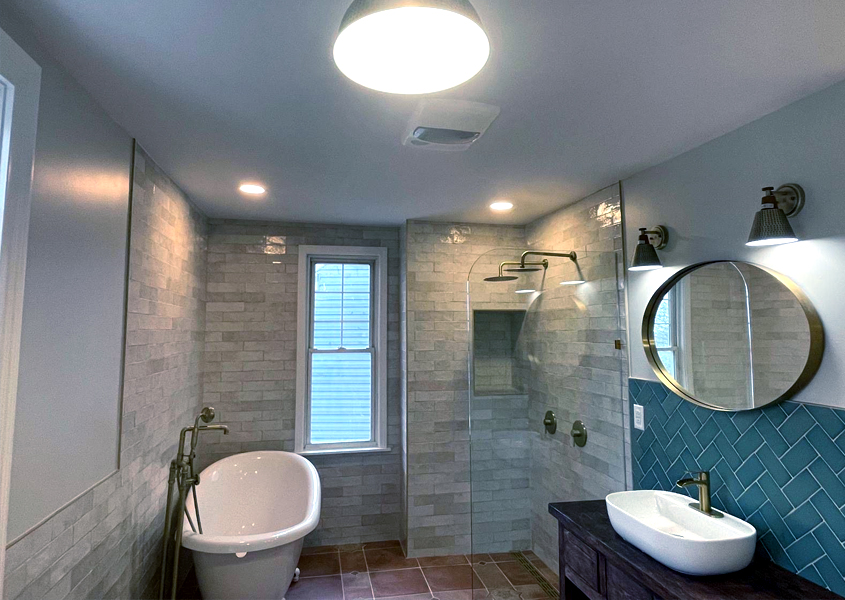
The Solution: Create dedicated landing pages for each ad group. If the ad is about "Small Bathrooms," the page should only show small bathroom projects. Ensure the page has "easy accessibility" with a clear form and a "click-to-call" button to maximize Conversion Rate Optimization (CRO).
The Value: A clean landing page provides a "safe, sound, and comfortable stay" for your leads. It preserves your ad spend by making sure more visitors turn into actual inquiries.
8. Cross-Platform Retargeting Sequencing
The Problem: Most homeowners don't "buy" a $20,000 remodel on the first click. If you don't retarget them, you are losing the chance to "multiply your money".
The Solution: Create a "sequence." If they visited your site from a Google Search, show them a "Testimonial Video" on Facebook the next day. A few days later, show them a "Limited Time Offer" or a "Free Design Consultation" on Instagram.
The Value: Retargeting acts as a "hooks and clips" feature that keeps you attached to the customer as they move through their journey. It ensures your brand stays "top of mind" until they are ready to book.
9. Server-Side Tracking & Attribution: The "Embedded GPS"
The Problem: Browser-based tracking is failing. With ad blockers and privacy updates, you are "flying blind" and don't know which ads are actually making you money.
The Solution: Implement Server-Side Tracking (GTM) or Meta’s Conversions API (CAPI). This is like having an "embedded GPS system" inside your ads. It sends data directly from your server to the ad platform, bypassing the browser's "hazards".
The Value: Better data means better optimization. When the algorithm knows exactly who converted, it can find more people like them, effectively "tracking the location" of your next big project.
10. Budget Management: The "Pocket-Friendly" Scale
The Problem: Scaling too fast can ruin your ROI. If you dump $10,000 into a new campaign without testing, you may end up "ruining your lovely" profit margins.
The Solution: Start with a "Day Trip" budget to test the waters. Once you see a positive ROAS, increase the budget by 10% to 20% every week. This ensures the "manufacturing quality" of your leads remains high as you grow.
The Value: Controlled scaling is "pocket-friendly" and helps you spend better on your journey. It provides a "guarantee" that your growth is sustainable.
The Essential 5-Tool Paid Media Stack 🛠️
To run an elite bathroom remodeling marketing operation, you need the right gear. Here are the five tools every contractor needs right now:
1. CallRail
The "Saviour" for phone lead tracking. It bridges the gap between digital clicks and actual phone calls.
- •Dynamic Number Insertion (DNI).
- •Call Recording.
- •Keyword Attribution.
- ✓Accurate data tracking for true ROI.
- ✗Monthly cost.
2. Instapage
A landing page builder for "Easy Accessibility" and high-speed conversion optimization.
- •Drag-and-drop builder.
- •A/B testing tools.
- •Built-in Heatmaps.
- ✓High conversion rates out of the box.
- ✗Pricey for beginners.
3. ClickCease
The "Anti-Theft" protection for Google Ads. Stop wasting money on bot clicks and competitor sabotage.
- •Block bot traffic automatically.
- •Competitor click protection.
- ✓Saves up to 20% of your daily budget.
- ✗Requires an extra setup process.
4. Canva
For creating "Durable" and "Reflective" ad visuals quickly without needing a dedicated graphic design team.
- •Thousands of templates.
- •AI image editing.
- •Brand kits.
- ✓Fast and cheap to use.
- ✗Limited features for professional videographers.
5. Triple Whale
The "Embedded GPS" for omnichannel reporting. It pulls data from all your ad accounts to give you the ultimate source of truth.
- •Centralized dashboard.
- •Profit tracking.
- •LTV (Lifetime Value) data.
- ✓All-in-one view of your business health.
- ✗Best for high-spend businesses.
Case Study 1: How "Luxury Bath AU" Scaled ROAS on Google Ads
A premium remodeler in Sydney was struggling with a low volume of leads. They were using a "Day Trip" budget but getting "Week-long" expectations.
Action The Execution:
Their initial CPA was a staggering $250 AUD. They moved away from a fragmented setup and committed to an exact-match bidding strategy, simultaneously adding "Google Guaranteed" badges through LSAs.
📈 The Results:
Within 90 days, their CPA dropped to $110 AUD. More impressively, they scaled their monthly revenue from $50,000 to an incredible $180,000 AUD.
Case Study 2: How "Modern Remodel US" Slashed Acquisition Costs with Paid Social
A contractor in Texas was "annoyed" with the high cost of Google clicks. They decided to "try their luck" with a Meta Advantage+ lead generation campaign because Google leads were costing $150 each.
Action The Execution:
They ran a video-first retargeting sequence showing a 360-degree tour of a recently finished master bath. They also used a "Kid Space" logic—providing a safe area for leads to browse content before booking.
📈 The Results:
They achieved a phenomenal lead cost of $42 USD. Additionally, by giving leads the space to consume content before deciding, they increased their close rate by 15%.
Future-Proofing Your Ad Campaigns
The "nature" of digital advertising is always changing, and we have no control over it. To survive, you must move away from "single-source" organic traffic and embrace a data-driven "multi-deck" approach.
Focus on "quality construction" of your brand and first-party data collection. As AI takes over more bidding tasks, your "saviour" will be your creative, the videos and stories that connect with a homeowner’s emotions.