
Building Your Funnel Like You Build Your Homes
Building a custom home is one of the biggest financial choices a person will ever make. For a builder, this means the "sale" doesn't happen with a single click. Most custom home builders struggle with rising costs on Google Ads, where a single click can cost $20 or more.
If you are spending thousands on ads but only getting "tire-kickers" or people looking for small kitchen remodels, your strategy is broken. You are likely facing a high Cost-Per-Acquisition (CPA) because your ads are not showing up at the right time or on the right platform to build the trust needed for a million-dollar contract.
💡 The Marketing Trifecta
While PPC delivers high-intent leads instantly, it should always be supported by strong organic search and community presence. Ensure you read our Complete Custom Home Builder SEO Guide to capture free local traffic, and implement our Builder Social Media Strategy to foster trust and showcase your luxury portfolio!
📊 The Current Omnichannel Ads Landscape for Custom Home Builders
The modern media buying environment for builders is no longer about just "buying keywords." It is about a balance between intent and inspiration. Google Ads and Microsoft Ads are for intent - capturing people who are actively typing "luxury custom home builder near me." However, because these clicks are expensive, you cannot rely on them alone.
Social platforms like Meta (Instagram/Facebook), TikTok, and Pinterest are for inspiration. This is where you build the "dream" before the search even happens. Attribution is evolving; we can no longer look at just the last click.
A lead might see a stunning home gallery on Instagram, watch a "behind the scenes" video on TikTok, and then finally search for your name on Google six months later. To win, you must have a presence across the entire journey while using Server-Side Tracking to ensure your data stays accurate in a privacy-first world.
How do you attract luxury home building clients?
Attracting luxury clients requires a shift from selling "construction" to selling an "experience." High-net-worth individuals are not just looking for a house; they are looking for a trusted partner who understands high-end finishes, architectural integrity, and project management. Your ads must reflect this through high-production visuals and authoritative copy.
On Google, this means bidding on "long-tail" keywords that imply a higher budget, such as "modern estate architects" or "custom luxury home builders." On social media, it involves using "lookalike audiences" based on your current high-value clients and layering in interests like luxury real estate, architecture, and high-end interior design. By matching the quality of your ads to the quality of your builds, you pre-qualify leads before they ever click.
The 10-Step Omnichannel Ads Blueprint for Custom Home Builders
1. Omnichannel Synergy: Balancing Search and Social
Many builders make the mistake of running search ads and social ads as two different worlds. When these platforms don't talk to each other, you end up paying to "re-introduce" yourself to the same person multiple times without moving them closer to a contract. This leads to a fragmented brand image and wasted budget on people who aren't ready to buy.
The fix is to use your Search ads to capture the high-intent demand and your Social ads to nurture that interest. For example, if someone clicks a Google Ad for "custom builders," they should immediately be entered into a Meta retargeting loop showing a video testimonial of a happy homeowner. This ensures you stay top-of-mind during their long research phase.
This synergy significantly lowers your overall CPA. By using Social to "warm up" your audience, your Google Search ads often see higher Click-Through Rates (CTR) because the user already recognizes your brand from their feed. It turns a cold search into a warm lead.
2. Search Campaign Architecture: Exact Match and Negatives
A common problem in home builder PPC is "keyword bleed." If you bid on broad terms like "home builder," Google will show your ad for "cheap mobile homes" or "modular home repairs." This can eat up your daily budget in minutes on low-quality traffic that will never result in a custom build.
The solution is to use a "hub-and-spoke" architecture focusing on Exact Match and Phrase Match keywords. You must also build a massive "Negative Keyword List" that excludes terms like "jobs," "remodeling," "rentals," and "apartments." This forces Google to only show your ads to people looking for new, custom construction.
This precise targeting increases your lead quality immediately. When every dollar spent is focused on high-intent luxury buyers, your conversion rate on the landing page improves. You stop paying for "trash" traffic and start paying for genuine opportunities.
3. Paid Social Audience Targeting: The Luxury Layer
If you target everyone in a 50-mile radius on Meta or TikTok, you will get a high volume of leads, but most will be unqualified. Builders often complain about "junk leads" from Facebook. This happens because the targeting is too wide and doesn't account for the financial capability of the user.

To fix this, you must layer your targeting. Start with a 1% Lookalike Audience of your past customers. Then, add "And" logic filters for high-income zip codes or "Top 5% Household Income" (available in the US). On LinkedIn, you can target specific job titles like "Managing Director" or "Partner" to reach those with the disposable income for a custom home.
The value here is in the efficiency of your spend. By narrowing your audience to those who can actually afford your services, you may see fewer total clicks, but your "Lead-to-Contract" ratio will soar. It is better to have 10 high-value conversations than 100 people asking for a $50k house.
4. Automated Bidding: Implementing tCPA and tROAS
Many business owners are afraid to let the "AI" take over their bidding, so they stay on Manual CPC. The problem is that humans cannot analyze thousands of signals - like time of day, device, and user behavior - in real-time. This leads to overpaying for clicks that don't convert and missing out on high-value users.
The solution is to move toward Smart Bidding, specifically Target CPA (tCPA). Once your account has at least 30 conversions in a month, you can tell Google, "I am willing to pay $200 per lead." Google’s algorithm will then find the users most likely to convert at that price point.
This shift allows you to scale your budget without a linear increase in work. As the algorithm learns which users are high-value, it optimizes your budget toward the best-performing times and audiences. This results in a much more stable and predictable lead flow.
5. Ad Creative: Search Copy vs. Video Inspiration
Using the same message on every platform is a recipe for failure. A text-heavy ad that works on Google Search will feel out of place and "salesy" on Instagram or TikTok. Conversely, a beautiful video with no clear call-to-action on Search won't capture someone looking for a builder "right now."
The solution is to match the creative to the platform's "vibe." For Search, focus on trust and speed: "Award-Winning Luxury Builder – Get a Free Site Evaluation." For Social, use high-quality video tours, drone shots of finished estates, and User-Generated Content (UGC) of you walking through a job site to show your expertise.
The value of tailored creative is a higher Engagement Rate. When your ad looks like native content on Social, people are more likely to watch and share it. Higher engagement leads to lower CPMs (Cost per 1,000 impressions), making your overall advertising cheaper.
6. Landing Page CRO: From Clicks to Consultations
A beautiful ad pointing to a generic "Home" page is a waste of money. Visitors often get lost on a website, clicking on "About Us" or "Blog" and forgetting to fill out the contact form. If your landing page has too many distractions, your conversion rate will suffer regardless of how good your ads are.
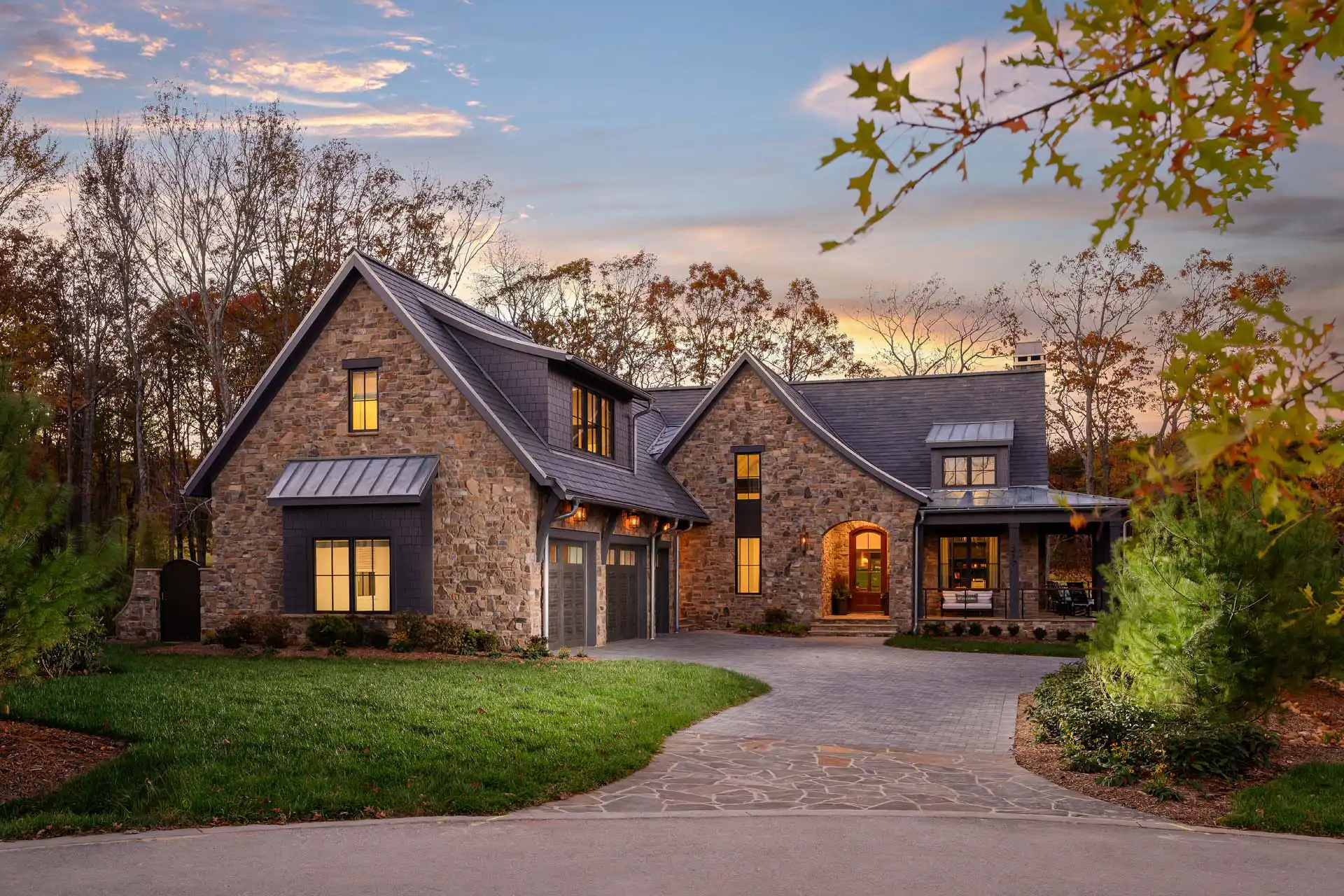
The fix is to create dedicated landing pages for each campaign. If the ad is about "Modern Farmhouses," the landing page should only show modern farmhouses and have one clear goal: "Schedule a Design Consultation." Use high-speed hosting and mobile-optimized layouts to ensure nobody leaves because of a slow load time.
Proper Conversion Rate Optimization (CRO) can double your lead volume without spending an extra cent on ads. If you improve your page's conversion rate from 2% to 4%, you have effectively cut your lead cost in half. It is the most powerful "lever" in PPC.
7. Retargeting Sequencing: The Long Play
Because custom homes have a long sales cycle, a "one-and-done" ad approach fails. Most people won't sign a contract the first day they see you. If you don't stay in front of them over the next 6 months, they will eventually find a competitor who does.
The solution is "Sequenced Retargeting." In week 1 after they visit your site, show them a gallery of your best work. In week 3, show them a testimonial. In month 2, show them a video about your "Transparent Pricing Process." This "drip feeds" trust over a long period.
This keeps your brand at the "Top of Mind." When the prospect is finally ready to meet with a builder, you are the only one they have been seeing consistently. This drastically increases your "win rate" when they finally reach out.
8. Server-Side Tracking and CAPI: Data Integrity
With the death of third-party cookies and the rise of ad-blockers, standard browser tracking is no longer accurate. Builders often see "missing" conversions in their reports. If your data is wrong, the automated bidding algorithms (like tCPA) will receive bad information and start making poor decisions.
The solution is to implement Server-Side Tracking and Meta's Conversions API (CAPI). This sends data directly from your server to the ad platform, bypassing the user's browser. It ensures that every lead is counted, even if the user has an ad-blocker or is using a private browser.
Reliable data is the fuel for AI bidding. When Google and Meta have 100% accurate data, they can find your "ideal" customer much more effectively. It "future-proofs" your account against further privacy changes and ensures your ROI reports are actually true.
9. Call Tracking and Offline Conversions: Closing the Loop
In high-ticket construction, most leads call the office rather than just filling out a form. If you aren't tracking these calls back to the specific ad and keyword, you don't know which ads are actually making you money. You might end up pausing an ad that looks "underperforming" but is actually driving all your phone calls.
The solution is to use a tool like CallRail to track every phone call back to its source. Furthermore, you should upload "Offline Conversions" back into Google Ads. When a lead turns into a signed contract, tell Google. This teaches the system to look for "buyers," not just "callers."
This creates a "feedback loop" that prioritizes profit over lead volume. Instead of optimizing for the person who wants a "free estimate," the system begins to optimize for the person who is ready to sign a contract. It aligns your marketing spend with your actual bank account.
10. Local Services Ads (LSAs): The "Google Guaranteed" Trust
For local builders, the top of the Google search results is now occupied by Local Services Ads. These are the "Google Guaranteed" boxes with star ratings. If you aren't in this section, you are losing the most "ready to hire" leads to competitors who are.
The fix is to apply for the Google Guaranteed program. This involves a background check and license verification. Once approved, you only pay per "Lead" (a phone call or message), not per click. It is a highly efficient way to capture local intent with built-in trust.
LSAs offer the highest trust-to-cost ratio. Because Google "vets" you, the barrier to entry for the user is much lower. It often results in some of the lowest CPAs in the entire home services industry.
The Essential 5-Tool Paid Media Stack 🛠️
To run an elite custom home builder marketing operation, you need the right gear. Here are the five tools every luxury builder needs right now:
1. CallRail
Advanced call tracking and attribution software to trace expensive phone calls back to the exact keyword.
- •Dynamic number insertion.
- •Call recording for sales training.
- ✓Precise keyword attribution to see what truly converts.
- ✗Can be pricey for very low lead volumes.
2. ClickCease
Click fraud protection software that monitors your Google and Meta Ads for malicious activity.
- •Automated IP blocking.
- •Blocks bots and competitors.
- ✓Saves 15-20% of budget instantly by blocking fake clicks.
- ✗Requires technical setup to integrate correctly.
3. Unbounce
A drag-and-drop landing page builder specifically designed for marketers running paid traffic.
- •High-speed templates.
- •Easy A/B testing implementation.
- ✓Maximizes conversion rate to lower CPA immediately.
- ✗Higher monthly cost than basic site builders.
4. Triple Whale
Centralized data dashboard for multi-channel attribution to give you the ultimate source of truth for your ad spend.
- •Aggregates data from Meta, Google, and your CRM.
- •Bypasses iOS tracking issues.
- ✓Clear "Source of Truth" to see real ROI.
- ✗Primarily focused on E-commerce, so it requires custom setup for lead generation.
5. GoHighLevel
All-in-one CRM and lead nurturing platform to ensure no expensive high-end custom home lead ever falls through the cracks.
- •Automates email and SMS follow-ups.
- •Builds complex marketing funnels.
- ✓Replaces dozens of other expensive software tools.
- ✗Steep learning curve for new users.
Case Study 1: How Arthur Rutenberg Homes Scaled Search Lead Volume
Arthur Rutenberg Homes, a luxury franchise builder, faced high competition in the Florida market with CPAs exceeding $500 per qualified lead on Google Search. They were using broad terms that attracted "home renovation" seekers instead of "custom home" buyers.
Action The Execution:
The strategy involved shifting 100% of the budget to Exact Match keywords and implementing a target CPA bidding strategy at $300. They also launched a Performance Max campaign using "Audience Signals" based on their high-net-worth customer list.
📈 The Results:
By narrowing the focus and letting the algorithm optimize for "luxury" signals, they slashed their CPA by 42% and increased qualified lead volume by 35% within 90 days. Their ROAS scaled as the average contract value remained over $1.2M USD.
Case Study 2: How Westchester Modular Homes Slashed Acquisition Costs with Meta
Westchester Modular Homes needed to prove that "modular" could be "luxury" to a skeptical Northeast US audience. Their Google Ads were too expensive to educate the customer, so they turned to a visual-first strategy on Meta.
Action The Execution:
They implemented a Meta Advantage+ campaign using long-form video tours of their most expensive builds. They used Sequenced Retargeting - if a user watched 50% of a video, they were shown a "Customer Testimonial" ad. They also used the Conversions API (CAPI) to track leads accurately across devices.
📈 The Results:
The result was a 60% reduction in lead cost compared to Search. By using "Educational Social" to build trust before the user even thought to search, they built a massive pipeline of warm leads that converted at a 15% higher rate than cold search traffic.
Future-Proofing Your Ad Campaigns
To survive in the highly competitive market and beyond, builders must stop being "platform dependent." Privacy laws will continue to limit how much we can "track" users. The winners will be builders who own their own data through a CRM and use Server-Side Tracking.
You should also lean into AI-driven automation while keeping your "Creative" strictly human. AI can handle the bidding, but it cannot tell your brand story or show the soul of your craftsmanship. Always prioritize high-quality video and authentic testimonials, as these are the only things AI cannot replicate.