
Getting High-Quality Leads Is Harder Than Ever
Getting high-quality leads for kitchen remodeling is getting much harder. If you run a remodeling business, you already know that the cost to acquire a customer is rising fast. You are paying more for clicks, but many of those clicks are just homeowners looking for cheap fixes or small repairs.
Wasting your hard-earned money on bad leads is just annoying. The solution is not just spending more money on Google Search. You need a balanced omnichannel paid advertising strategy that attracts serious buyers.
💡 The Marketing Trifecta
While PPC delivers high-intent leads instantly, it should always be supported by strong organic search and community presence. Ensure you read our Complete Kitchen Remodeling SEO Guide to capture free local traffic, and implement our Remodeling Social Media Strategy to foster trust and showcase your portfolio!
📊 The Current Omnichannel Ads Landscape for Kitchen Remodeling
If you only run search ads, you are missing out on huge opportunities. The modern media buying environment requires a strict balance. You use Google Ads to capture people who are ready to buy right now. Then, you use social media platforms like Meta and TikTok to build awareness and make people dream about a new kitchen long before they search.
Attribution is also changing rapidly. It is harder to track exactly where a lead came from. A homeowner might see your Facebook ad on Tuesday, search your name on Google on Thursday, and finally call you on Friday.
If you do not track this properly, you will think Facebook is useless and put all your budget into Google. A true omnichannel approach fixes this tracking issue and lowers your overall costs by balancing the high intent of search with the cheap reach of social media.
How much do Kitchen Remodeling Ads cost?
The cost of kitchen remodeling ads varies depending on the platform, but the average cost per click (CPC) for home improvement on Google Search sits at around $5.21 in 2026. For social media, the costs are much lower, with TikTok clicks averaging just $0.50. However, the real metric you should care about is the Cost Per Acquisition (CPA).
In the home improvement niche, median acquisition costs are rising due to heavy competition. But if you balance your spend across cheaper social platforms and high-intent search platforms, you can keep your blended CPA very profitable. Let's look at the exact steps to build this powerful system.
The 10-Step Omnichannel Ads Blueprint for Kitchen Remodeling
1. Balancing Omnichannel Synergy
Many contractors put their entire marketing budget into a single platform. If you only use Google Ads, you pay a heavy premium for high-intent clicks, which drains your budget fast. If you only use Facebook, you get a lot of cheap leads from people who are not ready to start a project. This unbalanced approach either drains your cash or wastes your sales team's time chasing bad leads.
You must balance Google intent with social awareness. Allocate 60% of your budget to capture demand on Google Search and Local Services Ads (LSAs). Allocate the remaining 40% to Meta and TikTok to generate demand and retarget past visitors. You show beautiful transformations on social media to build desire, and then capture that desire when they search for a reliable contractor.
This synergy lowers your overall CPA. Instead of paying $100 for a cold Google click, you pay $20 to warm them up on Facebook. When they do search later, they click your organic listing or cheaper branded ad, costing you much less overall.
2. Search Campaign Architecture (Google/Bing)
If your search campaigns are messy, you will bleed cash daily. Putting "full kitchen remodel", "cabinet repair", and "cheap countertops" into one single ad group confuses the bidding algorithm. You end up showing the wrong ads to the wrong people, resulting in a low click-through rate and wasted spend on irrelevant clicks.
Build tightly themed ad groups. Create one campaign specifically for "Full Kitchen Remodels" with exact and phrase match keywords like "kitchen renovation contractors near me." Create a completely separate campaign for your branded terms. Use negative keywords aggressively to filter out DIYers and people looking for cheap replacement parts.
This clean architecture increases your Quality Score. A high Quality Score means Google will charge you up to 37% less per click than your competitors. You get much better ad placement for less money.
3. How to get Kitchen Remodeling Leads? (Paid Social Audience Targeting)
Social media ads often attract people who just want a small repair or a cheap cosmetic update. Kitchen remodeling projects are large $20,000 to $80,000 investments. If your targeting is too broad on Meta, you will get inquiries from people who simply cannot afford a full renovation.
Use Meta and TikTok targeting to filter for high-income homeowners. Do not just target the broad "home improvement" interest. Target specific wealthy zip codes in your city. On Facebook, use pre-qualifying text right in your ad copy, such as "Projects Starting at $25k." Most importantly, optimize for "Lead Forms" that ask specific questions about their budget and timeline.
By pre-qualifying your audience, you filter out the tire kickers early. Your sales team will spend their valuable time talking only to serious homeowners with real budgets, dramatically improving your closing rate.
4. Local Services Ads (LSAs) for Immediate Trust
When a homeowner has an urgent need or is finally ready to hire a contractor, they look for immediate trust signals. Standard text ads are good, but they do not instantly prove that you are a legitimate, licensed business. This lack of instant trust can cost you the click and the job.
Set up Google Local Services Ads (LSAs) immediately. These appear at the very top of the search results, even above standard PPC ads. You must complete Google's verification process, which includes background checks and license verification. Once approved, you get a green "Google Guaranteed" badge right next to your business name.
LSAs are powerful because you pay per lead, not per click. If someone calls you for a service you do not provide, you can dispute the charge and get your money back. The Google Guaranteed badge instantly builds trust, resulting in a very high conversion rate.
5. Automated Bidding Strategies
Managing bids manually for hundreds of keywords takes too much time. Plus, human adjustments cannot react to the real-time signals that Google and Meta process every single second. If you stick to manual CPC bidding, you will be outcompeted by algorithms that know exactly when a user is most likely to convert.
Transition to Smart Bidding. On Google, use Target CPA for your high-intent search campaigns. Give the algorithm a specific cost you are willing to pay for a qualified lead. On Meta, use Advantage+ campaigns to let the system automatically find the best audience segments for your daily budget.
AI-powered bidding drives better results because it analyzes thousands of data points, like device type, location, and time of day, before every auction. Advertisers using these strategies report significantly lower costs per conversion compared to manual bidding.
6. Ad Copy & Creative Testing
Many remodelers run ads that just say "Call us for a free quote." This is boring and does not stand out at all. If your ad creative looks like every other contractor's ad, homeowners will scroll right past it. Poor creative leads to a high cost per click and zero leads in your inbox.
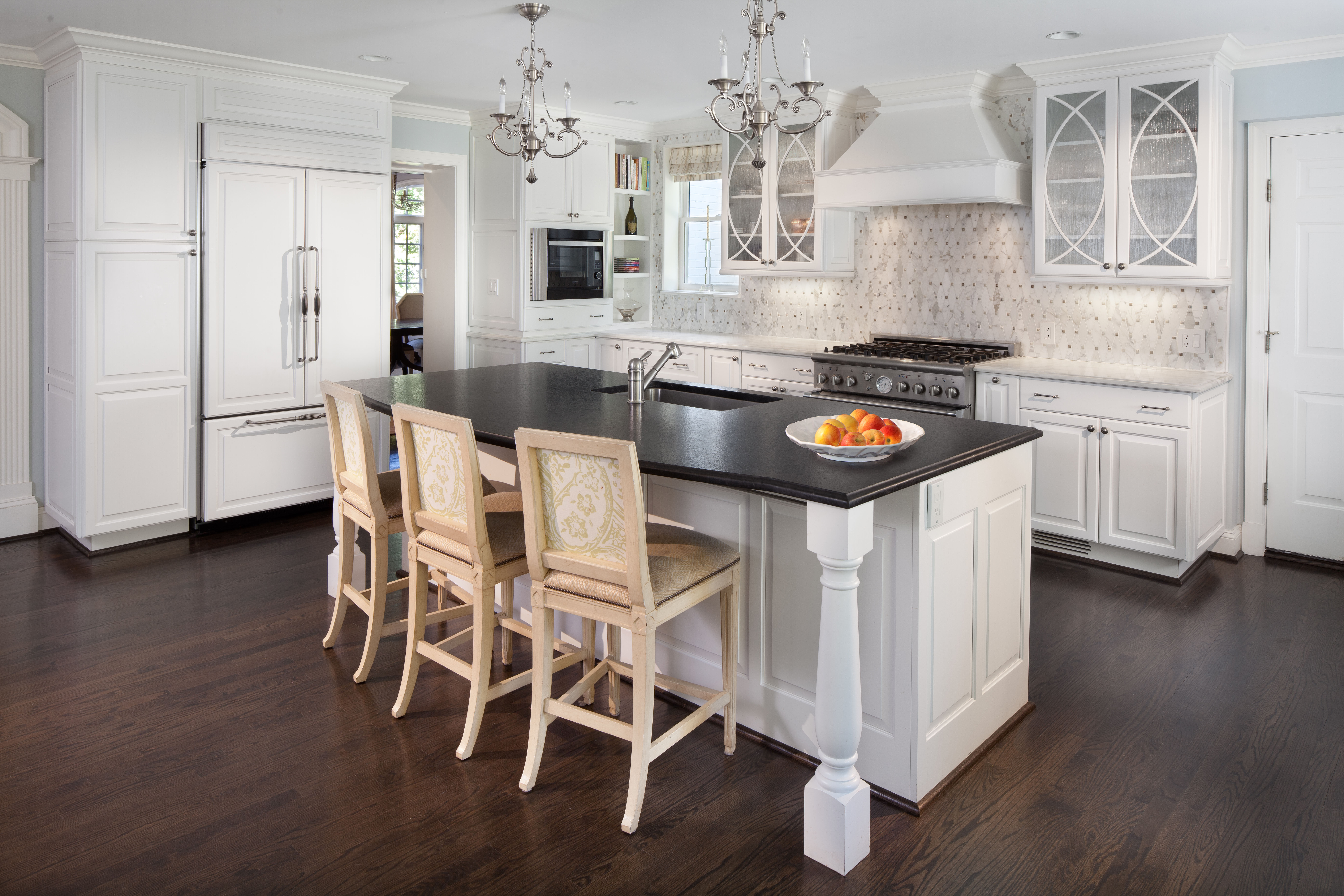
Test different creative formats constantly. On Search ads, test pinning your most compelling offer in Headline 1. On Meta and TikTok, use visual before-and-after transformations. Show the messy, outdated kitchen, and then cut to the beautiful, finished product. Use User-Generated Content (UGC) where a happy client talks about their great experience.
Strong creative stops the scroll. A great before-and-after video on social media can drop your cost per lead by half. It builds instant desire and sets high expectations for your premium craftsmanship.
7. What is the average CPA for home improvement? (Landing Page CRO)
The average CPA for home improvement search ads is high, often hovering over $100. However, if your landing page is terrible, your CPA will be much higher. Sending paid traffic to your website's generic homepage is a huge mistake. The user gets lost, cannot find the contact form, and leaves immediately.
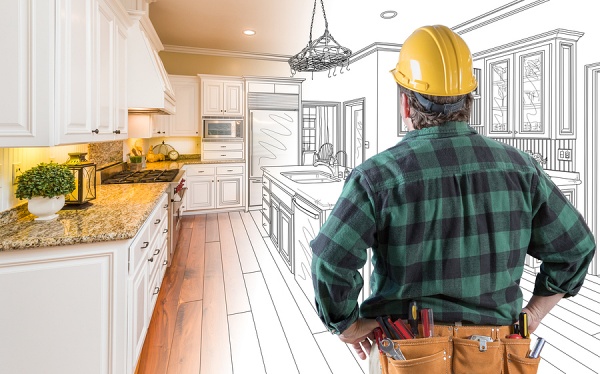
Practice Conversion Rate Optimization (CRO). Build dedicated landing pages for your ad campaigns. If the ad talks about "Luxury Kitchen Islands," the landing page must feature big pictures of luxury islands. Include a clear headline, trust badges, customer reviews, and a very simple lead form at the top of the page.
A high-converting landing page makes all your ads much cheaper. If you double your landing page conversion rate from 2% to 4%, you instantly cut your cost per lead in half without changing anything in your actual ad account.
8. Cross-Platform Retargeting Sequencing
Remodeling a kitchen is a massive decision. Most people do not click an ad and hire a contractor on the exact same day. If you do not follow up with them online, they will forget about you and eventually hire the competitor they see more often.
Build a smart retargeting sequence across platforms. If someone visits your landing page from a Google Search ad but does not fill out the form, retarget them on Facebook and Instagram. Show them a video of a completed project. Three days later, show them a carousel of customer reviews. Seven days later, offer them a specific design consultation.
This sequence stays in front of the prospect while they make their big decision. It builds massive authority and trust over time. Retargeting clicks are incredibly cheap, making this the absolute most cost-effective way to secure high-ticket jobs.
9. B2B Networking via LinkedIn Ads
If you only focus on direct-to-consumer homeowners, you are missing out on lucrative commercial deals. Kitchen remodelers often ignore LinkedIn, thinking it is only for software companies or corporate jobs. This leaves a massive gap in your pipeline.
Use LinkedIn Ads to target real estate developers, interior designers, and property managers in your city. Run Lead Gen campaigns offering a partnership guide or showcasing your ability to handle multi-unit kitchen renovations efficiently.
While the CPC on LinkedIn is higher, one closed B2B deal can be worth five residential kitchens. Building relationships with local architects and developers creates a steady stream of referral business that does not rely on daily ad spend.
10. Server-Side Tracking and Attribution
Due to privacy updates and strict ad blockers, basic tracking pixels are missing up to 30% of your conversions. If your tracking is broken, your automated bidding algorithms will get totally confused, and your ad performance will crash fast.
Implement Server-Side Tracking and the Meta Conversions API (CAPI). Instead of relying on the user's internet browser to send data back to the ad platforms, your own server sends the data directly. This ensures every single lead is recorded accurately.
Accurate tracking feeds the AI algorithms the correct data. When Google and Meta know exactly who converted, they can find more people just like them. This keeps your campaigns stable and highly profitable, even as browser privacy rules get stricter every year.
The Essential 5-Tool Paid Media Stack 🛠️
If you want to execute this omnichannel strategy, you need the right tools. Here are the five essential software tools for kitchen remodeling media buyers:
1. ClickCease
This is a click fraud protection software that strictly monitors your Google and Bing ads. It automatically blocks bots, competitors, and click farms from clicking your ads and draining your budget.
- •Automated IP blocking for malicious clicks.
- •Competitor tracking.
- ✓Saves wasted ad spend and improves your campaign data accuracy.
- ✗The monthly fee can be annoying if you have a very small daily budget.
2. Unbounce
This is a powerful landing page builder designed entirely for conversion rate optimization. It allows you to create high-converting pages without needing a developer.
- •Simple drag-and-drop builder.
- •Built-in A/B testing functionalities.
- ✓Very easy to use and integrates smoothly with almost any CRM software.
- ✗It can become expensive if you move into the higher traffic volume tiers.
3. Triple Whale
This is an advanced tracking and attribution dashboard for your omnichannel marketing. It provides server-side tracking and a unified dashboard.
- •See your Meta, Google, and TikTok stats in one place.
- •Advanced attribution models for long sales cycles.
- ✓Solves the annoying iOS tracking issues and shows exactly which ad generated the lead.
- ✗Geared slightly more towards e-commerce, but highly adaptable for high-ticket lead generation.
4. GoHighLevel
This is an all-in-one marketing platform and CRM built specifically for agencies and local businesses handling remodeling jobs.
- •Manages automated SMS follow-ups.
- •Sales pipeline and calendar booking.
- ✓Replaces multiple subscriptions and ensures new leads are contacted within seconds.
- ✗The learning curve is quite steep for beginners who are not tech-savvy.
5. Zapier
This is an automation tool that connects all your different apps and software together seamlessly for flawless lead routing.
- •Moves lead data from Facebook Forms to CRM instantly.
- •Sends instant text messages to your sales team when a lead arrives.
- ✓Offers endless integration possibilities and saves you hours of manual data entry.
- ✗Complex, multi-step automations require you to pay for the higher-tier plans.
Case Study 1: How Elite Kitchens Scaled ROAS on Google Ads
Elite Kitchens, a local remodeling company in the US, was struggling heavily with high acquisition costs. They were paying well over $200 per lead on Google Search, and most of those leads were just looking for cheap cabinet refacing jobs. Their budget was draining daily, and their sales team was incredibly frustrated with the low quality.
Action The Execution:
The execution involved a complete restructuring of their account. I paused their messy broad match keywords and built highly specific Performance Max (PMax) campaigns. I fed the PMax campaign with high-quality visual assets, including video tours of completed kitchens and multiple high-resolution image formats. I also set a strict Target CPA to steer the AI away from expensive, low-quality clicks.
📈 The Results:
Within six weeks, the results were incredible. Elite Kitchens saw their cost per lead drop down to just $85. Because the leads were much higher quality, their Return on Ad Spend (ROAS) scaled by 300%. They successfully booked $150,000 in new projects in the second month alone.
Case Study 2: How Prestige Remodeling Slashed Acquisition Costs with Paid Social
Prestige Remodeling wanted to expand their business quickly but found Google Ads too expensive in their highly competitive UK market. They decided to test Meta Advantage+ campaigns to generate fresh demand instead of waiting for people to search.
Action The Execution:
The strategy focused entirely on visual transformations. I created simple, 15-second videos showing an ugly, outdated kitchen transitioning smoothly into a modern masterpiece. I used Facebook Lead Forms with specific qualifying questions: "What is your project budget?" and "Are you looking to start within 30 days?" This instantly filtered out the low-budget inquiries.
📈 The Results:
The campaign was a massive success for them. Prestige Remodeling slashed their acquisition costs by 60% compared to their old search campaigns. They were generating qualified, high-ticket leads for just £45 each. By educating the market and showing clear proof of their craftsmanship, they filled their installation calendar for the next three solid months.
Future-Proofing Your Ad Campaigns
The world of digital advertising is changing fast. Privacy updates are making it much harder to track users, and AI automation is taking over manual bidding. To survive, kitchen remodelers must adapt quickly.
First, focus heavily on your first-party data. Build your email list and collect phone numbers at every opportunity. If you own your audience, you do not have to rely solely on expensive ad platforms. Second, lean fully into AI. Embrace Smart Bidding and Performance Max, but remember that the AI is only as good as the data you feed it. Keep your conversion tracking flawless and accurate.
Finally, prioritize your ad creative. As bidding becomes fully automated for everyone, your ad copy, images, and videos will be the main factors that separate you from your local competitors. A great video will always beat a perfect bid strategy.