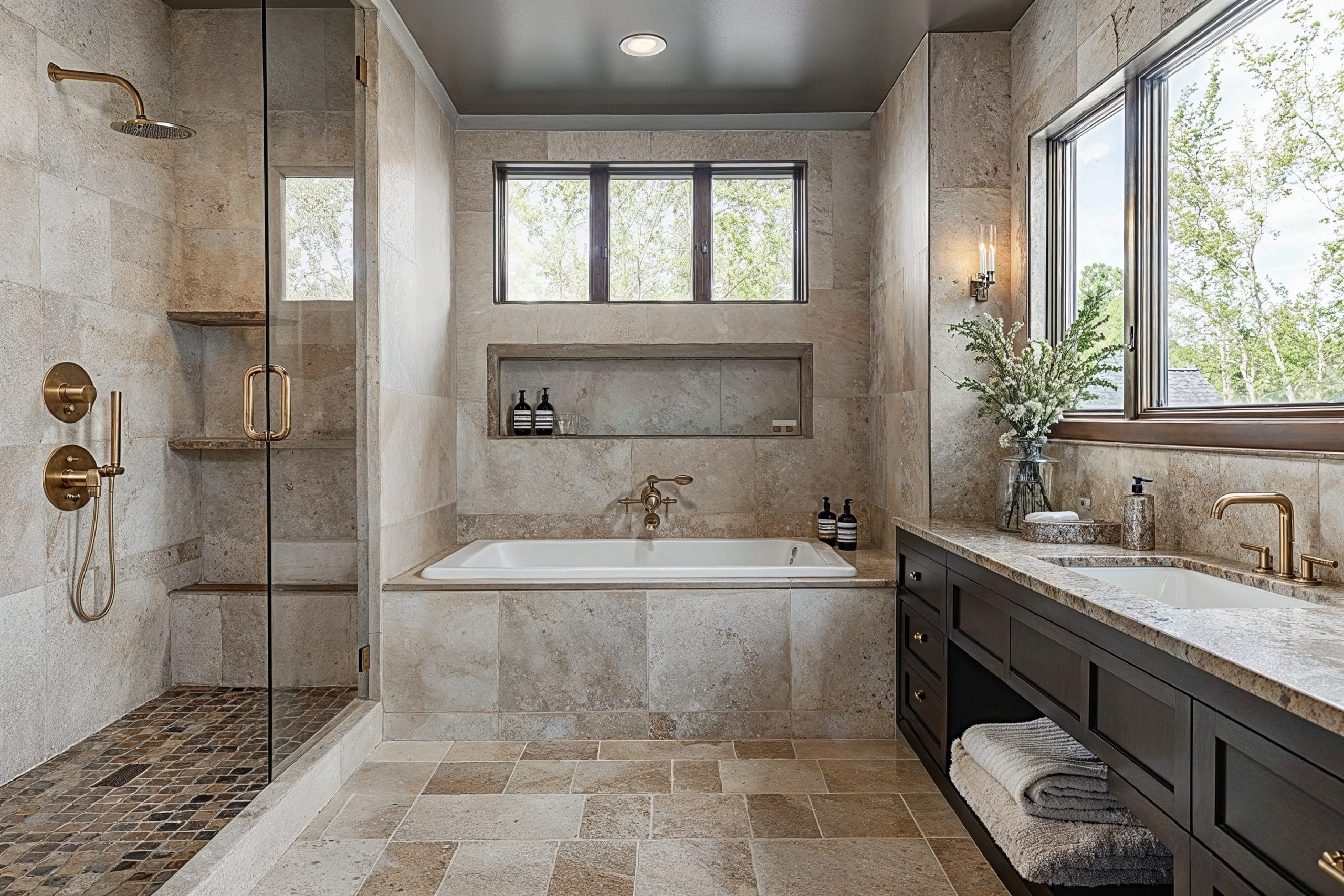
Imagine you just finished a stunning $40,000 master bath renovation. The tile work is flawless, the soaking tub is a dream, and the client is thrilled. You expect the phone to start ringing off the hook, but it stays silent. Why?
Because when homeowners in your city search for a "bathroom remodeler near me," they don't see your name. They see three other guys who might not be as good as you, but they own the Map Pack. Missing out on these local searches is just annoying and a waste of your talent. Luckily, there is a way to fix this without spending a fortune on useless ads.
💡 The Marketing Trifecta
While SEO delivers long-term traffic, it should always be paired with a strong paid and social foundation. Don't forget to implement our Complete Bathroom Remodeling PPC Strategy for instant local leads, and utilize our Bathroom Remodeling Social Media Marketing Guide to build community trust before a client even calls you!
📊 The Current Local Search Landscape for Bathroom Remodelers
The way people find contractors has changed. It used to be about the Yellow Pages or a flyer in the mail. Now, it is all about the Three Pack on Google. When someone has a leaking shower or a dated 1980s vanity, they grab their phone and search.
Google’s AI now looks for more than just keywords. It wants to see that you are a real local expert who actually does work in the neighborhood.
AI Overviews are also changing things. Instead of just a list of links, Google now gives a summary of who the best pros are based on reviews and project photos. If your business isn't optimized for this new way of searching, you are essentially invisible. The competition is high, but the rewards are even higher because "near me" searches lead to high-ticket contracts.
How do I rank my bathroom remodeling business on Google Maps?
To rank on Google Maps, you have to prove three things: Proximity, Relevance, and Prominence. Proximity means you are close to the person searching. Relevance means your profile clearly says you do "bathroom remodeling" and not just general handyman work. Prominence means you have the best reviews and photos in town.
Here we go with the core framework to make this happen. You need to treat your Google Business Profile (GBP) like a second storefront. It is the first thing people see, and it is often the reason they decide to call you instead of a competitor.
The 10-Step Local SEO Blueprint for Bathroom Remodelers
I. GBP Optimization & Verification
The biggest problem many remodelers face is a "ghost" profile. This is a listing that was created years ago but never claimed or updated. If your profile is incomplete, Google won't trust you enough to show you to potential customers. It is a missed opportunity for free leads that most businesses just ignore.
The solution is to claim your profile and fill out every single section. This includes your exact service area, your business hours, and a deep description of your remodeling specialties. Make sure you select "Bathroom Remodeler" as your primary category. If you also do kitchens, add that as a secondary category, but keep the focus on bathrooms to build authority.
The value of a verified and optimized profile is huge. It acts as the anchor for your local presence. According to a recent study by BrightLocal, businesses with complete profiles are 70% more likely to attract location visits. It is the fastest way to get into the Map Pack.
II. NAP Consistency & Citation Building
A common hassle for contractors is having different phone numbers or addresses listed across the web. Maybe you moved offices three years ago, but your old address is still on Yelp. This confuses Google. If the search engine doesn't know which information is correct, it will simply rank someone else who looks more reliable.
You need to perform a "NAP" (Name, Address, Phone Number) audit. Every mention of your business on the internet, from Facebook to the local Chamber of Commerce, must be identical. Use a tool to find these old listings and update them. This is called citation building, and it builds a "web of trust" around your brand.
The value here is pure ranking power. Consistent citations act like "votes" for your business's location. The more consistent your data is, the more confident Google feels placing you at the top of local search results. It removes the friction that stops you from ranking in nearby towns.
III. Localized On-Page SEO (City & Neighborhood Pages)
Most remodelers make the mistake of having a generic homepage that tries to rank for everything. If you are based in Austin but want jobs in Round Rock, a single page won't cut it. You are fighting an uphill battle because Google wants to show the most "local" result for every specific town.
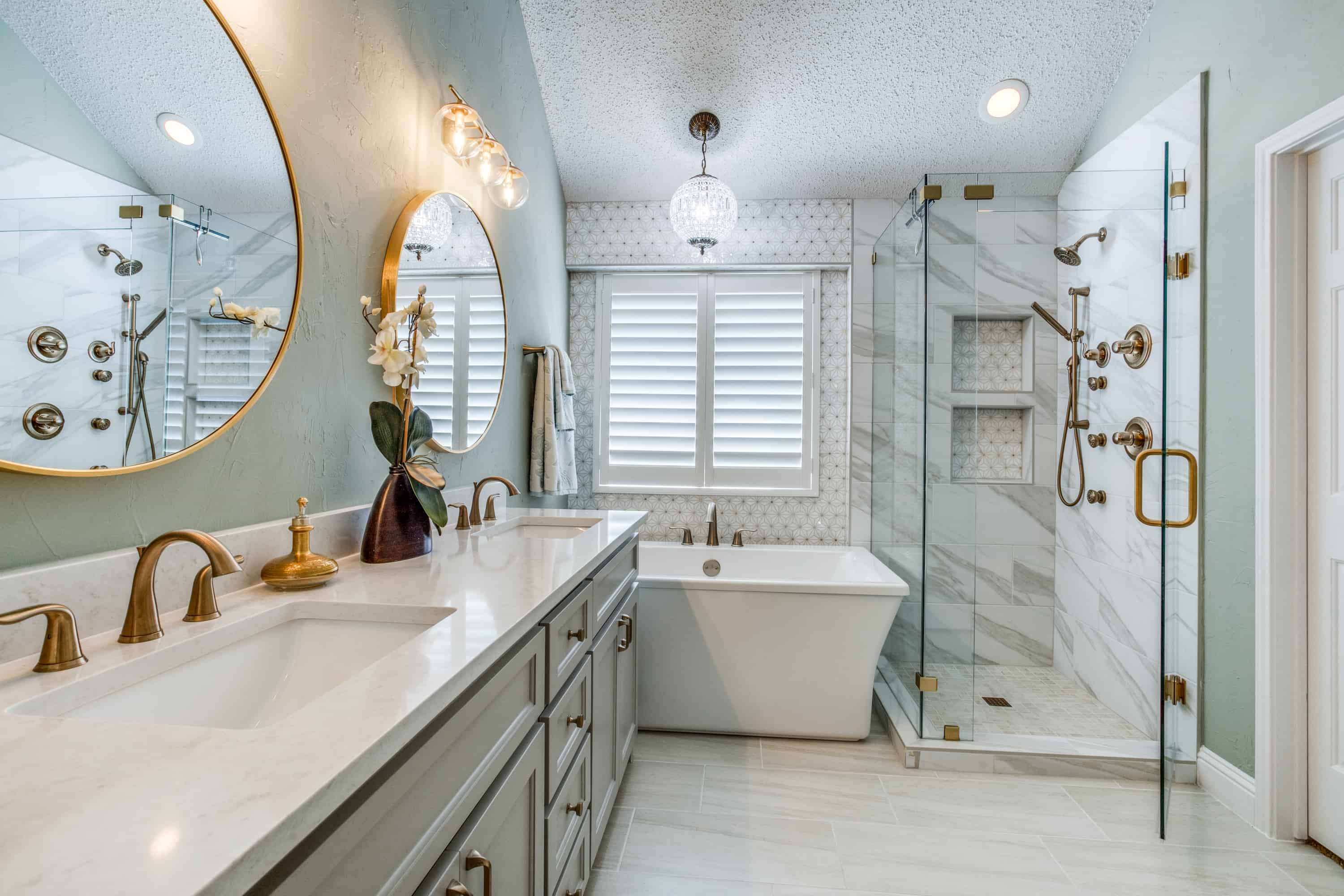
The fix is to create hyper-local service pages. For example, create a page titled "Bathroom Remodeling in Round Rock, TX." Fill this page with photos of projects you did in that specific area and mention local landmarks or neighborhoods. This tells Google that you aren't just a "nearby" contractor; you are the local expert for that specific spot.
This strategy creates "content silos" that catch local search intent. Instead of just competing for one big keyword, you are now catching leads from ten different smaller towns. This spreads your net wider and brings in more "ready to hire" homeowners.
IV. Review Generation & Reputation Management
Having zero reviews, or worse, a few bad ones, is a deal-killer. Homeowners are terrified of hiring a bad contractor. If they see a competitor with fifty 5-star reviews and you only have two, they will click the other guy every single time. It is the most common reason for a low conversion rate.
You must implement a review generation system. Don't just wait for people to leave a review. Send a text message with a direct link to your Google review page the moment you finish a walkthrough. Luckily, most people are happy to help if you make it easy for them. You can even use QR codes on your business cards to lead them right there.
The value of reviews goes beyond just looking good. Google uses "Review Velocity" (how often you get new reviews) as a major ranking signal. A steady stream of fresh, positive feedback tells the algorithm that your business is active and reliable, which keeps you pinned at the top of the Map Pack.
V. Local Link Building & Community PR
Many SEO experts talk about "backlinks" like they are magic, but for a local remodeler, they need to be local. Getting a link from a tech blog in California won't help you rank for bathroom jobs in Manchester or Sydney. You need links from organizations in your own backyard to prove your local authority.
Start by sponsoring a local Little League team or donating to a local charity. Most of these organizations will link to your website from theirs. Furthermore, reach out to local home and garden bloggers for a feature. These local links are a "saviour" for your SEO because they tell Google exactly where you operate.
The value here is "Geographic Relevance." When local websites link to you, it confirms to Google that you are a pillar of that community. This is one of the hardest things for competitors to fake, making it a very strong competitive advantage for your ranking.
VI. Local Business Schema Markup
The "back-end" of your website often looks like a jumble of code to Google. If the search engine can't easily find your service area or your operating hours, it might skip over you. This is a technical hurdle that keeps many great remodelers from reaching page one.
The solution is to install "LocalBusiness" Schema Markup. This is a special snippet of code that acts like a digital business card for search engines. It clearly tells Google your business name, address, phone number, and exactly which services you offer. You can use free tools to generate this code and paste it into your website's header.
The value of Schema is that it makes your search result look better. It can lead to "Rich Snippets," where your star rating and service area appear directly in the search results. This makes your link much more clickable and professional than a plain text link.
VII. Apple Maps & Bing Places Optimization
It is easy to get obsessed with Google, but not everyone uses it. Many homeowners use iPhones and rely on Apple Maps, or they use Bing on their work computers. If you aren't listed there, you are leaving money on the table. It is a simple fix that most of your competitors are too lazy to do.
You should claim your "Bing Places" and "Apple Business Connect" listings. Most of the time, you can just import your information directly from your Google Business Profile. This ensures that no matter what device a homeowner uses, they can find your remodeling business and see your beautiful project photos.
The value here is total market coverage. By being on every map platform, you protect your brand. It also sends a signal to Google that you are a widespread, legitimate business, which indirectly helps your main rankings.
VIII. Grid Tracking & Local Reporting
Ranking "number one" is a bit of a myth because rankings change based on where the person is standing. You might be #1 when someone is in your office, but #10 when they are five miles away. Not knowing this is annoying because you might think your SEO is working when it actually isn't.
Use a Grid Tracking tool to see exactly where you rank across your entire city. This tool shows you a map with pins. A green pin means you are in the top three, and a red pin means you are invisible. This allows you to see exactly which neighborhoods need more local content or citations.
The value of this data is that it takes the guesswork out of your marketing. You can stop "spraying and praying" and start targeting the exact zip codes where you want more bathroom jobs. It turns your SEO into a precision tool for growth.
IX. Service Area Business (SAB) Settings
If you run your remodeling business from your home, you might not want people showing up at your front door. However, if you hide your address incorrectly, Google might penalize your ranking. This is a tricky balance that many contractors get wrong, leading to suspended accounts.
Set your profile as a Service Area Business (SAB). This allows you to hide your home address while still telling Google exactly which cities you serve. Make sure your service area is realistic, usually within a 30 to 50-mile radius. If you claim an entire state, Google will view it as spam and hide your profile.
The value here is compliance and safety. By setting this up correctly, you stay in Google's good graces while still appearing for "remodeler near me" searches in your target towns. It keeps your business professional and your home life private.
X. Geo-Tagged Images & Project Updates
Stock photos are the enemy of trust. If a homeowner sees the same "perfect" bathroom photo on your site that they saw on five other sites, they won't trust you. Furthermore, Google’s AI is getting very good at recognizing where a photo was taken based on its metadata.
The solution is to upload real, high-quality photos of your jobs every single week. Before you upload them, ensure the "Location Services" are turned on on your phone. This "geo-tags" the photo. When you upload a photo of a bathroom in a specific suburb, Google sees that data and confirms you were actually there.
The value of this is twofold. First, it builds massive trust with homeowners who see real work. Second, it provides "proof of locality" to Google. This is a powerful signal that helps you rank for "near me" searches in the specific neighborhoods where you actually work.
What are the best keywords for bathroom remodeling?
The best keywords aren't just "bathroom remodeler." You need to target long-tail keywords that show the user is ready to buy. For example, "master bathroom renovation cost" or "small bathroom walk-in shower ideas." These show that the person is in the planning phase and looking for a pro.
You should also target "service + city" keywords. Phrases like "luxury bath design [Your City]" or "affordable bathroom tiling [Your City]" are the bread and butter of local SEO. They have less competition than broad terms and higher conversion rates.
The Essential 5-Tool Local SEO Stack 🛠️
1. BrightLocal
- Citation building
- Audit reports
- Local rank tracking
- All-in-one local focus.
- Can be pricey for single locations.
2. Whitespark
- Expert citation finding
- Local search consulting
- Best for finding niche remodeling directories.
- Interface is a bit dated.
3. Local Falcon
- Hyper-accurate map grid tracking
- Map Pack rankings tracking
- Visualizes rankings perfectly.
- Uses a credit-based system that adds up.
4. Canva
- Easy photo editing
- Adding project watermarks/logos
- Simple for non-designers.
- Not a specialized SEO tool.
5. Google Search Console
- Tracks which local keywords are actually driving traffic
- Free and direct data from Google.
- Steep learning curve for beginners.

Case Study 1: How Superior Bath System Dominated the Map Pack
Superior Bath System was struggling to get noticed in a crowded metro area. They had a great team but were stuck on page three of Google. They decided to focus entirely on Step IV (Review Generation) and Step X (Geo-Tagged Photos).
Action The Execution:
According to a recent report on their growth, they implemented a "Review First" culture. They trained their installers to ask for a Google review before they even packed up their tools. Within six months, they went from 12 reviews to over 150. Combined with daily uploads of real project photos, their Map Pack visibility exploded.
📈 The Results:
The results were measurable. They saw a 215% increase in "Request a Quote" form submissions. Their local organic traffic grew by 85%, and they estimated an additional $320,000 USD in revenue directly attributed to Map Pack leads in the first year alone.
Case Study 2: How West Shore Home Scaled Multi-Location SEO
West Shore Home is a massive player in the remodeling space that needed to manage dozens of locations. Their challenge was "Step IX" (SAB Settings) and "Step III" (City Pages). With so many branches, they risked having duplicate content that would confuse Google.
Action The Execution:
They moved away from a "one-size-fits-all" website. Instead, they built dedicated landing pages for every single branch office, each with unique local testimonials and project galleries. They used an API-based citation manager to ensure every location had a perfect NAP across the web.
📈 The Results:
By scaling their local SEO this way, they maintained a #1 or #2 position in almost every market they entered. In one Australian expansion market, they achieved a 40% local market share within the first 12 months. Their cost-per-lead dropped by 30% compared to traditional TV and radio ads.
Future-Proofing Your Local Visibility
Google updates are constant, but the fundamentals of E-E-A-T (Experience, Expertise, Authoritativeness, and Trustworthiness) never go out of style. To stay on top, you must continue to prove you are a real human business. Avoid using AI to write your reviews or your project descriptions. Google can tell, and so can your customers.
Keep your eyes on video. Short, "before and after" reels on your Google Business Profile are becoming a major engagement signal. The more time people spend looking at your profile, the higher Google will rank you. Stay consistent, keep it local, and your bathroom remodeling business will continue to thrive in the Map Pack.