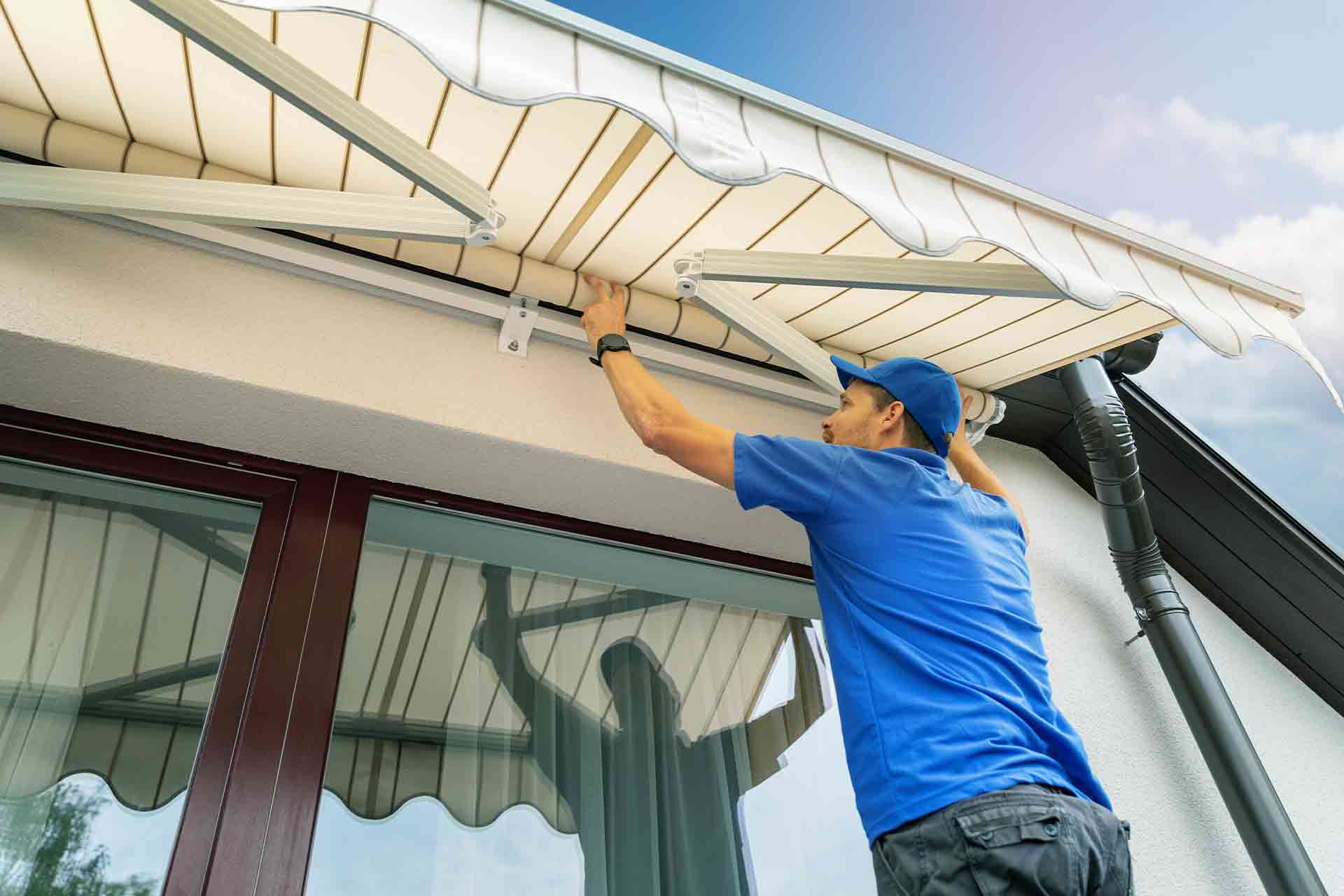
The daily survival of your awning installation company relies directly on local search visibility. When a homeowner wants to build a shaded patio or install a motorized canopy, they do not open a phone book. They pick up their phone and search for "awning installers near me."
If your business does not appear in the top three spots on that map, you simply do not exist to them. Countless contractors install amazing products but struggle to pay their crews because their local search presence is broken.
This guide provides the exact blueprint to fix those gaps, dominate your local market, and keep your phone ringing with high-ticket installation jobs.
💡 The Marketing Trifecta
While SEO delivers long-term traffic, it should always be paired with a strong paid and social foundation. Don't forget to implement our Complete Awning Installer PPC Strategy for instant local leads, and utilize our Awning Installer Social Media Marketing Guide to build community trust before a client even calls you!
📊 The Current Local Search Landscape for Awning Installers
The local search market for home improvement contractors has shifted massively. The days of simply stuffing keywords into a website and expecting the phone to ring are over. Today, Google prioritizes proximity, intense relevance, and verified trust signals. The local algorithm wants to know exactly where you are standing, who you serve, and if your past customers are actually happy with your work.
Artificial intelligence has completely disrupted how local discovery works. Features like AI Overviews now pull data directly from your Google Business Profile, local directories, and review sites. If someone asks an AI search assistant to find the most reliable retractable awning installer in their city, the AI will bypass weak websites and recommend the contractor with the cleanest data and the highest review velocity.
Furthermore, "near me" search intent has become hyper-specific. Homeowners expect search engines to filter out generic national brands and show them actual local crews with branded trucks parked nearby.
To win in this environment, awning installers must build an airtight local SEO foundation that clearly defines their geographic territory and proves their expertise to both search engine bots and human buyers.
How do I get my awning business on Google Maps?
Getting your awning business onto Google Maps requires claiming and verifying a Google Business Profile (GBP). This is the absolute foundation of your local marketing strategy. You must go to the Google Business portal, enter your company name, and follow the exact verification steps. Google is currently strict with home service contractors to prevent spam.
You will likely need to submit a continuous, unedited video from your phone showing your street sign, your branded work vehicle, and the tools you use to install awnings.
Once verified, you cannot simply leave the profile blank. You must completely fill out every section of the dashboard. Add your business hours, a direct link to your website, and your main contact number. Select "Awning Supplier" as your primary category. If you skip these basic setup steps, Google will not trust your listing, and you will never break into the top three results on the Map Pack.
The 10-Step Local SEO Blueprint for Awning Installers
Step 1: GBP Optimization & Verification
Many awning installers face a major proximity bottleneck because they list their residential address on their Google Business Profile. If customers do not visit your home to buy awnings, displaying this address violates Google's strict guidelines for Service Area Businesses (SABs). This error shrinks your search radius to a few blocks around your house and puts your profile at high risk of an immediate suspension. If your profile gets suspended, your entire source of local leads completely shuts down overnight.
The fix is to configure your profile explicitly as an SAB. Log into your GBP dashboard, navigate to your location settings, and choose the option to clear and hide your physical address. Next, input up to 20 specific zip codes, counties, or cities where your crew actively installs awnings.
Ensure your primary business category is set precisely to "Awning Supplier." Finally, keep your profile active by utilizing Google Posts to showcase weekly specials or seasonal installation discounts.
Hiding your address and claiming your service areas protects your account from getting taken down by algorithm sweeps. It also shifts Google's focus from your physical location to your entire defined service zone. This allows your business to appear in the Map Pack for users searching from miles away, directly driving more high-intent phone calls to your sales team and increasing your local market share.
Step 2: NAP Consistency & Citation Building
A common reason awning contractors stall on page two of Google Maps is inconsistent business data across the internet. If your company is listed as "Smith Awnings" on Yelp but "Smith Awning Installers LLC" on Facebook, search engines get confused. This mismatch in Name, Address, and Phone number (NAP) dilutes your local authority and prevents you from ranking in competitive markets.
You need to run a complete citation audit to clean up this data. Choose a single, standard format for your business name, phone number, and website URL. Then, manually update your listings on major directories like Yelp, Angi, HomeAdvisor, and the Better Business Bureau. Make sure the information matches your Google Business Profile exactly, down to the spelling of the street name or suite number.
Consistent NAP data sends a massive trust signal to search algorithms. When Google sees the exact same information across fifty different trusted directories, it verifies that your business is legitimate, active, and trustworthy. This trust translates directly into higher map pack rankings, ensuring your awning business outranks local competitors with messy or outdated listings.
Do citations still matter for local SEO?
Yes, citations still matter heavily for home service contractors. While they might not carry the exact same ranking weight they did ten years ago, they remain foundational for establishing trust. Search engines use these directories to cross-reference and verify your business data before they feel comfortable placing you in the top three map spots. Think of citations as the bare minimum entry requirement; you need them properly formatted to sit at the table and compete for local awning leads.
Step 3: Localized On-Page SEO (City/Service Pages)
Most awning companies dump all their services and service areas onto a single, cluttered homepage. When a homeowner in a neighboring town searches for "retractable awnings in [City]," your broad homepage will not match their specific local intent. This lack of hyper-local content forces Google to bypass your site in favor of competitors who specifically mention that exact town.
You must build hyper-local city landing pages. Create a dedicated page for every major city or neighborhood you serve. Title the page something like "Awning Installation in [City]" and include details specific to that area. Write about past projects completed in that town, discuss local weather challenges that require sturdy awnings, and embed a Google Map outlining the specific service boundary.
These localized silos align perfectly with how potential customers actually search for services. A dedicated city page acts as a local magnet, capturing organic search traffic from towns outside your immediate headquarters. By matching the exact intent of the searcher, you increase your chances of booking the job while expanding your organic footprint across your entire service territory.
Step 4: Review Generation & Reputation Management
Awnings are a high-ticket home improvement purchase, and homeowners rely heavily on reviews before making a decision. If your business has a low review velocity, meaning you only get one or two reviews a year, you will lose bids to competitors with recent, glowing feedback. Google also penalizes profiles with stale or infrequent reviews, dropping them lower in the local search results.
Implement an aggressive, automated review generation strategy. Give your installation crew cards with a QR code linked directly to your Google review page. As soon as a patio awning is installed and the customer is happy, ask them to scan the code right there in the yard. Follow up with a simple SMS text message the next day thanking them for the business and providing the direct review link again.
A steady stream of new five-star reviews is one of the strongest ranking signals you can generate. It shows Google that your business is currently active and highly regarded in the community. For the customer, a profile boasting fresh, positive reviews drastically increases the conversion rate, turning more profile views into direct phone calls and signed contracts.
Step 5: Local Link Building & PR
Many home service websites have weak backlink profiles, relying entirely on cheap, low-quality directories. If you do not have links from real, local organizations, Google will not view your awning company as an authority in your specific city. Without strong local link equity, your site will struggle to compete against older, more established contractors in the area.
Start building high-ticket local networking links. Sponsor a local little league baseball team, join the regional Chamber of Commerce, or partner with neighborhood homeowners associations. In exchange for your financial sponsorship or membership, request a direct backlink to your website. You can also reach out to local home and garden bloggers to feature your recent, high-end awning installations.
Local backlinks carry immense weight because they are hyper-relevant to your specific geography. A link from a community center in your town passes strong local authority directly to your domain. This localized trust pushes your website higher in organic search results and heavily influences your Map Pack positioning, cementing your reputation as the dominant local installer.
Step 6: Local Schema Markup
Search engines read code, not just the text on your page. If your website lacks structured data, Google has to guess what your business is, where it operates, and what specific services it provides. This guesswork slows down indexation and prevents your awning company from showing up in rich snippets or targeted local voice searches.
Inject Local Business Schema Markup directly into the backend of your website. Use a free schema generator tool to create a JSON-LD code snippet that clearly defines your business type as a "HomeAndConstructionBusiness." Include your geo-coordinates, accepted currencies, operating hours, and specific service areas. Place this code in the header of your website so search bots can read it instantly.
Schema markup acts as a direct, clear translator between your website and search engines. It removes all ambiguity about who you are and where you serve. When Google easily digests your geographic data, it rewards your site with faster indexing and greater visibility in local searches, giving you a distinct technical edge over competitors who ignore their site's code.
How do I add multiple service areas to my Google Business Profile?
To add multiple service areas to your Google Business Profile, log into your dashboard and click on the "Edit Profile" button. Scroll down to the "Location and areas" section and click the pencil icon next to "Service area." Here, you can type in specific zip codes, neighborhoods, or city names. You are allowed to add up to 20 different areas. Make sure you only select areas that you can comfortably drive to within a two-hour window, as claiming regions too far away can trigger account verification warnings.
Step 7: Apple Maps and Bing Places Optimization
Most awning contractors obsess exclusively over Google Maps and completely ignore Apple Maps and Bing Places. Because iOS users default to Apple Maps on their iPhones, ignoring this platform means you are instantly invisible to millions of potential high-income customers. If your business is missing from these secondary directories, you are leaving massive amounts of money on the table.
Claim and fully optimize your listings on both Apple Maps Connect and Bing Places for Business. The process is very similar to setting up a Google Business Profile. For Bing, you can actually sync your existing Google profile directly to save time. For Apple Maps, verify your phone number and ensure your service categories, website links, and business hours are perfectly accurate.
Diversifying your local presence ensures you capture leads from all device types and search habits. High-income homeowners searching for custom awnings on their iPhones will find your business immediately. Furthermore, establishing your exact entity on Apple and Bing sends additional trust signals back to Google, strengthening your overall local search authority.
Step 8: Grid Tracking and Reporting
Standard rank tracking only tells you where you rank from one specific location. If your shop is in the center of town, you might rank number one there, but drop to number ten just five miles away. If you do not track your rankings geographically, you are completely blind to the exact neighborhoods where you are losing valuable awning leads to your competitors.
Implement a local grid tracking tool to visualize your Map Pack rankings across a wide area. Set up a 5x5 or 7x7 mile grid over your service territory and track a primary keyword like "awning installer." The tool will generate a map showing your exact ranking position at each specific node. Use this hard data to identify your weak spots.
Grid tracking removes the guesswork from local SEO execution. It shows you exactly where your proximity limits end and where your competitors take over. By identifying these geographic gaps, you can deploy targeted strategies, like acquiring specific customer reviews from a weak zip code, to turn those red ranking nodes green, aggressively expanding your territory.
Step 9: Geo-Tagged Image Uploads
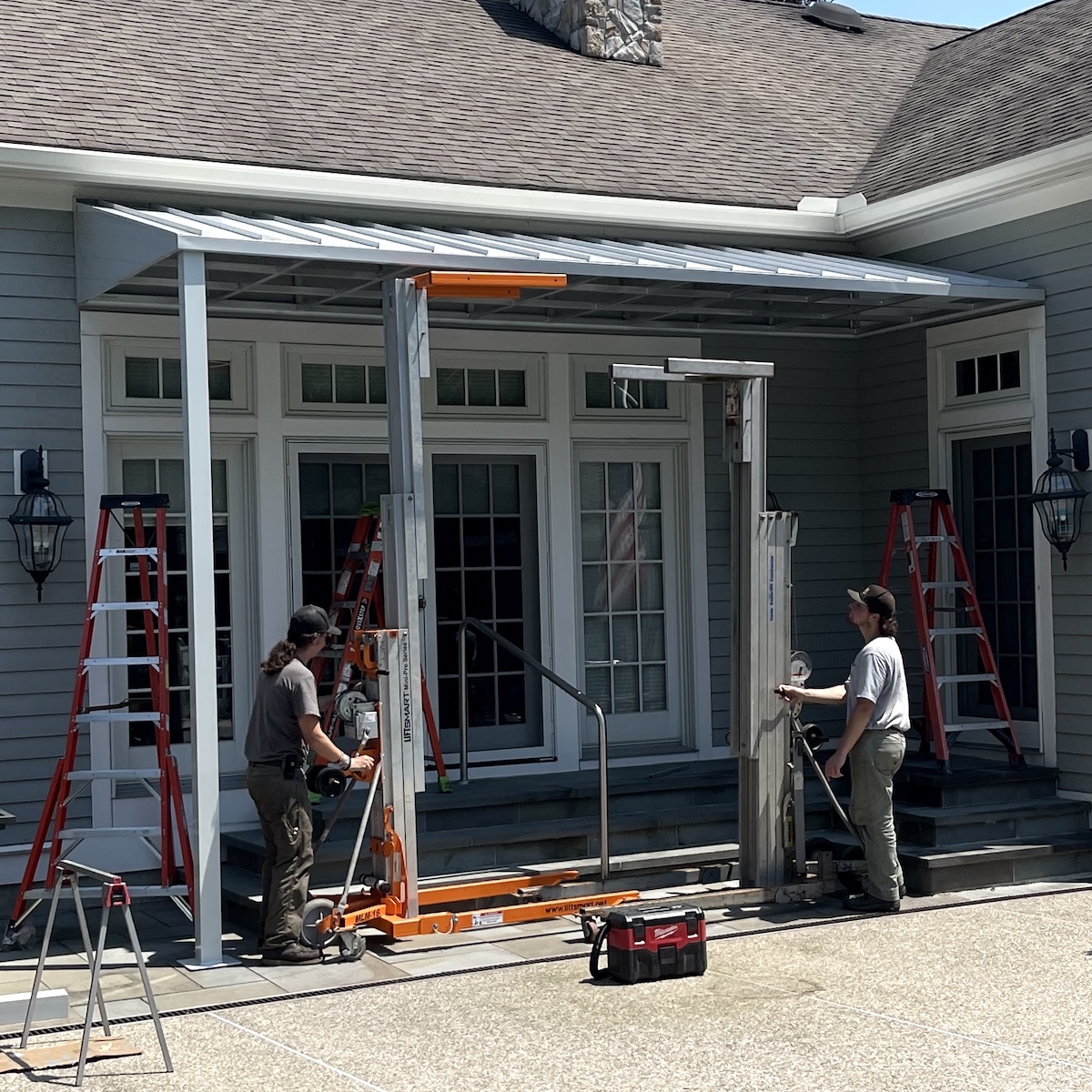
When you upload photos of your awning projects directly from your phone to your Google Business Profile, the platform often strips out the location metadata. If your photos lack geographic tags, Google cannot connect the image to the specific town where the work was done. This wastes a massive opportunity to prove to search engines that you actively work in the surrounding service areas.
Before uploading photos of your latest motorized awning installation, use an EXIF data editor tool to manually embed the exact GPS coordinates of the job site into the image file. Once the photo is correctly geo-tagged, upload it to your Google Business Profile and your localized website pages. Add a descriptive caption that includes the town name, such as "New patio awning installed in [City]."
Geo-tagged photos act as digital breadcrumbs. They provide hard, technical proof to Google that your service area claims are completely real. Consistently uploading geo-tagged images from various towns across your territory strengthens your local relevance in those specific areas, helping you rank higher in the Map Pack for users searching from those distant neighborhoods.
Step 10: Local Services Ads (LSA) Synergy
Organic local SEO takes time to build, and relying solely on the Map Pack leaves you vulnerable to competitors who pay to sit at the very top of the page. If a homeowner searches for "awning installation," they will see Google Local Services Ads (LSA) before they even scroll down to the organic Map Pack section.
You must run Local Services Ads in tandem with your organic local SEO efforts. Apply for the "Google Guaranteed" badge by passing their background checks and verifying your business insurance. Set your LSA budget to target your specific service areas. Make sure you answer every single phone call generated by these ads, as Google actively penalizes businesses that miss calls by lowering their ad rank.
Combining LSA with a strong organic Map Pack presence creates total search dominance. Homeowners will see your Google Guaranteed ad at the top, and then see your organic listing right below it in the Map Pack. This double exposure builds massive brand trust, drastically increasing the likelihood that they click on your name and call you for a high-value awning quote.
The Essential 5-Tool Local SEO Stack 🛠️
Executing this strategy requires the right software. Here are the 5 exact tools awning installers need to dominate local search.
Whitespark
A highly specialized local SEO tool built specifically for citation tracking and local search audits.
Local citation finder, accurate rank tracker, and a comprehensive reputation builder.
Incredibly accurate citation gap analysis that tells you exactly which directories your competitors are using.
The user interface is slightly dated compared to newer SaaS software.
BrightLocal
A complete local marketing platform for tracking grid rankings and auditing Google profiles.
Local Search Grid mapping, citation builder, and a central review management dashboard.
Generates beautiful, client-ready reports and highly accurate, localized grid tracking.
It can quickly consume a budget of $150 USD/month if you are tracking massive service grids.
LocalRank.so
An AI-powered local SEO platform that maps out exact citation ecosystems for specific cities and neighborhoods.
AI competitor gap analysis, automated listing cleanup, and local pack monitoring.
Discovers niche, city-specific directories that larger national tools completely miss.
Newer to the market, meaning the review management features are still maturing.
PlePer
A highly technical Chrome extension and toolset for deep Google Business Profile analysis.
Category extraction, detailed review auditing, and GBP metric tracking.
Reveals exactly which hidden secondary categories your top competitors are using to rank.
The learning curve is steep and requires basic technical SEO knowledge to use effectively.
Yext
A powerful data management tool that syncs your NAP data across hundreds of directories instantly via API.
Real-time listing updates, duplicate listing suppression, and widespread review monitoring.
Fixes NAP inconsistencies across the entire web in a matter of seconds.
Very expensive (often exceeding £800 GBP annually), and your listings revert to their old, broken state if you cancel the subscription.

Case Study 1: How Undercover Blinds & Awnings Dominated the Map Pack
Challenge The Challenge:
Undercover Blinds & Awnings is an awning manufacturer and installer based in Melbourne, AU. They faced a severe decline in online visibility, coupled with rising digital marketing costs. Their broad approach was not generating enough inbound calls from the suburbs where high-ticket buyers lived.
Action The Execution:
By completely restructuring their website to chase profitable leads, they built hyper-local pages focused specifically on high-margin products like folding arm awnings and retractable roofs. They optimized their overall digital presence to ensure their service areas were properly mapped to cover the correct Melbourne territories. They also implemented a call tracking solution to identify and solve serious phone engagement issues that had been depressing online sales.
📈 The Results:
The results were massive. For more than half of what they used to spend on all digital marketing endeavors, Undercover Blinds was able to quintuple its customer sales, mostly driven by an increase in successful inbound phone calls. By dominating the local search results and fixing their conversion bottlenecks, they secured a massive return on investment in AUD.
Case Study 2: How Apex Awning & Windows Scaled Multi-Location SEO
Challenge The Challenge:
Apex Awning & Windows is a home improvement contractor that struggled to gain traction in competitive city markets. Their local visibility was practically nonexistent because their website was slow, and their Google Business Profile was severely underutilized. They were heavily dependent on paid lead generation services.
Action The Execution:
The SEO team executed a strict local blueprint. They fixed the mobile page speed, built dedicated location pages for specific towns, and created a review automation system that prompted the front desk staff to follow up via phone after every installation job. They also ran a comprehensive citation cleanup to fix mismatched business data across various online directories.
📈 The Results:
Within three months, local traction ignited. Their Google Business Profile interactions skyrocketed, and they grew organic traffic by 20% in year one, followed by a massive 50% jump in year two. The automated review generation directly influenced their Map Pack rankings, dropping their cost per lead to under $45 USD and breaking their reliance on expensive third-party lead vendors.
Future-Proofing Your Local Visibility
The local search market is shifting quickly toward AI-driven discovery. Platforms like Google's Gemini, ChatGPT, and Claude are now pulling data directly from local review sites and Google Business Profiles to answer user queries. If a homeowner asks an AI assistant, "Who is the best awning installer in my town?", the AI will reference the contractor with the strongest reviews, the cleanest structured data, and the most consistent local citations.
To survive these future updates, you must maintain impeccable E-E-A-T (Experience, Expertise, Authoritativeness, and Trustworthiness). Stop relying on cheap tricks or fake reviews. Publish real case studies of your awning projects, maintain a perfect 5.0 rating velocity, and ensure your NAP data is flawless across the internet. By executing the fundamentals with high precision, you guarantee that search engines and AI assistants will always recommend your awning business first.