Table of Contents
The massive surge in popularity of pickleball over the last few years proved one major thing: Americans love highly social, easy-to-learn paddle sports. But what happens when you want that same exact energy without driving to a packed public court or dropping hundreds of dollars on a bulky basement ping pong table?
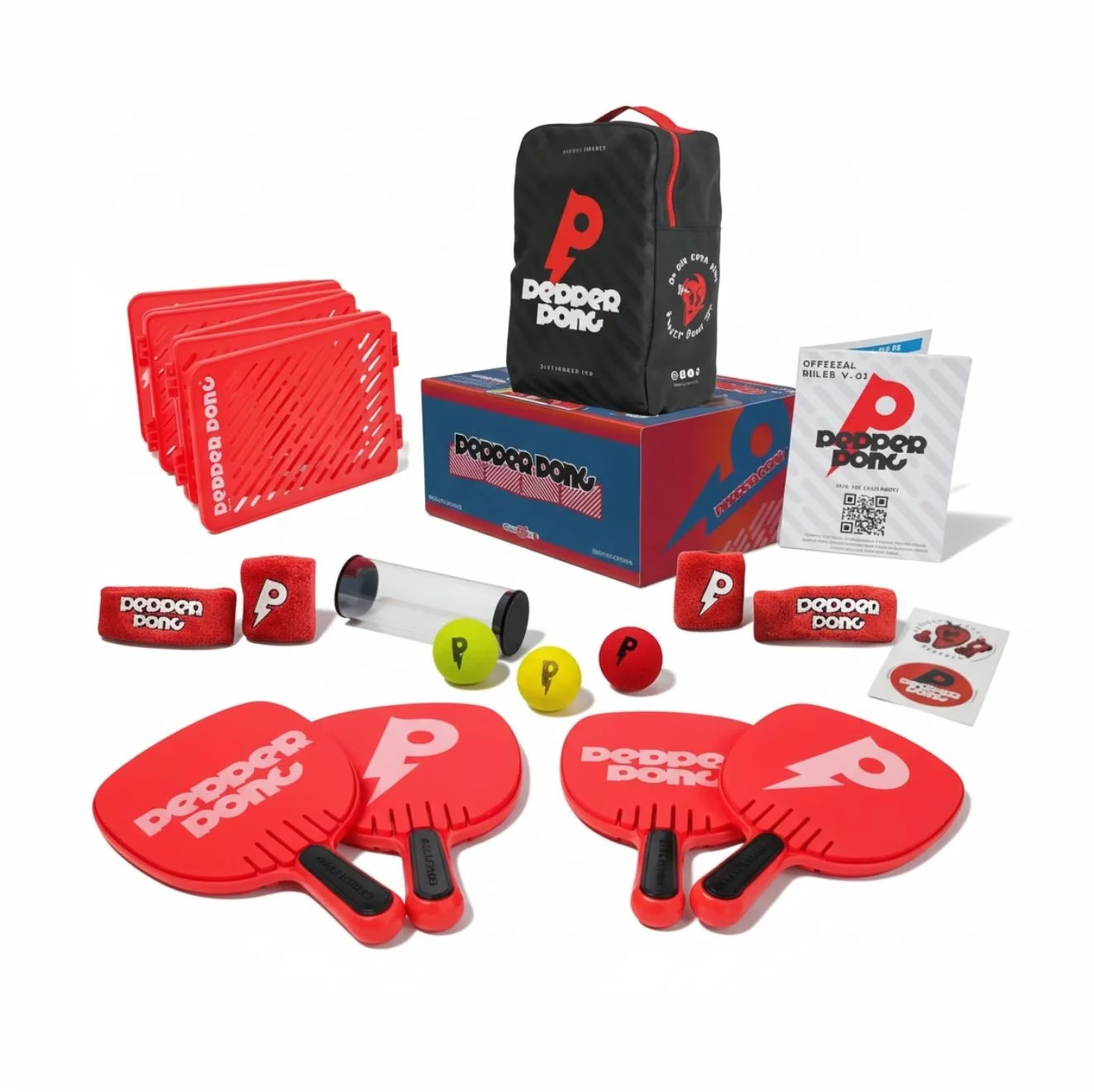
Enter Pepper Pong, a product that promised to turn literally any flat surface into an instant rally.
When a Denver-based entrepreneur carried a small, 11-inch bag onto the stage in Season 16 of Shark Tank, the Sharks looked skeptical. By the time the pitch ended, he had secured a massive deal with billionaire guest Shark Todd Graves, opened up about a deeply personal journey of sobriety, and sparked a fierce bidding war.
Now, the big question remains. Did this “pickleball meets ping pong” hybrid just become another novelty gathering dust in the closet, or did it legitimately change the way we play? Here is the absolute latest on Pepper Pong, its financial growth, and where the brand stands today.
What is Pepper Pong?
Pepper Pong is a highly portable, incredibly versatile hybrid racket game that combines the best elements of traditional table tennis and modern pickleball. Designed for maximum portability and zero hassle, the game completely eliminates the need for a dedicated, heavy, and expensive ping pong table.
Instead, it allows players to transform virtually any flat surface, from kitchen islands and dining room tables to tailgating coolers, office desks, and even the floor, into a competitive playing arena.
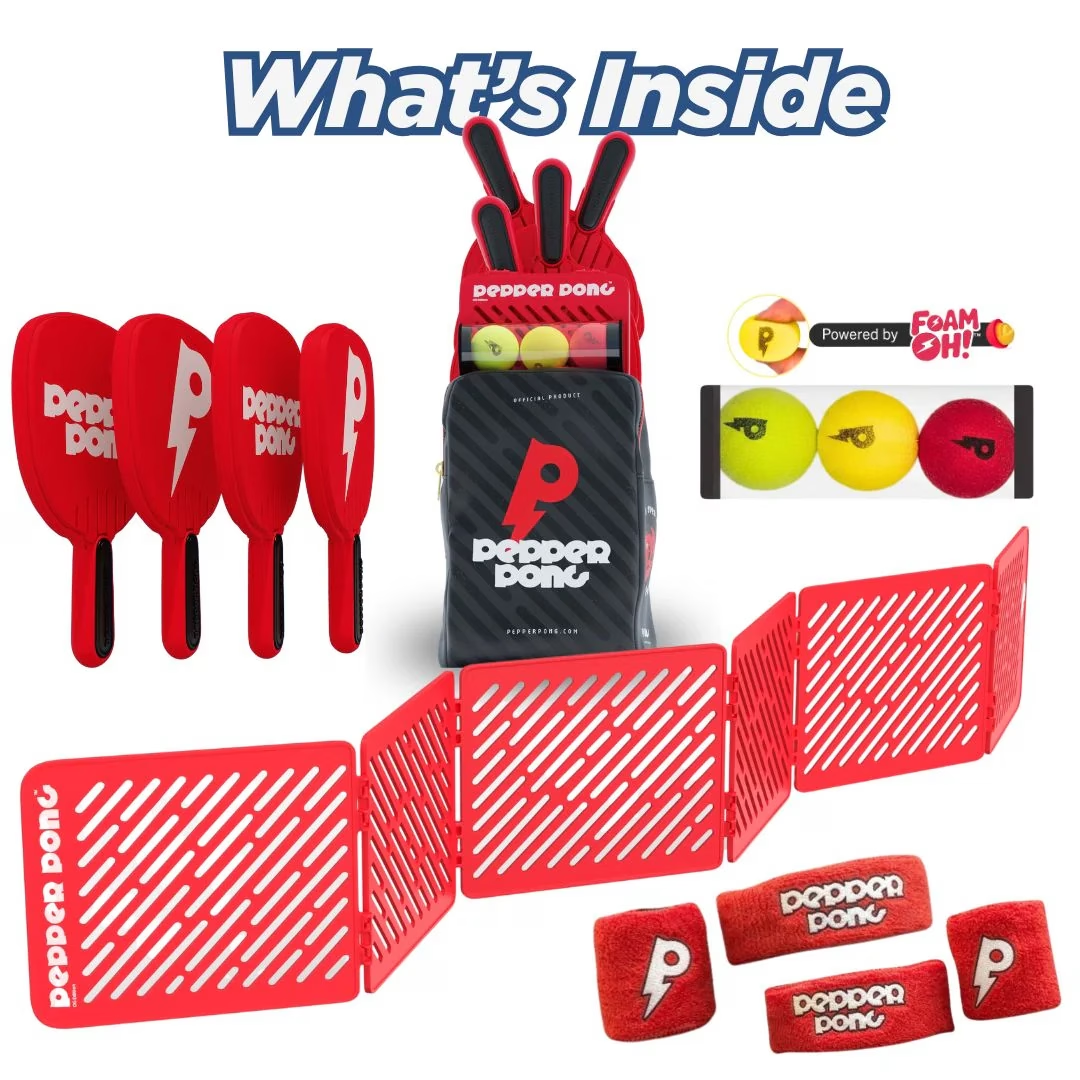
The true secret to the game lies in its smartly engineered components. The core of the system is the freestanding "Fence," a collapsible net that sets up in under ten seconds without the need for damaging clamps or clips. You just unfold it, set it down, and you are ready to serve.
However, the real magic is the "peppers," a set of three specially designed foam-core balls that cater to different skill levels and table sizes. The slow-bounce "Jalapeño" is perfect for small surfaces or beginners. The medium "Habanero" is built for standard play and long rallies. Finally, the fast-paced "Ghost Pepper" is for highly competitive players who want a real challenge.
Because the balls are made of dense foam, they are completely safe for indoor furniture and whisper-quiet, meaning no annoying plastic clicking sounds that echo through the house.
Players hit these balls using the "Mullet" paddles, which are sturdy, waterproof, and slightly thicker than traditional ping pong paddles, giving them a satisfying heft similar to a pickleball racket. The entire kit packs away into a compact 11-inch bag, making it the ultimate grab-and-go game for vacations, dorm rooms, and backyard parties.
| Product Overview | Details |
|---|---|
| Industry | Sporting Goods / Recreational Games |
| Founded Year | 2023 |
| Core Product | The Pepper Pong Full Set |
| Target Audience | Families, college students, tailgaters, and office workers |
| Retail Price | $119.99 (Often discounted to $79.99) |
Who is the Founder of Pepper Pong?
Pepper Pong was created by Tom Filippini, an entrepreneur operating out of Denver, Colorado. While many founders step onto the Shark Tank carpet with tales of Ivy League business schools or lifelong engineering backgrounds, Filippini brought a much more grounded and emotional backstory to the tank.
Filippini was previously a highly successful businessman, but behind the scenes, he was fighting a severe battle with alcoholism. His addiction eventually derailed his professional trajectory and threatened his personal life. With the unwavering support of his family, Filippini made the life-altering decision to get clean, officially achieving sobriety in 2016.
As he rebuilt his life and career, he wanted to create something positive, a project that brought people together in the real world, away from screens and isolation. He noticed that modern families were dealing with massive digital fatigue and social disconnection. At the same time, traditional games like ping pong were too space-intensive, and board games often required too much setup time.
Filippini funneled his energy into solving this exact problem. Acting as the sole investor and employee of his new venture, he poured roughly $500,000 of his own money into research, development, and securing the expensive multi-cavity molds required to manufacture the unique foam balls and durable paddles.
Pepper Pong became his passion project, a physical manifestation of his bounce back into the entrepreneurial world.
Pepper Pong Shark Tank Journey & Pitch
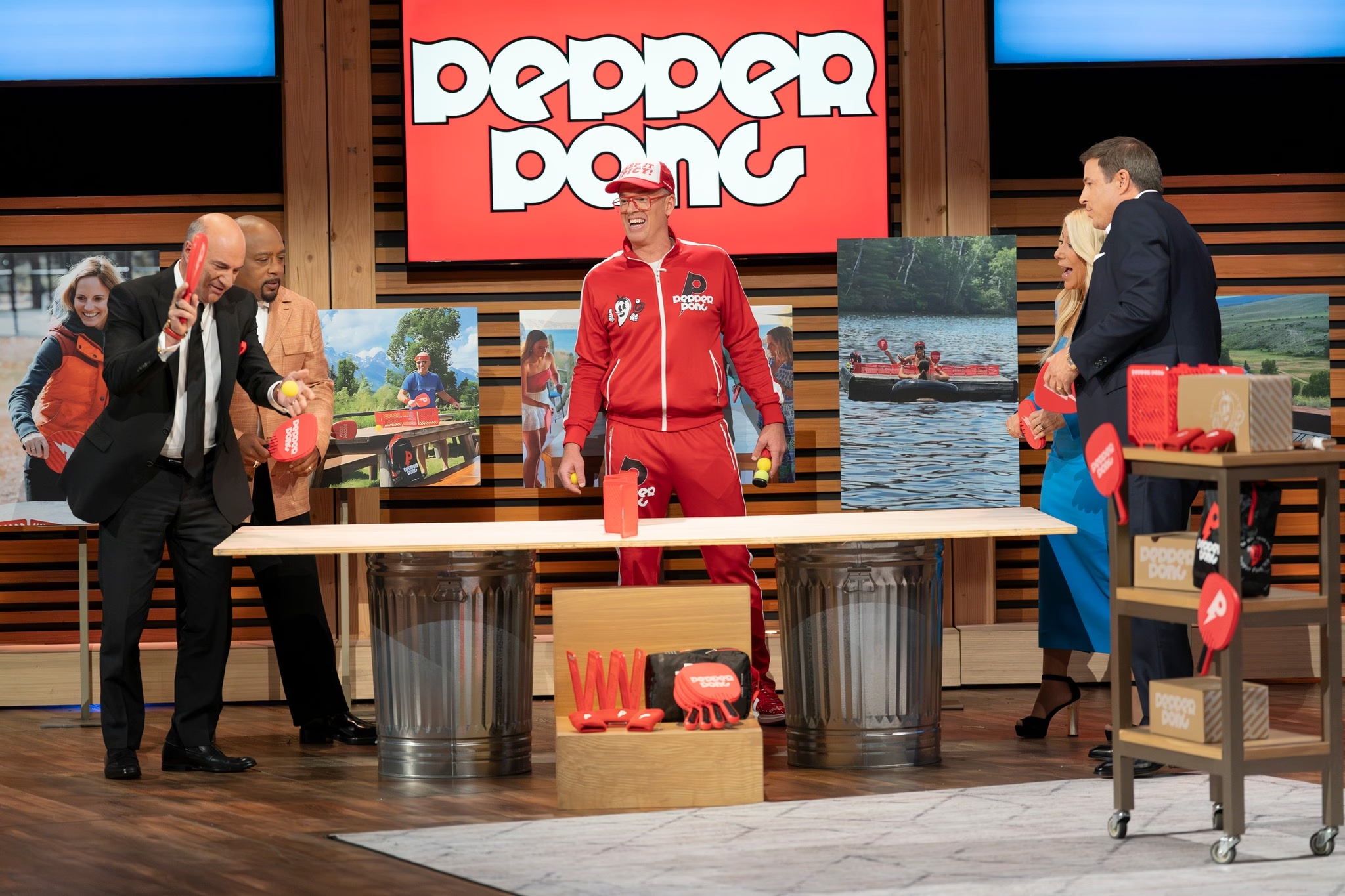
Tom Filippini walked into the Shark Tank during Season 16, Episode 6, looking to secure a $150,000 investment in exchange for 10% equity in Pepper Pong. His valuation sat at $1.5 million, a bold but common starting point for consumer products.
He kicked off the pitch with high energy, demonstrating the game's lightning-fast setup by transforming a standard prop table into a court in a matter of seconds. The Sharks were immediately intrigued by the silent foam balls and the high-quality feel of the paddles.
Filippini passed the gear around, and the investors quickly realized this wasn't just a cheap plastic knockoff; it was a premium, well-engineered product.
When the conversation shifted to the numbers, Filippini proved he had the business acumen to back up the clever design. He revealed that despite launching less than a year prior, Pepper Pong had already racked up $260,000 in net sales, entirely direct-to-consumer through his own website.
He controlled the customer experience tightly, which resulted in a flawless streak of over 160 consecutive five-star reviews. He also noted that he had 10,000 units of inventory ready to move and projected closing out 2024 with $600,000 to $800,000 in revenue.
The primary reason he needed Shark money was scaling. He wanted to drop $100,000 on a second production mold to increase manufacturing volume and keep up with demand.
The Sharks had mixed reactions to this strategy. Lori Greiner loved the product but felt dropping $100,000 on a second mold this early was a massive risk. She advised him to "crawl, walk, and then run," ultimately dropping out. Mark Cuban also admired Filippini's hustle and personal turnaround but didn't see how the business could scale massively beyond Tom's sheer willpower. Mark bowed out as well.
The room's temperature changed when Daymond John spoke up. Deeply moved by Filippini's journey of sobriety, sharing that he too had faced similar struggles, Daymond offered $150,000 for 30% equity, promising to use his retail muscle to blow the brand up in big box stores.
However, Filippini hesitated, stating he wanted to protect the brand's premium feel and wasn't quite ready for mass retail. Respecting the founder's vision, Daymond gracefully withdrew his offer.
This left Todd Graves, the billionaire founder of Raising Cane's Chicken Fingers, who was sitting in as a guest Shark. Graves saw the immense mass appeal and tailgate potential of the product. He offered $150,000 for 25%.
What followed was a classic Shark Tank negotiation. Filippini countered with 17.5%. Graves nudged his offer down to 20%. Filippini shot back with 19%, and Graves finally smiled and accepted the deal.
| Pitch & Offers | Details |
|---|---|
| Initial Ask & Valuation | $150,000 for 10% ($1.5M Valuation) |
| Sharks in the Room | Mark Cuban, Lori Greiner, Kevin O'Leary, Daymond John, Todd Graves |
| Daymond John's Offer | $150,000 for 30% (Withdrawn) |
| Todd Graves' Offer | $150,000 for 25% |
| Final Accepted Deal | Todd Graves: $150,000 for 19% |
What Happened to Pepper Pong After Shark Tank?
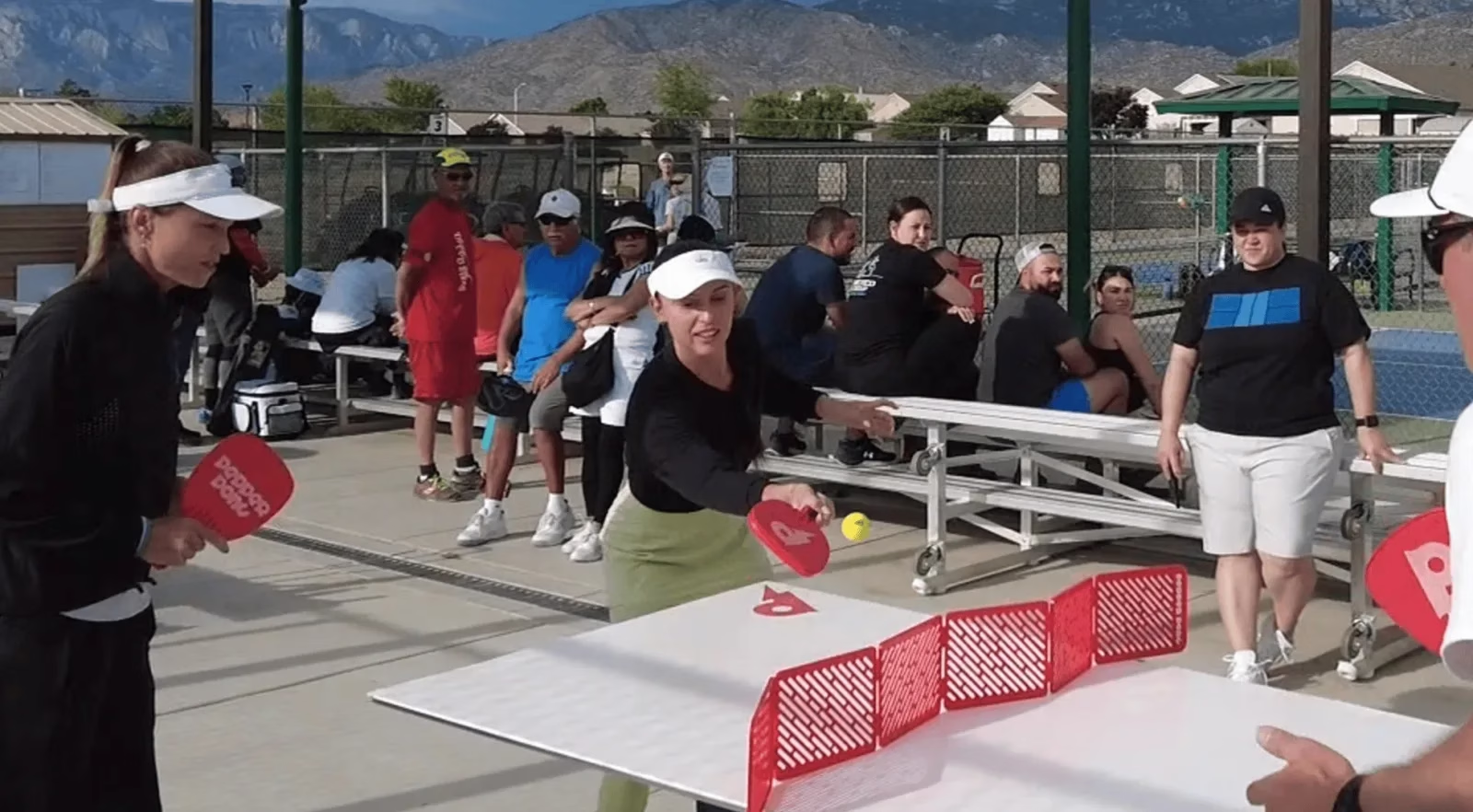
The phrase "Shark Tank Effect" is thrown around a lot, but for Pepper Pong, it was an absolute reality. Immediately following the airing of the episode in late 2024, traffic to the Pepper Pong website exploded. The brand sold out of its core inventory three separate times in just three months, completely validating Todd Graves' investment.
Because Filippini had 10,000 units sitting in inventory prior to the pitch airing, the company was able to capture a massive amount of early capital. The sales generated in the immediate months post-show were so staggering that Filippini was actually able to pay back Todd Graves' initial $150,000 investment almost entirely through cash flow, essentially playing with house money moving into 2025.
The media frenzy caught the eye of the booming professional pickleball industry. Top-ranked professional players like Zane Navratil, Simone Jardim, Parris Todd, and Kamryn Blackwood began publicly endorsing the product. They praised it as the ultimate warmup tool and a fantastic way to keep hand-eye coordination sharp while hanging out in hotel rooms or airport lounges between tournaments.
Despite Filippini's earlier hesitation regarding retail during the pitch, the sheer volume of demand forced his hand in a good way. Over the course of 2025, Pepper Pong transitioned from being an exclusively direct-to-consumer online brand to securing shelf space in major sporting goods retailers across the United States.
Is Pepper Pong Still in Business?
Yes, Pepper Pong is not only still in business, but it is thriving as a dominant force in the recreational gaming sector.
The company has maintained its momentum by staying true to its core product while slightly expanding its offerings. The "Full Set" remains their flagship moneymaker, but they have also introduced the "Double Down" package for larger families and an "8-Pack PLUS" specifically designed for institutional buyers like colleges, intramural sports leagues, and corporate recreation rooms.
They also offer replacement nets and individual paddles, ensuring customers can fix a set rather than having to buy a brand new one if a piece gets lost at a tailgate.
Filippini remains the driving force behind the company. The brand actively runs marketing campaigns highlighting their "Lifetime Guarantee" and 60-day money-back promise, which goes a long way in building consumer trust for a product that costs over $100 at full retail. The company's social media presence remains robust, frequently reposting user-generated content of people playing the game on kitchen islands, in corporate boardrooms, and on the beds of pickup trucks.
What is the Valuation & Net Worth of Pepper Pong?
Pepper Pong's financial health is incredibly strong. When Todd Graves secured 19% of the company for $150,000, it placed the on-air valuation of the business at roughly $789,000.
Thanks to the rapid sell-outs, the expansion into physical sporting goods retail stores, and the lucrative institutional sales (selling $600 bulk packs to universities), the company easily crushed its original $800,000 revenue projection for its debut year.
Today, industry analysts estimate that Pepper Pong's overall company valuation sits comfortably between $2.5 million and $4 million. Furthermore, the estimated net worth of the business itself is reported to be over $1 million.
Because Filippini managed to retain 81% of the equity, his personal net worth has seen a substantial boost, fully vindicating the massive $500,000 personal gamble he took to get the molds manufactured in the first place.
Where to Buy Pepper Pong?
For consumers looking to get their hands on a set, the absolute best place to purchase is directly through the official Pepper Pong website. Buying direct guarantees access to their frequent seasonal sales, such as back-to-school or holiday discounts, where the $119.99 Full Set is routinely dropped down to $79.99. It also ensures you are covered by their 60-day money-back guarantee and lifetime warranty on the components.
Additionally, due to their aggressive post-Shark Tank expansion, you can now find Pepper Pong on the shelves of major national sporting goods retailers and outdoor lifestyle stores across the United States.
While knockoffs frequently pop up on discount marketplace sites under generic names like "indoor portable pickleball," they almost always lack the patented tension net and the heavily engineered, furniture-safe foam balls that make the real Pepper Pong actually playable.
Are Pepper Pong Reviews Actually Good?
During the Shark Tank pitch, Tom Filippini boasted about having a perfect streak of five-star reviews. But does that hold up years later at mass scale?
The consensus remains overwhelmingly positive. On the company's website, the product holds an impressive 4.93 out of 5 stars with well over 100,000 units sold. Verified buyers consistently praise the game for its durability and its unique ability to bridge the gap between kids, teens, and older adults.
The most frequently complimented feature in independent reviews is the foam ball technology. Parents love that the kids can smash the ball as hard as they want indoors without shattering a window or leaving dents in the drywall. College students routinely mention how the whisper-quiet gameplay prevents noise complaints in dorms.
The only consistent critique found on platforms like Reddit revolves around the price tag. Some users feel that $120 is steep for a portable paddle game, leading many to advise waiting for the frequent $80 flash sales before pulling the trigger.
Pepper Pong vs. Traditional Ping Pong
The reason Pepper Pong has survived where other novelty games have failed is that it solves genuine consumer pain points associated with legacy games.
Traditional ping pong tables cost anywhere from $300 to $800, require a massive amount of dedicated, permanent floor space, are incredibly heavy to move, and utilize hard plastic balls that are loud and easily crushed.
Pepper Pong, by contrast, costs a fraction of the price, requires zero dedicated square footage, sets up in 30 seconds, and fits inside a tiny backpack. It recognized that modern consumers value mobility, modularity, and minimalism. By removing the table from table tennis, Tom Filippini didn't just invent a new game; he managed to successfully repackage an American classic for the modern living room.