Table of Contents
You are throwing a backyard barbecue, packing up for a sunny afternoon at the beach, or heading to a Saturday morning tailgate. You need a cooler, but you don't need a heavy, $300 bear-proof fortress that keeps ice solid for ten days. You just need something light, easy to carry, and reliable for a few hours.
That exact realization led two outdoor industry veterans to step onto the set of Shark Tank in late 2024, dragging a brightly colored, squishy cooler and an actual industrial steamroller. The pitch was wild, the product was completely unique, and the negotiations resulted in a high-stakes deal with Daymond John.
But what television audiences didn't see was the brutal economic reality that was about to hit the company right after the cameras stopped rolling.
What is FOAM Cooler?
FOAM Cooler is exactly what it sounds like: a portable beverage and food cooler constructed entirely from 100% EVA foam. If that material sounds familiar, it is the exact same shock-absorbing, waterproof foam used to manufacture the massively popular Crocs footwear.
By ditching hard plastics, metal hinges, and bulky insulation, FOAM created a radically different outdoor product. The traditional hard-sided cooler market has been dominated by brands like Yeti and Pelican, which boast extreme durability for intense outdoor survival. FOAM went the opposite direction.
They built an "everyman's" cooler designed strictly for short-term, everyday recreational use. It does not claim to keep a six-pack freezing cold for a week. Instead, it promises 24-hour ice retention, which is more than enough for a pool party or a boat day.
Because it is made of EVA foam, the cooler is incredibly lightweight, weighing in at a mere four pounds when empty. It is naturally buoyant, meaning if it falls off the back of a pontoon boat, it will float completely upright. The flexible material also makes it practically indestructible against drops and impacts, and the seamless interior means there are no weird cracks or crevices where dirt and mold can hide.
| Product Overview | Details |
|---|---|
| Industry | Outdoor & Recreational Gear |
| Founded Year | 2024 |
| Core Product | The FOAM Cooler (22-Quart) |
| Target Audience | Beachgoers, tailgaters, parents, and casual outdoor enthusiasts |
| Retail Price | $99.00 - $125.00 |
Who is the Founder of FOAM Cooler?
FOAM Cooler was brought to life by two highly experienced product design veterans: David Kittle and Chad Lee. Neither of these men were amateurs in the outdoor recreation space. Combined, they shared decades of experience in product development, design, and retail distribution for massive global brands like Coleman, Little Tikes, Adidas, and Eddie Bauer.
The initial spark for the business came from David Kittle. As a father to a family that managed severe food allergies, Kittle found himself packing food and hauling coolers everywhere he went. He quickly grew incredibly frustrated with the current market options.
The cheap coolers were flimsy, had zippers that constantly snagged, or leaked melted ice all over the trunk of his car. On the other end of the spectrum, the premium coolers were painfully heavy, incredibly expensive, and vastly over-engineered for a simple trip to the local park.
Kittle asked a simple question: Why does a cooler need to be bear-proof if you are just going to a kid's soccer game?
He teamed up with Chad Lee, whose background in retail distribution perfectly complemented Kittle's design skills. Together, they realized that EVA foam was the holy grail material they had been searching for. It was insulating, shockingly light, and easily molded into bright, fun colors.
The duo bootstrapped the company, sinking $150,000 of their own personal savings into research, development, and the first manufacturing runs to get FOAM off the ground.
FOAM Cooler Shark Tank Journey & Pitch
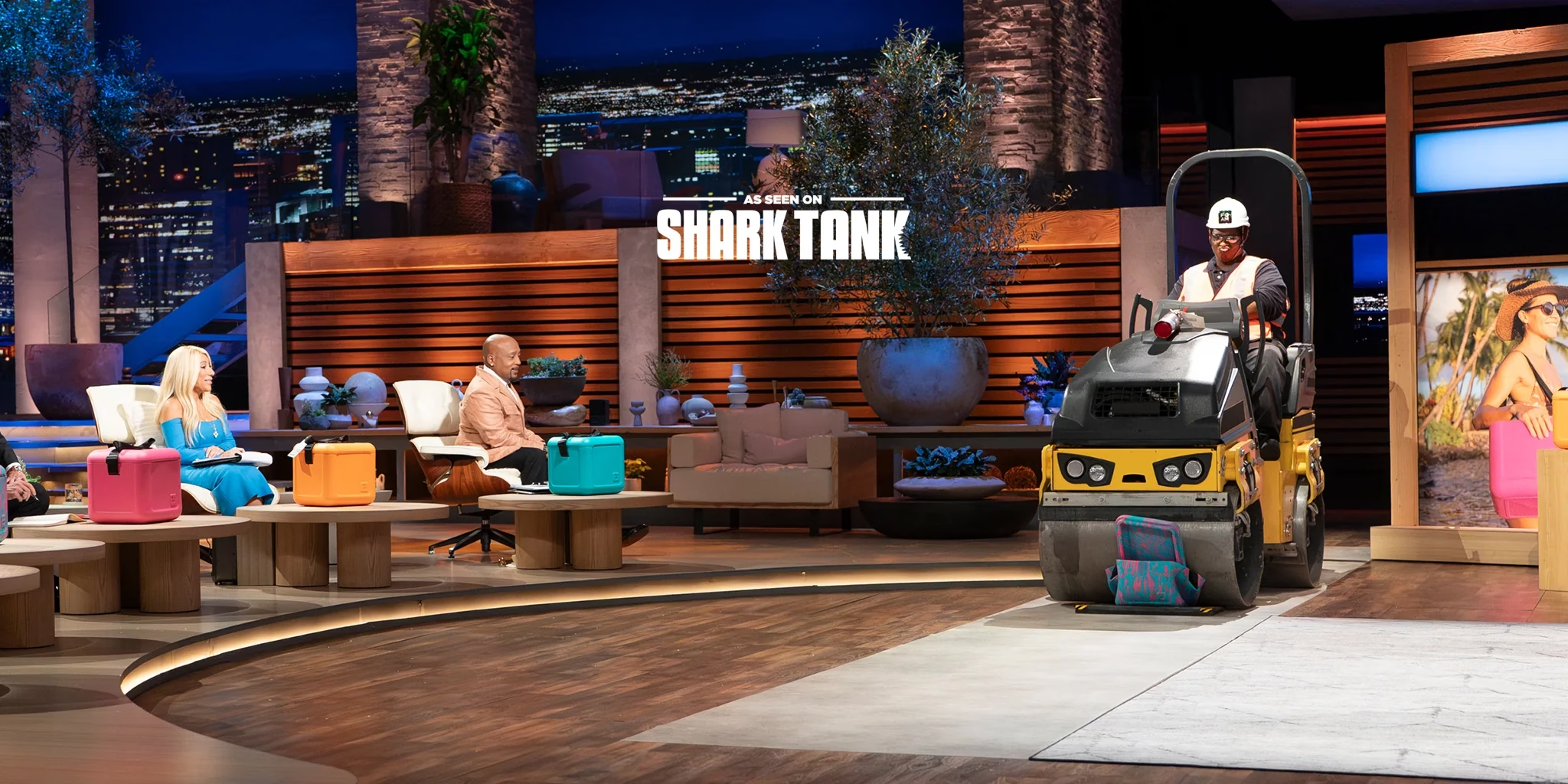
David Kittle and Chad Lee marched into the Tank during Season 16, Episode 6, which aired nationally on November 22, 2024. Wearing bright t-shirts that matched the vibrant colors of their products, they brought high energy and an undeniable level of industry expertise.
They were seeking $150,000 in exchange for 10% equity in their company, giving FOAM Cooler an initial valuation of $1.5 million.
The presentation started with a bang. To prove just how tough EVA foam actually is, the founders wheeled an industrial steamroller onto the set. The Sharks watched in shock as the heavy machinery literally rolled right over a FOAM Cooler, squishing it completely flat against the studio floor.
As the steamroller backed away (accidentally cracking a piece of the set's floor in the process), the cooler instantly bounced back to its original shape without a single scratch or tear. The Sharks were thoroughly entertained.
When the business numbers came out, the Sharks were equally intrigued. The duo revealed they had achieved $114,000 in year-to-date sales for 2024, with another $137,000 in solid commitments, bringing their total revenue pipeline to $251,000 before even stepping on the show.
Better yet, through sheer hustle and cold-calling, Chad Lee had secured a massive retail purchase order. FOAM was scheduled to launch in 97 Target stores just a week after filming, and Target had agreed to the deal without even seeing a physical sample first.
Financially, the margins were standard for retail gear. Each cooler cost $25 to manufacture. They wholesaled the product for around $50 to big-box stores and retailed it directly to consumers for $99.
However, the Sharks had some mixed reactions to the price point. Daymond John was instantly skeptical, stating that $99 felt incredibly high for what looked like a simple piece of foam, comparing it to cheap styrofoam coolers you can buy at a gas station for five bucks.
Mark Cuban loved the product design and praised the founders' hustle, but felt the cooler space was too highly saturated. He bowed out, stating the risk-to-reward ratio was simply not there for him.
Guest Shark Todd Graves, the founder of Raising Cane's, noted that outdoor ice chests simply were not in his wheelhouse, and he dropped out. Lori Greiner loved the design and promised to be a customer, but she also declined to invest.
That left Kevin O'Leary and Daymond John. O'Leary liked the Target deal but viewed the business as a massive gamble. He offered the $150,000 but demanded a massive 33.3% equity, wanting to be a third partner. Daymond John, seeing the potential for brand licensing, jumped in with an offer of $150,000 for 30% equity.
Kittle and Lee tried to play hardball. They counter-offered Daymond at 17%, which he immediately shot down. They tried again at 25%, but Daymond held firm. Knowing they needed a Shark's retail connections to survive the big-box transition, the duo finally accepted Daymond's offer.
| Pitch & Offers | Details |
|---|---|
| Initial Ask & Valuation | $150,000 for 10% ($1.5 Million Valuation) |
| Sharks in the Room | Mark Cuban, Kevin O'Leary, Lori Greiner, Daymond John, Todd Graves |
| Kevin O'Leary's Offer | $150,000 for 33.3% equity |
| Daymond John's Offer | $150,000 for 30% equity |
| Final Deal Accepted | Daymond John ($150,000 for 30% equity) |
What Happened to FOAM Cooler After Shark Tank?
The immediate aftermath of the episode airing was nothing short of spectacular. According to Chad Lee, the company's website was averaging a measly 10 to 12 visitors per day prior to the broadcast. On the night of November 22, 2024, the website was flooded with 27,000 visitors in just two hours. Sales skyrocketed overnight.
With Daymond John's backing, they aggressively pushed their retail footprint. They successfully executed their launch into the initial 97 Target stores. From there, the momentum continued.
They landed coveted shelf space inside REI, a massive win for any outdoor gear brand. Soon after, FOAM Coolers were being listed on Walmart.com, Amazon, Wayfair, and even featured on the home shopping giant QVC. In July 2025, the brand received a massive national daytime television bump when it was featured on ABC’s Live with Kelly and Mark.
They also expanded their product catalog. They released their "Gen2" coolers, offering improved carrying straps and expanding the color lineup to eight distinct shades, including a bright Cherry Red.
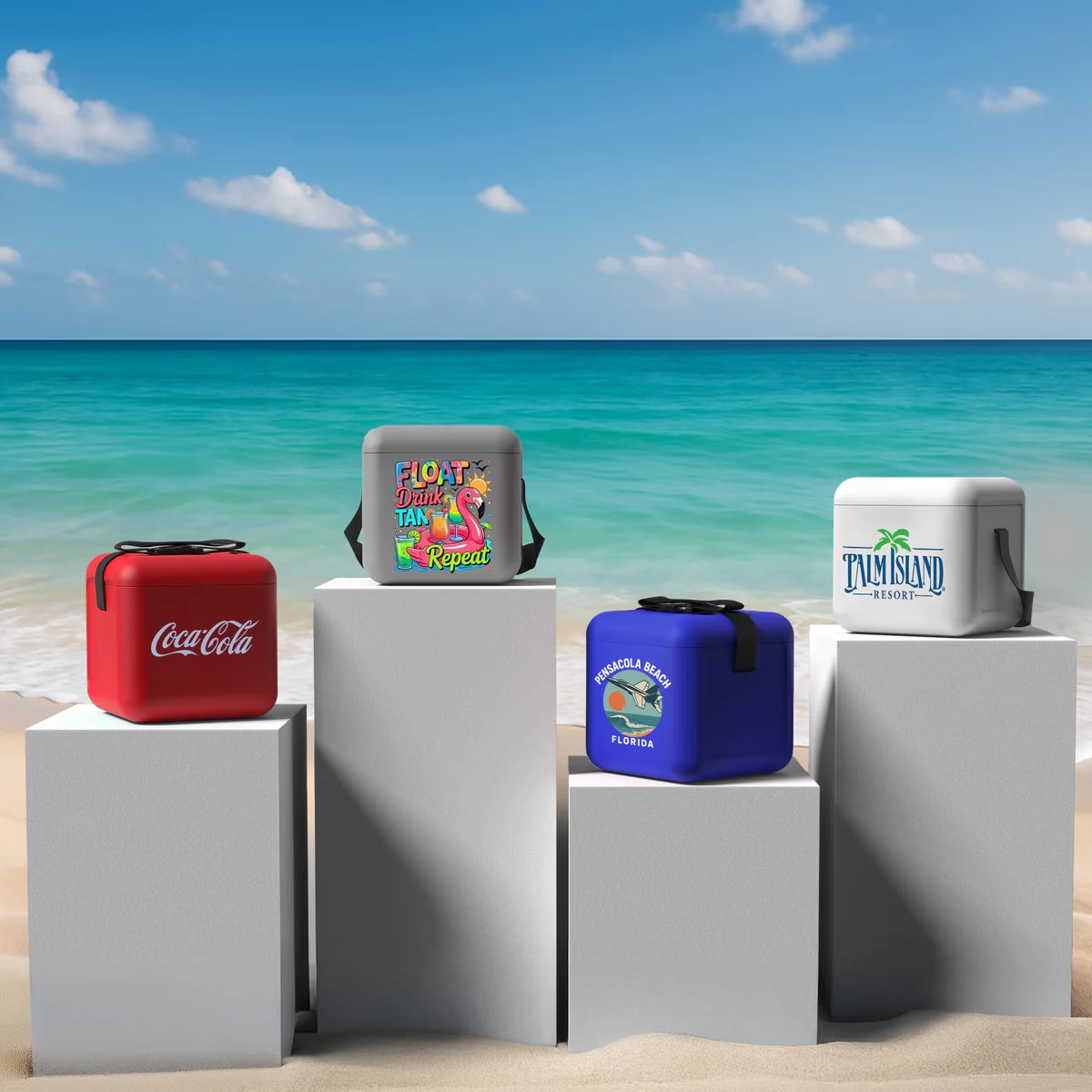
Recognizing the B2B potential that Daymond John loved, FOAM partnered with the Koozie Group, a massive promotional supplier. This allowed corporate clients to order bulk FOAM Coolers with custom printed company logos.
The partnership with Daymond John also extended beyond pure business. In 2024, Chad Lee's wife was tragically diagnosed with breast cancer. In October 2025, Daymond John personally filmed a promotional video for the brand to help push a breast cancer awareness initiative, where FOAM donated a portion of all October sales to cancer research.
Is FOAM Cooler Still in Business? The Tariff Crisis
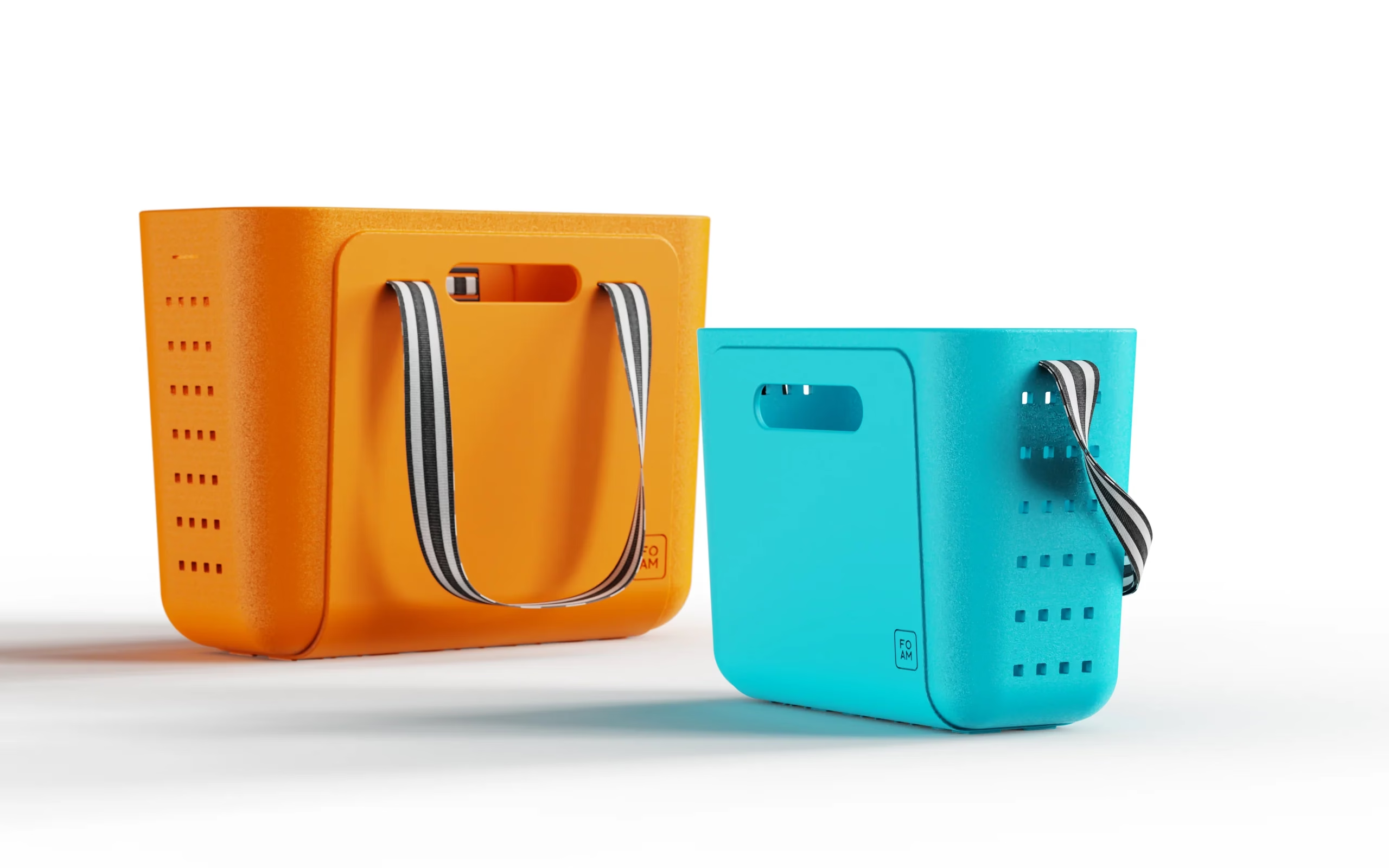
Yes, FOAM Cooler is absolutely still in business. You can actively purchase their products online and find them sitting on the shelves of over 160 brick-and-mortar retail stores across the United States. They have even launched a new product line called the "FOAM Anywhere Tote," utilizing their signature EVA foam to create a waterproof, flexible beach bag that competes directly with popular brands like Bogg Bag.
However, looking at the brand's impressive retail presence only tells half the story. Behind the scenes, FOAM Cooler has been fighting for its absolute life.
In early 2025, new executive orders from the United States government placed massive, sweeping tariffs on goods imported from China. Because FOAM Coolers are manufactured in Chinese facilities, the company was caught completely in the crossfire. The financial hit was immediate and devastating.
Chad Lee revealed that the cost to import a single shipping container of their coolers jumped from a manageable $4,500 to a back-breaking $22,800. Another shipment resulted in a staggering $55,000 tariff bill.
The founders scrambled to find a solution. They lobbied U.S. lawmakers for small business manufacturing grants and spent months trying to move their entire manufacturing process stateside to American factories. Unfortunately, the cost of American labor and tooling for EVA foam proved completely unfeasible for a startup of their size. They were forced to keep production in China and absorb the massive tax hits.
To survive the bleeding margins, FOAM had to raise the retail price of their coolers from $99 to $125. The price hike hurt direct-to-consumer sales, leading to mixed customer reviews on platforms like Amazon, where some buyers complained that $125 was simply too much money for a cooler that did not hold ice for multiple days.
The financial strain became severe. In a candid early 2026 podcast interview on Entrepreneurship and Intellectual Property, Chad Lee confessed a stark reality: the company was essentially broke. The exorbitant tariff payments had completely drained Kittle and Lee's personal savings accounts. Despite the millions of dollars in top-line retail sales, the profit margins had been entirely wiped out by import taxes, leaving the founders and their staff working tirelessly without drawing a single dollar in salary.
What is the Valuation & Net Worth of FOAM Cooler?
Determining the exact valuation of FOAM Cooler is complex due to their rapid retail growth actively fighting against their severe cash flow issues.
When David Kittle and Chad Lee accepted Daymond John's offer on Shark Tank, they agreed to trade 30% of the company for $150,000. That specific deal effectively lowered the company's valuation from the founders' initial $1.5 million estimate down to a hard valuation of $500,000.
Since that episode, FOAM has undeniably generated millions of dollars in lifetime gross sales, driven by their massive expansions into Target, REI, and their B2B corporate partnerships. Under normal economic conditions, this retail footprint would easily push the company's valuation into the $2 million to $4 million range.
However, because the 2025 import tariffs annihilated the company's profit margins and forced the founders to drain their cash reserves, the actual net worth of the business is heavily suppressed.
The estimated valuation of FOAM Cooler sits steadily around $1 million. While the brand holds massive equity in its retail relationships and intellectual property, the founders' current estimated net worth tied to the business remains relatively low until they can secure better manufacturing margins or outlast the current trade policies.
Where to Buy FOAM Cooler?
Despite the behind-the-scenes financial drama, FOAM has made it incredibly easy for American consumers to get their hands on a cooler. The most direct way to purchase the Gen2 coolers and the new FOAM Anywhere Totes is directly through their official website, where the brand has managed to stabilize the core cooler price back down to $99.
For shoppers who prefer to see the product in person to test the weight and flexibility, FOAM is stocked in the camping aisles of select Target and REI locations nationwide.
You can also order them online with fast shipping through Amazon, Walmart.com, and Wayfair, though consumers should double-check the listings, as some third-party distributors on Wayfair and Walmart still list the coolers at the elevated $125 tariff-era price point.
Are FOAM Coolers Worth the Price? (Customer Reviews)
The customer consensus on FOAM Coolers heavily depends on what the buyer is expecting out of the product.
For the target demographic, parents lugging snacks to a youth baseball game, beachgoers, or folks needing a quick cooler for a backyard party, the reviews are overwhelmingly positive.
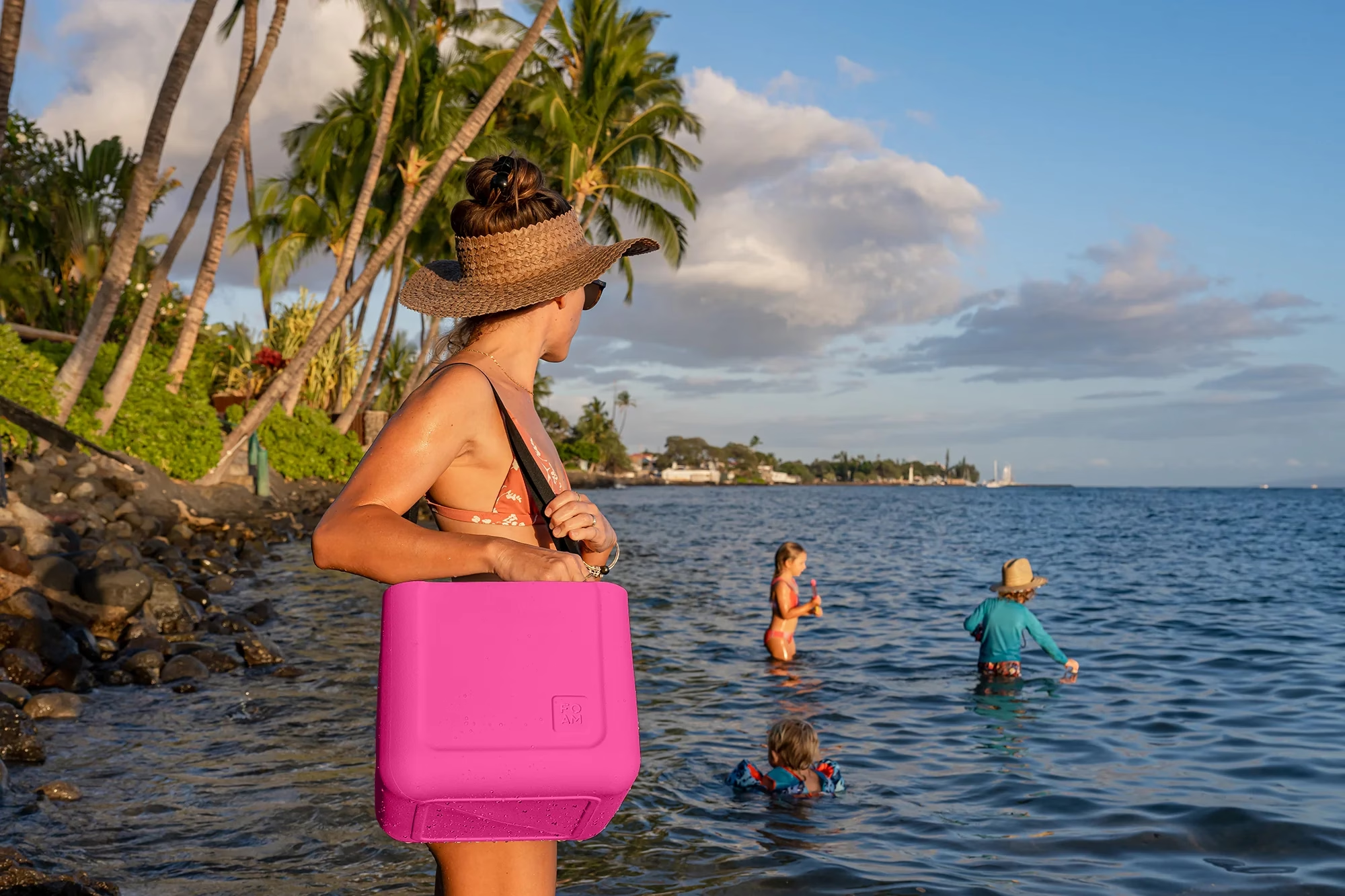
Customers consistently praise the unbelievable four-pound weight, noting that it is far easier to carry a fully loaded FOAM cooler from the car to the beach than dragging a heavy rotomolded plastic cooler. Fans also love the bright aesthetic and the fact that it effortlessly floats in the pool.
However, the negative reviews stem almost entirely from the price-to-performance ratio. Hardcore outdoorsmen and campers who accidentally purchase the cooler expecting Yeti-level performance are left disappointed. Critical reviews on Amazon note that the cooler struggles to keep drinks ice-cold past the 12-hour mark on exceedingly hot summer days.
Furthermore, many consumers echo Daymond John's initial Shark Tank hesitation, stating that spending roughly $100 on an EVA foam box feels excessively steep when you can buy a standard hard-plastic Igloo cooler at Walmart for under $30.
Ultimately, FOAM Cooler survived the Shark Tank, conquered the retail world, and is now battling the realities of global economics. Whether Kittle and Lee can weather the storm and finally take home a paycheck remains to be seen, but their lightweight invention has undeniably left a permanent, brightly colored mark on the outdoor gear industry.

Madhav Kushwaha
SEO Analyst & Digital Marketer
Madhav analyzes complex business pitches and provides high-level updates for tech startups and reality television ventures. Specializing in advanced organic search strategies, he brings clarity to the rapidly evolving digital landscape.