Table of Contents
It all started with a hangover. During the height of the 2020 pandemic lockdowns, Megan Klein found herself drinking more wine than usual to take the edge off. Like millions of Americans, she quickly realized that the morning-after headaches, brain fog, and sluggishness were taking a serious toll.
She wanted the relaxing ritual of an evening cocktail, but she was completely over the negative side effects of alcohol. When she scoured the market for alternatives, she found plenty of sparkling waters and sugary sodas, but nothing that actually delivered a mood-boosting buzz.
Determined to find a solution, she turned to the power of plant medicine. By blending functional mushrooms and botanical terpenes, she created a beverage that looked, tasted, and felt like a high-end cocktail, completely minus the booze. She called it Little Saints, and it quickly became a massive hit in the rapidly growing "sober curious" space.
By the time she walked onto the set of Shark Tank for the Season 16 premiere, she was already sitting on a multi-million dollar beverage empire. But walking into the Tank and walking out with a deal are two very different things.
What is Little Saints?
Little Saints is a premium brand of non-alcoholic cocktails and spirits designed to mimic the sensory experience and relaxing effects of traditional alcoholic beverages. Instead of relying on ethanol to give consumers a buzz, Little Saints utilizes a proprietary blend of functional mushrooms, specifically Reishi and Lion's Mane, along with botanical terpenes.
These natural ingredients are known in the wellness community for promoting mental focus, reducing stress, and inducing a mild sense of euphoria and relaxation without any psychedelic effects.
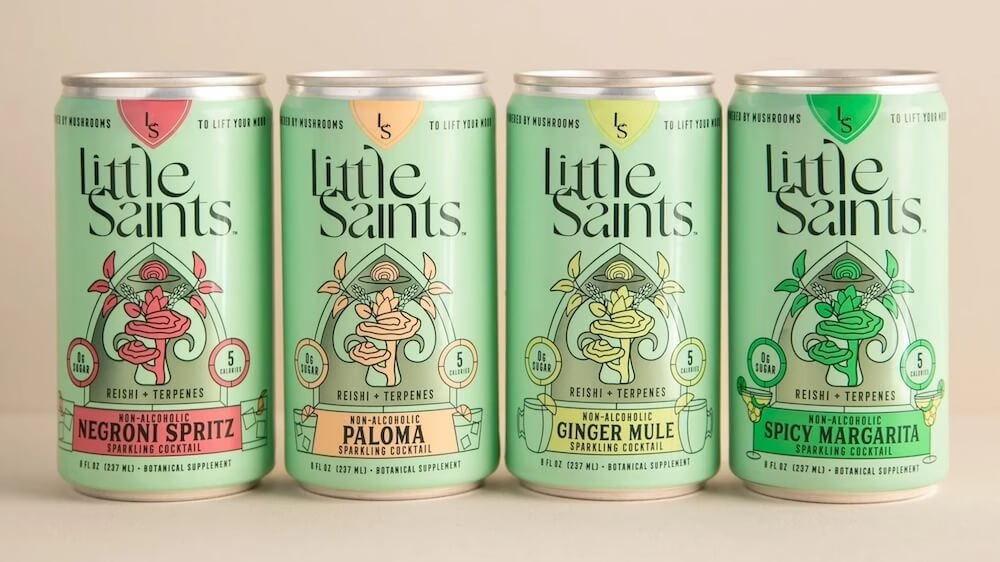
The product line is split into two main categories: ready-to-drink canned mocktails and bottled non-alcoholic spirits. The canned mocktails recreate classic bar favorites like the Spicy Margarita, Paloma, Ginger Mule, and Negroni Spritz. The bottled spirits, including their top-selling St. Ember, St. Juniper, and St. Oak, are meant to be used as base liquors for mixology at home.
What truly sets Little Saints apart in the crowded beverage aisle is its nutritional profile. The drinks are completely sugar-free, utilizing monk fruit as a natural sweetener, and clock in at a remarkably low five calories per serving. For health-conscious consumers looking to cut back on alcohol without sacrificing their social lives, Little Saints provides a clean, plant-based alternative.
| Product Overview | Details |
|---|---|
| Industry | Non-Alcoholic Beverages / Wellness |
| Founded Year | 2021 |
| Founder | Megan Klein |
| Core Product | Mushroom-infused non-alcoholic spirits & mocktails |
| Target Audience | Sober-curious adults, health-conscious millennials |
| Retail Price | $59.99 (12-pack cans), $49.99 (Bottled Spirits) |
Who is the Founder of Little Saints?
Megan Klein is the brains and the driving force behind Little Saints. Long before she was mixing mushroom mocktails, Klein built a formidable career in environmental law. She spent years working as an advocate against industrial pollution, fighting to protect natural resources and promote sustainability.
Her passion for the environment eventually led her out of the courtroom and into the agricultural sector, where she managed a large-scale vertical farming operation.
This background in sustainable agriculture gave Klein a deep, hands-on understanding of plant biology, supply chains, and consumer packaged goods (CPG). She previously founded a plant-based salad dressing and dip brand, which gave her the foundational retail experience needed to launch a beverage company.
When the idea for Little Saints hit her during the pandemic, Klein didn't just test recipes in her kitchen; she collaborated with professional food scientists and plant medicine experts to ensure the functional mushrooms would actually deliver on their promises without compromising the taste. Believing fiercely in her vision, she poured a massive $1 million of her own life savings, earned from her previous business ventures, into getting Little Saints off the ground in 2021.
Little Saints Shark Tank Journey & Pitch
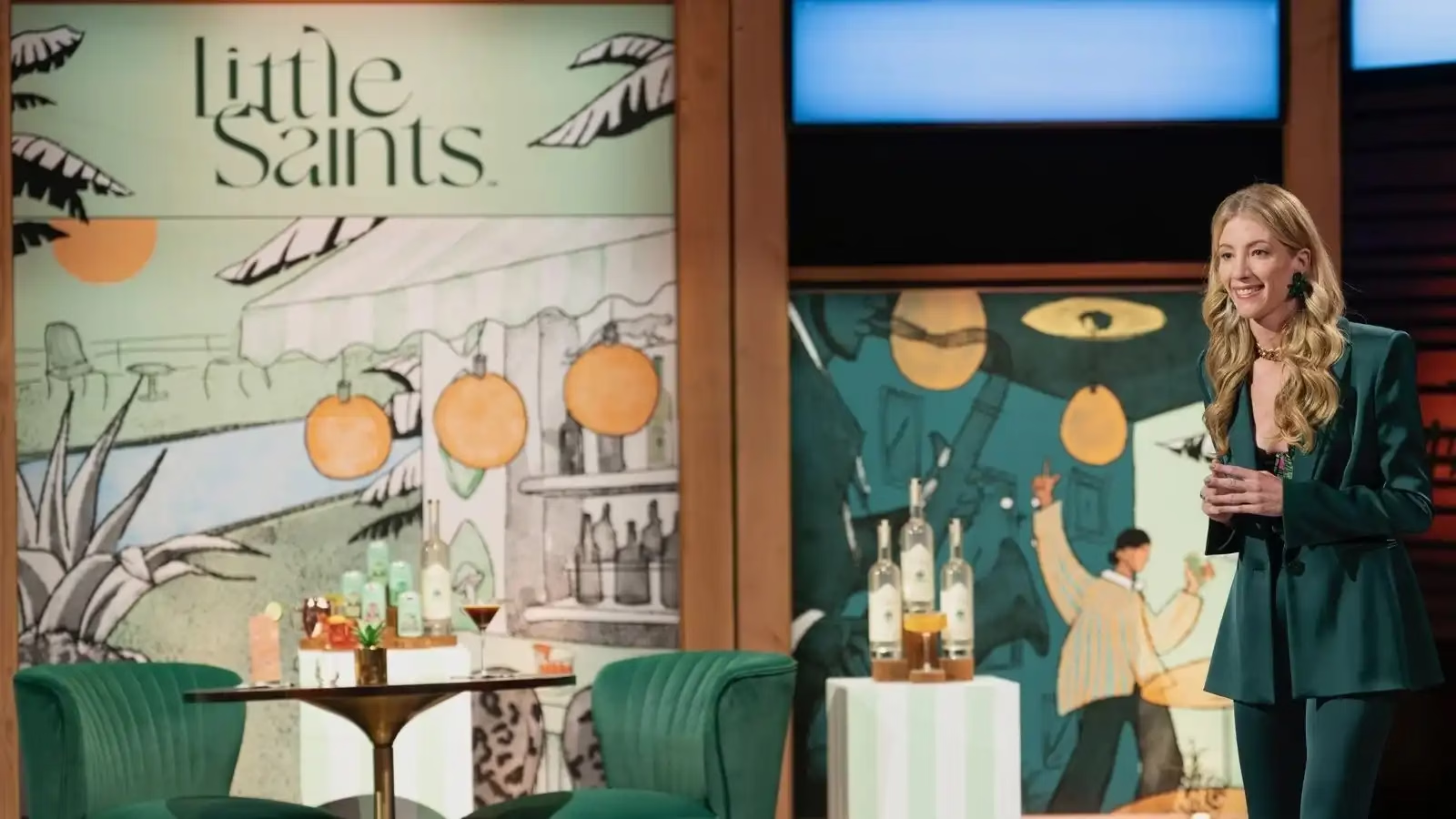
Megan Klein stepped onto the iconic Shark Tank carpet during the Season 16 premiere in October 2024. She was seeking a $500,000 investment in exchange for 5% equity in Little Saints, slapping a bold $10 million valuation on her company right out of the gate.
She started her pitch by handing out samples of her canned mocktails and her flagship bottled spirit, St. Ember. The taste test yielded mixed results. Guest Shark Rashaun Williams and Kevin O'Leary were pleasantly surprised by the Paloma, noting that it actually tasted like a premium cocktail.
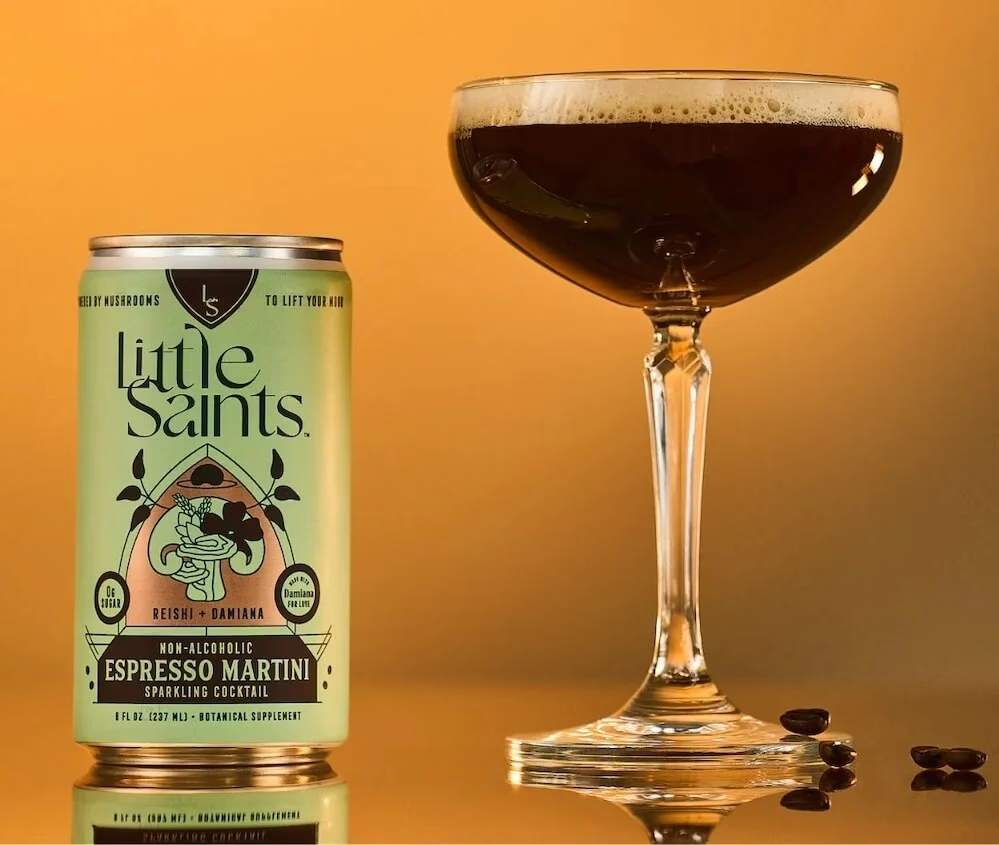
However, the espresso martini variation did not go over well with everyone. Mark Cuban took one sip, puckered his face, and bluntly stated, "That's not my kind of taste," prompting Lori Greiner to agree.
Despite the split opinions on the flavor, the mood in the room shifted dramatically when Klein dropped her financial numbers. She revealed that she had invested $1 million of her own money and had already raised an additional $2.2 million from outside investors in October 2023 at a $6 million valuation. But the real jaw-dropper was her sales data: Little Saints had generated a staggering $5 million in sales in the trailing 12 months.
She backed up her massive valuation with rock-solid unit economics. Her bottled spirit cost $7 to produce, $23 fully shipped to the customer's door, and retailed for $49.99, resulting in a highly lucrative 54% profit margin. Her customer acquisition cost (CAC) was $42, but her lifetime value (LTV) ratio was an incredibly healthy 4x.
| Pitch & Offers Breakdown | Details |
|---|---|
| Initial Ask & Valuation | $500,000 for 5% ($10M Valuation) |
| Sharks in the Room | Mark Cuban, Kevin O'Leary, Lori Greiner, Daymond John, Rashaun Williams |
| Rashaun Williams' Offer | $500,000 for 10% equity |
| Kevin & Rashaun's Offer | $500,000 for 15% equity |
| Final Deal | No Deal (Megan walked away) |
Despite the flawless math, the Sharks started dropping. Lori Greiner opted out because she simply wasn't passionate about the sour flavor profiles of the drinks. Daymond John couldn't get past the $10 million valuation and quickly bowed out. Mark Cuban, historically skeptical of homeopathic or supplement-based claims, stated he wasn't interested in the product space and exited.
This left Guest Shark Rashaun Williams and Kevin "Mr. Wonderful" O'Leary. Williams, deeply impressed by Klein's hustle and metrics, offered her the $500,000 but wanted 10% equity, effectively cutting her valuation in half. O'Leary then jumped in, proposing that he and Williams team up to offer the $500,000 for 15% equity.
Klein, fiercely protective of the valuation she had built over three years, refused both offers. She confidently countered with $1 million for 10% equity, attempting to maintain her $10 million valuation while doubling the cash injection. Both Williams and O'Leary refused the counter. Unwilling to give up too much of her company, Klein thanked the Sharks and walked out of the Tank without a deal.
What Happened to Little Saints After Shark Tank?
Walking away from a Shark Tank deal is always a massive gamble, but for Megan Klein, it paid off almost immediately. The exposure from the Season 16 premiere created a massive surge in website traffic and sales, commonly known as the "Shark Tank effect."
Rather than mourning the loss of a Shark partner, Klein used the national television exposure as incredible leverage. Shortly after her episode aired, she took to her company's social media platforms to announce a massive victory: Little Saints had successfully secured a new round of fundraising from outside investors. The kicker? The funding round valued Little Saints at $20 million, double the valuation she had asked for on the show, and quadruple the valuation that the Sharks had tried to push on her.
Armed with fresh capital and nationwide brand awareness, the company hit the gas pedal on its retail expansion. They officially partnered with Sprouts Farmers Market, placing Little Saints products on the shelves of hundreds of locations across the country. They also tapped into the lucrative wellness market by securing placements in high-end yoga studios, boutique wellness centers, and specialty non-alcoholic bottle shops.
To keep the momentum going, the brand expanded its product line. They launched new seasonal flavors, including a highly popular Spiced Old Fashioned, and introduced various bundle packs like the "Day to Night Set" to encourage bulk purchasing and drive up their average order value.
Is Little Saints Still in Business?
Yes, Little Saints is not only still in business but is thriving as a dominant player in the alternative beverage space. The company completely avoided the pitfalls that many fast-growing startups face by carefully managing their cash flow and leaning heavily into strategic retail partnerships.
Today, Little Saints products can be found in nearly 800 physical retail locations across the United States. They have successfully established themselves as a go-to brand for major cultural movements like "Dry January" and "Sober October," running aggressive, highly targeted marketing campaigns during these peak months.
The company has also continued to refine its formulas. Early on, Little Saints experimented with incorporating CBD into their beverages but ultimately phased it out after realizing that CBD regulations created unnecessary hurdles for nationwide shipping and alienated a portion of their target demographic. By strictly focusing on functional mushrooms and botanical terpenes, they bypassed the legal gray areas of the cannabis industry, allowing for frictionless e-commerce sales and easier onboarding with major national grocery chains. Looking forward, the company is actively exploring eco-friendly packaging initiatives and plotting a strategy for international expansion.
What is the Valuation & Net Worth of Little Saints?
When Megan Klein pitched the Sharks in late 2024, she valued Little Saints at $10 million based on her $5 million trailing revenue and strong profit margins. However, thanks to her successful post-show fundraising efforts, the company achieved an official valuation of $20 million shortly after the episode aired.
Industry analysts estimate the overall valuation of Little Saints to be comfortably sitting between $25 million and $30 million. This growth is driven by their expanded retail footprint, the explosion of the global non-alcoholic beverage market, and their incredibly sticky customer base (evidenced by their strong 4x LTV-to-CAC ratio).
While Megan Klein's exact personal net worth is private, taking into account her initial $1 million personal investment, her previous successful exits in the CPG space, and her retained majority equity in Little Saints, her estimated net worth is currently projected to be around $15 million. By walking away from the Sharks and betting on herself, Klein ensured that she kept the lion's share of the wealth her company is generating.
Where to Buy Little Saints?
If you are looking to try the mushroom-powered mocktails for yourself, the absolute best place to purchase Little Saints is directly through their official website. Buying direct offers consumers access to exclusive variety packs, like the 24, 36, and 48-can bundles, which significantly drive down the cost per can. The website also features a "Subscribe & Save" option for their most loyal customers.
For those who want to pick up a pack in person, Little Saints has an extensive retail footprint. Their largest national partner is Sprouts Farmers Market, making them easily accessible across the United States. Additionally, they are stocked in hundreds of independent health food stores, premium liquor stores that feature non-alcoholic sections, and upscale restaurants and bars that cater to the sober-curious crowd.
Are Little Saints Reviews Good?
The reviews for Little Saints are generally highly positive, though they highlight how subjective taste can be when it comes to functional beverages.
On their official website, customers rave about the relaxing, mood-boosting effects. Many reviewers note that the drinks have successfully replaced their nightly glass of wine, helping them unwind after a long day without impacting their sleep quality or leaving them groggy the next morning. The Spicy Margarita and the St. Ember bottled spirit consistently rank as fan favorites for their complex, bite-like flavor profiles that genuinely mimic alcohol.
However, independent reviews on platforms like Reddit offer a more mixed perspective. While many praise the clean ingredients and the actual effectiveness of the Reishi and Lion's Mane, some consumers struggle with the price point, noting that $60 for a 12-pack of canned beverages is a steep investment.
Furthermore, as Mark Cuban pointed out on the show, the earthy, slightly bitter undertones of functional mushrooms aren't for everyone. Some reviewers find the taste a bit too unconventional compared to standard fruit sodas.
Ultimately, for consumers genuinely seeking a sophisticated, adult beverage that provides a tangible sense of relaxation without the alcohol, Little Saints delivers exactly what it promises.