Table of Contents
Imagine walking onto the biggest business stage in America, fighting to represent your culture, and walking away completely empty-handed. For most entrepreneurs, a rejection inside the Shark Tank signals the end of the road. But for the founders of 1587 Sneakers, a brutal pass from Mark Cuban and Kevin O'Leary was just the opening act.
Two years after their national television debut, this boutique footwear brand isn't just fighting for market share in the cutthroat apparel industry, they are currently locked in a highly publicized, David-versus-Goliath federal court battle against Super Bowl champions Patrick Mahomes and Travis Kelce.
From the premium leather workshops of Italy to the chaotic pressure cooker of reality television, and finally into the halls of a US District Court, the trajectory of 1587 Sneakers is anything but a standard business case study. It is a story about the true cost of customer acquisition, the painful realities of trademark law, and what happens when an underdog refuses to back down.
Here is the complete, up-to-date 2026 breakdown of 1587 Sneakers, their Shark Tank journey, and where the brand stands today.
What is 1587 Sneakers?
1587 Sneakers is an independent, direct-to-consumer footwear and apparel brand specifically designed, owned, and inspired by Asian American culture. The company's name is highly intentional: 1587 marks the first documented year that Asians (specifically Filipino sailors) arrived in what is now the United States. The brand's core mission is to empower Asian Americans to be unapologetically themselves, weaving cultural pride directly into high-end street fashion.
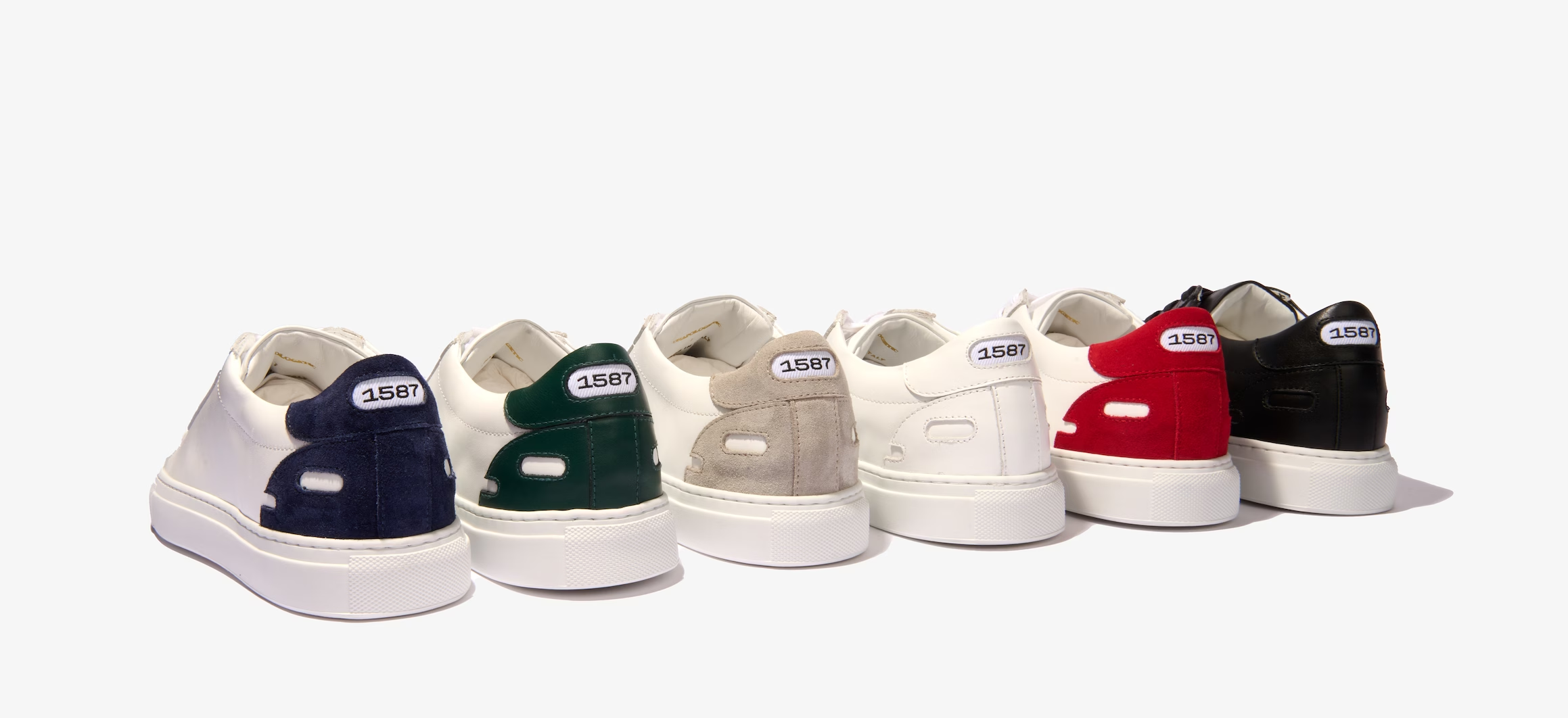
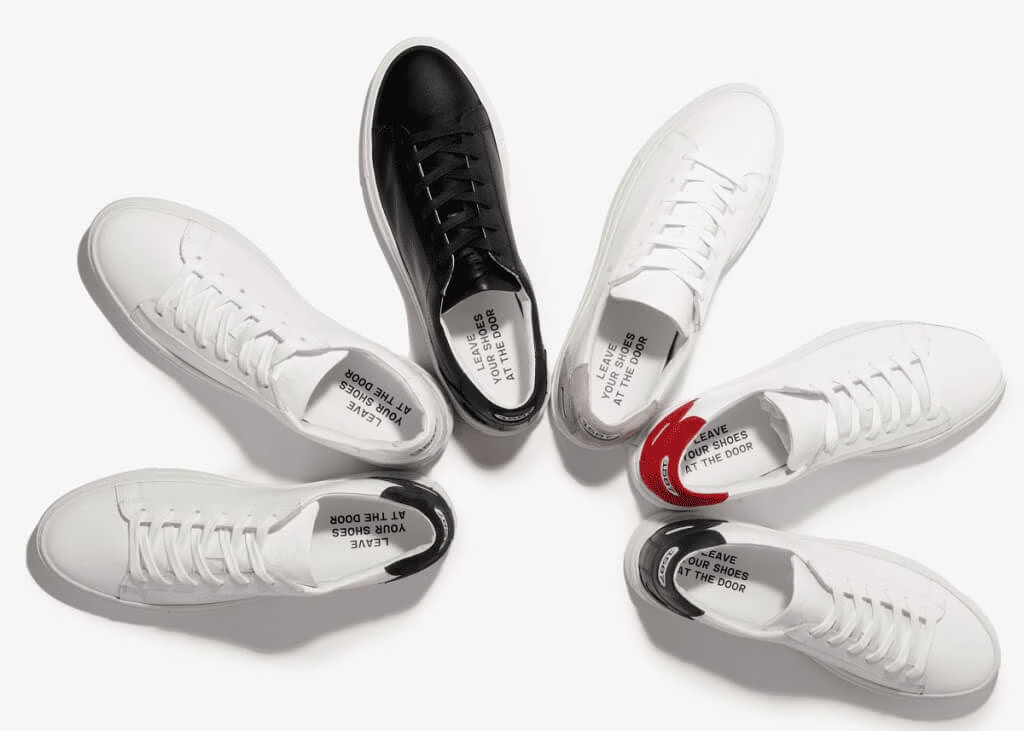
Initially, the company differentiated itself through premium, old-world craftsmanship. Their flagship sneakers were handmade in Italy using full-grain leather and natural rubber soles, designed to resist the creasing and warping that plague mass-market synthetic shoes. Details mattered; the brand’s logo was stylized to resemble Asian characters, and the insoles featured culturally resonant messaging like "Leave your shoes at the door."
However, operating in the premium footwear space requires massive capital. Recognizing the need to reach a broader audience, 1587 Sneakers eventually expanded its supply chain. While they still offer their high-end European-made models, they have since introduced lines manufactured in Asia to provide more accessible price points without completely sacrificing their premium aesthetic.
| Category | Details |
|---|---|
| Business Name | 1587 Sneakers |
| Industry | Footwear & Apparel |
| Founded Year | 2023 |
| Core Product | Culturally inspired, premium leather sneakers |
| Target Audience | Asian Americans and sneaker enthusiasts |
| Retail Price | Starting at $155 – $288 (Depending on origin) |
Who is the Founder of 1587 Sneakers?
1587 Sneakers was brought to life by co-founders Adam King and Sam Hyun, two men with vastly different backgrounds who united over a shared frustration with the footwear industry.
Adam King, the company's CEO, is a seasoned veteran of the shoe game. After graduating from Emory Business School, King initially took a safe, lucrative job at a corporate law firm in New York City. However, his true passion was sneaker culture.
In a legendary display of hustle, King recorded video introductions of himself and persistently mailed them directly to the home address of Reebok’s then-CEO, Uli Becker. The stunt worked. King broke into the industry, spending the next 15 years working across the globe for heavyweights like Adidas and Reebok, and later cutting his teeth at KOIO, a luxury Italian leather sneaker startup.
Throughout his career, King noticed a glaring blind spot: Asian Americans drove a massive portion of hype-sneaker sales, yet almost no major brands actively represented or catered to their specific cultural identity.
Sam Hyun brought the megaphone. A prominent social activist, public speaker, and former director of federal relations for the City of Boston, Hyun had spent years advocating for the AAPI (Asian American and Pacific Islander) community. He even earned the title of the Boston Globe's 2021 Citizen of the Year.
Hyun brought a massive built-in audience to the table, boasting over 250,000 personal followers on social media. Together, King’s manufacturing expertise and Hyun’s community influence seemed like the perfect recipe to disrupt a multi-billion-dollar industry.
1587 Sneakers Shark Tank Journey & Pitch
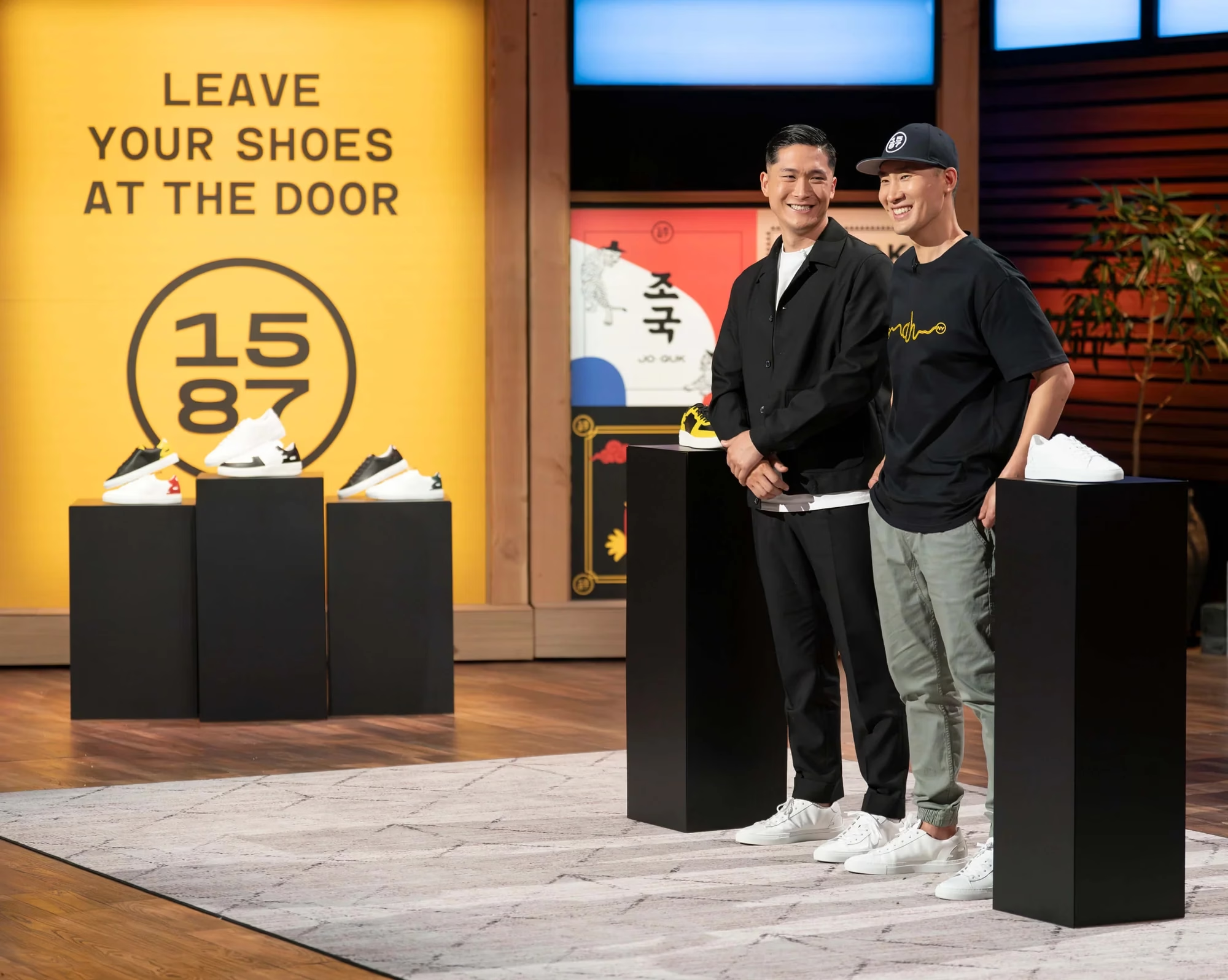
Adam King and Sam Hyun stepped onto the iconic Shark Tank carpet during the Season 16 premiere, which aired in October 2024. They came in hot, seeking a $100,000 investment in exchange for a highly specific 15.87% equity stake in their business.
The pitch began flawlessly. The duo leaned heavily into their brand narrative, explaining that 30% of their existing customers were Asian Americans and that they were building a lifestyle movement, not just a shoe company. They handed out samples of their Italian-made sneakers, and the Sharks were visibly impressed by the high-quality leather and premium construction.
Then, the financial interrogation began. The founders revealed that in their first ten months of business, they had generated a respectable $240,000 in revenue, with projections to hit $500,000 over the next year.
Their unit economics were solid for a premium brand: their Italian-made shoes cost $110 landed, and retailed for $288. Furthermore, they announced a pivot to Asian manufacturing for newer models, which dropped the landed cost to $90 with a retail price of $155. Their customer acquisition cost (CAC) was sitting at a highly efficient $45, with an average order value of $170.
Despite the healthy margins, the pitch quickly unraveled.
Kevin O'Leary was the first to poke holes in the business model. When Hyun revealed that he had a quarter of a million personal followers, O'Leary immediately asked about the brand's conversion rate. Hyun admitted that the 1587 Sneakers Instagram account only had about 7,000 followers. O'Leary let out an audible groan. The inability to seamlessly transfer a personal activist following into hard, retail-buying customers was a massive red flag.
Furthermore, King and Hyun made a critical tactical error: they told the panel they wanted Shark money to help them break into physical retail stores.
Lori Greiner quickly dropped out, stating she simply wasn't a "sneaker person." Kevin O'Leary followed suit, citing the sheer, bloodthirsty competition of the global footwear market. Guest Shark Rashaun L. Williams backed out, echoing O'Leary's concerns about the lack of brand traction on social media.
Daymond John, the resident apparel expert who had previously invested in the Shark Tank footwear brand Muvez, told the founders he knew exactly how brutal the shoe business was. He warned them about the dangers of dead inventory, popular sizes selling out while odd sizes sit in a warehouse eating up capital. He wished them luck but declined to invest.
Mark Cuban was the last Shark standing. He didn't mince words. He explicitly warned King and Hyun that attempting to go into traditional retail would be a death sentence for a brand their size. "Control your own destiny," Cuban advised them. He urged them to scrap the retail dreams, stay strictly direct-to-consumer, and grow organically. While he offered invaluable advice, he did not offer his wallet. 1587 Sneakers left the Tank without a deal.
| Shark Tank Breakdown | Details |
|---|---|
| Season & Episode | Season 16, Episode 1 (October 2024) |
| Initial Ask | $100,000 |
| Equity Offered | 15.87% |
| Implied Valuation | ~$630,000 |
| Sharks in the Room | Mark Cuban, Kevin O'Leary, Daymond John, Lori Greiner, Rashaun L. Williams |
| The Final Deal | No Deal. All Sharks dropped out due to intense market competition, low social media conversion, and the founders' risky desire to enter traditional retail. |
What Happened to 1587 Sneakers After Shark Tank?
A lack of Shark funding did not slow the team down. Following the airing of their episode, 1587 Sneakers experienced a modest "Shark Tank effect." Their brand social media following ticked up past the 10,000 mark, and the founders utilized the national exposure to secure media spots on networks like MSNBC.
Taking Mark Cuban's harsh but necessary advice to heart, the company abandoned its immediate retail ambitions and doubled down on its direct-to-consumer (DTC) digital storefront. They quickly expanded their catalog to capitalize on the momentum.
Just weeks after filming, they launched the "Yellow Thread" sneaker series, utilizing their new Asian manufacturing pipelines to offer a more affordable, high-quality shoe. They also leaned heavily into their cultural mission by launching the FAHM Bayan Box Shirt in October 2024 to celebrate Filipino American History Month, collaborating with Pulitzer Prize-winning journalist Jose Antonio Vargas.
Within a year of their television appearance, the company upgraded from packing orders in a cramped office to operating out of a dedicated fulfillment warehouse. They proved that they didn't need a billionaire's validation to keep the lights on. However, their biggest challenge was looming just over the horizon, and it had nothing to do with selling shoes.
The 2026 Trademark War: 1587 vs. Patrick Mahomes & Travis Kelce
If the Shark Tank pitch was the brand's introduction to national television, 2026 was their introduction to the brutal realities of federal trademark law.
In September 2025, Kansas City Chiefs superstars Patrick Mahomes and Travis Kelce partnered with hospitality group Noble 33 to open a sprawling, 10,000-square-foot luxury steakhouse inside the Loews Kansas City Hotel. They named the restaurant 1587 Prime, a clever amalgamation of Mahomes' jersey number (15) and Kelce's jersey number (87).
For the founders of 1587 Sneakers, this was an existential threat. Not only was a massive, celebrity-backed entity utilizing their exact numerical namesake, but the restaurant was also selling branded "1587 Prime" merchandise and apparel to its patrons. Fearing total brand dilution, 1587 Sneakers filed a federal trademark infringement lawsuit in the US District Court for the Southern District of New York.
The sneaker company demanded an emergency temporary restraining order to immediately shut down the restaurant's operations and halt all merchandising. They argued that they had been using the "1587" mark in commerce since April 2023, long before the football stars ever fired up a grill.
However, the legal system favors those who file paperwork, not just those who sell products. In a devastating blow to the sneaker brand, US District Judge Naomi Reice Buchwald denied the emergency injunction in March 2026.
The judge noted two glaring issues with the sneaker company's case. First, they waited over two months after the restaurant opened before declaring a legal "emergency." Second, and far more damaging, public records showed that Mahomes and Kelce filed their trademark application for "1587 Prime" in August 2023.
In stark contrast, 1587 Sneakers neglected to file for their "1587" apparel trademark until October 2025, two and a half years after they started selling shoes, and over a year after they pitched on national television.
While the broader lawsuit remains active as of mid-2026, the restaurant's doors remain open. Legal experts and trademark attorneys have publicly noted that the case is an uphill battle for the sneaker brand. Some critics on consumer forums like Reddit have even speculated that the expensive lawsuit is a "hail mary" PR stunt by a struggling apparel company. Regardless of the motive, the ongoing litigation serves as a harsh, expensive lesson for entrepreneurs: file your trademarks before you start selling.
Is 1587 Sneakers Still in Business?
Yes, 1587 Sneakers is fully operational and actively fulfilling orders. Despite the costly distractions of federal litigation, the company's direct-to-consumer website remains highly active.
They currently offer multiple variations of their flagship sneakers, including the premium AP87 Asian Fit series, the Morro Bay White Mountain, and the more affordable Yellow Thread models. They continue to run promotions, offer "Buy Now, Pay Later" financing options, and maintain a 90-day return policy to build consumer trust.
The brand has also expanded its apparel footprint, selling culturally inspired heavy-weight cotton t-shirts and accessories. Adam King remains at the helm as CEO, continuing to push the vision of transforming 1587 from a niche shoe company into a mainstream lifestyle brand that authenticates the Asian American experience.
What is the Valuation & Net Worth of 1587 Sneakers?
Entering the Shark Tank in 2024, Adam King and Sam Hyun valued their company at approximately $630,000. Today, they have managed to grow that baseline, though perhaps not at the explosive venture-capital rate they originally dreamed of.
Based on industry analytics and B2B financial databases, 1587 Sneakers is generating an estimated $684,440 in annual revenue. Utilizing standard revenue multiples for direct-to-consumer apparel manufacturing (which generally sit between 2x and 3x depending on margin health), the overall valuation of 1587 Sneakers is estimated to be between $1.5 million and $2.2 million.
The personal net worth of the founders remains private, as they hold the entirety of the company's equity after turning away from venture capital and Shark money. While the legal fees associated with their ongoing trademark battle against Mahomes and Kelce will undoubtedly impact their bottom-line profitability this year, the underlying business is self-sustaining.
1587 Sneakers may not have landed a millionaire investor, but they survived the Tank, navigated an international supply chain pivot, and are currently holding their own in a legal brawl against the NFL's biggest stars. In the volatile world of startup apparel, simply staying in the fight is a victory in itself.