Table of Contents
Every working parent in America knows the dreaded mid-afternoon scramble. The school bell rings at 3:00 PM, but the workday doesn't end until 5:00 PM. In that two-hour gap, millions of kids are either shuffled off to overpriced babysitters, parked in front of a television, or left to navigate homework entirely on their own. It is a universal, stress-inducing gap in the American educational system. Enter Trevor and Heather Szafranski.
When this husband-and-wife duo walked into the Shark Tank in Season 17, they didn’t bring another tech gadget or a trendy snack food. They brought a massive, physical solution to a problem keeping parents awake at night.
Their business, R1SE, pitched a "Google office for kids," a high-energy, educational haven that promised to get homework done and let kids actually have fun afterward. The emotional pitch gripped the room, but the harsh realities of real estate, liability, and scaling a brick-and-mortar childcare facility quickly turned the Tank into a battlefield.
Here is the complete breakdown of R1SE, the intense negotiation that went down on national television, and exactly where the company stands today.
What is R1SE?
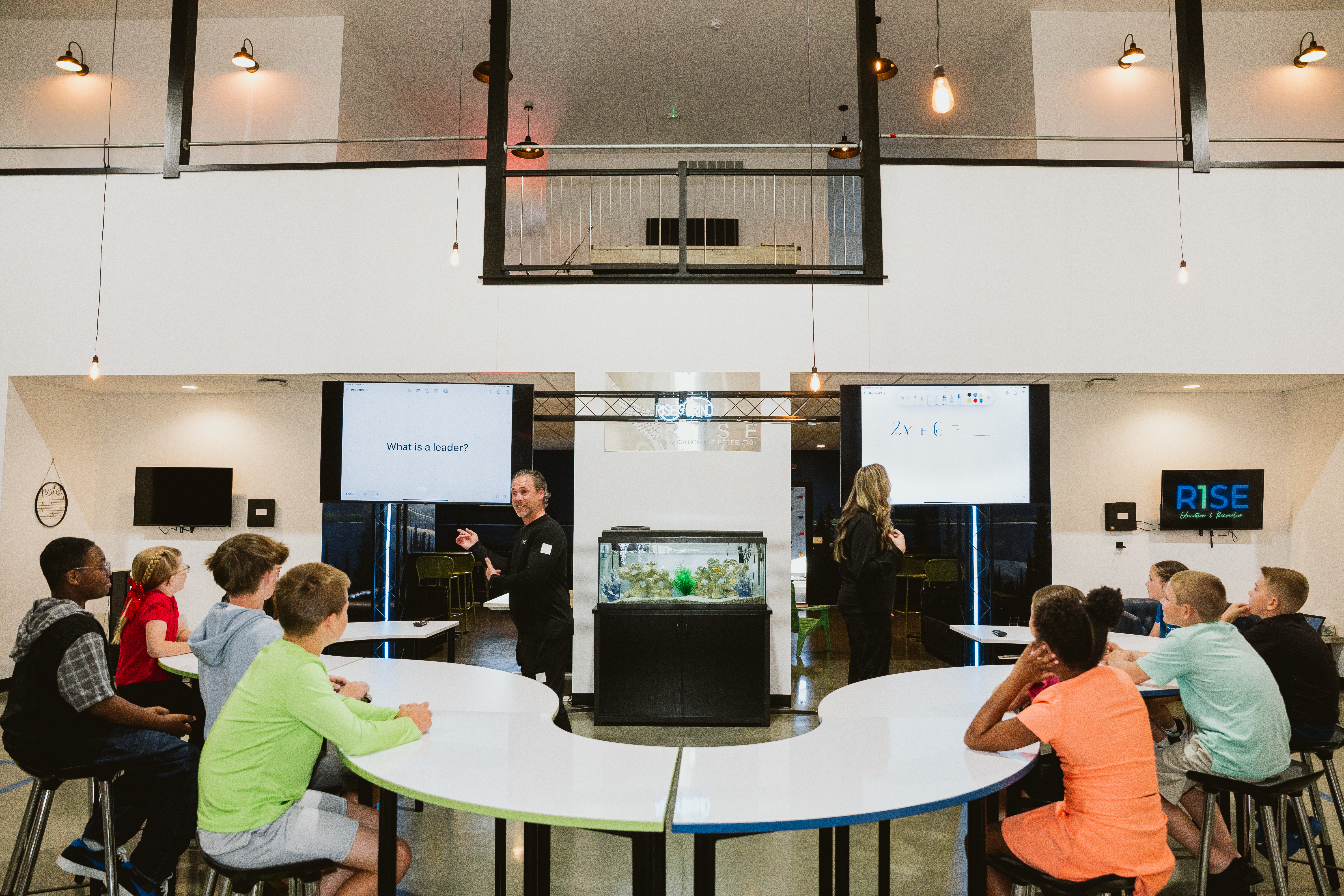
R1SE (short for Education and Recreation) is a state-of-the-art, facility-based after-school program designed for elementary and middle school students. It completely rethinks the traditional "daycare" or "tutoring center" model by blending strict academic support with high-end, heavily rewarded recreation.
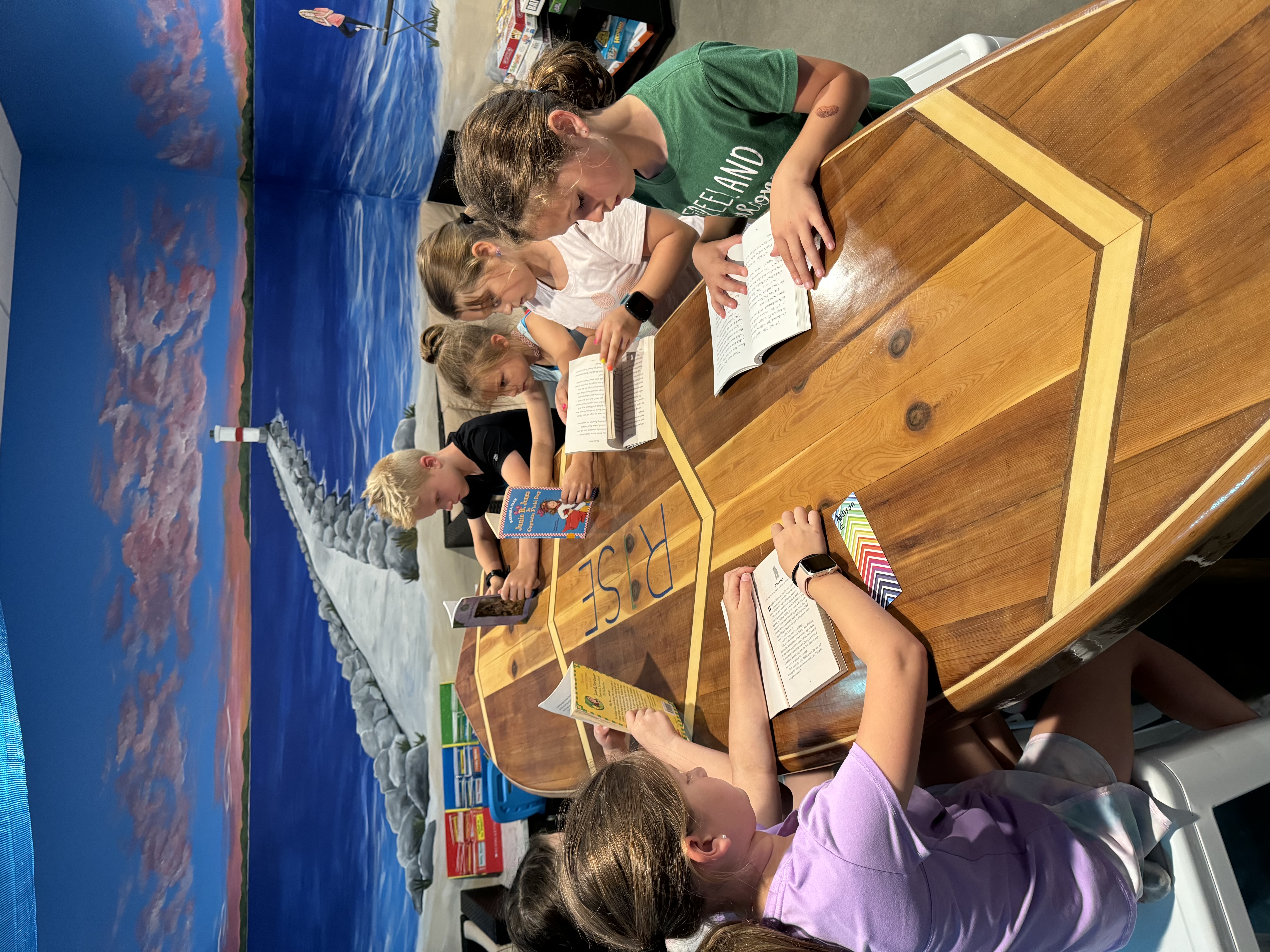
When a student arrives at a R1SE facility, which averages a massive 10,000 square feet, the first hour is strictly dedicated to academics. Under the supervision of highly trained staff, kids knock out their daily homework, finish long-term projects, and prep for upcoming exams. Once the work is done and checked, the second hour is pure, unadulterated fun.
R1SE facilities are decked out with amenities that look more like an indoor theme park than a school. Kids get access to movie theaters, art studios, video game lounges, hands-on gaming tables, and even giant indoor bounce houses.
The genius of the R1SE model is its affordability. While private tutors can cost upwards of $50 an hour and dedicated childcare facilities lock parents into expensive monthly contracts, R1SE operates at a highly accessible $15 per hour. Because most kids stay for the standard two-hour gap, the average cost is just $30 a day. It is an absolute game-changer for middle-class parents who desperately need a safe, productive, and fun environment for their kids.
| Business Overview | Details |
|---|---|
| Business Name | R1SE: Education and Recreation |
| Industry | Education / After-School Childcare |
| Founded Year | 2022 |
| Core Service | Academic tutoring combined with high-end indoor recreation |
| Target Audience | Working parents, elementary, and middle school students |
| Standard Pricing | $15 per hour (Average $30 per day) |
Who is the Founder of R1SE?
R1SE wasn't built by corporate investors looking to cash in on the childcare market. It was built from the ground up by a teacher who was exhausted by seeing kids fall behind.
Trevor Szafranski spent 15 years in the trenches of the Michigan public school system. He was not just a participant; he was highly recognized, even taking home Michigan’s prestigious "Excellence in Education" Award. But despite his accolades, Trevor was frustrated. He watched his students struggle with anxiety, completely burnt out by the time the final bell rang. He also saw the exhausted faces of working parents at pick-up time, parents who still had to go home, cook dinner, and fight through hours of frustrating math homework with their kids.
Trevor realized that the traditional options were failing. Standard daycares felt too babyish for older kids, and sterile tutoring centers felt like a punishment after a long day at school. He wanted to build a space where kids actually begged their parents to go.
Teaming up with his wife, Heather Szafranski, who stepped in to manage the financial modeling and operational logistics, they took a massive leap of faith. Trevor walked away from his decorated, stable teaching career to go all-in on his dream. They opened their first 10,000-square-foot facility in Freeland, Michigan, and quickly expanded to a second location in Midland due to overwhelming parental demand. Their vision had grown into a multi-city operation that finally caught the attention of the producers at Shark Tank.
R1SE Shark Tank Journey & Pitch
When Trevor and Heather stepped onto the iconic Shark Tank carpet in Season 17 (airing in early 2026), they were seeking a $300,000 investment in exchange for 10% of their company. This placed the initial valuation of R1SE at a confident $3 million.
The pitch was incredibly strong right out of the gate. Trevor spoke passionately about the state of modern education, leaning heavily on his 15 years of teaching experience. The Sharks were visibly moved. Guest Shark Rashaun Williams connected deeply with the mission, noting how education and safe after-school environments had radically changed the trajectory of his own life.
Then, the numbers came out. Trevor and Heather revealed that each of their massive facilities generated around $600,000 per year, boasting a highly respectable 21% profit margin. They were seeing roughly 120 students a day.
Despite the solid numbers, the Sharks quickly zeroed in on the brutal realities of the business model. Kevin O'Leary, never one to mince words, immediately pointed out a massive pricing problem. At just $15 an hour, Kevin argued they were severely undercharging for the immense value they provided. He suggested they needed to double their prices immediately to survive the rising costs of commercial real estate.
Scaling was the next major hurdle. Opening 10,000-square-foot facilities across the country requires immense capital, complex local zoning approvals, and tight management to handle the liabilities of childcare. Because of the slow, capital-intensive nature of building physical locations, Rashaun Williams opted out. Daymond John and Lori Greiner quickly followed suit, both agreeing that while the mission was beautiful, it simply wasn't the right fit for their product-heavy portfolios. They advised Trevor and Heather to find a strategic partner who understood commercial real estate.
That left Barbara Corcoran.
| Pitch & Offers | Details |
|---|---|
| Initial Ask | $300,000 |
| Equity Offered | 10% |
| Implied Valuation | $3,000,000 |
| Sharks in the Room | Mark Cuban, Kevin O'Leary, Lori Greiner, Daymond John, Rashaun Williams, Barbara Corcoran |
| Kevin O'Leary's Reaction | Loved the idea but insisted they were vastly undercharging. Out. |
| Barbara Corcoran's Offer | $300,000 for 15% + 3-year payback structure |
| Final Deal Accepted | $300,000 for 15% with Barbara Corcoran |
Barbara, the undisputed queen of real estate on the panel, saw exactly what R1SE was at its core: a brilliant, real-estate-anchored community business. She loved the concept and the hustle of the founders but wanted a larger piece of the pie and a guarantee on her cash. She offered the $300,000 but demanded 15% equity, structuring the deal with a strict three-year payback mechanism to ensure her initial capital was returned while still keeping her equity stake intact.
Trevor and Heather, knowing Barbara's connections in commercial real estate were exactly what they needed to scale nationally, eagerly accepted the deal.
What Happened to R1SE After Shark Tank?
The "Shark Tank Effect" hit R1SE like a tidal wave. The moment Season 17, Episode 15 aired, the company's inbox was flooded. Parents from California to New York were reaching out, desperately asking when a R1SE facility would open in their neighborhood.
For Trevor and Heather, the immediate aftermath was about managing the sudden national spotlight while ensuring their existing Michigan locations didn't lose the high-quality, personal touch that made them successful in the first place.
Following Barbara Corcoran's advice, they took a hard look at their operational costs and lease agreements. The show gave them massive leverage; local landlords and community centers were suddenly reaching out, offering favorable lease terms just to get the "Shark Tank famous" brand into their commercial spaces.
The biggest challenge post-show was managing the waitlists. Because R1SE promises a safe student-to-teacher ratio to ensure kids actually get their homework done, they couldn't just pack the buildings to the brim. They had to cap enrollment at their Freeland and Midland locations, which only drove the local demand higher.
Is R1SE Still in Business?
Yes, R1SE is absolutely still in business, and they are aggressively expanding their footprint.
Riding the momentum of their television appearance, Trevor and Heather announced a massive update: the opening of a third location in Frankenmuth, Michigan. Slated to be fully operational by mid-2026, this new facility replicates the winning 10,000-square-foot formula, bringing their signature mix of homework help and high-energy recreation to a brand new community.
Furthermore, the team has smartly diversified their offerings to capture more revenue outside of standard after-school hours. R1SE rolled out highly lucrative Summer Sessions. Instead of kids sitting idle from June to August, parents can now buy bulk session packages. R1SE is also adapting to the needs of older students by launching a dedicated high school program in Freeland and Midland, aimed at SAT prep, advanced tutoring, and a safe hangout space for teenagers, charging a slightly premium rate of $25 per hour.
What is the Valuation & Net Worth of R1SE?
When R1SE accepted Barbara Corcoran's offer of $300,000 for 15%, it placed the company’s valuation at exactly $2,000,000. However, in the fast-paced world of startup growth, valuations rarely stay stagnant after national television exposure.
R1SE has grown significantly as of today. With their Freeland and Midland locations reliably generating a combined $1.2 million annually, the addition of the new Frankenmuth facility pushes their projected annual top-line revenue closer to the $1.8 million to $2 million mark.
Factor in the high-margin Summer Sessions and the newly launched high school programs, and the company's financial health is stronger than ever. Today, the estimated overall valuation of R1SE sits comfortably between $2.5 million and $3 million. As for Trevor and Heather Szafranski, their estimated combined net worth has surged past $1.5 million, entirely tied up in the equity of their rapidly growing educational empire.
How Much Does R1SE Cost?
One of the main talking points on Shark Tank was Kevin O’Leary’s insistence that R1SE was too cheap. The company has managed to maintain its core promise of affordability while introducing premium packages to boost the bottom line.
-
Standard After-School Care: The bread-and-butter offering remains incredibly competitive. The standard rate is $15 per hour for elementary and middle school students.
-
High School Program: Recognizing the need for more specialized tutoring, the newly launched high school tier costs $25 per hour.
-
Summer Sessions: To capitalize on the months when school is out, R1SE has introduced bundled summer packages. Parents can secure 16 sessions (essentially one full week of Monday-Thursday care from 8 AM to 4 PM) for $400. Larger bundles are available, scaling up to 48 sessions (three weeks) for $700, giving parents immense flexibility during the summer break.
Can You Franchise R1SE?
The number one question flooding Trevor Szafranski's inbox is, "How can I open a R1SE in my city?"
Currently, R1SE is corporately owned and operated by the Szafranski family. The facilities in Freeland, Midland, and Frankenmuth are entirely managed by their internal team. However, the business model was practically built for franchising.
The company's website now prominently features a "Do you want a R1SE in your community?" contact portal. Given Barbara Corcoran's heavy involvement and her legendary success with building franchise empires (like her work with Cousins Maine Lobster), industry experts highly anticipate that R1SE will announce a formal franchise model by late 2026 or 2027.
Until then, the company is meticulously perfecting its operational playbook in Michigan, ensuring that when they do allow outside operators to open a R1SE, the brand's reputation for educational excellence remains spotless.