Table of Contents
In the fast-paced world of technology, a single decision can rewrite history. For decades, Intel was the undisputed heavyweight champion of the computing world. They built the processors that powered the personal computer revolution, and their massive manufacturing plants were the envy of the globe.
But today, the story looks very different. The company that once dominated Silicon Valley is now facing billions in losses, while the US government has stepped in to acquire a massive equity stake to keep their manufacturing dreams alive.
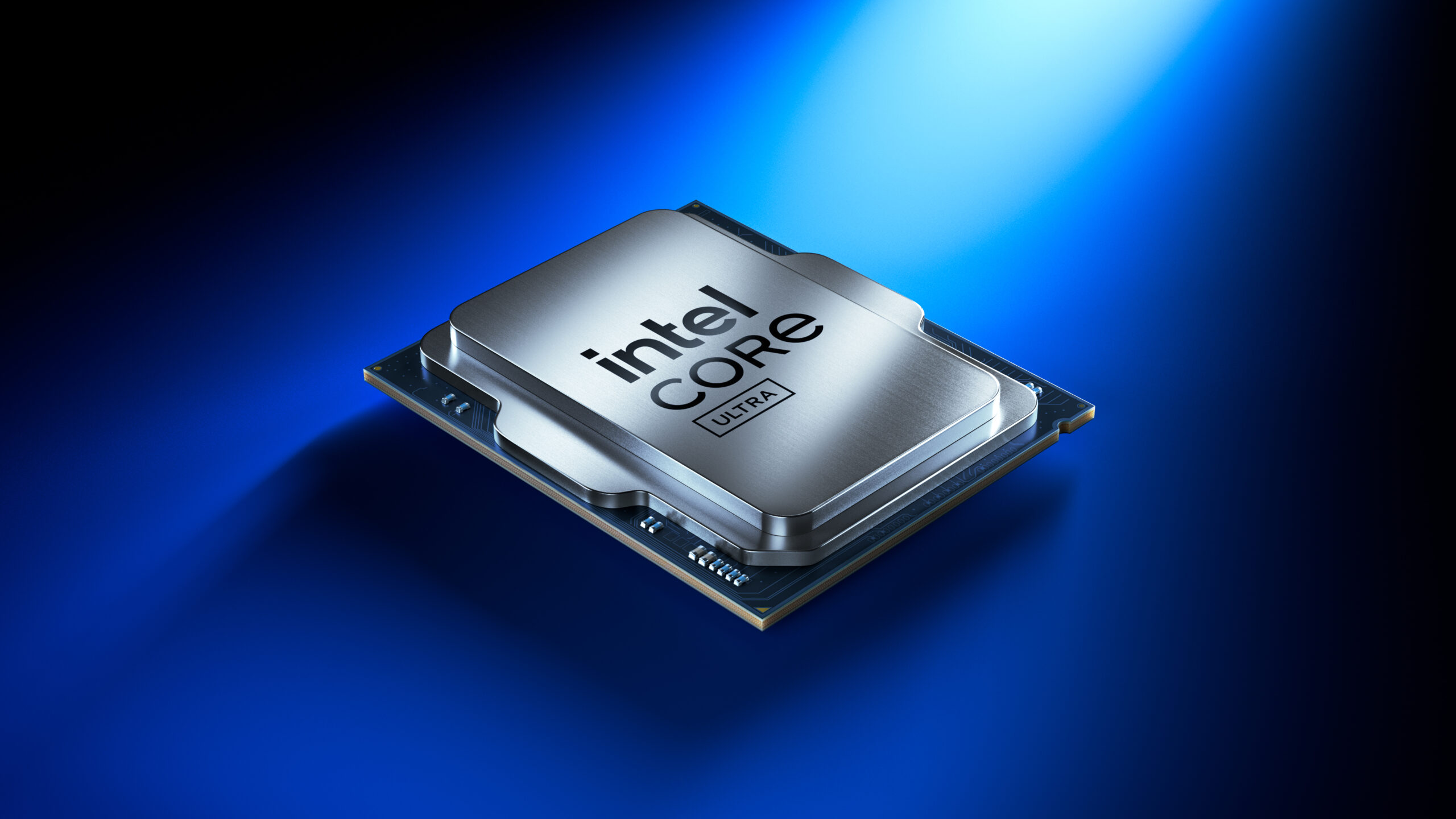
How did one of the most powerful companies on earth lose its grip on the market? To understand the current Intel semiconductor struggles, we have to look back at two defining moments. The first is a private meeting in 2006 between two tech titans that changed the trajectory of mobile computing forever. The second is a recent, unprecedented move by the US government to secure America's chip manufacturing future.
This is the story of how a relentless focus on profit margins blinded a giant to the smartphone revolution, and how the consequences of that choice are still shaking the global economy today.
The Meeting That Changed Tech History
The year was 2006. Apple and Intel were actually on fantastic terms. Apple was transitioning its line of Mac computers to use Intel's powerful Core x86 chips, and the partnership seemed like a perfect match.
Steve Jobs, the visionary leader of Apple, saw an opportunity. He approached Intel CEO Paul Otellini with a proposition. Apple was working on a highly secretive new product called the iPhone, and Jobs wanted Intel to manufacture the chips for it.
At the time, Paul Otellini was widely considered a fantastic CEO. He was known as a low-key leader. He did not yell or scream at his employees. He never dictated unreasonable terms, and he never asked his staff to work on Sundays or stay late on Fridays.
Instead, he had a unique way of inspiring his team to rise to the occasion. Under his eight-year tenure, Intel generated more revenue than it had during the rest of the company's entire 45-year history. He inherited a golden goose, but he successfully fine-tuned it into an absolute profit machine.
Because Otellini was running such a tight, profitable ship, his response to Steve Jobs was a polite but firm rejection. Intel completely turned down the offer to produce the chips for the upcoming iPhone.
To anyone looking back today, this sounds like sheer madness. The iPhone went on to become the most successful consumer product in history. But you have to remember the context of the time. This meeting took place before the iPhone was even introduced to the public.
Nobody knew exactly what the device would do, and nobody could have predicted the massive scale of the smartphone explosion. Some of the most successful people on earth openly scoffed at the concept of the iPhone. So, why did Otellini say no? The answer comes down to one simple word.
The Margin Trap and the XScale Misstep
In the business world, profit margins dictate everything. For Intel, their entire business model was built around high-margin chips. On average, it cost Intel about $40 to produce one of their powerful x86 computer chips. They would then turn around and sell that exact same chip for hundreds of dollars. It was an incredibly lucrative system.
Mobile devices presented a massive math problem for Intel. Apple wanted to pay a very specific, low price for the iPhone chips, and they refused to pay a penny more. The selling price for a mobile device was simply too low to support Intel's traditional pricing. Steve Jobs wanted a chip that cost around $30.
For Intel, dedicating millions of dollars to develop and manufacture a $30 chip just did not make financial sense. Their internal forecasts showed that the cost to produce these chips would be higher than what Apple was willing to pay. Otellini simply could not see a way to make up the difference on volume alone.
This rejection was not an isolated incident. Around this exact same time, Intel was actively trying to get out of the mobile space altogether. They had an internal product line called XScale, which specialized in mobile chips. They had poured a staggering $10 billion into XScale over the course of nearly ten years. What did they have to show for it? A few minor hits like Palm Trios and Compaq pocket PCs, but mostly a string of duds.
In June 2006, Intel made a massive strategic pivot. They sold the XScale division to Marvell Technology Group and redeployed roughly 16,000 employees. Intel was officially pulling out of mobile because it just did not seem worth the headache. The profit margins were awful compared to their booming PC business.
Deep down, however, Paul Otellini felt a nagging doubt. On paper, selling XScale and rejecting Apple made perfect financial sense. But Otellini later admitted that his gut told him to say yes to Steve Jobs. He noted that throughout his career, his best decisions were made when he followed his instincts. Unfortunately, he let the internal forecasts guide him this time. In hindsight, those forecasts were completely wrong. The volume of iPhones sold ended up being 100 times larger than anyone at Intel had predicted.
The Rise of ARM and Apple's Pivot
With Intel out of the picture, Apple had to find a new partner. In a twist of irony, they turned to Samsung to manufacture the chips for the first iPhone. But Samsung was simply the manufacturer. They were not designing the architecture of the chip itself. The real powerhouse behind the iPhone processor was a British company called ARM Holdings.
ARM Holdings operates very differently from Intel. They do not actually manufacture chips themselves. Instead, they design the chip architecture and license it out to other companies. Whenever a company like Apple, Samsung, or Qualcomm uses the ARM architecture, ARM gets a royalty cut from every single chip shipped.
ARM chips were not the most powerful processors on the market, but they had three distinct advantages that made them perfect for mobile devices. They were incredibly cheap to produce, they generated very little heat, and they used barely any power. This made them absolutely essential for battery-powered devices. Before the iPhone even launched, ARM chips were already inside practically every mobile phone, tablet, and even the Nintendo Game Boy.
The strangest twist in this entire story is that Apple actually co-founded ARM back in 1994 in a partnership with Acorn. Apple wanted a new chip architecture for their MessagePad device. When that product failed and Apple was teetering on the edge of bankruptcy, Steve Jobs actually sold Apple's stake in ARM just to keep the company alive. Thanks to companies like Nokia, the ARM architecture survived, thrived, and ended up dominating the mobile industry.
The first iPhone launched as a massive success using ARM chips manufactured by Samsung. But Apple quickly realized they had a communication problem. In 2005, Apple had laid off their internal custom chip team. Because they lacked in-house design experts, their communication with Samsung was poor. The resulting A1 processor was exactly what Apple had asked for, but it was not what they actually wanted. Realizing their mistake, Apple formed a brand new internal team to begin designing their own custom chips. They continued to use the ARM architecture, meaning they still paid royalties to ARM Holdings, but they took complete control over their hardware future.
Intel's Failed Counterattack with Atom
While Apple was perfecting the iPhone, Intel began to wake up to their massive mistake. They watched as the iPhone exploded in popularity, followed closely by the entire smartphone and tablet industry. Suddenly, mobile devices were not just cheap gadgets. They were becoming expensive, high-margin products with a scale that nobody had anticipated. At the same time, the core PC market that Intel relied on was beginning to slow down.
Intel decided it was not too late to get back into the game. Paul Otellini desperately wanted to win the mobile war. But Intel made a fatal flaw. They wanted to force their traditional PC architecture, known as x86, into mobile phones.

In theory, the idea sounded great. If Intel could create a highly power-efficient x86 chip for mobile phones, then software could be perfectly compatible across PCs, tablets, and smartphones. Intel could rule the entire computing ecosystem. So, in 2008, Intel launched a new chip called Atom. It was an extremely compact and energy-efficient version of their x86 architecture.
Intel was ready for war. They had absurdly deep pockets. While ARM only employed fewer than 1,800 people and had a market capitalization of just $3 billion, Intel was a colossal giant. They could afford to prop up the Atom project using the massive profits from their PC and server lines. They even made a deal with TSMC to allow customers to make their own products based on Atom cores.
But the market did not care about PC compatibility on a smartphone. The market desperately needed cheap, ultra-low power chips that could be manufactured by the billions. Atom could not compete on price. Intel's entire business model was built around controlling the design, architecture, and manufacturing process in a very specific environment. This was perfect for high-end PCs, but terrible for cheap mobile chips. ARM was using companies like Samsung and TSMC to make chips faster and cheaper than Intel ever could.
To put the scale into perspective, it took Intel decades to ship its one billionth x86 chip in 2003. In the year 2009 alone, ARM shipped 2.8 billion processors.
Intel's counterattack completely collapsed. Smartphone manufacturers wanted devices with integrated LTE radios, which Intel did not have. A major partnership with TSMC failed to come to market because Intel could not secure enough volume to kickstart production. Despite their massive budget, Intel could not force the x86 square peg into the mobile round hole. ARM won the war.
Eventually, Apple dropped Intel x86 chips from their Mac computers entirely. Following a long-term strategy laid out by Tim Cook to own and control their primary technologies, Apple switched their entire lineup of computers, tablets, and phones to their own custom Apple Silicon. And the architecture they used? ARM. Today, nearly every phone, tablet, and Chromebook runs on ARM architecture. If Intel had just said yes to Steve Jobs back in 2006, they might be the undisputed king of mobile today.
Fast Forward: The Foundry Crisis and TSMC Dominance
The failure to capture the mobile market had lingering effects, but Intel still had their PC and server business. However, as the years passed, another major problem emerged. Intel was losing its edge in manufacturing.
Historically, Intel designed and manufactured their own chips. But over time, a company in Taiwan called TSMC (Taiwan Semiconductor Manufacturing Company) rose to power. TSMC focused solely on manufacturing chips for other companies. They became faster, more reliable, and produced chips with fewer faults than Intel. By 2021, TSMC held over 50% of the foundry market share. Tech giants like NVIDIA and Apple relied almost exclusively on TSMC to build their advanced designs.
Intel tried to fight back. In 2021, they announced a massive strategy called "IDM 2.0" to invest $100 billion into building their own foundries. For the first time, Intel planned to manufacture chips for other companies, directly competing with TSMC. But the plan struggled. Intel found themselves losing massive amounts of money, possibly more than ever before in their history. Meanwhile, TSMC's market share grew to over 70%, and their market cap crossed the $1 trillion mark by 2025.
This manufacturing shift created a massive geopolitical problem. The US realized they were completely reliant on foreign manufacturing for the chips that power modern life, from smartphones to artificial intelligence. To make matters worse, China was aggressively investing in their own semiconductor industry. The Chinese government set up a state-backed investment fund with $47.5 billion to achieve self-sufficiency in semiconductors. Companies like YMTC received a 12.9 billion Yuan state-owned investment.
The US government realized they were losing the manufacturing race. They needed a domestic champion to build American foundries. Since companies like NVIDIA and Meta only design chips, Intel was the only logical choice. Intel perfectly aligned with the government's need for domestic manufacturing, but Intel was in desperate financial trouble.
The US Government Steps In
The tension came to a boiling point in late 2024 and 2025. The new US government administration made it incredibly clear to tech leaders that they needed to invest heavily in domestic manufacturing. On September 4th, 2025, Donald Trump hosted a roundtable dinner with top tech CEOs including Tim Cook, Mark Zuckerberg, Sam Altman, and Jensen Huang. The message was simple. Invest in the US, or face heavy tariffs.
The tech giants quickly fell in line. Apple pledged a massive $500 billion US investment, creating 20,000 jobs, with Tim Cook later adding another $100 billion to the promise. Microsoft pledged over $75 billion. NVIDIA committed over $500 billion over four years, with Jensen Huang declaring that AI data centers are the factories of the future.
But one notable person was missing from this dinner. Lip-Bu Tan, the CEO of Intel, was not at the table. Just prior to this, Trump had called for Tan's resignation, citing deep conflicts of interest regarding his past ties to a company that sold tech to China. Tan had to travel to Washington to discuss how Intel and the government could align their goals.
The result of these talks shocked the financial world. On August 22nd, 2025, it was announced that the US government had acquired a 9.9% equity stake in Intel stock.
This was not a normal stock purchase. No new money actually changed hands. Instead, the government utilized legislation that had been passed back in August 2022 under the Biden administration known as the CHIPS and Science Act. This act originally set aside $52 billion to boost US semiconductor manufacturing.
Intel was already scheduled to receive a large chunk of this money in the form of grants. But instead of handing over the cash, the government converted the remaining $5.7 billion in CHIPS Act grants, along with $3.2 billion from the Secure Enclave program, into Intel common stock. They acquired this stock at a $4 discount compared to Intel's closing price of $24.80.
Investors were furious. The government essentially diluted the existing shareholders, reducing the voting rights and ownership of everyone else who held Intel stock. Critics argued it set a dangerous precedent for a president to take 10% of a company after applying pressure to its CEO.
Furthermore, this move put Intel's international sales at risk. A massive 76% of Intel's revenue comes from outside the United States, with 29% coming from China alone. Having the US government as a major shareholder subjects Intel to extra legal scrutiny and anti-subsidy laws from foreign regulators.
Interestingly, Intel might not have actually needed the government money to survive at that exact moment. Just days before the government acquisition, SoftBank had invested $2 billion into Intel. Some analysts believe the government stake was accepted simply to keep the administration happy.
However, from a national security standpoint, the move makes sense. The US simply cannot afford to let its largest domestic chip manufacturer fail. While tech CEOs can make promises about multi-billion dollar investments, those promises do not always materialize. By taking a direct equity stake in Intel, the US government secured tangible control over an asset they desperately need to compete with TSMC and state-backed Chinese firms.
Frequently Asked Questions
Why did Intel refuse to make the first iPhone chips?
What was Intel XScale?
How does ARM make money if they do not manufacture chips?
Why did Intel Atom fail in mobile devices?
Why did the US government acquire 10% of Intel?
Why were Intel investors upset about the government stake?
Conclusion
The story of Intel is a powerful lesson in business strategy and foresight. By letting short-term profit margins blind them to the potential of the iPhone, Intel handed the mobile revolution directly to ARM. That single decision snowballed over two decades, leaving Intel struggling to keep up in the modern manufacturing race. Now, with the US government stepping in to take a 10% stake in the company, Intel semiconductor struggles have evolved from a corporate boardroom problem into an issue of vital national security.