Table of Contents
Evernote was once one of the biggest and most ambitious products in tech history. It boasted 225 million users, secured hundreds of millions in funding, and had a clear goal to pass one billion users. The founders wanted it to become a 100-year startup. But today, almost no one uses it. Many people do not even remember it. So, what happened to Evernote?
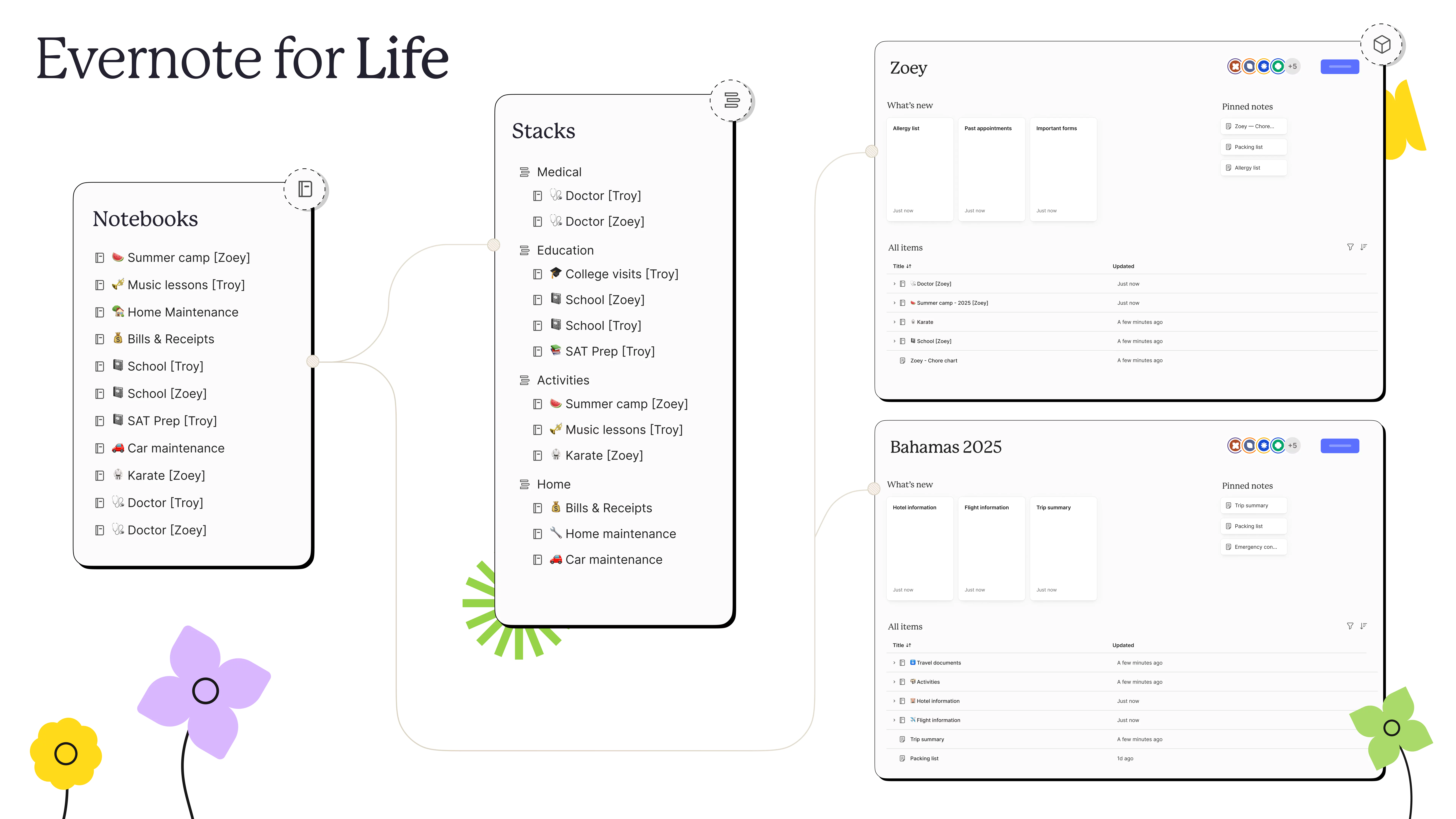
To understand the rise and fall of this tech giant, you have to think about how you take notes today. You probably just open your phone, type something out, or snap a quick picture. It is completely effortless. But before the smartphone came along, keeping track of your life was pretty chaotic.
If you wanted to remember a shopping list, run errands, or save an address, you had to write it down on paper or simply try your best to remember it. Some people carried around a physical notebook everywhere they went. If you had to keep receipts for work reimbursements, like gas or travel expenses, you literally had to hold on to those flimsy pieces of paper. Naturally, you would lose them, or you would completely forget which notebook you stuffed them into.
That specific frustration is exactly the problem Stephen Pachikov wanted to solve. It was the spark that created an empire, but it also set the stage for one of the most interesting downfalls in modern software history.
The Birth of a Digital Brain Backup
Stephen Pachikov was not just a random entrepreneur looking for a quick app idea. He had spent years building handwriting recognition software. His technology was so effective that it ended up being used in almost every tablet and stylus device on the market.
Pachikov looked at his success and asked a brilliant question. If software could recognize handwriting, why should it stop there? Why not build something that could recognize absolutely everything?

He spent six years building and prototyping his vision. Finally, in 2008, he had Evernote. The software was designed to be a kind of brain backup. Once you installed it, you could store anything your mind needed to offload. You could scan business cards, save receipts, upload handwritten notes, and snap photos of name tags.
The true magic was that the software made all of these random items entirely searchable. You could take a photo of a document that had no digital text attached to it, and Evernote would tag it by context and location. Your smartphone can do this easily today, but you have to remember that this was 2008. Being able to search through images of receipts and handwritten notes was unbelievable. It was a massive game-changer for personal productivity.
Pachikov also deeply understood another quiet fear that plagues the business world. He knew people were terrified of forgetting names. Networking used to be extremely difficult if you failed to grab someone's physical business card. With Evernote, you could just scribble down a person's name and phone number, upload it, and search for it later when you needed it.
Pachikov himself noted that he really liked the concept of an endless tape. For many years, he had been looking for a suitable database to conveniently record memos, jokes, tasks, and random thoughts. That personal quest became one of the main prerequisites for the birth of the Evernote concept.
Even though the platform was invite-only at the time, demand grew incredibly fast. On June 24, 2008, Evernote officially launched to the world as a public, cloud-based application. The growth that followed was staggering. By the end of that first year, the app had over 500,000 users and 14 million saved notes. It was already running on multiple platforms, including a very strong mobile version. But there was another major factor driving this massive success.
The Freemium Model and Perfect Timing
To really understand why Evernote took off the way it did, we need to step back to the most important leadership change in the company's history. In May 2007, before the public launch, Stephen Pachikov stepped down. He handed control of the company to Phil Libin because he believed Libin would be a better CEO for the next phase of growth.
Libin brought a very specific philosophy to the table. He pushed hard for the freemium model. He wanted absolutely everyone using Evernote, and making the core product free gave them the best chance to achieve that.
Libin's strategy was simple but powerful. He openly stated that the company did not care if you paid right away. They just wanted you to stay around, keep using the product, and get all of your friends to use it too. He believed that the longer you used the product, the more likely you were to fall in love with it. Sooner or later, you would be happy to pay for it.
He was absolutely right. Within a year of launching, Evernote had been downloaded 1.7 million times on desktop alone, boasting over one million active users. The company was exploding.
They raised nine million dollars from angel investors and began preparing for a major venture funding round, which was a very difficult thing to pull off at the time. But Evernote had a secret weapon that money could not buy. They had perfect timing.
Evernote launched right alongside the rise of the original iPhone. The iPhone was the absolute best device to showcase exactly what Evernote could do. By 2010, the app was available on Windows, Mac, iPhone, and BlackBerry. The user base swelled to over three million people.
By the end of 2011, Evernote achieved something rare in the startup world. It was actually profitable. Annual sales hit 16 million dollars, and it was widely celebrated as the 2011 company of the year. The momentum continued until they reached 80 million users and raised an astonishing 250 million dollars. Evernote was now officially worth one billion dollars. Everything was going great, but this is exactly where things started to get weird.
The Delusion of the 100-Year Startup
Phil Libin had a massive vision for the company. He had so much ambition that it would eventually become the root cause of Evernote's downfall.
Evernote was not the first startup Libin had run. It was actually his third, but he was determined to make it his last. He did not just want to build a successful company. He wanted to build a lifelong institution. He publicly stated that their goal was to build a 100-year startup. At the time, he noted they were about four and a half years into that journey, meaning they were only four and a half percent done.
Because of this mindset, the team had no exit strategy. They had no plan to sell to a bigger tech giant, which is the dream for most startup founders. Instead, they had grand plans for an IPO and a vision of eventually capturing one billion users.
Libin also had a very specific theory about the future of the technology world. He believed the line between consumer software and business software was completely fading away. He predicted that within five years, there would be no such thing as a successful enterprise software company that was not also a successful consumer product company.
His logic was that modern knowledge workers were going to demand the same high-quality digital experience everywhere in their lives. He assumed the exact same people who used Evernote to organize their personal lives at home would naturally bring it into their offices to use at work. This assumption drove all of their business decisions moving forward, and it proved to be a fatal miscalculation.
Going Wide Instead of Deep
Fueled by Libin's massive ambition and a fresh bank account full of venture capital, Evernote began to expand rapidly. But being a "100-year startup" apparently meant constantly launching or acquiring brand new productivity tools.
They launched a wave of new products. First came Evernote Sketch, which was a visual note-taking app. Then they acquired Penultimate, a very popular handwriting app. After that came Evernote Trunk, which was an ecosystem designed to connect over 200 third-party apps to their platform.
The problem was that Evernote was expanding out wide, but they were not going deep. Soon, it felt like anything you could possibly imagine had a branded Evernote version. There was Evernote Food for recipes. There was Evernote Hello for contacts. There was Evernote Work Chat for office communication, and Evernote Business for enterprise clients.
Evernote was no longer just a great note-taking app. For some reason, it was trying to become an entire lifestyle brand. Even though the company had over a million paying customers at this point, the foundation was starting to crack.
Every single expansion and every new acquisition meant more hiring, more scaling, and much higher expenses. The company needed more revenue just to sustain its massive new footprint. Evernote was getting hungry, which exposed a massive flaw in Libin's original freemium plan.
The Breaking Point for Loyal Users
The harsh reality was that many free users were just not upgrading to the premium version because they simply did not have to. The free version was too generous.
To fix their revenue problem, the company made a drastic move in 2016. They restricted the features of the free version while simultaneously raising the prices for their paid plans. The fundamental economics of Evernote did not make sense until this point because most users never had a real financial incentive to buy a premium subscription.
Users were incredibly unhappy about this change. People who had stored years of personal memories, receipts, and ideas on the platform suddenly found their access heavily restricted. But the pricing change was only part of the problem.
Because Evernote had grown so wide with all its side projects, the execution quality of the core app was severely lagging. Bugs started piling up. Meaningful updates stagnated. The company's marketing efforts seemed to heavily outweigh their actual product development.
Frustrated users flooded Evernote's public forums with complaints. People pointed out that editing notes on the web version was incredibly painful. If a user pasted text, the screen would randomly jump back to the top of the page. If they pasted a list, it would get indented with a weird blank top line. If they tried to delete that blank line, the software would delete the text before it instead.
Users openly mocked the engineering team. They said that if an Evernote developer actually tried to write a simple article in their own editor, they would see how subpar it was. The functionality was years behind the standard. Customers felt that the company could easily fix these core issues if they actually wanted to, but they were too distracted by other projects.
Then, things got remarkably worse. One specific change pushed users from being slightly annoyed to completely angry. To improve its machine learning capabilities, Evernote decided to change its privacy policy. The new policy granted select employees the right to actually access and read users' personal notes.
To make matters worse, you could not opt out of this change. The backlash was immediate and fierce. Longtime users declared that they were leaving the platform, stating clearly that their personal thoughts and data were not meant for engineers to pick through.
Evernote went into full damage control. They released statements saying they had received a lot of customer feedback expressing concerns about the upcoming policy changes. They tried to reaffirm their commitment to keeping privacy at the center of what they did, but the damage was already done. The reputation of the 100-year startup was looking very shaky.
The Rise of Better Alternatives
While Evernote had been stumbling, ignoring bugs, and angering its community, competitors had been working incredibly hard to make them obsolete.
People started to realize that Evernote basically did the exact same things that Google Keep or Apple Photos could do for free. If you search for a word like "dog" or "grandma" in your phone's photo library today, the results are highly accurate. Most default phone apps can easily handle searching through texts and receipts now.
It was not just photo searching, either. Pretty much everything Evernote did suddenly had a better, faster, and more focused competitor. Simplenote, Apple Notes, Notion, Microsoft OneNote, Joplin, and Obsidian started pulling users away. The list went on and on.
Most of these competing apps had very few constraints on users who did not want to pay a monthly subscription. Microsoft's OneNote even went as far as introducing a dedicated data migration tool for Windows users, making it incredibly easy for frustrated people to abandon Evernote and switch over.
Were these alternative apps drastically better? In some ways, yes. They might have lacked a few niche features that Evernote had spent years building, but they were better in the ways that actually mattered to normal people. Most of them were simpler, cheaper, easier to use, and far more reliable. This was a catastrophic problem for an app that was already struggling to convince people to pay for it.
Leadership Collapse and Restructuring
By the mid to late 2010s, the company was in obvious trouble. Evernote was openly restructuring, laying off staff, and desperately replacing its leadership team.
Phil Libin, the grand architect of the 100-year startup vision, stepped down as CEO in 2015. By 2016, he had left the company entirely.
Two years later, the situation behind the scenes became even more dramatic. The Chief Technology Officer, Chief Financial Officer, Chief Product Officer, and the head of Human Resources all exited the company within a two-week period. This massive leadership void happened right as the company was trying to secure more outside funding.
In 2018, they changed CEOs yet again. Evernote was collapsing, and there were multiple reasons for the failure. The new CEO, Chris O'Neill, tried to be honest about the situation. He admitted that the company had committed too many resources far too quickly. They had built up areas of the business in ways that proved to be highly inefficient. He announced that they would be streamlining certain functions, like sales, so they could finally speed up product development and engineering.
O'Neill was entirely right about the diagnosis, but his realization came too late. The company was forced to lay off 15 percent of its staff.
This brings us back to Phil Libin's grand vision for the tech industry. He believed the line between business and consumer products would disappear. It turns out he was only half right.
Evernote's entire business model was built on consumer-first growth. They relied heavily on being popular and maintaining a strong public image. That strategy worked for getting initial downloads, but big tech companies like Google and Microsoft took a different path. They sold their productivity suites directly to massive businesses. That approach generated much more money, offered significantly better profit margins, and resulted in a much higher conversion rate.
The lines between work and home were blurring, but not nearly as much as Libin thought. People might use an app at home, but that did not guarantee their corporate IT department would buy thousands of licenses for the office.
By 2019, the user base was deeply apathetic. A survey asked users how disappointed they would be if they could no longer use Evernote. The product scored a dismal 23 percent. Only 64 out of 277 respondents said they would be very disappointed to lose it. Furthermore, only 21 percent reported using the app every single day, while over 75 respondents admitted they opened it just once a month.
Evernote was designed to be a daily, indispensable product. These numbers were a death sentence.
The Final Takeaway: Why Evernote Failed
Even though Evernote eventually reached an impressive 225 million users, that was the absolute highest it would ever go. The app slowly began to fade into irrelevance. Users left for better options, fresh downloads declined sharply, and eventually, the company was quietly acquired.
The app is still around today. Some people do still use it, but it is now just a shell of its former self. By all accounts, the core user experience has not improved much either.
When you look back at what happened to Evernote, you realize they were not killed by one single competitor app. They simply lost their focus. They pivoted left and right, adding new features and shiny new toys that the vast majority of their users did not care about at all.
They went wide and shallow instead of going narrow and deep. While leadership was distracted by building a lifestyle brand, they completely neglected their core product and their most loyal customers. Naturally, those customers packed up their data and went elsewhere.
They also made a massive bet on consumer revenue, thinking they could easily conquer both the business and consumer markets at the same time. They failed to capture the enterprise market because they did not understand how different those buyers really were.
Instead of focusing all their energy on building a product that was secure, reliable, and incredibly fast, Evernote spread itself far too thin. They tried to build out their install base across as many random platforms as possible, hoping sheer size would fend off their inevitable competition.
The story of Evernote leaves us with one critical business lesson. It does not matter if your product is the first one on the market, or even if it is technically the best. Market dominance is always temporary. To survive, you have to keep winning your customer over and over again by providing less friction than anyone else. Evernote forgot that rule, and it cost them their 100-year dream.
Frequently Asked Questions
What was the original purpose of Evernote?
Why did Evernote restrict its free version in 2016?
What was the "100-year startup" vision?
Why were users angry about the Evernote privacy policy change?
Who were Evernote's main competitors?
Did Evernote shut down?
Conclusion
If you want to know what happened to Evernote, the answer lies in a loss of focus. They started with a revolutionary idea that changed how we manage our digital lives, but they traded a reliable, deep core product for a wide, shallow ecosystem of apps no one asked for. By neglecting the basic user experience and misunderstanding the enterprise market, they opened the door for simpler, more reliable competitors to take their place.