Table of Contents
Not too long ago, Fiverr was the ultimate go-to destination for freelancers and businesses alike. Whether you needed graphic design, custom coding, or professional voiceovers, this platform had it all. At its absolute peak, the freelance marketplace was worth over $11 billion.
Then, it all came crashing down.

Today, Fiverr's share price is down over 90 percent. The company has lost roughly $10 billion in total valuation. If you look closely at what happened behind the scenes, you will find a chaotic mix of overhype, massive overspending, and tone-deaf scandals. The worst part is that almost all of these issues were entirely self-inflicted.
This is the complete story of how Fiverr exploded into a global powerhouse and then systematically destroyed its own momentum. We are going to look at the pandemic boom, the illusion of paper wealth, the aggressive shift toward AI, and the decisions that alienated the very freelancers who built the platform.
The Calm Before the Storm: Fiverr Goes Public
Our story begins in June of 2019. Fiverr was taking a massive step in the corporate world by going public and listing on the New York Stock Exchange at $21 a share.
At the time, the results were perfectly fine. For the next six months, the stock hovered comfortably between $20 and $30. It was not incredibly impressive, but it showed stable confidence in the freelance marketplace. Fiverr was known primarily as the cheap place to get things done, famously starting with their simple five-dollar gigs.
Little did Fiverr's leadership know that the entire global economy was about to shift overnight.
The Pandemic Boom: Why Fiverr Exploded Overnight
In early 2020, the World Health Organization officially declared a public health emergency. When the world suddenly went into lockdown, companies had to change their entire way of operating. Businesses shifted from in-office environments to fully remote setups in a matter of weeks.
For many traditional businesses, doors were closing and revenue was plummeting. But something entirely different was happening over at Fiverr. The platform suddenly exploded with activity. Money started pouring in at unprecedented rates. The internal staff could barely keep up with the sheer volume of signups from companies looking to hire, as well as the flood of new freelancers looking for work.
Obviously, this was driven by the pandemic. But if we break down the market dynamics, there were three distinct reasons why Fiverr saw such an absurd tidal wave of demand:
-
1
Traditional Businesses Had to Go Digital Overnight: Countless local businesses and traditional companies had never operated in the digital space before. Suddenly, they had no choice. Demand for digital services skyrocketed immediately. Business owners desperately needed websites, e-commerce stores, online marketing campaigns, video content, and graphic design just to survive the lockdowns. Fiverr was perfectly positioned to capture this frantic demand.
-
2
Employees Needed Replacement Income: As businesses shut down or dramatically downsized, thousands of traditional employees were getting fewer hours. Many were laid off entirely. To make ends meet, a massive wave of professionals turned to freelancing for extra work. Fiverr was the easiest and most accessible choice for people trying to monetize their skills from home.
-
3
The "Try Before You Buy" Strategy: With businesses downsizing and strapped for cash, hiring full-time remote staff during a global crisis was incredibly risky and expensive. Instead of committing to salaries and benefits, managers decided to outsource short-term projects to freelancers. Many modern tech companies had done this for years, but suddenly, old-school businesses that had only ever hired traditional employees were dipping their toes into contract work.
The Illusion of Wealth and "Growth at All Costs"
Fiverr witnessed a tidal wave of demand all at once. The financial numbers were staggering. In 2020, the company's revenue leapt to $189 million, which was a 77 percent increase from 2019. In 2021, it leapt again to $300 million, marking another 57 percent jump.
These consecutive jumps were absolutely absurd. Investors quickly took notice of the boom and desperately wanted a piece of the action. Fiverr's share price went from mostly horizontal to completely vertical. It shot from $25 in March 2020 to over $200 by that same time the next year. In a flash, Fiverr's total value had climbed from hundreds of millions to over $11 billion.
In their annual financial report, founder and CEO Micha Kaufman proudly stated that they were carrying that incredible momentum into the new year. He told investors he was thrilled about what laid ahead for them in 2021.
Fiverr was loaded with a boatload of new cash and an incredibly expensive stock price. Everything was looking perfect on the surface. Yet, from here, things did not go as planned. Behind this lucrative growth and the expensive marketing campaigns was a dark financial secret.
Why Was Fiverr Actually Losing Money?
Despite the endless optimism from leaders and investors, and despite that insane boom in user demand, Fiverr had not actually made any real money.
Let's look at the actual profit and loss numbers. In 2019, the company lost $33 million. During their explosive growth in 2020, they only managed to reduce that loss to $14 million.
Then, it gets significantly worse. Despite a slight recovery, their financial losses went into total free fall the very next year. Fiverr's losses plummeted to $64 million in 2021, and then hit $70 million in 2022.
You might be asking yourself how a company loses more money when its revenue is at an all-time high. The answer comes down to the illusion of paper wealth and a dangerous business strategy known as "growth at all costs."
After a company goes through an IPO, they do not actually make cash when everyday investors buy or sell their shares on the open market. That is paper wealth. However, a high share price is incredibly useful. It gives the company a valuable new asset. They can use their highly valued shares in place of cash when buying other businesses. It also gives them access to massive amounts of corporate credit, allowing them to take on heavy debt from lenders.
And Fiverr definitely took on debt. From late 2019 to 2020, Fiverr's debt grew by an astonishing 12,100 percent. It went from a measly $3 million to a staggering $370 million.
Spending the Paper Wealth: Marketing and Acquisitions
Fiverr prioritized aggressive expansion over actual profitability. First, they spent an absolute fortune on marketing. Huge, highly produced ad campaigns were rolling out constantly. They even bought a wildly expensive Super Bowl ad to tell the world that Fiverr has the freelancers to get you where you want to be.
Next, they began pouring millions of dollars into research and development. They also went on a massive corporate spending spree of acquisitions to buy out the competition.
In early 2021, they acquired Working Not Working, which was a high-end creative talent marketplace. Shortly after, they acquired the popular education and training platform called Creative Live. Then, in November of 2021, they acquired Stoke Talent, a sophisticated freelance management platform, for an eye-watering $95 million.
Why was Fiverr buying all these high-end platforms? The strategy was to move upmarket. Fiverr used to be the absolute cheapest place you could go on the internet. But the market had changed. Large businesses were needing good, highly reliable services, and they actually had the big corporate budgets to spend. Fiverr was trying to attract major corporate clients for massive, ongoing projects instead of relying on individual buyers looking for five-dollar logo designs.
The Reality Check: The Fall of Fiverr Begins
And then, it all came crashing down. In late 2021, Fiverr and its investors were hit with a brutal reality check. The world was finally opening up again, and millions of people were returning to the traditional office.
Fiverr's revenue was still growing, but the pace had slowed dramatically. Revenue had climbed to $340 million, hitting another record high, but that only represented a 12 percent growth rate compared to the massive 70 percent jumps of previous years.
While the revenue growth merely slowed down, their share price went into an absolute free fall. In July 2021, Fiverr was priced at a highly impressive $248 a share. Just one year later, in June 2022, that price had fallen to a dismal $34 a share. That is an 86 percent drop. Almost overnight, Fiverr was barely worth $1 billion.
Demand had died down. Businesses opened up, and many managers simply went back to hiring full-time employees. Yet, Fiverr was now saddled with the consequences of spending hundreds of millions of dollars on marketing, R&D, and corporate acquisitions. Fiverr's leadership genuinely thought the pandemic boom was the new normal, but that artificial growth engine had officially stalled.
In 2022, CEO Micha Kaufman announced that Fiverr would have to seriously recalibrate its spending. He admitted that market conditions were worse than anticipated. Instead of growing at any cost, the leadership team decided they had to prioritize EBITDA (earnings before interest, taxes, depreciation, and amortization) and free cash flow. They needed to focus on basic stability.
Fiverr had built a massive corporate infrastructure for a reality that no longer existed.
Alienating the Core: How Fiverr Punished Top Sellers
To survive the post-pandemic reality, Fiverr began aggressively cutting costs. They laid off staff, stopped buying other companies, and slashed their big marketing budgets. They also decided to fundamentally change the platform itself through something they called a "quality recalibration."
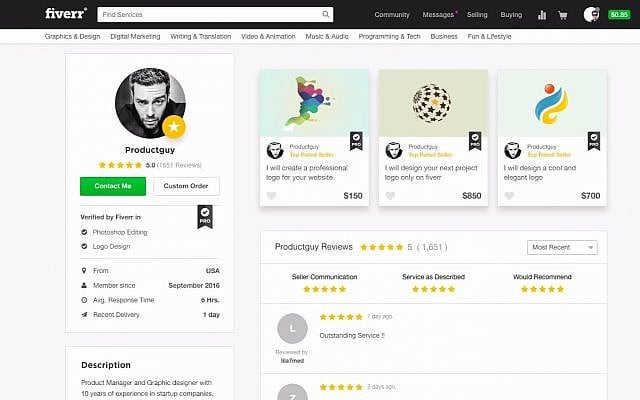
The internal search algorithm was completely overhauled. The goal was to boost new or rising sellers instead of keeping the exact same top-rated freelancers at the top of the search results forever. They also actively removed fake sellers who had suspiciously high five-star reviews.
In theory, this sounds like a good idea. But in practice, there was a massive problem.
Fiverr's absolute best, highest-performing freelancers noticed something very strange. Almost overnight, their hard-earned success scores were being quietly demoted. The platform claimed this was due to a drop in communication quality. Sellers who had massive amounts of recurring business and perfectly happy customers suddenly saw their incomes fall.
Their official seller levels dropped from Level 3 (Top Rated Sellers) down to Level 2 (Notable Sellers). Many even received threatening system warnings that they were about to be dropped to Level 1.
Fiverr was actively punishing all of its top sellers and flat-out refused to give anyone a clear, transparent answer as to why it was happening. To make matters worse, Fiverr wound up in court because it quietly snuck in hidden service fees at checkout. This move severely annoyed both the clients paying the bills and the sellers doing the work. Freelancers were already frustrated, and somehow, the platform found a way to make the core experience even worse.
A History of Tone Deaf Marketing
To understand why Fiverr's relationship with its community is so strained, we need to take a quick step back to 2017. Fiverr has a long, documented history of completely misunderstanding its own user base.
In 2017, Fiverr rolled out a truly bizarre ad campaign. They plastered posters and billboards everywhere with slogans that glorified extreme overwork. The ads featured phrases like, "Sleep deprivation is your drug of choice. You might be a doer."
This campaign left the general public incredibly confused. It was supposed to promote the hustle of freelancing, but it just seemed to glorify burnout. It was going completely backward against modern work trends. Everyday workers were becoming much more conscious of work-life balance. People wanted to avoid being slaves to their jobs, they wanted to log off at five o'clock, and they wanted an actual life outside of their careers.
Instead of reading the room, Fiverr poured millions into a campaign that quickly became an internet laughingstock. Countless media articles reported on the public relations disaster. Amazingly, Fiverr doubled down. Their head of digital publicly explained that they wanted to push people out of their comfort zones to see if they were doing everything possible to achieve success. It was a wildly tone-deaf stunt.
This historical context is vital because it proves this disconnect was not a one-time mistake. When the next major crisis hit, Fiverr repeated the exact same pattern.
The AI Controversy: A Desperate Pivot
Fiverr urgently needed to revamp their stalling business. They needed a massive new narrative to excite investors. Their ultimate solution was Artificial Intelligence.

Fiverr rapidly added a massive new category to their platform specifically for AI services. They encouraged gigs for AI-generated content like synthetic voiceovers, prompt writing, image generation, and chatbot development. Today, Fiverr boasts over 10,000 self-proclaimed AI experts on the platform.
To be completely fair to the business strategy, it actually worked in the short term. It brought in heaps of new search demand and fresh buyers. They also rolled out an internal tool called Fiverr Go, which functioned as an AI assistant for the sellers themselves.
However, the human freelancers on Fiverr were starting to panic. Traditional artists, graphic designers, custom coders, and human voice artists who relied on Fiverr to pay their rent were getting incredibly worried. It looked exactly like Fiverr was actively promoting the technology that would replace them.
Fiverr's management team repeatedly went on record to emphasize that AI was an opportunity, not a threat. But behind closed doors, a different story was playing out. In the midst of their massive AI push, the CEO sent a highly controversial internal email to employees. He bluntly wrote, "Here's the unpleasant truth. AI is coming for your jobs. Heck, it's coming for my job, too. This is a wake-up call."
Naturally, this email was leaked to the public. The media quickly reported on the CEO's actual thoughts, and it immediately confirmed the absolute worst suspicions of the human sellers.
Instead of doing damage control, Fiverr decided to lean in. They needed to market all these new AI features, so they launched a brand-new ad campaign. The core message of the commercial was essentially: "We made this ad with AI and nobody cares. Nobody cares that you use AI. We get it. You used AI."
The ad spectacularly backfired. While the global debate about the ethics of AI use was at its absolute peak, and while thousands of creatives were terrified of losing their livelihoods, Fiverr decided this dismissive tone was a good idea. Critics called the campaign tasteless and told Fiverr to finally read the room. The ad felt like a massive miscalculation that actively alienated the very human talent the entire business relied upon.
It was the 2017 sleep deprivation ad campaign all over again. They were trying to market a website built entirely by human sellers by telling everyone that human effort no longer mattered.
The Classic Boom and Bust Trap
The fall of Fiverr is the ultimate boom and bust tale. They rode the incredible, unnatural high of the pandemic and built a massive corporate infrastructure for a growth phase that was always destined to be temporary.
It is worth noting that Fiverr was not the only company to fall into this specific trap. Countless tech companies made the exact same mistake. Vroom, the digital car dealership, exploded in value, spent big money on Super Bowl ads just like Fiverr, and eventually went bankrupt. Similarly, the video conferencing tool Zoom grew exponentially overnight. They spent heavily on hiring, massive R&D, and corporate acquisitions. When the market inevitably cooled down, Zoom's stock fell by 85 percent.
To Fiverr's credit, they did manage to achieve their basic survival goals after the crash. By 2023, their operating income was officially back in the green, and it even continued to grow slightly into 2024.
However, the share price has barely moved. It is still down around 90 percent from its peak and sits near an all-time low. Fiverr as a platform probably is not going anywhere anytime soon. They still have millions of users. But it is going to be an incredibly long and difficult journey back to the top, if they can ever manage to get there again.
Frequently Asked Questions
Why did Fiverr stock drop so much?
Is Fiverr still profitable for freelancers?
What is the Fiverr AI controversy?
Why did Fiverr buy other companies like Stoke Talent?
Are there hidden fees on Fiverr?
Conclusion
The fall of Fiverr serves as a powerful lesson for both tech investors and independent workers. The platform capitalized perfectly on a global crisis, but leadership mistook a temporary pandemic boom for permanent market dominance.
By prioritizing aggressive acquisitions, tone-deaf marketing, and AI tools over the financial stability of their core human users, the company alienated the foundation of its own success. While the business itself survives today, recovering from the fall of Fiverr will require winning back the trust of the very freelancers they left behind.