Table of Contents
For decades, the American tea-drinking experience has been remarkably uninspiring. You boil water, drop in a bleached paper bag full of crushed, dusty leaves, and wait. But when Lisa Li walked into the Shark Tank in late 2025, she brought a completely different vision to the table.
She dropped a single, tightly bundled dried flower into a glass teapot, poured hot water over it, and let the Sharks watch as it slowly, beautifully bloomed back to life right in front of their eyes. It was part beverage, part performance art, and rooted entirely in centuries of holistic wellness.
The Sharks were mesmerized, but as any fan of the show knows, a pretty presentation does not guarantee a check. Behind the delicate petals and calming aromas, Lisa had to prove she had a cutthroat business model capable of scaling in the notoriously brutal beverage industry. Here is the full update on The Qi.
What is The Qi Flower Tea?
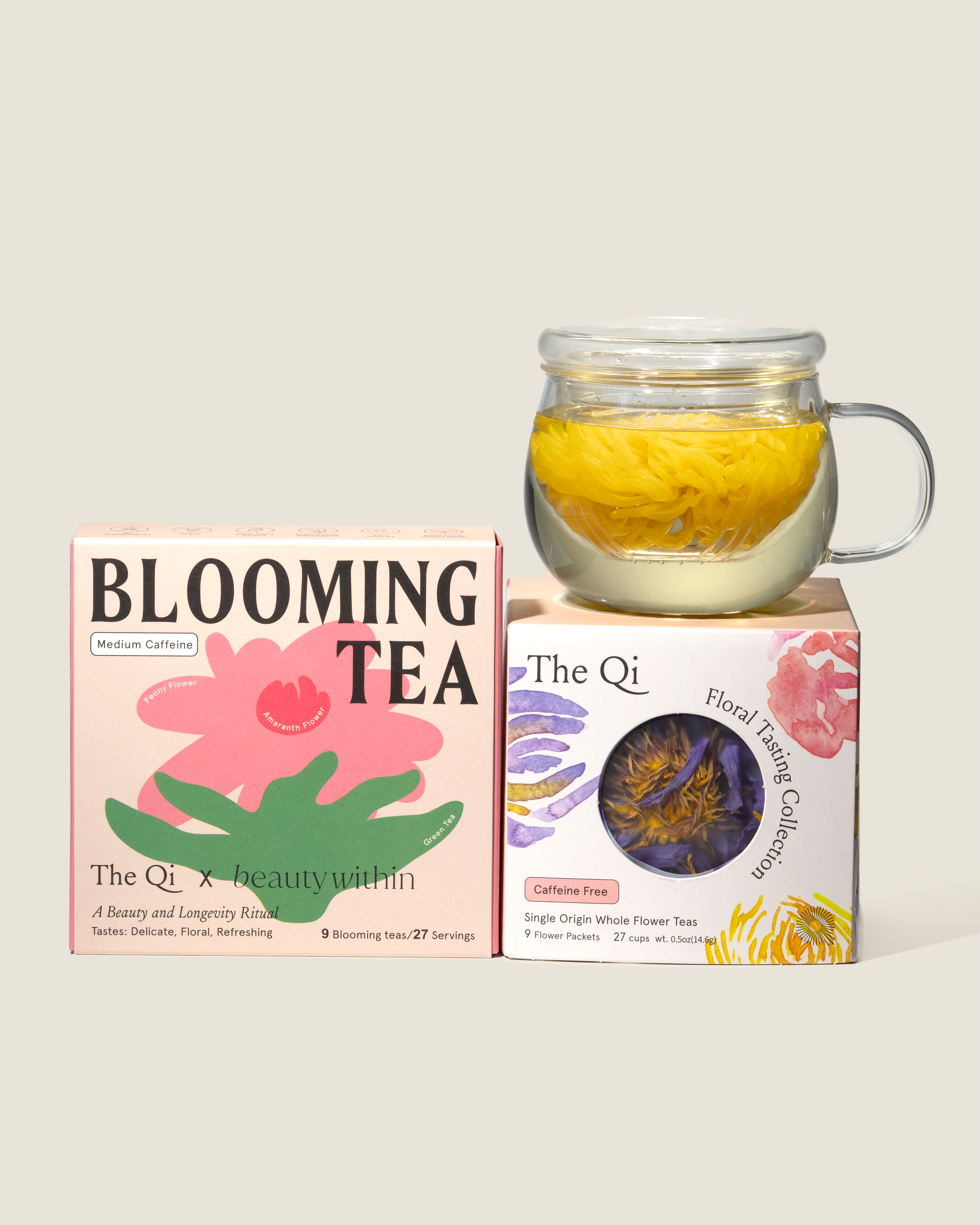
The Qi (pronounced "chee") is a premium wellness brand centered entirely around the ritual of drinking whole-flower teas. Unlike traditional tea companies that blend chopped tea leaves, herbs, and artificial flavorings into single-serve bags, The Qi sells single-origin, whole dried flowers.
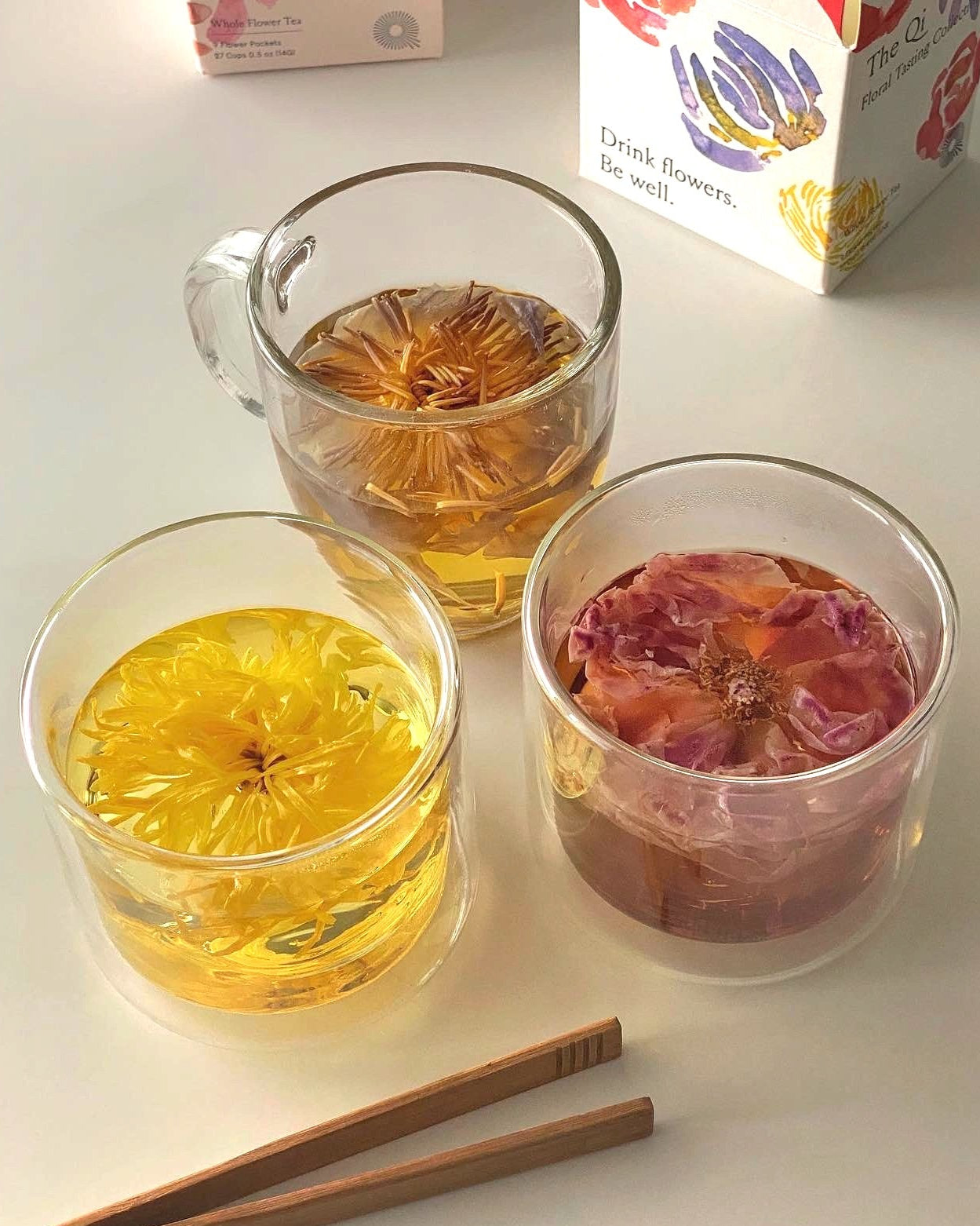
When you drop one of these flowers into hot water, it rehydrates and visually blooms in your cup. The product is designed to force the consumer to slow down, watch the process, and engage in a calming daily ritual. The brand is deeply rooted in Traditional Chinese Medicine (TCM), focusing on "Qi" - the Chinese concept of life force or vital energy.
Currently, the brand focuses on three core flower varieties sourced from small, family-owned farms in Asia:
- Shangri-La Rose: A pale gold infusion with a soft, fruity finish, meant to be consumed in the morning to open the heart.
- Royal Chrysanthemum: A bright, slightly grassy brew similar to chamomile, perfect for afternoon cooling and clarity.
- Blue Lotus: A delicate, neutral-tasting tea that acts as a powerful relaxant, ideal for evening wind-downs.
The flowers contain zero caffeine, zero calories, and no added fragrances or oils. They are simply hand-picked, sun-dried, and carefully packaged to ensure they do not shatter during shipping.
| Feature | Details |
|---|---|
| Industry | Food & Beverage (Wellness / Tea) |
| Founded Year | 2018 |
| Core Product | Single-origin, whole-flower blooming teas |
| Target Audience | Wellness enthusiasts, tea drinkers, gift shoppers |
| Retail Price | $36 for a Variety Box (yields approx. 27 cups) |
Who is the Founder of The Qi Flower Tea?
The Qi was founded by Lisa Li. Born in Liaoning, a province in northeast China, Lisa grew up drinking the warm, herbal flower teas her grandmother would steep for her. At the time, she thought nothing of it. At age 14, she immigrated to Vermont with her mother, who opened a local dumpling restaurant.
Lisa eventually earned a BA in Marketing from Bentley University. She initially worked a corporate accounting job that she despised before aggressively pivoting into the fast-paced New York fashion industry, eventually landing a role at Gucci.
But the relentless hustle-culture of the American fashion world quickly took a toll. After years of pushing through stress, late nights, and severe burnout, Lisa’s body rebelled. She was diagnosed with a thyroid condition.
Doctors gave her a stark ultimatum: undergo surgery or take medication for the rest of her life. Hesitant to do either, Lisa took a step back and flew home to China. In 2017, she and her mother traveled to Shangri-La, a remote, mountainous region in Yunnan Province. There, she witnessed locals drinking local rose teas and realized how disconnected she had become from the natural, healing rituals of her youth.
She wanted to bring this experience back to the United States but quickly hit a massive roadblock: pesticides. Commercial flowers sold in the US are grown for bouquets, not consumption. They are heavily treated with chemicals to survive long shipping routes.
It took Lisa over a year of traveling, tasting, and testing to find small family farms in Asia that grew flowers purely, organically, and without pesticides. In 2018, she officially launched The Qi from her New York City apartment, teaching herself how to pack and ship delicate dried flowers without breaking them.
The Qi Flower Tea Shark Tank Journey & Pitch
Reaching the Shark Tank was a marathon, not a sprint. Lisa applied to the show three separate times over six years, facing rejection and radio silence until she finally secured a spot on Season 17, Episode 5, which aired on November 5, 2025.
Lisa walked into the Tank asking for $200,000 in exchange for an 8% stake in her company, giving The Qi a valuation of $2.5 million.
Her presentation was visually stunning. She served the Sharks her three signature flowers in clear glass mugs so they could watch the blooming process. She then delivered a "wow" moment by having the Sharks pour honey into the Blue Lotus tea. The change in pH levels instantly turned the pale liquid into a vibrant, bright purple, sparking genuine surprise from the panel. Despite her nerves - which led to a funny, tension-breaking moment where she accidentally called Kevin O'Leary "Mr. Kevin" - the pitch was off to a strong start.
Then came the numbers. Lisa revealed that a variety box retails for $36. Her landed cost to produce that box was only $7, representing a massive profit margin. Even better, that single box contains nine flowers, and because each flower can be steeped up to three times, one box provides 27 cups of tea.
The financial history was equally solid. Lisa shared that her lifetime sales sat at $2.9 million. In 2024, she brought in $616,000, and she projected that by the end of 2025, sales would cross the $1 million mark. She explained her distribution model was a healthy mix of direct-to-consumer (DTC) website sales, wholesale to boutiques, and hospitality partnerships.
Despite the great margins and proven sales, the Sharks started dropping. Lori Greiner and Kevin O'Leary both stepped out, arguing that the market was simply too niche for their investment portfolios. Robert Herjavec agreed with Kevin's assessment and also bowed out. Guest Shark Allison Ellsworth (founder of Poppi) also declined to make an offer.
That left Daymond John. Daymond, who has been highly vocal about his own recent health scares and his deep investment in longevity and real wellness, connected with Lisa's mission. However, he felt the $2.5 million valuation was too high for the risk involved. He offered Lisa the $200,000 she needed, but demanded 20% equity, slashing the valuation down to $1 million.
Lisa, knowing her numbers, confidently countered: she asked if Daymond would do $300,000 for that same 20%. Daymond held firm, explaining that the beverage space is brutal and he could easily lose his entire investment. Recognizing the value of having a Shark who genuinely understood her health-focused mission, Lisa accepted Daymond's original offer.
| Shark Tank Details | Figures & Outcomes |
|---|---|
| Initial Ask | $200,000 for 8% equity |
| Implied Valuation | $2.5 million |
| Sharks in the Room | Mark Cuban, Kevin O'Leary, Lori Greiner, Daymond John, Allison Ellsworth |
| Offers Made | Daymond John: $200,000 for 20% |
| Final Deal | $200,000 for 20% with Daymond John |
What Happened to The Qi Flower Tea After Shark Tank?
The immediate aftermath of the broadcast was a textbook example of the "Shark Tank Effect." Lisa hosted a watch party with friends at her tea studio in the Flatiron district of New York City. As the episode aired across the country, The Qi's website traffic exploded.
Within mere hours of the episode finishing, the company completely sold out of multiple SKUs. Lisa was flooded with messages from strangers across America eager to try their first whole-flower bloom.
Capitalizing on the massive spike in national visibility, Lisa quickly introduced a "Shark Tank Special" bundle on the company's website. This bundle perfectly packaged the exact products she pitched on the show, the three core flowers plus a special blooming green tea, allowing new customers to easily replicate the exact tasting experience the Sharks had on television.
Is The Qi Flower Tea Still in Business?
Yes, The Qi is absolutely still in business and thriving. The company continues to operate out of its dedicated tea studio in the Flatiron/NoMad neighborhood of Manhattan.
The brand has successfully maintained its omnichannel approach. While digital advertising costs remain sky-high for small brands, The Qi has bypassed some of those hurdles by securing strong retail partnerships. You can currently find their products stocked on the shelves of major premium retailers like Anthropologie and Bloomingdale's.
They have also slightly expanded their product line. While the three core flowers remain the flagship sellers, The Qi now offers a highly-rated Uji Ceremonial Matcha and various high-end glass teapots designed specifically to showcase the blooming flowers.
The brand has also tapped into the exploding popularity of TCM (Traditional Chinese Medicine) on platforms like TikTok, positioning themselves perfectly at the intersection of aesthetic social media trends and genuine holistic wellness.
What is the Valuation & Net Worth of The Qi?
When Lisa Li shook Daymond John's hand, she accepted a deal that placed The Qi's valuation at exactly $1 million ($200k for 20%). However, reality television deals often serve as a launching pad rather than a permanent ceiling.
Prior to the show, Lisa had already generated $2.9 million in lifetime sales and hit $616,000 in revenue in 2024. With her stated projections of crossing $1 million in annual revenue by the close of 2025, and the massive, sold-out surge following the November 2025 broadcast, the company's financial footprint has grown considerably.
Currently, standard consumer packaged goods (CPG) industry multiples for a high-margin, million-dollar-revenue DTC brand place The Qi's estimated valuation closer to $3 million to $5 million.
Lisa Li's personal net worth is estimated to be between $1.5 million and $2.5 million, factoring in her remaining majority equity in the company, her successful retail expansions, and the highly profitable 80% gross margins on her core products.
Where to Buy The Qi Flower Tea?
If you want to experience the blooming tea for yourself, the most reliable place to purchase The Qi is directly through their official website (the-qi.com). Buying direct ensures you get access to their full inventory, including the limited-edition "Shark Tank Special" bundles and their custom borosilicate glass teapots.
For retail shoppers who prefer to buy in person, The Qi has secured impressive wholesale distribution. You can frequently find their beautifully designed boxes in the home and wellness sections of Anthropologie and Bloomingdale's locations across the United States.
Are The Qi Reviews Good?
The customer consensus on The Qi is overwhelmingly positive, particularly regarding the sensory experience. On their native site, products boast near-perfect 4.8 out of 5-star ratings across thousands of reviews. Customers frequently praise the visual beauty of the blooming flowers, noting that the ritual of brewing the tea is just as beneficial as drinking it.
On independent forums like Reddit's r/tea community, reviews are slightly more nuanced but generally favorable. Serious tea purists note that The Qi is quite expensive compared to standard bulk loose-leaf tea, and point out that the flavor profile of a single flower is much milder than a heavily oxidized black tea.
However, even the strictest critics agree that the quality of the sourcing is excellent, the packaging is top-tier, and the product makes for a fantastic, unique gift for wellness enthusiasts.
The Qi Alternatives
While The Qi has carved out a highly specific niche with its single-origin whole flowers, there are alternatives in the broader premium tea market.
- Teabloom: This is perhaps the closest competitor. Teabloom specializes in flowering teas, but instead of single, raw flowers like The Qi, they sew green tea leaves around a dried flower center that "blooms" when steeped.
- Numi Organic Tea: For those who want high-quality, organic floral notes (like Rose or Jasmine) but prefer the convenience of traditional tea bags and lower price points.
- Traditional Medicinals: If the primary goal is herbal wellness and TCM-inspired remedies rather than the visual aesthetic, this heritage brand offers widely available, highly effective herbal blends in every American grocery store.
Ultimately, Lisa Li didn't just sell the Sharks a beverage; she sold them a moment of peace. And in the fast-paced, high-stress landscape of modern America, that moment of peace is proving to be incredibly profitable.