Table of Contents
When the doors to the Shark Tank opened on the December 10, 2025 holiday episode, viewers were greeted with the warm, nostalgic sound of Victorian-era singers belting out Christmas classics.
It seemed like a wholesome, festive pitch full of holiday cheer. But the moment the singing stopped, the holiday magic quickly turned into one of the most ruthless and unconventional business negotiations in Shark Tank history.
The founders walked in hoping for a standard investment to grow their seasonal caroling business, but they ended up fighting tooth and nail against a total corporate buyout. By the end of the episode, a Shark owned the majority of their life's work. So, what happened when the cameras stopped rolling? Here is the full The Christmas Carolers Shark Tank update.
What is The Christmas Carolers?
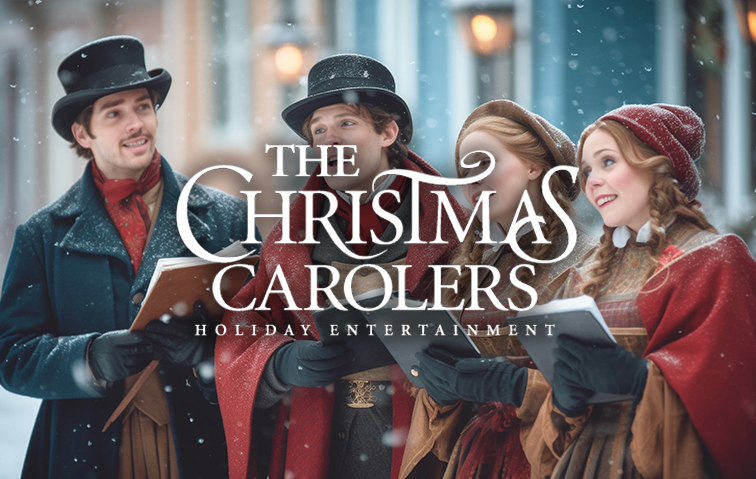
The Christmas Carolers is a nationwide holiday entertainment company that provides live, professional a cappella singers for corporate events, private parties, and retail gatherings. Instead of just sending out average singers in basic holiday sweaters, the company focuses on creating a premium, immersive experience.
Every performer is dressed in authentic, custom-made Victorian-era costumes, complete with ruffled collars, brocade vests, and top hats. The quartets memorize a massive setlist of classic holiday songs and are trained to deliver perfect harmonies in the middle of chaotic environments like busy office lobbies, corporate lunches, or crowded shopping malls.
| Product Overview | Details |
|---|---|
| Industry | Holiday Entertainment & Event Services |
| Founded Year | 1996 |
| Core Service | Live Victorian-Style A Cappella Carolers |
| Target Audience | Corporate Events, Private Parties, Retail Spaces |
| Retail Price | Starts at $700 for the first hour |
Who is the Founder of The Christmas Carolers?
The Christmas Carolers was founded by Kenyon Ross in 1996 in Hoover, Alabama. What started as a simple way to make some extra money singing during the holiday season slowly grew into a true business.
For almost thirty years, Kenyon ran the company as a passion project alongside his other ventures, slowly expanding the brand from local Birmingham gigs into a multi-city operation.

However, the real engine behind the daily operations in recent years has been Jessica Harris. Serving as the Director of Sales and proudly carrying the title of "Head Elf," Jessica manages the immense logistical nightmare of booking, scheduling, and wrangling hundreds of singers across multiple time zones.
Kenyon brought Jessica with him into the Tank to help pitch the business, proving that she was the glue keeping the holiday operation together.
The Christmas Carolers Shark Tank Journey & Pitch
Kenyon Ross and Jessica Harris stepped onto the Shark Tank stage during Season 17, Episode 7, seeking $250,000 in exchange for a 20% equity stake in their company. This ask gave The Christmas Carolers an implied valuation of $1.25 million.
After a charming musical introduction, the harsh reality of business took over. Kenyon explained that the company charges around $700 for the first hour of a performance. When the Sharks asked about the company's financial history, the mood in the room shifted.

Kenyon revealed that despite starting the business in 1996, the company had only generated just over $1 million in lifetime sales. This slow, 28-year crawl to a million dollars drew a sharp laugh from Daymond John, who joked that he could have made that much money just working at Red Lobster over the same time period.
The recent numbers were slightly better but still highly seasonal. In the previous three years, revenue climbed from $60,000 to $90,000, and finally to $255,000 in 2024, leaving them with roughly $50,000 in net profit. Kenyon also admitted that almost all of their business is generated online, yet they only had "hundreds" of social media followers, a fact that shocked the panel.
Kevin O'Leary immediately dropped out, stating bluntly that a seasonal business with $50,000 in profit was nowhere near a $1.25 million valuation. Daniel Lubetzky agreed, claiming their financial projections were only achievable in "another dimension," and he exited as well. Daymond John and Lori Greiner quickly followed suit, leaving only Barbara Corcoran.
Barbara Corcoran, however, saw a massive opportunity. She already owned Hire Santa, a massively successful holiday entertainment company from a past Shark Tank season that had generated over $16 million in sales using smart social media marketing.
Barbara knew exactly how to scale The Christmas Carolers, but she wasn't interested in being a minority partner. She shocked the room by offering $125,000 in cash, plus a $125,000 line of credit, for 100% of the company. She wanted to buy Kenyon out completely.
Kenyon refused to give up his entire business. After a tense back-and-forth negotiation, Barbara adjusted her ruthless offer to something more palatable but still aggressive.
| Pitch & Offers | Details |
|---|---|
| Initial Ask & Valuation | $250,000 for 20% equity ($1.25M Valuation) |
| Sharks in the Room | Mark Cuban, Kevin O'Leary, Lori Greiner, Daymond John, Barbara Corcoran, Daniel Lubetzky (Guest) |
| Kevin O'Leary's Offer | Out (Valuation too high) |
| Barbara Corcoran's Initial Offer | $125,000 for 100% equity + $125k line of credit |
| Final Deal Accepted | $125,000 for 60% equity + $125k line of credit (Kenyon kept 30%, Jessica received 10%) |
What Happened to The Christmas Carolers After Shark Tank?
The immediate aftermath of the December 2025 episode was explosive. Viewers were fascinated by the rare majority-buyout deal, which sent thousands of curious event planners and holiday enthusiasts straight to the company's website.
The Christmas Carolers experienced a massive spike in web traffic, which quickly converted into a surge of early bookings for the following holiday season.
To capitalize on the momentum of their national television debut, the company launched a "Shark Tank Special," offering a $200 discount on bookings that were tied directly to the airing of the episode.
Behind the scenes, the integration with Barbara Corcoran's Hire Santa empire began to take shape, providing the caroling company with the massive social media reach and operational blueprint that Kenyon and Jessica had previously lacked.
Is The Christmas Carolers Still in Business?
Yes, The Christmas Carolers is still very much in business and growing aggressively under Barbara Corcoran's majority control. The cash injection and strategic guidance have allowed the company to break out of its stagnant growth pattern.
Prior to Shark Tank, the company operated in 14 cities. By mid-2026, they had expanded their footprint into 20 major American markets, adding lucrative entertainment hubs like New York City, Los Angeles, Chicago, Miami, and Las Vegas to their roster.
Furthermore, the company has diversified its offerings to ensure they capture as much of the holiday market as possible. They officially launched a "Hire a Santa" service directly through their website, fully leveraging Barbara's existing Santa network.
Most surprisingly, The Christmas Carolers announced a brand new product line for the holiday season: life-size Animatronic Carolers. These robotic singers are designed specifically for bank lobbies, corporate offices, and secured indoor venues that want constant holiday music without having to pay human singers by the hour.
What is the Valuation & Net Worth of The Christmas Carolers?
Valuing a highly seasonal business can be tricky, but the Shark Tank negotiations laid bare the hard financial realities of the company. When Kenyon Ross asked for $250,000 for 20%, he was dreaming of a $1.25 million valuation.
However, the final deal he struck with Barbara Corcoran, $125,000 for 60% equity, slashed the company's actual valuation down to just $208,333 at the close of 2025.
Financially, the company netted $50,000 on roughly $255,000 in gross revenue in the year leading up to their television appearance. However, going into the holiday season, those numbers are expected to multiply.
With the expansion into 20 major metropolitan areas, the cross-promotional power of Hire Santa, and the introduction of corporate animatronic rentals, business analysts estimate that the company's revenue could easily push past $500,000.
While founder Kenyon Ross gave up the lion's share of his equity, his remaining 30% stake in a rapidly scaling, nationally recognized brand will likely prove far more valuable than owning 100% of a stagnant local operation. The estimated net worth of the business itself is currently rebounding toward the $750,000 to $1 million mark as Barbara Corcoran works her operational magic.
How Much Does It Cost to Hire The Christmas Carolers?
If you are looking to bring a Victorian-era vibe to your next holiday party, it comes with a premium price tag. In 2026, booking The Christmas Carolers starts at roughly $700 for the first hour of performance.
If you want to keep the festive tunes rolling, the hourly rate drops slightly for each additional hour booked. The average corporate event generally books the quartet for two hours.
During the Shark Tank pitch, Kenyon revealed exactly where that $700 goes. Out of the initial booking fee, the four performing singers split $230, which breaks down to roughly $40 to $50 an hour per singer.
The remainder of the fee goes toward paying the local City Directors who manage the talent, the cost of the custom Victorian costumes, travel logistics, and the company's profit margin.
How Do The Christmas Carolers Find Their Singers?
Managing hundreds of singers across 20 different US cities is a logistical nightmare, which is why the company relies on a localized management system. In every market, the company employs a "City Director." These directors are usually local voice teachers, theater veterans, or choir directors who deeply understand the local performing arts scene.
These directors hold strict auditions starting in the late summer and early fall. They actively recruit from university musical theater programs, opera choruses, and professional vocal groups.
They aren't just looking for good voices; they need singers who can sight-read music, blend their tone flawlessly in an a cappella quartet, and not break character when a distracted shopper bumps into them at a retail gig. Once the singers are hired, they go through rigorous rehearsals to ensure that a quartet in Dallas sounds exactly the same as a quartet in Nashville.