Table of Contents
Picture a freezing New York winter night. You are craving the ultimate comfort food. Do you reach for the hearty warmth of traditional Jewish matzoh ball soup, or do you crave the rich, savory depth of a hot bowl of Japanese ramen? For chefs and husband-and-wife duo Aaron Israel and Sawako Okochi, the answer was simple: you put them together.
What started as an authentic dinner experiment inside their Williamsburg apartment soon became the signature dish of their Brooklyn restaurant, Shalom Japan. But when local demand turned into nationwide clamoring, the couple had to figure out how to put their restaurant-quality soup into a shippable box.
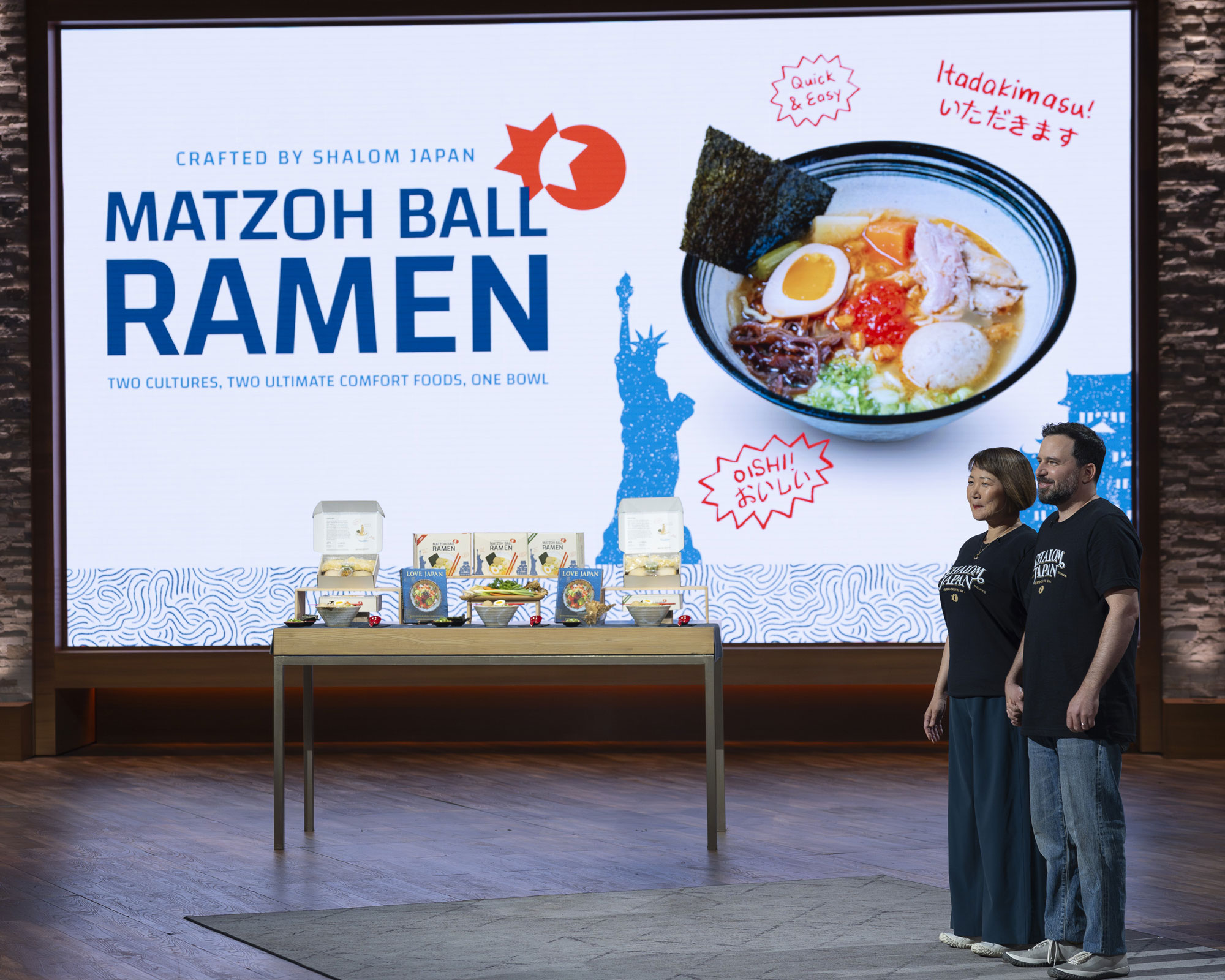
Stepping onto the Shark Tank stage in late 2025, they brought a mashup that had the Sharks fighting over the last drop of broth. Here is the full story of Shalom Japan, the Matzoh Ball Ramen Kit, and where the business stands today.
What is Shalom Japan Matzoh Ball Ramen?
Shalom Japan is a popular restaurant in South Williamsburg, Brooklyn, known for its "authentically inauthentic" blend of Jewish and Japanese cuisine. While the restaurant offers a full menu, their breakout retail product is the Matzoh Ball Ramen Kit.
This kit is a ready-to-cook, direct-to-consumer meal box that allows people across the United States to recreate the restaurant’s most famous dish in their own kitchens in about ten minutes. It is not an instant soup; it is a premium meal kit.
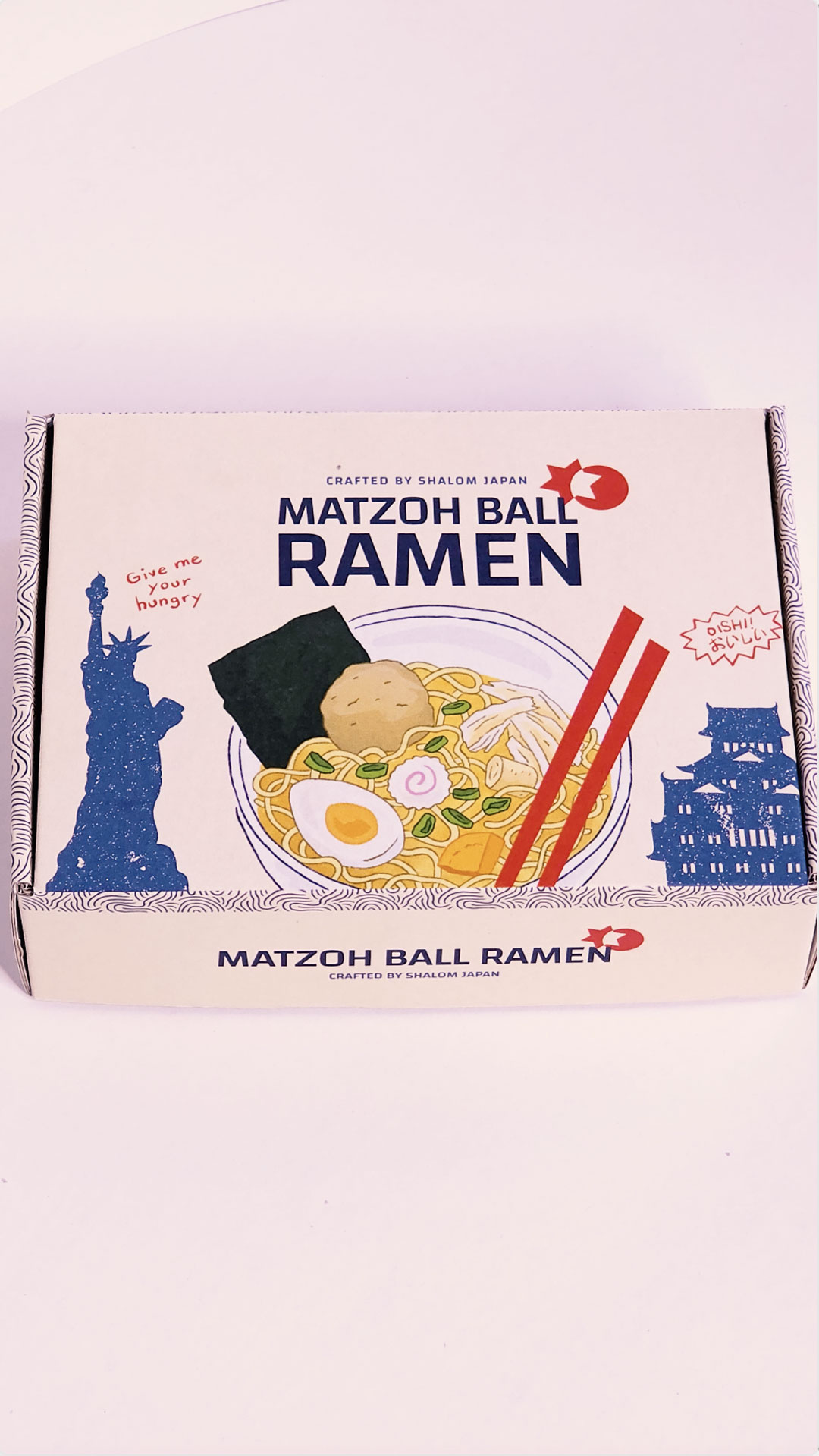
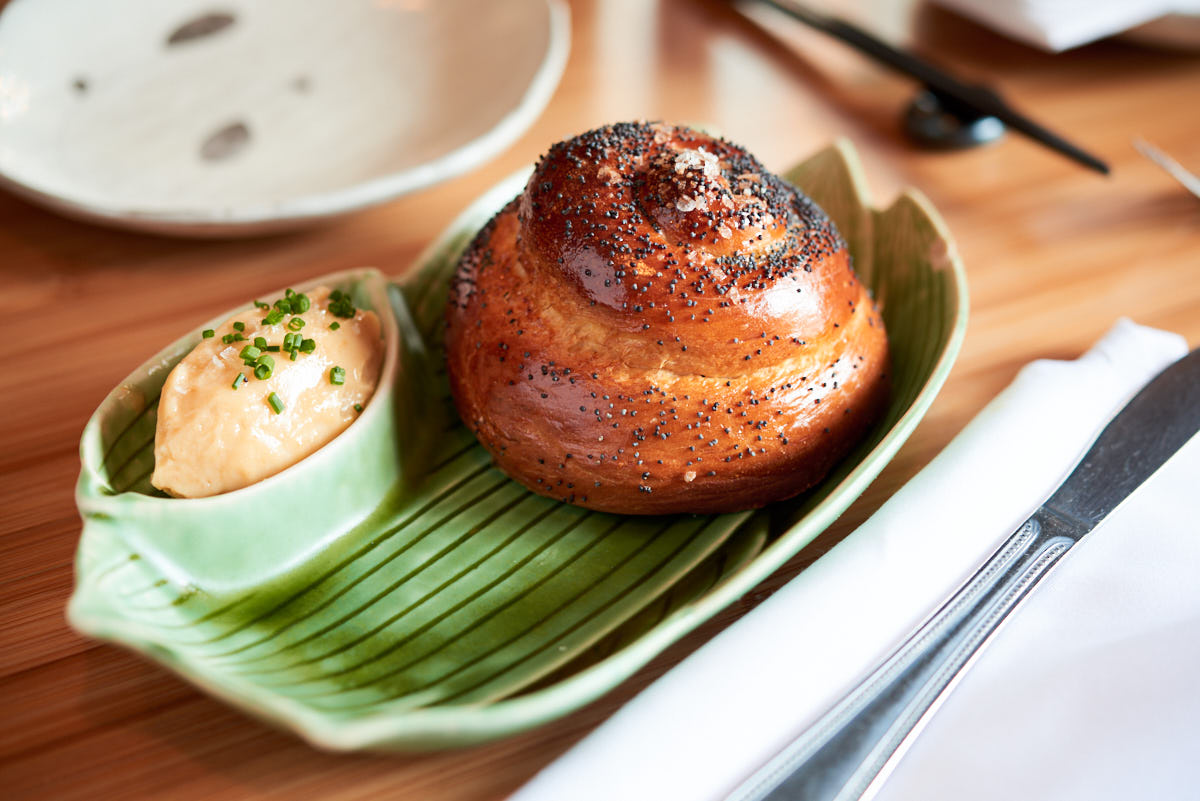
Inside the insulated box, customers find two heavy pouches of rich chicken broth, each containing two large, perfectly textured matzoh balls. The kit also includes dry ramen noodles, pre-portioned sliced scallions, and a bag of "soup mandels" (traditional crispy soup crackers made with duck fat).
To kick the flavor up to a restaurant level, they include a small jar of their house-made chili sauce. To prepare it, you simply boil the unopened soup pouch in water to heat it safely, quickly boil the ramen noodles for one minute, and combine it all in a bowl with the toppings.
| Product Overview | Details |
|---|---|
| Industry | Food & Beverage / E-Commerce |
| Founded Year | 2013 (Restaurant) / 2024 (Kits) |
| Core Product | Matzoh Ball Ramen Meal Kits |
| Target Audience | Comfort Food Seekers, Foodies, Gift-Givers |
| Retail Price | $79.95 (Nationwide Shipping) / $30.00 (Local Pickup) |
Who are the Founders of Shalom Japan?
The minds behind the matzoh ball ramen are Aaron Israel and Sawako Okochi. The two met the way many great chefs do - grinding it out side-by-side in high-pressure New York City kitchens. Aaron grew up in New York with deep Jewish roots, while Sawako (often called Sawa) was born and raised in Hiroshima, Japan.
As they fell in love and built a life together, their cooking naturally blended. One evening, Aaron was making his mother's traditional matzoh ball soup recipe. He was experimenting with the broth, trying to make it richer and thicker. Sawa tasted it and suggested tossing in some ramen noodles instead of the traditional egg noodles. The match was an instant success. The ramen noodles held their chewy bounce in the hot broth, and the matzoh balls absorbed the savory liquid perfectly.
In 2013, they opened Shalom Japan. They didn't want a gimmick restaurant; they just wanted to cook the food they ate at home. Their menu featured items like lox with pickled daikon and an okonomiyaki (Japanese savory pancake) loaded with sauerkraut and pastrami. But the matzoh ball ramen quickly became the runaway hit.
By 2024, after years of out-of-towners begging for a way to take the soup home, Aaron and Sawa finally developed a packaging method to freeze and ship the soup nationwide.
Shalom Japan Shark Tank Journey & Pitch
Aaron and Sawa walked into the Tank during Season 17, Episode 6 (airing in November 2025). They were seeking $200,000 in exchange for 20% equity in their ramen kit spin-off business.
The couple handed out fresh, steaming bowls of the soup to the panel. The reaction was immediate. Lori Greiner raved about the broth, calling it "really, really nice." Guest Shark Daniel Lubetzky, founder of KIND Snacks, called the flavor profile "exquisite," while Daymond John and Barbara Corcoran practically cleaned their bowls.
However, the business logistics brought the Sharks back down to earth. Aaron revealed that the kits cost about $9.60 to make, mostly due to the heavy, insulated packaging required to keep the soup cold. They retailed for $79.95 online. Because they had only just launched the shippable kits a year prior, lifetime sales for the e-commerce side were only about $17,000.
Kevin O'Leary immediately spotted a problem. Shipping heavy, frozen liquids across the country is notoriously difficult and eats into profit margins. He warned that getting this into traditional grocery retail would be a nightmare.
Daniel Lubetzky agreed, asking if they could make the product shelf-stable. Aaron admitted that tweaking the recipe for grocery shelves was exactly why they needed a Shark's help. Daniel also expressed concern that running a highly successful, full-time restaurant would prevent the founders from giving the retail brand the 100% focus it needed to scale.
Then, Barbara Corcoran stepped in with a curveball. She loved the food and loved the couple. Instead of focusing just on e-commerce, she envisioned taking the soup to the streets. She offered $200,000 for 30% equity, but with a massive contingency: they had to partner with Cousins Maine Lobster (one of Barbara's most famous and lucrative Shark Tank investments) to launch a fleet of food trucks selling the ramen.
Aaron, trying to protect his equity, countered at 25%. Barbara refused to budge. Realizing the power of the Cousins Maine Lobster network, Aaron and Sawa accepted the deal.
| Pitch & Offers | Details |
|---|---|
| Initial Ask & Valuation | $200,000 for 20% (Implied Valuation: $1,000,000) |
| Sharks in the Room | Lori Greiner, Daniel Lubetzky, Kevin O'Leary, Daymond John, Barbara Corcoran |
| Specific Offers | Barbara Corcoran: $200,000 for 30% (Contingent on Food Truck Partnership) |
| Final Deal Accepted | $200,000 for 30% with Barbara Corcoran |
What Happened to Shalom Japan After Shark Tank?
The immediate aftermath of their November 2025 airing was explosive. The "Shark Tank effect" flooded their website with orders. Because they were partnered with Goldbelly - a massive food shipping platform equipped to handle high traffic - their site didn't crash, and they were able to process the nationwide orders smoothly.
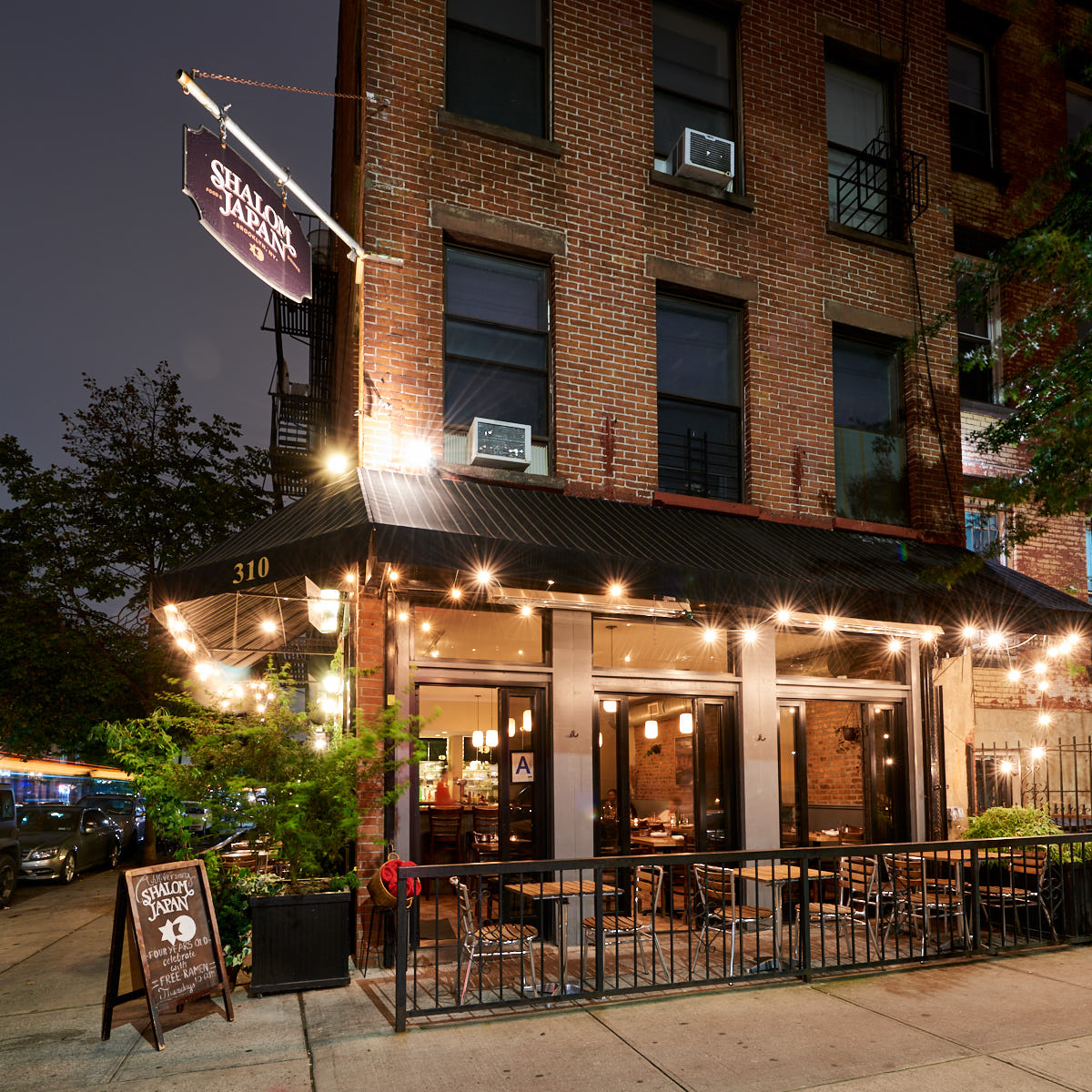
Locally, the brick-and-mortar restaurant in Brooklyn experienced a massive surge. Fans of the show lined up outside the South 4th Street location just to try the soup fresh from the kitchen. Local food critics and bloggers flocked to the restaurant to cover the hype.
By early 2026, the momentum hadn't stopped. In January 2026, the prestigious Michelin Guide highlighted Shalom Japan, specifically mentioning their Shark Tank success and praising the matzoh ball ramen as one of the best bowls in New York City. In April 2026, Aaron Israel was featured on popular culinary podcasts, further expanding the brand's reach beyond just reality TV fans.
Is Shalom Japan Still in Business?
Yes, Shalom Japan is absolutely still in business. The restaurant continues to operate as a staple in the Williamsburg food scene, keeping its doors open for dinner and brunch.
The e-commerce side of the business is also running strong. They have expanded their offerings slightly on Goldbelly, now offering a "Spicy Matzoh Ball Ramen Kit" as well as a combo box for families. They have successfully maintained their quality during the scale-up, avoiding the common pitfall of ruining the recipe to meet high demand.
What is the Valuation & Net Worth of Shalom Japan?
Valuing Shalom Japan requires looking at two different entities: the physical restaurant and the e-commerce kit business. During their Shark Tank pitch, the agreed-upon deal with Barbara Corcoran ($200,000 for 30%) placed the valuation of the retail meal kit business at $666,666.
However, the overall net worth of the founders and their brand is much higher. Shalom Japan has been a successful, Michelin-recognized restaurant operating in one of the most expensive real estate markets in the country since 2013.
Factoring in a decade of restaurant revenues, their James Beard Award-winning cookbook (Love Japan), and the new injection of capital and sales from the e-commerce kits, the estimated net worth of Aaron Israel and Sawako Okochi is currently between $2 Million and $3 Million.
Where to Buy Shalom Japan Matzoh Ball Ramen Kits?
If you do not live in New York, the only way to get your hands on the official meal kits is through the gourmet food delivery website, Goldbelly. You can order the Classic Kit, the Spicy Kit, or a Combo Kit. Because the soup requires heavy insulation and ice packs, shipping is factored into the $79.95 price tag.
If you live in Brooklyn or the surrounding NYC boroughs, you can order the kits for local pickup directly through the Shalom Japan website for a much cheaper $30. You can also order hot, ready-to-eat bowls for delivery via apps like Seamless and Grubhub.
Are Shalom Japan Reviews Good?
The reviews for the matzoh ball ramen are overwhelmingly positive, though they vary depending on how the customer purchased it.
On Goldbelly, the kits maintain an excellent "86% loved" rating. Home cooks frequently praise the deep, comforting flavor of the broth and how well the matzoh balls survive the freezing and reheating process.
On local delivery apps like Seamless, the reviews sit around 4 out of 5 stars. The primary complaint from local delivery customers is the price-to-portion ratio. A few reviewers noted that paying $19 to $20 for a single bowl of soup felt steep for the portion size they received. However, almost all reviewers agree that the taste itself is incredibly unique and delicious.
What Happened to the Cousins Maine Lobster Partnership?
The most exciting part of Barbara Corcoran's offer was the contingency to launch Shalom Japan food trucks alongside the legendary Cousins Maine Lobster brand.
The food trucks have not yet hit the streets. In the food and beverage industry, retrofitting trucks, securing city permits, and establishing mobile supply chains for a highly perishable soup takes time.
While the trucks aren't actively serving on corners just yet, Barbara's team is known for aggressive execution. Industry insiders expect to see prototype Shalom Japan ramen trucks popping up at food festivals or testing markets alongside Cousins Maine Lobster trucks by late 2026 or early 2027. For now, fans will have to settle for getting the soup shipped to their door or booking a table in Brooklyn.