Table of Contents
Walking into the Shark Tank with hundreds of thousands of dollars in revenue is usually a one-way ticket to a bidding war. But walking into the Tank with hundreds of thousands of dollars in unfulfilled pre-orders is a great way to get chewed up and spit out.
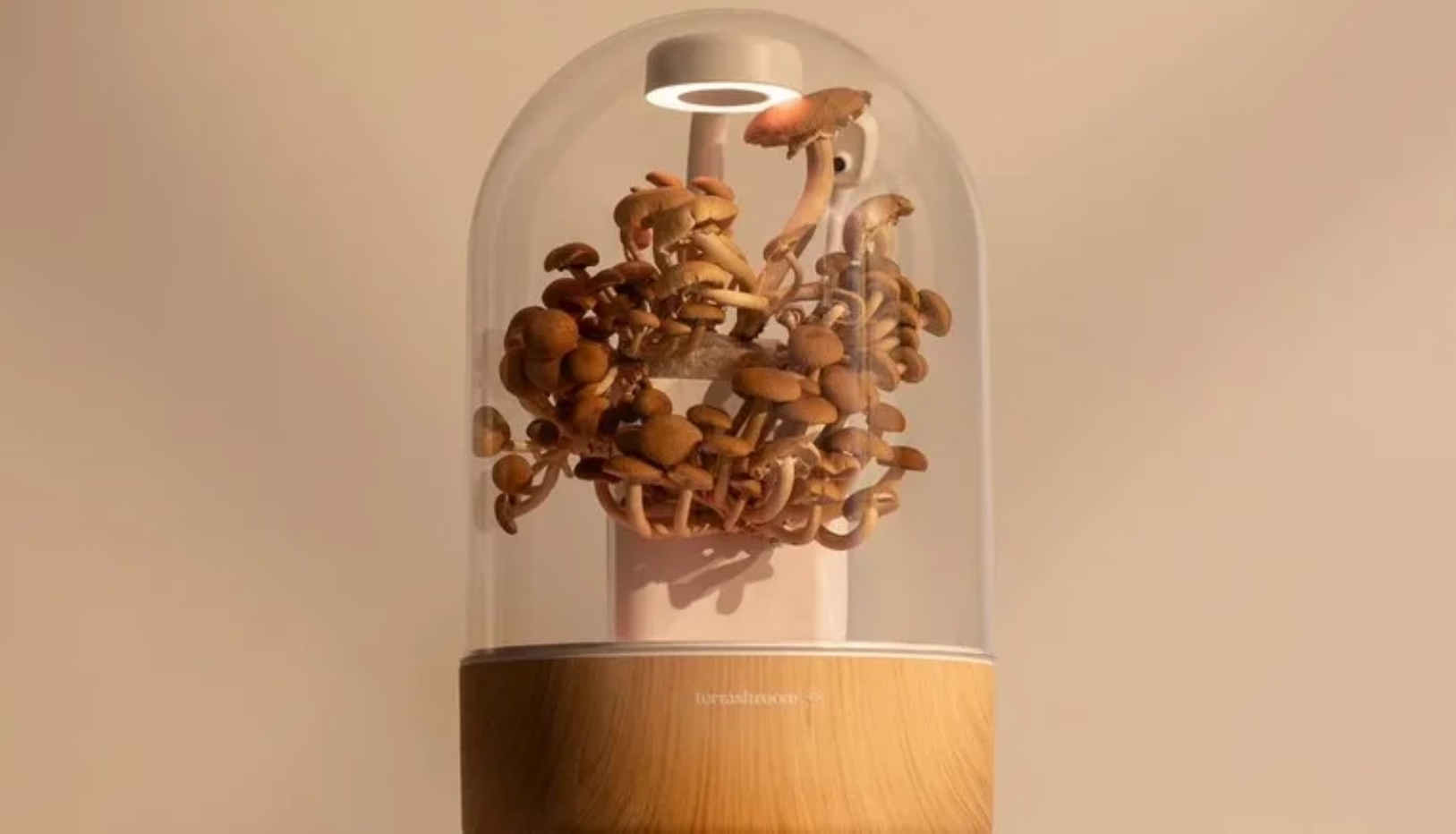
When Jared Steele stepped onto the stage in Season 16 with Terrashroom, a sleek, app-controlled, fully automated mushroom-growing chamber, the Sharks were initially mesmerized by the slick tech and impressive margins.
The device promised to turn anyone with a smartphone into a master mycologist. But as the pitch unfolded, the reality of hardware manufacturing cast a dark shadow over the presentation.
Taking money from consumers for two years without delivering a single product is the ultimate red flag in the consumer tech space. While the Sharks praised the ambition, the severe lack of operational execution left the panel highly skeptical.
What followed was one of the most intense reality checks in recent Shark Tank history, culminating in a rejected offer from Kevin O'Leary. But the drama on the show was just a preview of the absolute chaos that would unfold behind the scenes.
By the time 2026 rolled around, the Terrashroom story evolved from an optimistic startup pitch into a cautionary tale about the brutal realities of hardware engineering, supply chain logistics, and the dangers of over-promising.
What is Terrashroom?
Terrashroom was designed to be the "Keurig of mushroom cultivation." Growing gourmet or medicinal mushrooms at home traditionally requires a delicate, constantly monitored balance of humidity, temperature, and fresh air exchange. If the environment is too dry, the mushrooms abort.
If it is too wet or stagnant, bacterial contamination takes over. Terrashroom aimed to completely eliminate this learning curve by housing the entire process inside a sleek, futuristic dome that looked like a high-end kitchen appliance.
The system was heavily reliant on smart technology. Users would simply plug the device into a standard wall outlet, fill the internal water reservoir, place a pre-inoculated mushroom "cake" inside the chamber, and connect the device to their home Wi-Fi. From there, the Terrashroom smartphone app took over.
The user would select the specific type of mushroom they were growing, such as Lion’s Mane, Reishi, or Blue Oyster, and the device’s internal sensors and fans would automatically adjust the microclimate to match the exact environmental needs of that fungi species. The unit even featured customizable mood lighting and a built-in time-lapse camera, turning the agricultural process into a highly shareable social media flex.
The business itself was built on the classic "printer and ink" revenue model. The hardware was merely the entry point. Once a customer owned a Terrashroom, they would theoretically need a continuous supply of fresh mushroom blocks to keep growing. The company offered a subscription service delivering these ready-to-grow cakes right to the customer's doorstep.
| Feature | Details |
|---|---|
| Industry | Home & Garden / Smart Tech |
| Founded Year | 2022 |
| Core Product | Automated Mushroom Grow Chamber |
| Target Audience | Urban gardeners, bio-hackers, and culinary hobbyists |
| Retail Price | $399 for the device, $30 per mushroom cake |
Who is the Founder of Terrashroom?
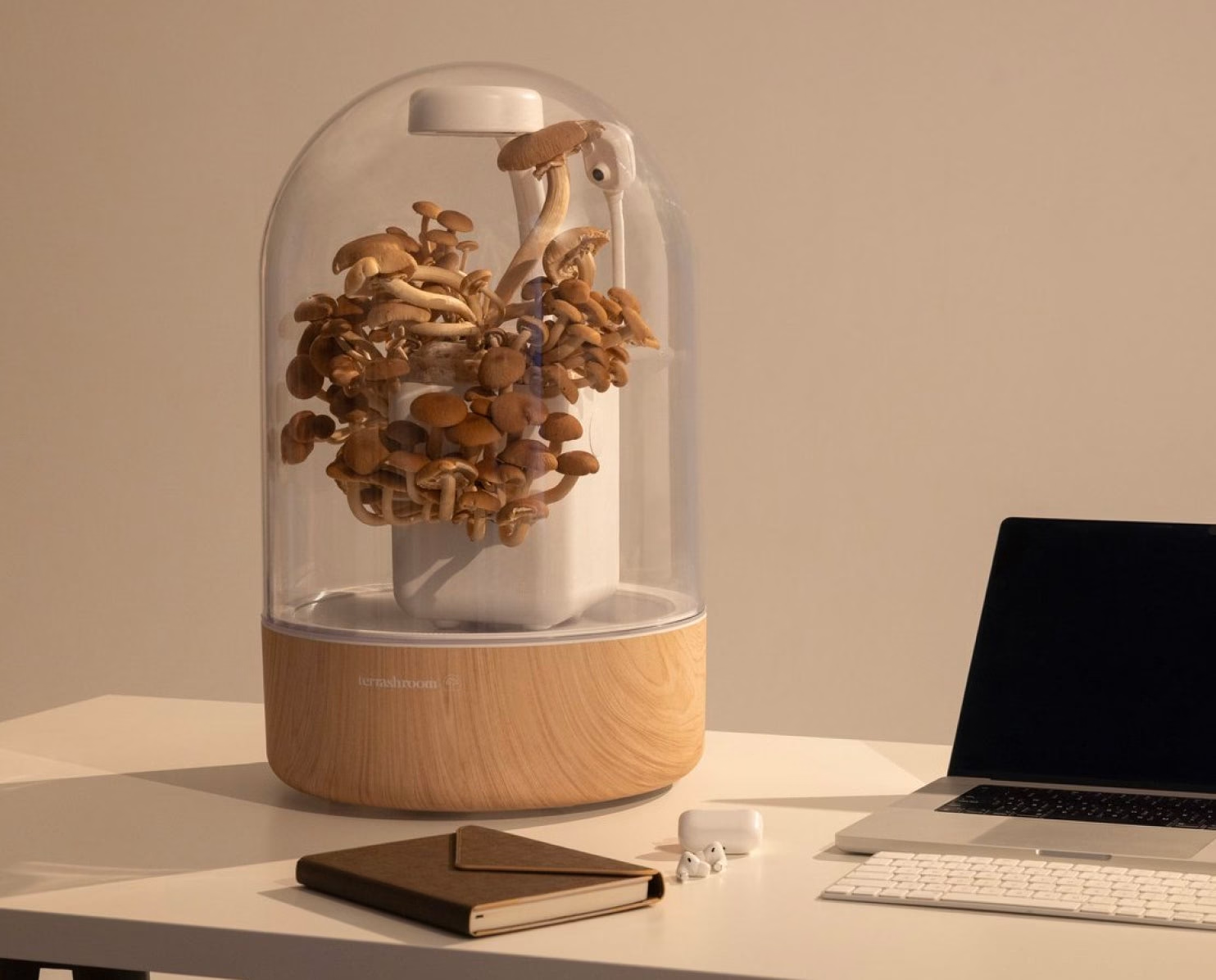
The brain behind the automated fungi chamber was Jared Steele, an entrepreneur based in Austin, Texas. Steele’s background was primarily rooted in sales, having worked as a sales director before pivoting entirely into the hardware startup space. His journey into mycological engineering did not begin in a high-tech laboratory, but rather in the cramped closet of his Austin apartment.
Like many hobbyists, Steele initially tried growing mushrooms using the traditional "monotub" method, essentially drilling holes into plastic storage bins, filling them with substrate, and manually misting them with a spray bottle multiple times a day. He quickly realized how tedious and prone to failure the process was.
As he began experimenting with adding cheap LED lights, computer fans, and automated humidifiers to his plastic tubs, he realized there was a massive gap in the market. Houseplants had aesthetic pots, and hydroponic herbs had sleek countertop gardens, but mushroom growers were stuck looking like amateur chemists.
Determined to bridge the gap between functional agriculture and modern home decor, Steele dedicated himself to engineering a better solution. Driven by a pure bootstrapper mentality, he purchased a few 3D printers, taught himself computer-aided design (CAD) modeling, and learned the fundamentals of microelectronics.
What started as a scrappy hackathon-style project soon evolved into a highly polished prototype. Recognizing the commercial potential of his creation, Steele officially launched the Terrashroom brand in August 2022.
By leveraging targeted Facebook and Instagram ads highlighting the device's futuristic look and time-lapse capabilities, he managed to tap into a massive, eager audience of health-conscious consumers and urban gardeners.
Terrashroom Shark Tank Journey & Pitch
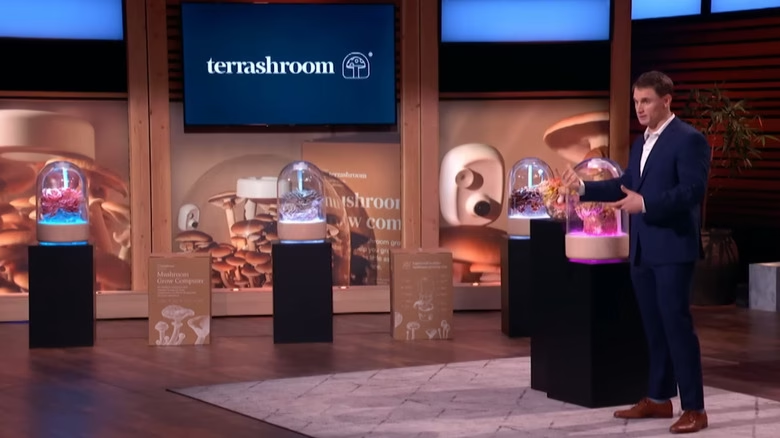
Jared Steele walked into the Tank during Season 16, Episode 4, with an immense amount of confidence and a towering valuation. He asked the Sharks for a $175,000 investment in exchange for a mere 2.5% equity stake in his company. This implied that Terrashroom, a company still in its infancy, was worth an astounding $7 million.
Steele began his pitch by demonstrating the elegant simplicity of the device. He showcased the aesthetic appeal, the automated app controls, and the high-margin business model. He broke down the unit economics clearly: The Terrashroom chamber retailed for $399 and cost $158 to manufacture.
The real money, however, was in the subscription mushroom blocks. Each block retailed for $30 but only cost the company $3.51 to produce, a staggering 88% profit margin. He confidently announced that since launching ads in August 2022, he had secured 6,500 customers, generated $780,000 in revenue, and amassed an email waitlist of 22,500 eager buyers.
The Sharks were visibly impressed by the numbers, until Mark Cuban stopped the momentum dead in its tracks. Cuban pressed Steele on the exact nature of those sales, asking if they were pre-sales. Steele admitted they were.
Robert Herjavec's jaw practically dropped as he realized the severe implication: Steele had been aggressively marketing the product and collecting nearly a million dollars from consumers over a two-year period without actually shipping a single finished unit.
The mood in the room shifted instantly. Herjavec was appalled that the company continued to take money while failing to deliver on a two-year-old promise. Steele attempted to defend his position, explaining that they had purposely held back mass production because they had "over-engineered" the product and wanted to ensure it was absolutely perfect before shipping, in order to avoid a wave of returns and refunds. He assured the panel that the first 1,140 units were finally slated to arrive at their Austin warehouse by July of that year.
The Sharks were not buying the excuses. Mark Cuban stated that while the idea was cool, the execution was full of "uncertainty and terror," and he became the first to drop out. Robert Herjavec praised the beautiful design but refused to invest in a company with such glaring shipping and fulfillment issues.
Lori Greiner, a notoriously harsh critic of overly complex consumer goods, told Steele the device was entirely over-engineered and far too expensive for the average consumer. She backed out as well. Daniel Lubetzky also declined to make an offer.
That left Kevin O'Leary. Staying true to his "Mr. Wonderful" persona, O'Leary saw the raw potential in the massive margins of the subscription model. He offered Steele the requested $175,000, but he demanded a massive 15% equity stake, effectively slashing Steele's $7 million valuation down to roughly $1.16 million.
Greiner immediately interjected, warning O'Leary that Steele was simply not ready for an investor and that the supply chain issues would be a nightmare. Ignoring her, O'Leary held firm on his offer. Steele, unwilling to give up that much of his company, attempted to counter at 5%. O'Leary immediately shut him down, and Steele walked out of the Tank with no deal.
| Shark Tank Details | Figures & Outcomes |
|---|---|
| Initial Ask | $175,000 |
| Offered Equity | 2.5% |
| Implied Valuation | $7,000,000 |
| Sharks in the Room | Mark Cuban, Robert Herjavec, Kevin O'Leary, Lori Greiner, Daniel Lubetzky |
| Offers Made | Kevin O'Leary ($175,000 for 15% equity) |
| Final Deal | No Deal |
What Happened to Terrashroom After Shark Tank?
In the immediate aftermath of filming, Jared Steele worked feverishly to prove the Sharks wrong. The company aggressively communicated with its restless customer base through YouTube updates, Instagram posts, and emails, promising that the long-awaited delivery day was just over the horizon.
For a brief moment, it looked like Terrashroom might actually pull off a miraculous recovery. In July 2024, the company successfully shipped a highly limited batch of 23 units to early beta testers for field testing. The initial reviews were generally positive, praising the aesthetic of the device.
By August, the company claimed they were finalizing their manufacturing pipeline, and by September 2024, they announced that their first mass production run (dubbed MP1) had commenced at a facility in Shanghai, China. They projected that the first massive wave of back-ordered units would finally reach customers by late 2024.
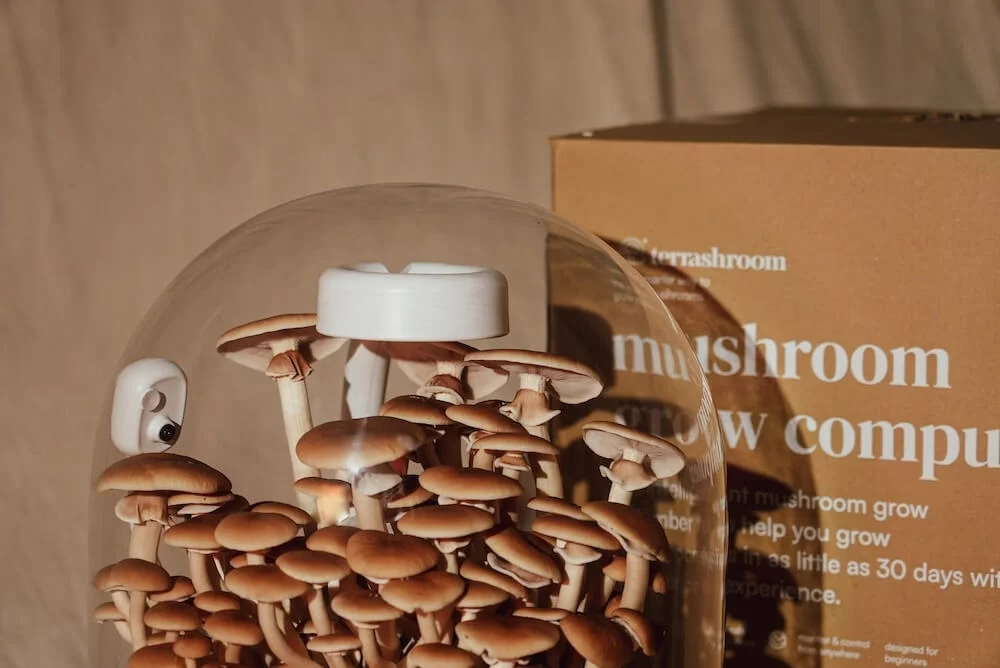
However, behind the polished marketing updates, the company was bleeding cash and buckling under the immense weight of hardware manufacturing. Building a consumer Internet of Things (IoT) device that seamlessly integrates mechanical parts, electrical engineering, custom firmware, and a proprietary cloud-based app is notoriously difficult, even for massive tech conglomerates. For a scrappy startup with limited funding, it was a death sentence.
The company managed to fulfill approximately 1,040 pre-orders, getting a fraction of the promised devices into the hands of consumers. But the victory was incredibly short-lived.
Weeks after the first major batch shipped, the core engineering team abruptly quit. The devices out in the wild began experiencing major connectivity and functionality issues. More devastatingly, internal data revealed a fatal flaw in the business model: 72% of customers who received a Terrashroom stopped using it entirely within the first few months. Without active users buying the high-margin subscription mushroom cakes, the company's financial lifeline evaporated.
Is Terrashroom Still in Business?
No, Terrashroom is completely out of business. The silence from the company began in late 2024, leading to massive unrest among the thousands of backers who had still not received their orders.
Customer forums and Reddit threads became flooded with angry buyers demanding refunds and threatening legal action. Finally, on June 24, 2025, Jared Steele posted a lengthy, brutally honest final update to the Terrashroom community, officially announcing the closure of the business after three and a half years of operation.
In his statement, Steele outlined the catastrophic financial realities that killed the company. The design agency he originally hired estimated that research and development would cost around $40,000 and take four months. In reality, the timeline stretched to nearly three years.
The R&D costs ballooned to 10 times the original projection. The tooling costs for the plastic molds came in at 7 times the estimate. Worst of all, the actual cost to manufacture a single Terrashroom unit ended up being 5 times higher than Steele had originally modeled, completely destroying the unit economics he had pitched in the Shark Tank.
Steele also revealed that an attempted acquisition of the company had fallen through during the due diligence phase, leaving Terrashroom with no capital to continue operations. Because of the company's dire financial state, Steele was forced to admit that they could not issue refunds to the thousands of customers who had paid deposits or full price for unfulfilled pre-orders.
The Terrashroom website is defunct, its social media accounts have been wiped from the internet, and the company's remaining physical assets were liquidated. According to his professional profiles, Jared Steele moved on to work for small businesses in the Austin area, leaving his mushroom empire behind.
What is the Valuation & Net Worth of Terrashroom?
Because Terrashroom officially dissolved and liquidated its assets in the summer of 2025, the company's valuation is exactly $0.
Prior to its collapse, speculative estimates placed the company's net worth anywhere from $5 million to $8.5 million based heavily on the $7 million valuation Steele presented during his Shark Tank pitch and the $780,000 in unfulfilled revenue sitting on the books.
However, those numbers were purely theoretical. The revenue was a liability, not an asset, because the products had not been delivered. The massive overhead costs, bloated manufacturing expenses, and eventual bankruptcy completely wiped out whatever equity Steele and his early investors held.
The estimated net worth of the business evaporated entirely during the dissolution process as lawyers and creditors attempted to salvage whatever capital was left to appease a fraction of the burned consumer base.
Terrashroom Alternatives
The collapse of Terrashroom proved Lori Greiner's core critique to be entirely accurate: the product was simply too expensive and over-engineered for the average consumer. For those still looking to cultivate gourmet mushrooms at home, the market has pivoted heavily back toward simplicity and affordability.
- Back to the Roots Grow Kits: For absolute beginners, Back to the Roots remains the reigning champion of the retail mushroom space. Retailing for under $25 at major stores like Home Depot and Target, these simple cardboard boxes require nothing more than a few daily spritzes of water to produce a massive flush of Oyster mushrooms in a matter of weeks. They lack the high-tech app integration of Terrashroom, but they boast a 100% success guarantee and require zero electricity.
- North Spore Boomr Bins: Ironically, North Spore was the exact company that Terrashroom partnered with to supply their internal grow blocks. Consumers skip the expensive hardware middleman and go straight to the source. North Spore offers automated "Boomr Bin" monotub kits. While they are slightly more manual to set up than a Terrashroom, they provide high-yield results, feature automated humidity controls, and cost a fraction of the price of Steele's doomed invention.
- DIY Monotub Setups: For the true hobbyist, the DIY route remains the gold standard. For less than $50, an aspiring mycologist can purchase a plastic storage tote, a cheap hygrometer to measure humidity, and a block of sterilized grain spawn. While it lacks the futuristic countertop aesthetic, it avoids the catastrophic software bugs and hardware failures that ultimately sent Terrashroom into bankruptcy.
Frequently Asked Questions
Did Terrashroom get a deal on Shark Tank?
What is the valuation and net worth of Terrashroom?
What was the Terrashroom?
Is Terrashroom still in business?

Madhav Kushwaha
SEO Analyst & Digital Marketer
Madhav analyzes complex business pitches and provides high-level updates for tech startups and reality television ventures. Specializing in advanced organic search strategies, he brings clarity to the rapidly evolving digital landscape.