Table of Contents
A passionate founder walks onto the famed television set, armed with a brilliant product and numbers that would make any investor's heart race. Sales are through the roof. Over $5.6 million in a single year, a massive retail expansion into Ulta Beauty, and viral TikTok fame that brands dream of.
The Sharks are practically salivating. But then, the financial skeletons fall out of the closet. A shocking $1.5 million in high-interest debt and deeply negative profit margins send the millionaire investors swimming away in terror.
This was the wild, rollercoaster reality for Sugardoh. It is a classic tale of how rapid, hyper-growth can sometimes become a business's worst enemy. When a company scales too fast without figuring out its profit margins, the very sales that look great on paper can silently bankrupt the business behind the scenes. But did this brutal rejection spell the end for the popular hair removal brand?
Here is the complete, up-to-date look at the Sugardoh Shark Tank journey, the massive debt crisis, and exactly where the company stands today.
What is Sugardoh?
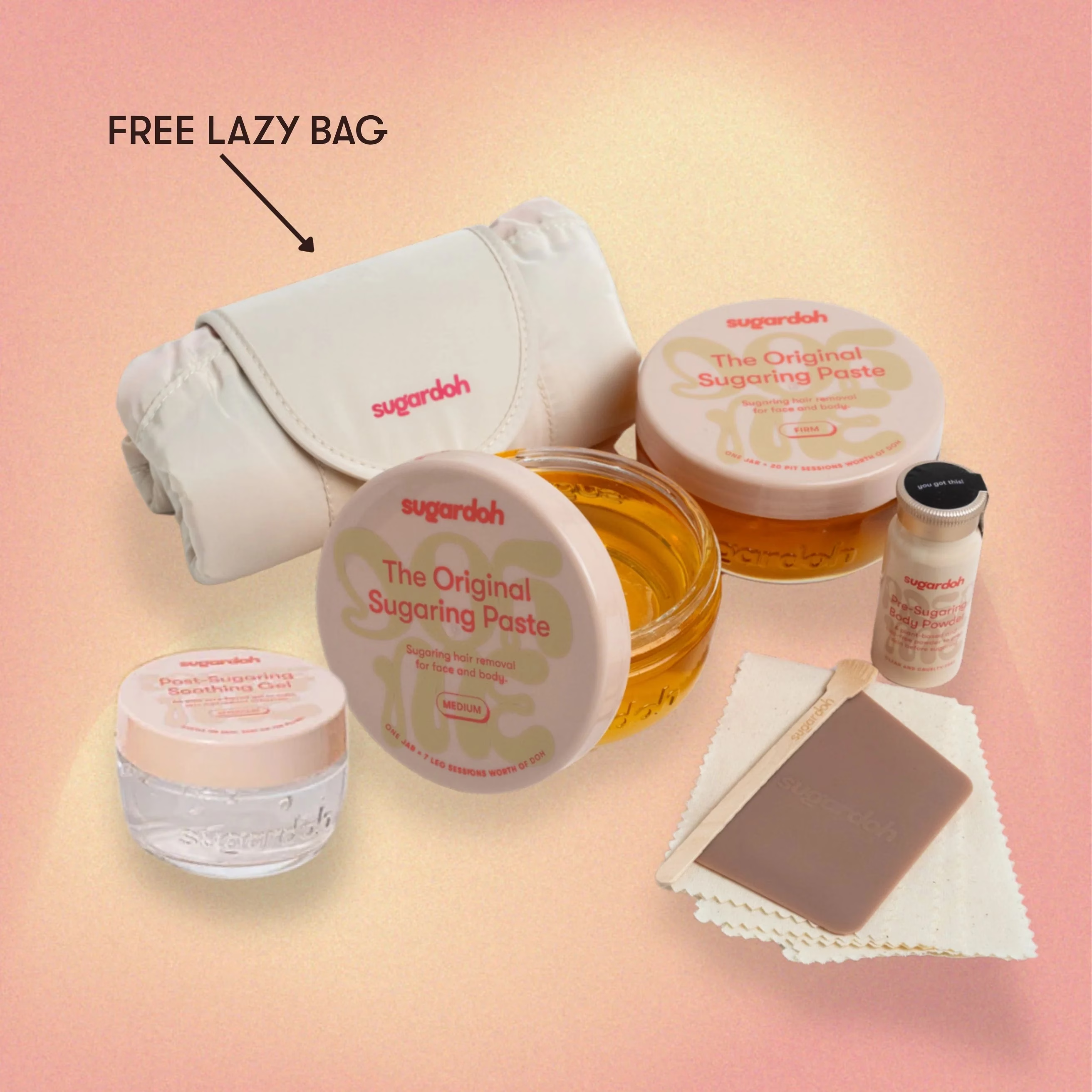
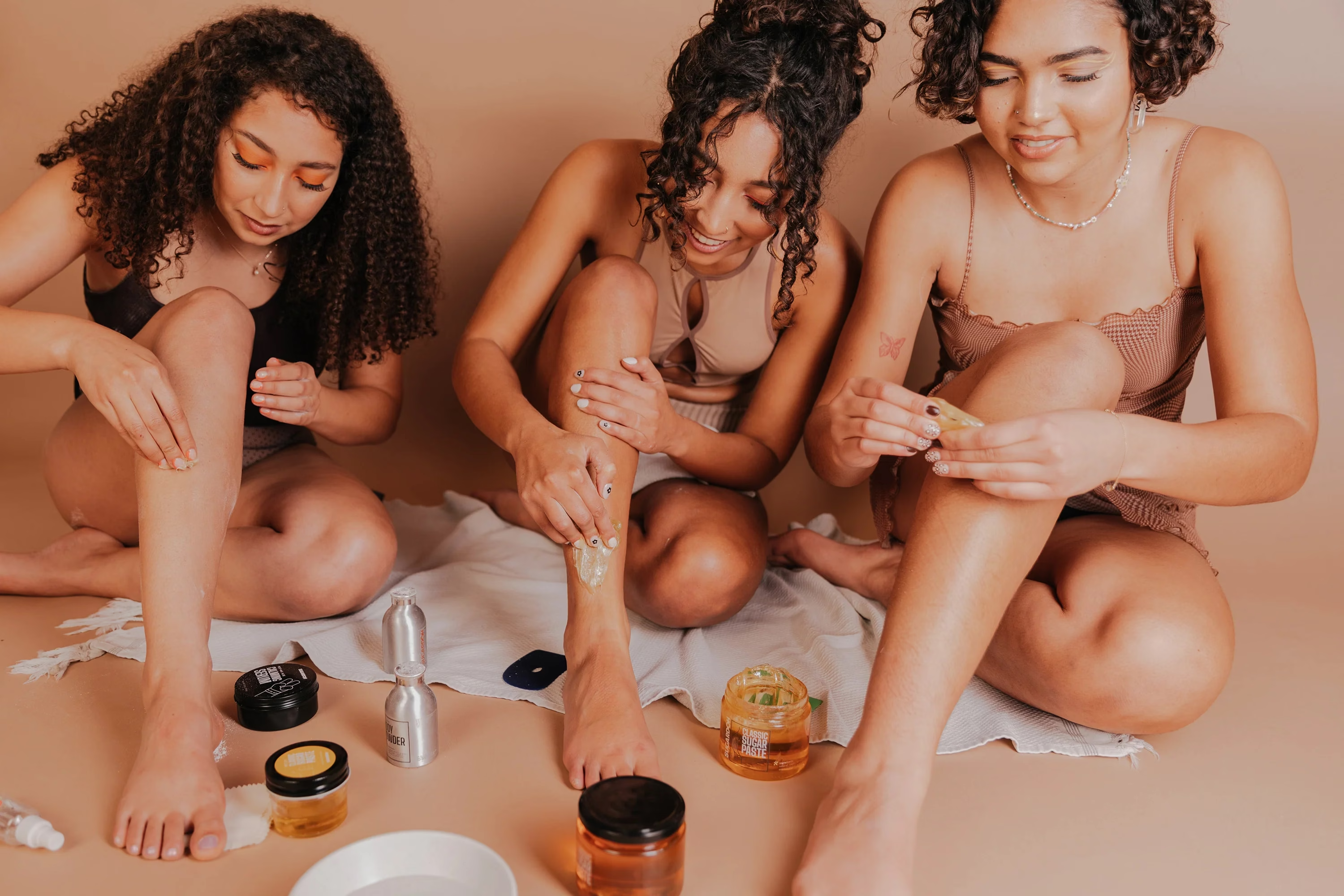
Sugardoh is an at-home hair removal company that specializes in "sugaring." Sugaring is an ancient Egyptian hair removal method that uses a sticky, taffy-like paste made from just three simple ingredients: sugar, water, and citrus (citric acid).
Unlike traditional hot wax, which requires heating equipment, wooden applicator sticks, and harsh chemicals that can tear the top layer of your skin, Sugardoh is completely natural.
The paste binds only to the dead skin cells and the hair itself, pulling the hair cleanly from the root without heavily traumatizing the live skin underneath. Because it is water-soluble, any leftover sticky mess can just be washed away in the shower, completely eliminating the need for harsh chemical solvents.
Furthermore, the brand leans heavily into environmental sustainability. The paste itself is 100% compostable, and it comes packaged in recyclable glass jars rather than single-use plastics.
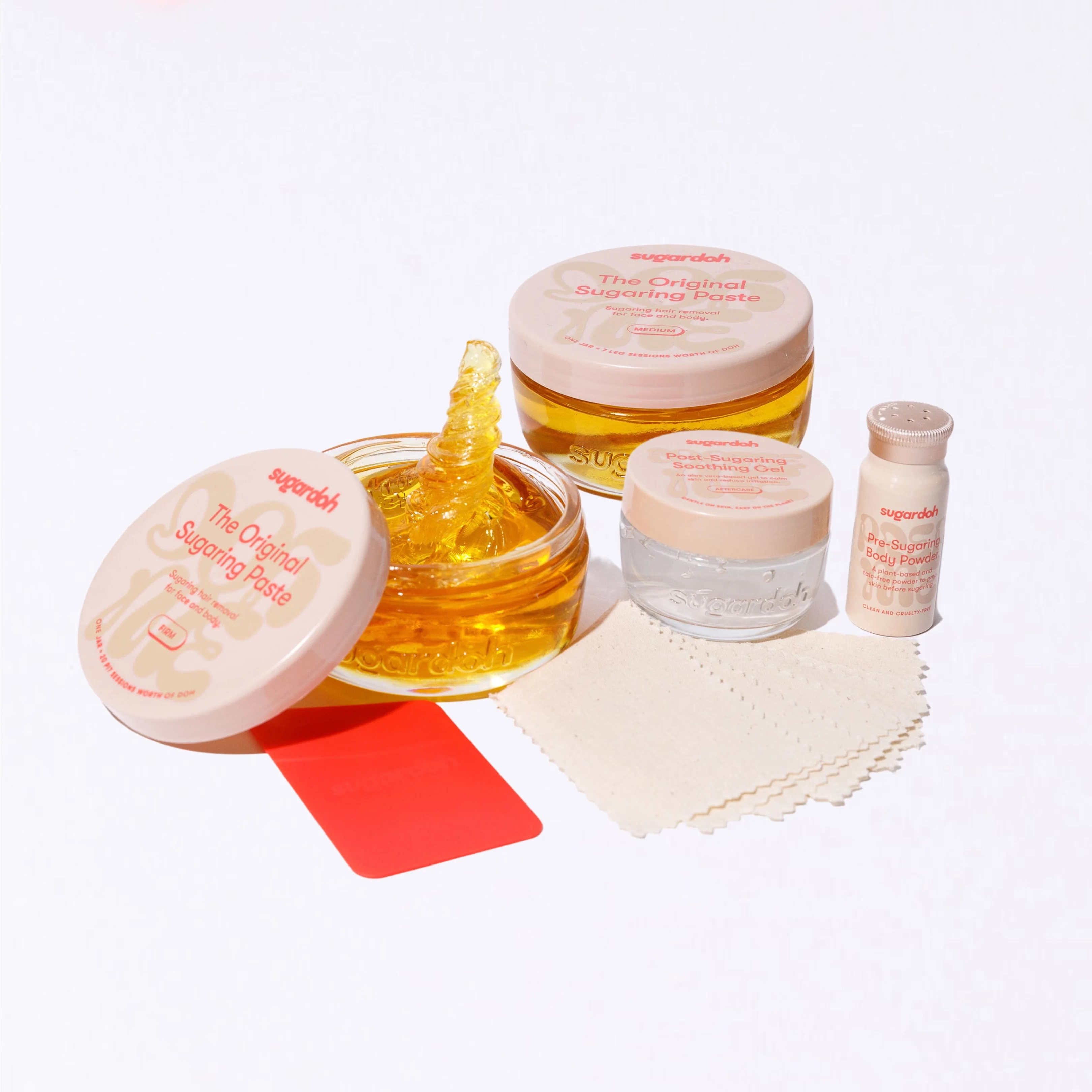
The company offers different consistencies of "doh" to match the user's experience level and hair type, ranging from a "Firm Doh" for beginners and coarse hair to a "Medium Doh" for finer body hair.
| Feature | Details |
|---|---|
| Industry | Beauty & Personal Care |
| Founded Year | 2020 |
| Core Product | Compostable At-Home Sugaring Paste |
| Target Audience | Women and men with sensitive skin or coarse body hair |
| Retail Price | $20.00 (Mini Doh) to $35.00+ (Full Kits) |
Who is the Founder of Sugardoh?
Sugardoh was founded by Aliyah Marandiz, an entrepreneur based in Austin, Texas. Armed with degrees in Sociology and Studio Art from Santa Clara University, Marandiz initially spent her professional career working in the tech industry. She specialized in marketing emerging technology brands and eventually developed a deep expertise in sustainable, bio-based materials.
The inspiration for Sugardoh came from a highly personal place. As someone with coarse body hair, a darker complexion, and highly sensitive skin, Marandiz struggled for years with traditional hair removal methods.
Shaving left her with severe razor burn and dark spots, while professional waxing often ripped her skin and resulted in painful scabs. She realized that the mainstream beauty industry prioritized the sheer force of hair removal over actual skin health.
When Marandiz discovered the ancient art of sugaring, it changed her life. However, getting professionally sugared at a salon was incredibly expensive and time-consuming. When the global pandemic locked the world down in 2020, she decided to take matters into her own hands. She began experimenting in her Austin kitchen, boiling sugar, water, and lemon juice to create her very own sugaring paste.
She realized there was a massive gap in the market for a fun, accessible, and eco-friendly at-home sugaring kit. By September 2020, Marandiz officially launched Sugardoh.
By combining her background in digital marketing with her newfound proprietary formula, she took to TikTok. Her educational, oddly satisfying videos of pulling thick hair from the root went viral almost immediately. The brand exploded overnight.
Sugardoh Shark Tank Journey & Pitch

Aliyah Marandiz stepped onto the Shark Tank carpet during Season 16, Episode 3, which aired in the fall of 2024. She was seeking a massive investment: $500,000 in exchange for just 5% equity in her company. This implied a staggering $10 million valuation, a number that instantly put the Sharks on high alert.
Marandiz started her pitch strong. She brought out a male model with a notably hairy chest to demonstrate the product. Guest Shark Kendra Scott, a highly successful jewelry mogul, volunteered to test the product.
Scott smoothed the golden, caramel-like paste onto the model's chest, pressed a reusable cloth strip down, and ripped it away. The Sharks gasped as a massive patch of hair came off cleanly. The product clearly worked, and the room was buzzing with excitement. Then, Marandiz dropped her sales figures, and the Sharks' jaws hit the floor.
- 2020: $50,000 in revenue.
- 2021: $2.6 million.
- 2022: $5.6 million in gross sales.
The brand had successfully expanded beyond its direct-to-consumer website and landed on the shelves of 300 Ulta Beauty stores, eventually expanding to 1,300 retail locations nationwide by 2023.
But in the Tank, the sweet pitch quickly turned sour.
Kevin O'Leary pressed Marandiz on her profit margins, and she admitted a devastating reality: despite making $5.6 million in sales, she didn't make a single penny in profit. In fact, Sugardoh had operated at a negative 77% margin the previous year.
Because the company had scaled so aggressively without optimizing its manufacturing costs, they were bleeding cash with every jar they sold. To keep the lights on, Marandiz and her husband had to sink $400,000 of their own personal savings into the business.
Worse, she revealed that Sugardoh was carrying $1.5 million in debt, financed at a brutal 22% interest rate. She desperately needed the $500,000 from the Sharks just to survive and fulfill her massive retail orders.
The Sharks were horrified by the financial disaster hiding behind the shiny revenue numbers. Mark Cuban was the first to drop out. He stated that taking on heavy retail expansion while carrying that much high-interest debt was a terrible business move.
Kevin O'Leary followed suit, bluntly stating, "This is nuts," noting that her $10 million valuation was completely unjustified for a company losing money so rapidly.
Daymond John explained that this was a textbook case of "hyper-growth" destroying a business. He felt the massive debt made it far too risky to invest in, and he bowed out.
Guest Shark Kendra Scott empathized with Marandiz, noting she had made similar cash-flow mistakes early in her own entrepreneurial journey, but the debt was simply too toxic for her to take on. Finally, Lori Greiner declined, citing the highly competitive nature of the hair removal market.
Marandiz walked out of the Tank without a deal, leaving behind a cautionary tale of how top-line revenue means nothing if the bottom-line profit isn't there.
| Shark Tank Fact | Details |
|---|---|
| Initial Ask & Valuation | $500,000 for 5% ($10,000,000 Valuation) |
| Sharks in the Room | Mark Cuban, Kevin O'Leary, Daymond John, Lori Greiner, Kendra Scott |
| Offers Made | None |
| Final Deal | No Deal |
What Happened to Sugardoh After Shark Tank?
Walking away without half a million dollars was a tough blow, but it did not kill the company. Like many businesses that appear on the show, Sugardoh experienced a massive surge in website traffic the night their episode aired. Millions of viewers were introduced to the eco-friendly hair removal alternative, and thousands of units flew off the digital shelves.
However, Marandiz knew that an influx of sales would only deepen her debt crisis if she didn't fix her profit margins. Taking the Sharks' harsh criticisms to heart, she went back to the drawing board.
Prior to her television appearance, she had already begun implementing a new, proprietary manufacturing process and sourcing cheaper, high-quality raw materials.
Through sheer determination and aggressive cost-cutting, Marandiz managed to flip the script. She successfully raised Sugardoh's profit margins to a highly healthy 80%. This massive operational shift finally allowed the company to stop bleeding cash on every sale and start aggressively paying down that terrifying $1.5 million debt load.
The brand also continued its dominance on social media. Marandiz leaned heavily into an educational marketing strategy. Instead of just selling the wax, she launched "Sugaring School" content across TikTok, YouTube, and Instagram. By teaching people exactly how to prep their skin, apply the paste, and prevent ingrown hairs, she built a highly loyal, cult-like following that trusted her brand implicitly.
Is Sugardoh Still in Business?
Yes, Sugardoh is very much still in business. The company has fully weathered the financial storm that terrified the Sharks and is currently thriving in the competitive beauty space.
Sugardoh has solidified its massive retail footprint. The brand is permanently stocked in over 1,300 physical retail locations across the United States. Beyond their core offerings, they have actively expanded their product line to create an entire ecosystem around hair removal.
Today, customers don't just buy the wax; they buy the complete routine. Sugardoh's top-selling items now include their "Pre-Sugaring Body Powder" (which absorbs sweat to allow the wax to grip better), reusable cloth strips, and the highly popular "Ingrown Magic Wand." This post-care exfoliating serum utilizes a potent mix of glycolic, lactic, and salicylic acids to prevent the dark spots and razor bumps that plague so many people after hair removal.
Marandiz's vision of turning Sugardoh into a household name is actively coming true, proving that even a business buried in debt can dig itself out with the right operational pivots.
What is the Valuation & Net Worth of Sugardoh?
The estimated net worth of Sugardoh is approximately $8.78 million. While the company did not secure the $10 million valuation they asked for inside the Tank, their relentless retail expansion and massive correction in profit margins have allowed them to grow their underlying value significantly. Lifetime sales for the brand have comfortably crossed the eight-figure mark.
It is important to note that a company's net worth is a calculation of its total assets minus its liabilities. While exact private accounting records are not publicly available, the fact that Sugardoh has maintained its heavy retail presence in major big-box stores indicates that they have either successfully paid down a large chunk of their $1.5 million debt or successfully refinanced it away from that crippling 22% interest rate.
Founder Aliyah Marandiz continues to retain majority ownership of the company, securing a highly lucrative personal net worth in the process.
Where to Buy Sugardoh?
Finding Sugardoh is incredibly easy, as the brand has masterfully blended its direct-to-consumer roots with massive wholesale distribution. If you are looking to buy directly from the source, the entire product lineup, including exclusive bundles and subscription refills, is available on the official Sugardoh.co website.
For those who prefer to shop in person, Sugardoh has maintained its powerful partnership with Ulta Beauty. You can find their beginner kits, firm pastes, and ingrown serums stocked on the shelves of nearly every Ulta location nationwide.
Additionally, the brand has secured retail placement at lifestyle retailer Urban Outfitters, tapping into a younger, highly eco-conscious demographic. Lastly, for the ultimate convenience and fast shipping, Sugardoh's official storefront is fully active and highly rated on Amazon.
Are Sugardoh Reviews Good?
The reviews for Sugardoh are generally positive, though they come with a few notable caveats. On consumer review platforms like Thingtesting, the brand holds a solid rating, with roughly 71% of verified buyers recommending the product to a friend.
The Good:
Customers consistently rave about the longevity of the results. Many users report remaining completely hair-free for up to three weeks at a time, a massive improvement over daily shaving.
The eco-friendly aspect is another major winning point; buyers love that the glass jars can be recycled and that the paste itself is entirely compostable. Furthermore, users highlight that the water-soluble nature of the paste makes cleanup incredibly easy compared to the sticky, permanent mess that traditional soft wax leaves behind.
The Bad:
The most common complaint surrounding Sugardoh is the steep learning curve. Sugaring is an art form, and many first-time users find the paste difficult to extract from the jar, incredibly messy, and hard to flick off the skin correctly.
Several reviewers compare learning to use Sugardoh to learning how to use a complex hair styling tool, it takes two or three frustrating, sticky attempts before you finally get the hang of it. Additionally, despite some early marketing claims that sugaring is "painless," many honest reviews confirm that pulling hair from the root still hurts, especially in highly sensitive areas.
Sugardoh Alternatives
While Sugardoh has captured the viral spotlight, the global sugaring hair removal market is massive, expected to reach $3.37 billion globally. If you are looking for alternatives to Sugardoh, there are several notable competitors on the market.
- Moom: One of the oldest names in the organic hair removal space, Moom offers a legendary tea tree-infused organic sugar wax. It functions very similarly to Sugardoh but often retails at a slightly lower price point, making it a great entry-level option.
- Veet Sugar Wax: For those looking for a mass-market, easily accessible drugstore alternative, Veet offers a highly popular sugar wax hair remover. While it may lack the boutique, eco-conscious aesthetic of Sugardoh, it is widely available and highly effective.
- Soft Services: If your main goal is simply getting rid of strawberry skin and ingrown hairs rather than the waxing itself, Soft Services provides incredibly powerful physical and chemical exfoliants that compete directly with Sugardoh's "Ingrown Magic Wand."
Ultimately, Aliyah Marandiz took a terrifying financial situation that sent the Sharks running and turned it into a masterclass in business survival. By fixing her margins and doubling down on education, Sugardoh has cemented its place as a powerhouse in the 2026 beauty industry.

Madhav Kushwaha
SEO Analyst & Digital Marketer
Madhav analyzes complex business pitches and provides high-level updates for tech startups and reality television ventures. Specializing in advanced organic search strategies, he brings clarity to the rapidly evolving digital landscape.