Table of Contents
Picture the chaotic scene at the hydration station of a major marathon: thousands of exhausted runners grabbing paper cups of water, taking a single gulp, and violently tossing them onto the asphalt. It is a logistical nightmare for race organizers and an absolute disaster for the environment.
Enter Kristina Smithe, a Coast Guard veteran and marathon enthusiast who stepped onto the Shark Tank stage with a bold, green solution. She wasn’t pitching a flashy new tech gadget or a trendy snack food; she was pitching a massive logistical overhaul for the racing industry.
But in a room full of profit-driven investors, would a mission to save the planet be enough to secure a life-changing deal?
What is Hiccup?
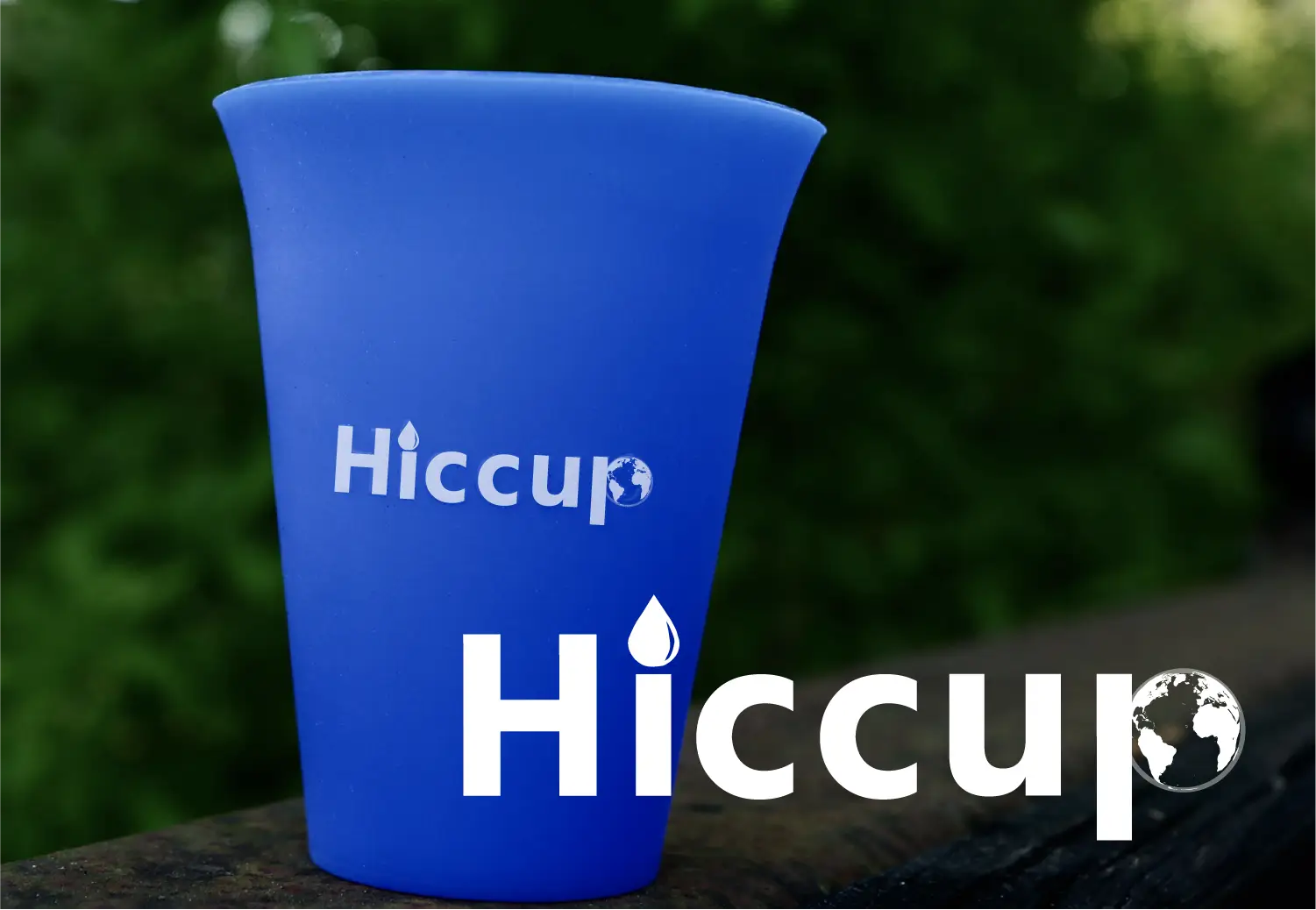
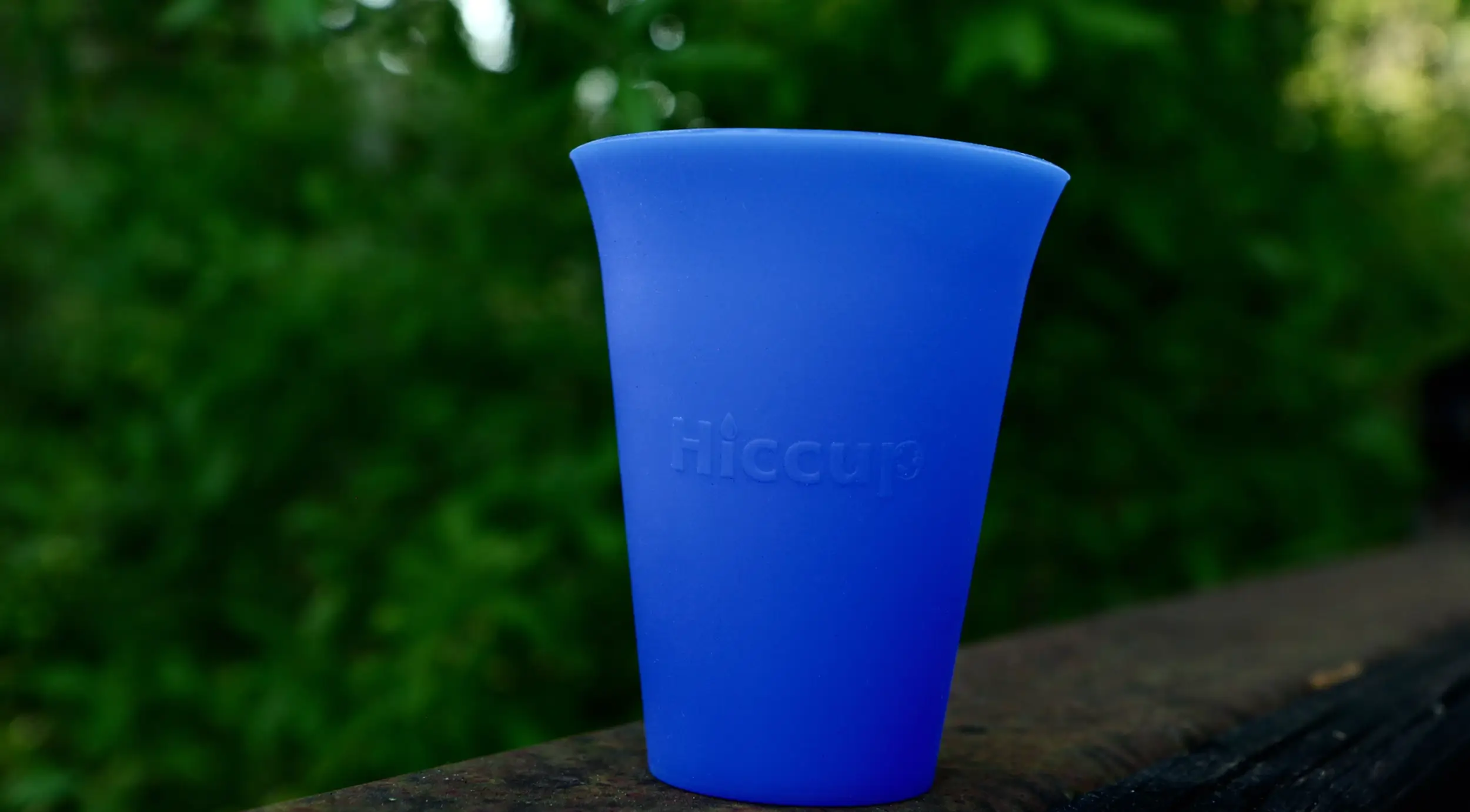
Hiccup is an end-to-end reusable cup service designed exclusively for the racing and marathon industry. Instead of race organizers purchasing thousands of single-use paper or plastic cups that inevitably end up in landfills, Hiccup rents out durable, 8-ounce silicone cups.
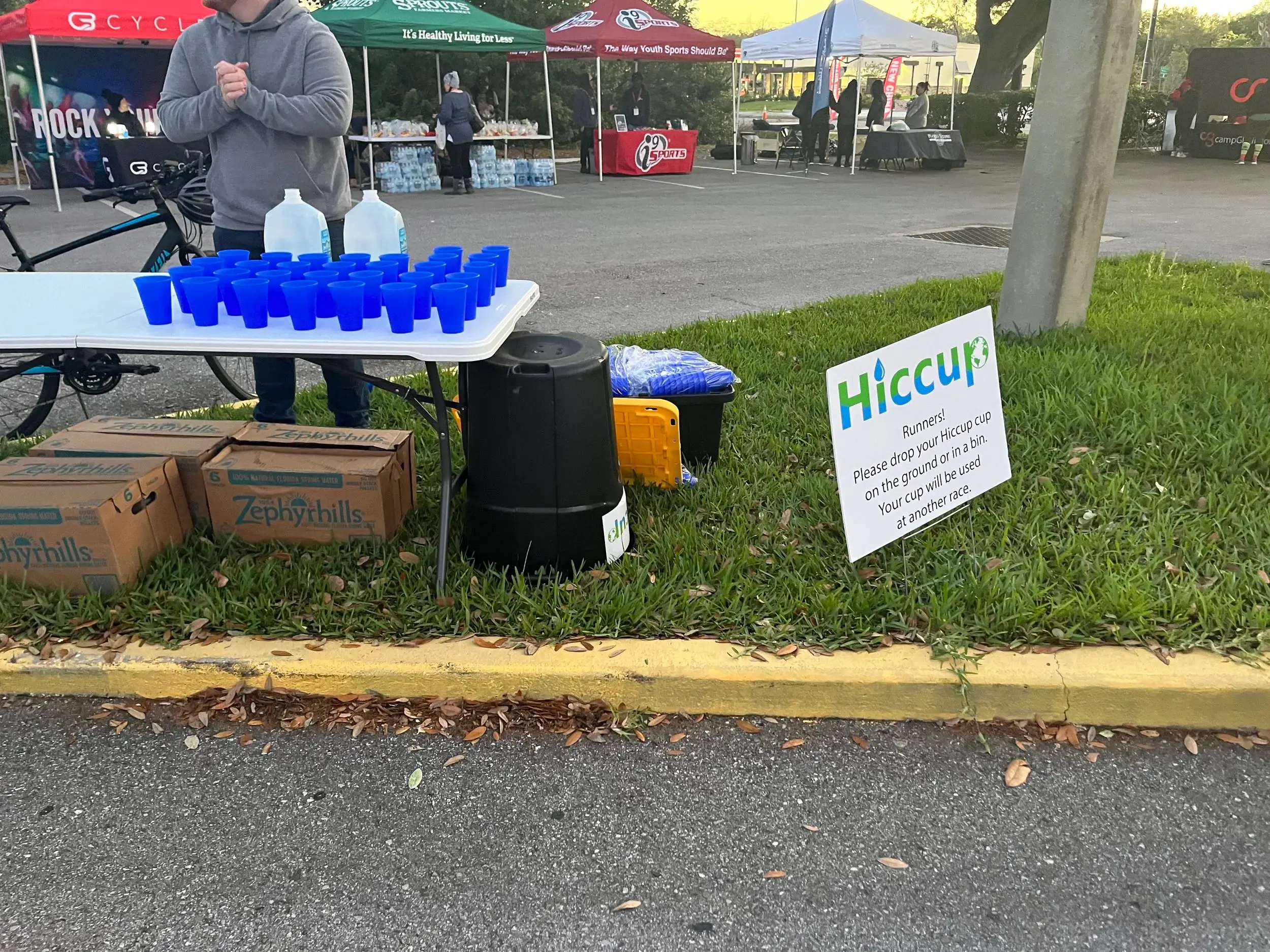
The service is highly comprehensive. Hiccup delivers the sanitized cups to the race's aid stations in organized 17-gallon totes.
After the runners hydrate and toss the silicone cups into designated bins, Hiccup’s team collects them, washes them in a patent-pending, highly efficient commercial dishwasher, and preps them for the next event.
The silicone material was specifically chosen because it is malleable enough for runners to squeeze while drinking on the go, yet durable enough to withstand extreme temperatures and thousands of commercial washing cycles.
| Feature | Details |
|---|---|
| Industry | Event Logistics / Sustainability |
| Founded Year | 2020 |
| Core Product | 8 oz. Reusable Silicone Cups & Cleaning Service |
| Target Audience | Marathon, 5K, and Endurance Race Organizers |
| Retail Price | Rents at $0.15/cup (Drops to $0.10/cup after 10,000 units) |
Who is the Founder of Hiccup?
Hiccup was founded by Kristina Smithe, a 31-year-old Coast Guard veteran and passionate runner who has completed 26 marathons herself. Originally from Marne, Michigan, Smithe eventually settled in the Tampa Bay area of Florida.
The lightbulb moment for Hiccup came in December 2019. After taking a cross-country flight to run a marathon in California, Smithe started doing the math.
She calculated the sheer volume of single-use cup waste generated by her flight and the race itself, multiplying that by the thousands of other participants. The number was staggering.
Realizing that even "recyclable" paper cups are lined with polyethylene plastic that makes them virtually impossible to process, she decided to create a closed-loop system.
By September 2020, she had manufactured her first batch of 5,000 silicone cups, launching a one-woman crusade against race-day waste.
Hiccup Shark Tank Journey & Pitch
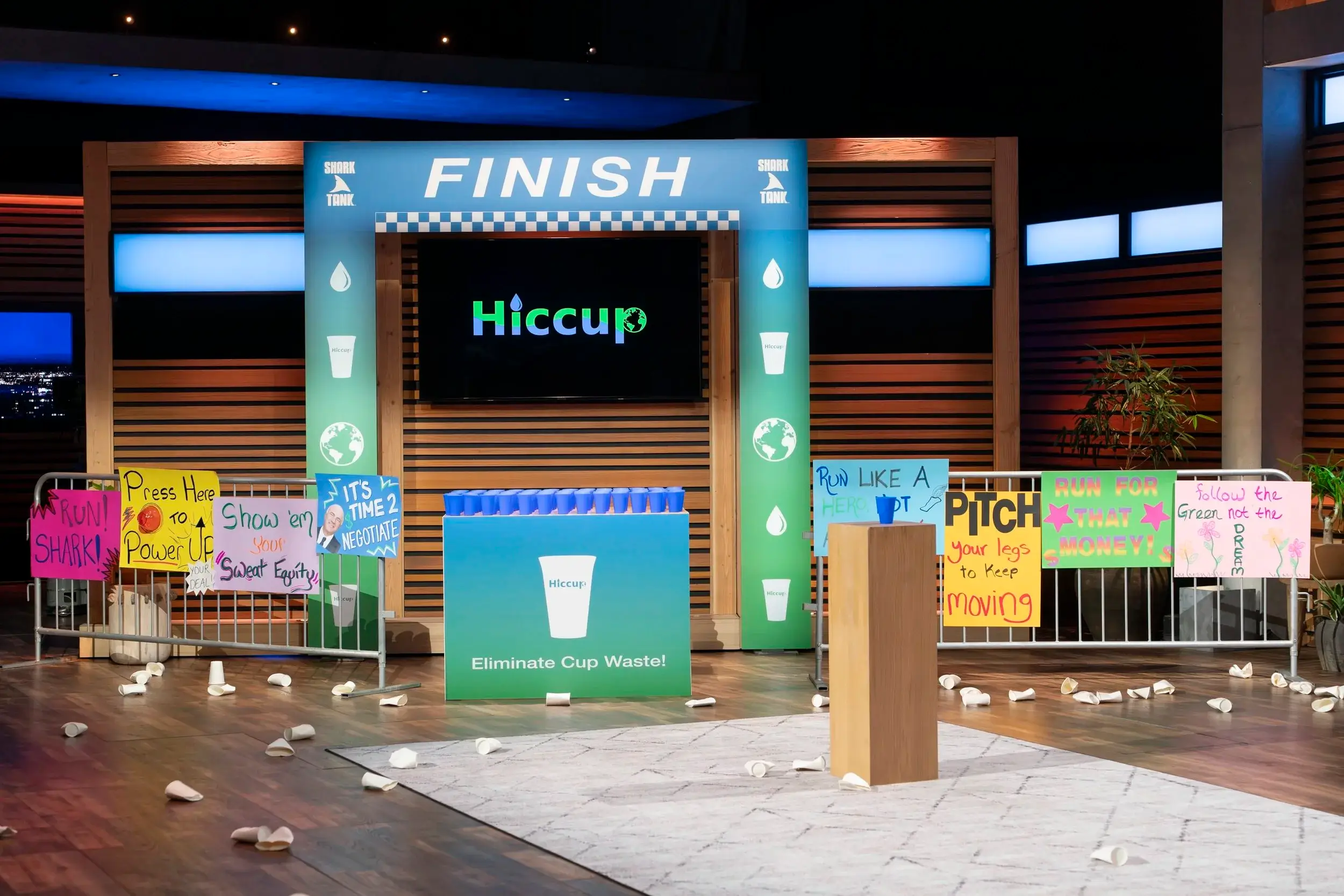
Kristina Smithe confidently marched into the Shark Tank during Season 16 (Episode 8, aired January 2025), seeking $200,000 in exchange for a 10% equity stake in her company, giving Hiccup an implied valuation of $2 million.
She opened her pitch by vividly describing the trash-strewn streets of marathon routes and presented her silicone cups as the ultimate fix. The Sharks were immediately curious about the economics.
Robert Herjavec, an avid runner himself, asked how Hiccup's pricing compared to standard disposable cups.
Smithe explained that her cups rent for 15 cents each, dropping to 10 cents once an organizer rents over 10,000 cups. In contrast, paper cups cost organizers about 7 cents each.
Mark Cuban drilled into the sales numbers. Smithe revealed that Hiccup generated $67,000 in revenue in 2023.
While her mission was incredibly noble, the business was entirely reliant on her own manual labor, she was doing everything from driving the trucks to personally washing the cups.
Kevin O'Leary bluntly criticized the lack of sponsor logos on the cups to offset costs, a missed revenue stream Smithe attributed to simply being too busy washing the inventory.
The Sharks quickly began dropping out.
Robert Herjavec loved the environmental angle but couldn't see how the logistics would scale. Lori Greiner and Guest Shark Daniel Lubetzky both admired her grit but didn't feel it was the right fit for their portfolios.
Kevin O'Leary, true to form, hated the business model and bowed out.
Finally, Mark Cuban noted that while she could carve out a great living, the overall market size just wasn't massive enough to warrant venture capital investment.
| Shark Tank Details | Data |
|---|---|
| Initial Ask & Valuation | $200,000 for 10% (Valuation: $2,000,000) |
| Sharks in the Room | Mark Cuban, Kevin O'Leary, Lori Greiner, Robert Herjavec, Daniel Lubetzky |
| Offers Made | None |
| Final Deal | Walked away without a deal |
What Happened to Hiccup After Shark Tank?
Leaving the Tank without a billionaire investor can spell doom for some entrepreneurs, but for a Coast Guard veteran, it was just another hurdle to clear.
The immediate aftermath of the Shark Tank airing provided Hiccup with a massive wave of national exposure. Race directors from across the country, many of whom are deeply passionate about sustainability, began flooding Smithe’s inbox.
Without a Shark's capital, Smithe had to rely on organic growth. She doubled down on efficiency, heavily utilizing her patent-pending commercial dishwasher that can blast 1,500 cups clean with just 30 gallons of water. This technological advantage allowed her to handle larger events without completely burning herself out.
The company successfully executed zero-waste hydration stations at major events, including the St. Pete Run Fest and the Twin Cities In Motion's "Get in Gear" Half Marathon.
Is Hiccup Still in Business?
Yes, Hiccup is absolutely still in business and is thriving within its niche. The company has aggressively expanded its footprint and now operates out of three strategic hubs: Tampa (Florida), Grand Rapids (Michigan), and Willits (California).
Hiccup reported that their services had officially kept over 1,860,600 single-use cups out of landfills. The company has scaled its inventory massively, currently boasting over 70,000 silicone cups ready for deployment.
Smithe has noted that out of the tens of thousands of cups in rotation, only three have ever worn out, proving the immense durability of her product.
Hiccup is now a staple at dozens of races across Florida, Michigan, North Carolina, and several other states.
What is the Valuation & Net Worth of Hiccup?
While Hiccup did not secure the $2 million valuation Kristina Smithe originally asked for in the Shark Tank, the company has grown significantly since its 2023 revenue report of $67,000.
Because Hiccup remains a privately held, bootstrapped business, exact revenue figures are closely guarded.
However, based on their massive inventory expansion and the volume of cups diverted from landfills, business analysts estimate the current valuation of Hiccup to be approximately $1.5 million.
Kristina Smithe has successfully built a profitable, sustainable lifestyle business that proves environmental consciousness can coexist with a solid bottom line.
Where to Buy Hiccup Cups?
While Hiccup is primarily a B2B (Business-to-Business) logistics and rental service catering to race directors, individual consumers can also get their hands on the product.
If you are an avid runner looking for a highly compressible, reusable cup to tuck into your running belt, you can purchase individual Hiccup silicone cups directly through the company’s official website for $5.00 each.
For race organizers looking to host a zero-waste event, rental inquiries and quotes can be requested directly through HiccupEarth.com.

Madhav Kushwaha
SEO Analyst & Digital Marketer
Madhav analyzes complex business pitches and provides high-level updates for tech startups and reality television ventures. Specializing in advanced organic search strategies, he brings clarity to the rapidly evolving digital landscape.