Table of Contents
Mothers know the problem. The tiny hospital beanie, the baptism gown, the first pair of baby shoes, the dried bouquet from a wedding day - where do they actually go?
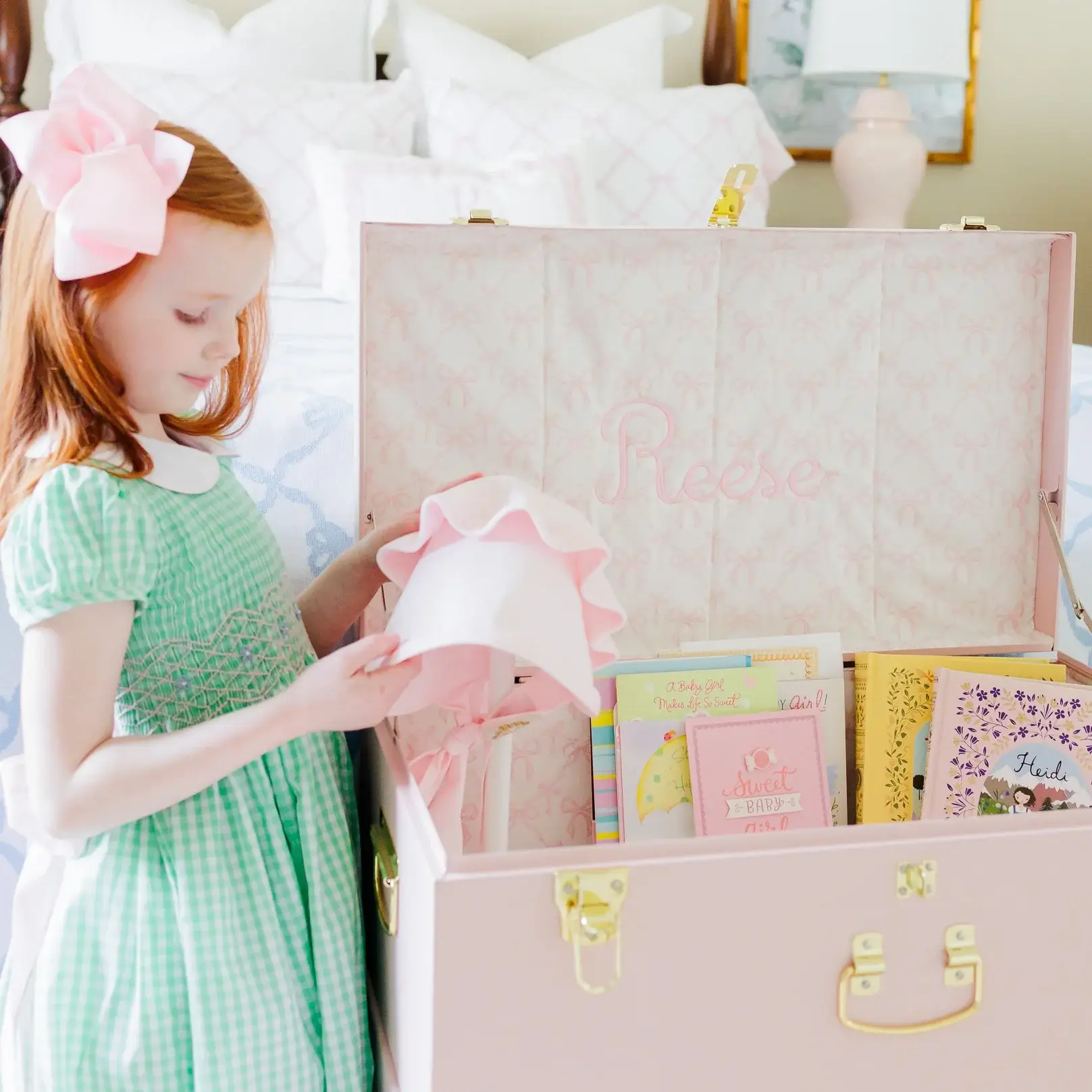
Usually into a cracked plastic tub in the attic, or a cardboard box under the stairs. That's the problem Lindsay Mullenger set out to solve.
She turned her own family's keepsake habit into a multimillion-dollar business called Petite Keep. By the time she walked into the Shark Tank in Season 16, she had millions in trailing sales, shrinking profit margins, and a pitch that ended in a rare three-way bidding war.
What Is Petite Keep?
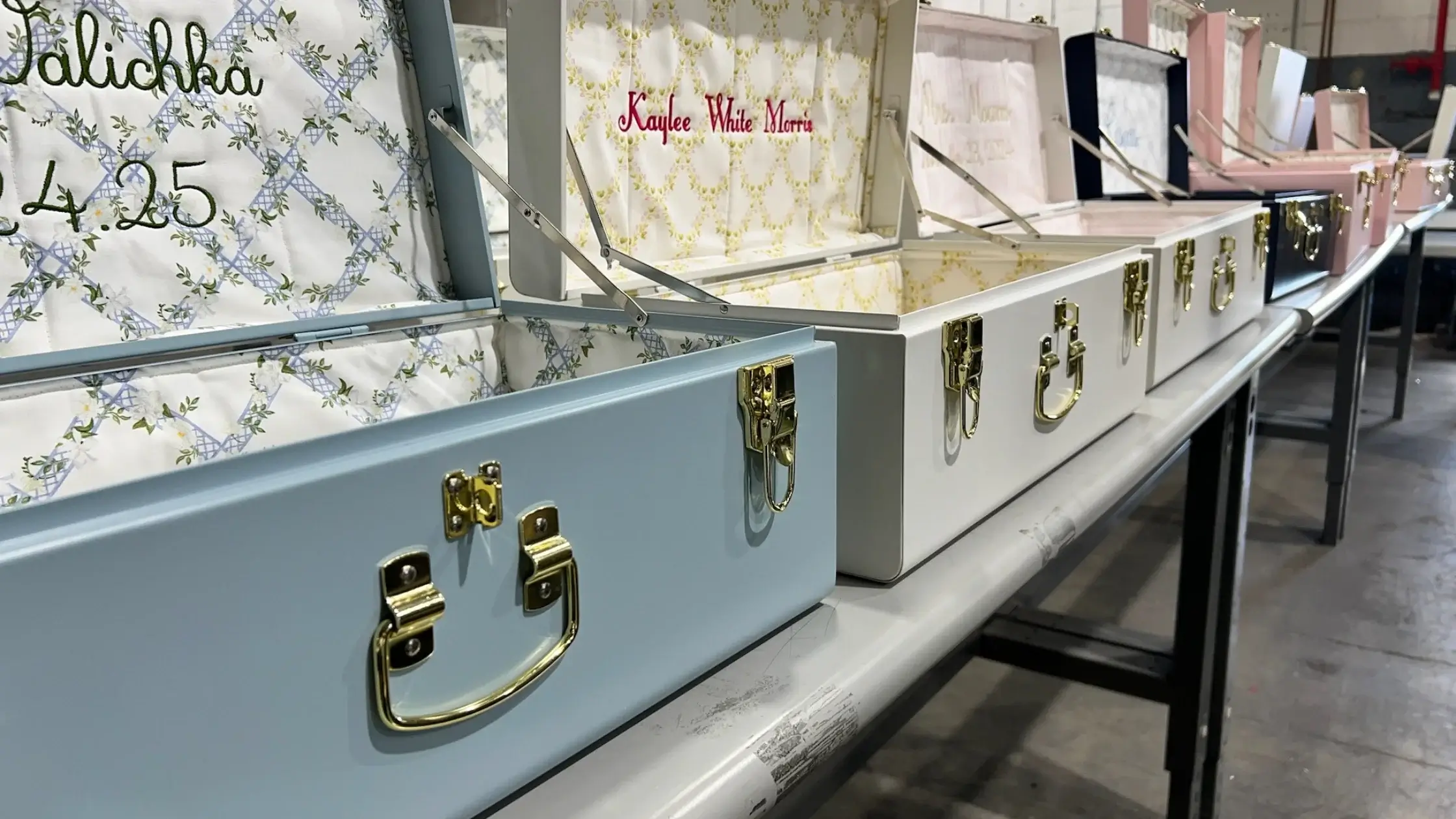
Petite Keep is a direct-to-consumer brand that makes handcrafted, customizable memory trunks for storing sentimental items. Instead of a plastic bin, it's a home-decor piece - exterior fabric, brass hardware, a heart-shaped padlock.
The customization happens inside. Buyers choose from hundreds of interior fabric patterns - "Darling Dogwood," "Timeless Trellis" - and add embroidery to the lid: names, dates, messages. What started as a baby-keepsake product has expanded into bridal, graduation, and general heirloom trunks.
| Details | |
|---|---|
| Industry | Home Decor & Luxury Keepsakes |
| Founded Year | 2020 |
| Core Product | Handcrafted, customizable memory trunks |
| Target Audience | Mothers, brides, gift-givers, grandparents |
| Retail Price Range | $195 (Mini) to $350 (Grand) |
Who Is the Founder of Petite Keep?
Lindsay Mullenger studied business at the University of Missouri and spent years at Procter & Gamble before starting Petite Keep. The idea came in 2018, while she was pregnant with her second daughter and wanted a nice place to keep her family's keepsakes. She called friends around the country, found nothing on the market that fit, and decided to build it herself.
She was raising five kids in suburban St. Louis and working full-time when she started - researching supply chains on Google, figuring out product development piece by piece. She launched in early 2020, right as COVID hit, when families stuck at home were reorganizing their lives.
In the early days, she and her husband worked nights and weekends in the attic. Her mother hand-wrote every gift card. Her father packed the shipping boxes. Within a year, the business crossed six figures.
Petite Keep's Shark Tank Pitch
By Season 16, Episode 9, Mullenger wasn't running an attic startup anymore - sales had reached eight figures. She asked for $400,000 for 5% equity, valuing the company at $8 million, and handed the Sharks personalized trunks: "Queen of QVC" for Lori Greiner, "Nana" for Barbara Corcoran.

The Sharks liked the product. Then came the numbers: $1.7 million in 2022, $5 million in 2023, $4.5 million year-to-date in late 2024, on track for $10 million by year-end. Her customer acquisition cost was $86, and margins had dropped from 10.9% in 2022 to 7.5% in 2023.
Mark Cuban passed - not the right fit for him. Lori Greiner passed too - 5% wasn't enough equity to justify the work.
Guest Shark Jamie Kern Lima, founder of IT Cosmetics, offered $400,000 for 10%, on the condition another Shark joined her.
Kevin O'Leary took the other half, offering $400,000 for 20% between them and pitching his ability to cut her acquisition costs.
Barbara Corcoran dropped out first, telling Mullenger she was too smart to need an investor.
Mullenger held her ground, knowing her 2025 sales were projected at $17 million. She countered Kevin and Jamie at $400,000 for 10%, then $600,000 for 12%, then 15%. They wouldn't move.
Just as the deal looked dead, Corcoran and Cuban came back in with $400,000 for 15%. Kern Lima matched it immediately, and the back-and-forth continued until she said, "This is the Shark Tank, not the Minnow Tank."
In the end, Cuban, Corcoran, and Kern Lima teamed up: $400,000 for 15%, split evenly at 5% each.
| Details | |
|---|---|
| Initial Ask & Valuation | $400,000 for 5% ($8M valuation) |
| Kevin O'Leary & Jamie Kern Lima Offer | $400,000 for 20% (10% each) |
| Mark Cuban & Barbara Corcoran Offer | $400,000 for 15% |
| Final Accepted Deal | $400,000 for 15% (Cuban, Corcoran, Kern Lima) |
What Happened to Petite Keep After Shark Tank?
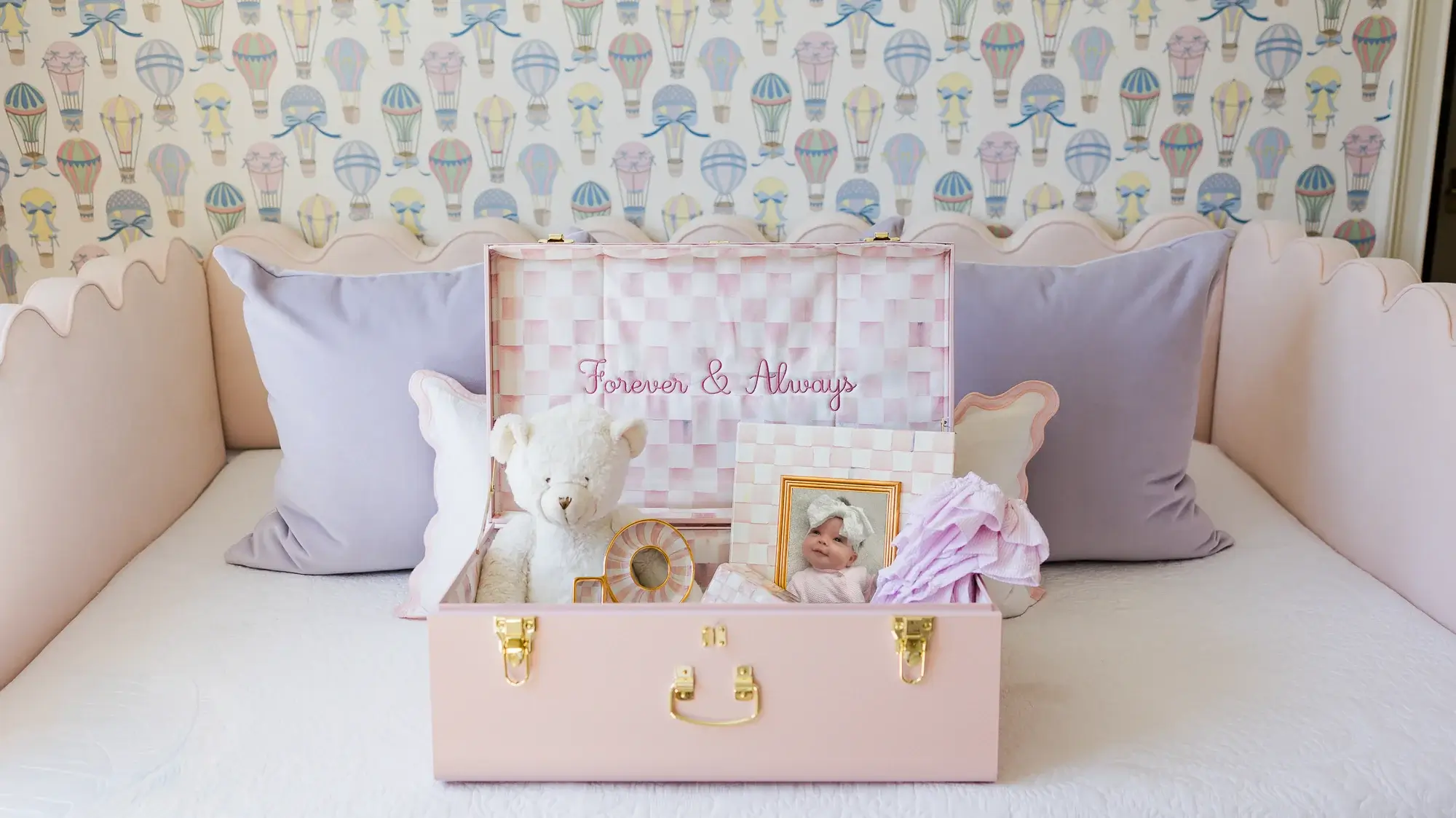
The episode aired and traffic flooded the website. Mullenger threw a watch party in St. Louis for her team to mark the three-Shark deal.
With three investors behind her, the company expanded fast: a Mini Classic Trunk for smaller milestones, "Quick Ship" options for last-minute buyers, Petite Pouches, Wedding Memory Books, and licensed Collegiate trunks for the graduation market.
By the end of 2025, the artisan team had grown past 60 people - partly to avoid the shipping delays that hit a lot of companies after a Shark Tank traffic spike. Petite Keep also flew 17 of its top customers to Charleston, South Carolina, for a brand trip called "PK in the Palms."
Is Petite Keep Still in Business?
It's grown. The company stayed 100% direct-to-consumer and moved from a basement operation into a full warehouse in St. Louis. It launched five collaborations in 2025, including one with influencer Samantha Varvel, and has over 166,000 followers on Instagram. New fabric patterns, padlocks, and seasonal collections keep coming.
What Is the Valuation and Net Worth of Petite Keep?
Mullenger's own pitch valued the company at $8 million. The Sharks' final deal - $400,000 for 15% - put it closer to $2.66 million.
Neither number tells the full story for a company growing this fast. Between $5 million in 2023 sales, a roughly $10 million 2024 projection, and a $17 million target for 2025, lifetime sales are well past $15 million.
Estimates of the company's current net worth run from roughly $3.38 million to $5 million - the range depends mostly on whether the acquisition-cost and margin problems the Sharks flagged actually got fixed.
Are Petite Keep Alternatives Worth It?
At $195 to $350 a trunk, the price drew debate after the episode aired. Threads in Reddit's r/sharktank argued you could build something similar with a plain trunk from Michaels and some Etsy decals for under $50.
That's true, and cheaper. But it skips the actual pitch: heirloom quality. Petite Keep is selling brass hardware, archival fabric, real embroidery, and French moiré linings meant to protect what's inside for decades - not a cardboard box with a bow on it. For the mothers, brides, and gift-givers this brand is built for, that's the trade they're making.
Where to Buy Petite Keep
Mullenger has kept the brand off retail shelves on purpose, to control the buying experience. As of 2026, the only place to buy an authentic Petite Keep trunk is the company's own website, where an interactive builder lets you preview fabric, embroidery fonts, and padlock choices before checkout.