Table of Contents
Out in the Mojave Desert, living entirely off the grid without a grocery store for miles, Doug Evans had a serious problem: he needed fresh food. The dirt in Wonder Valley wouldn't grow a thing, and running to a supermarket was a two-hour ordeal. So, he turned to the simplest agricultural method known to man. He put some seeds in a glass jar, added water, and waited.
If the name Doug Evans rings a bell, you are likely familiar with the spectacular rise and crash of Silicon Valley's most notorious hardware startup, Juicero. But years after that $120 million implosion, Evans re-emerged on Shark Tank Season 17 with a brand new obsession, a much simpler product, and a sky-high valuation that had the Sharks reeling.
Did investors bite on his countertop farm, or did they smell an overpriced glass jar? Here is the complete breakdown of the pitch and exactly where the business stands today.
What is The Sprouting Company?
The Sprouting Company is a direct-to-consumer health and wellness brand that designs and sells premium, countertop sprouting equipment alongside high-quality organic seeds. The core mission of the brand is to empower anyone, regardless of their living situation or gardening skills, to grow nutrient-dense living foods right in their kitchen.
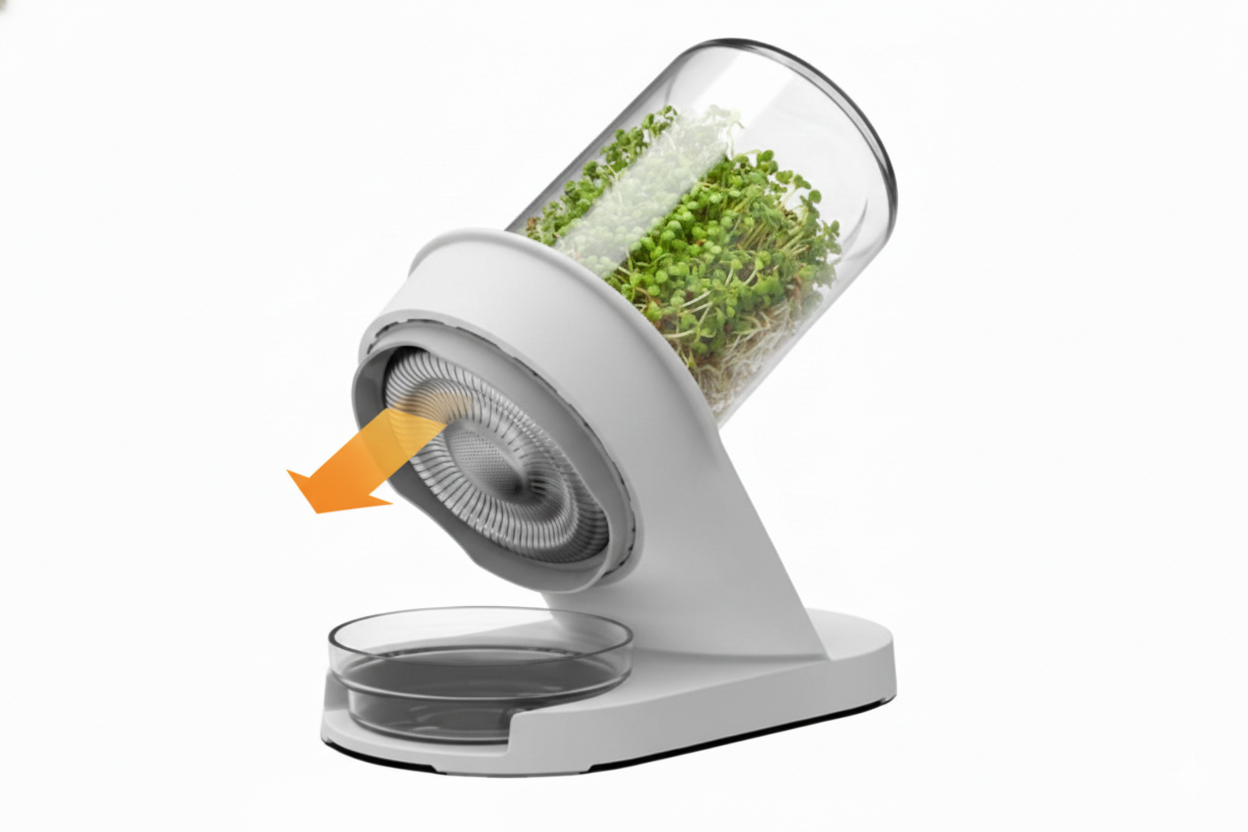
The flagship product, known simply as "The Sprouter," is a heavily engineered take on the classic Mason jar. It features a wide-mouth borosilicate glass vessel, straight walls to prevent moisture trapping, a medical-grade stainless-steel strainer lid, and a custom base that automatically angles the jar perfectly for drainage and airflow.

The system requires absolutely no soil, no sunlight, no fertilizer, and no electricity. Users simply soak the seeds overnight, rinse them with tap water twice a day, and within three to seven days, they yield a massive crop of fresh sprouts ready to eat.
To complement the hardware, the brand operates a highly lucrative subscription model for its triple-pathogen-tested organic seeds, offering everything from basic lentils and garbanzo beans to their proprietary "High-Glucoraphanin" broccoli seeds, which boast massive anti-inflammatory benefits.
| Category | Details |
|---|---|
| Industry | Food & Beverage / AgTech |
| Founded Year | 2020 |
| Founder | Doug Evans |
| Core Product | Countertop Sprouter Kits & Organic Seed Subscriptions |
| Target Audience | Vegans, health enthusiasts, and urban gardeners |
| Retail Price | $100 for the kit, $12–$50 for seed bags |
Who is the Founder of The Sprouting Company?
Doug Evans is a man who knows the extreme highs and devastating lows of the food tech industry. His journey into the health space was born out of profound personal tragedy. In 1999, his aunt lost both of her feet to Type-2 diabetes, his mother passed away from stomach cancer, and his father succumbed to heart disease. Believing the modern American diet was the culprit, Evans pivoted his life entirely toward raw veganism and holistic nutrition.
That same year, he founded Organic Avenue, one of the first major raw food and cold-pressed juice retail chains in New York City. He scaled the business from a tiny 125-square-foot storefront into a 12-location empire before selling it to the private equity giant KKR in 2012 for an eight-figure sum.

However, Evans is most famous for his next venture: Juicero. Launched in 2013, the company created a $700 Wi-Fi-enabled juicing machine that required proprietary juice packets. He successfully raised $120 million from top-tier venture capitalists. But in 2017, journalists discovered that the expensive machine was entirely unnecessary, as the juice packets could simply be squeezed by hand with the exact same result. The backlash was immediate and brutal, and Juicero folded shortly after.
Retreating to the quiet of the California desert, Evans went back to basics. He became obsessed with the nutritional density of sprouts, eventually authoring The Sprout Book, which gained endorsements from figures like Dr. Oz. Realizing that the general public found traditional sprouting methods messy and prone to mold, he designed The Sprouter, self-funded the manufacturing, and officially launched The Sprouting Company in 2020.
The Sprouting Company Shark Tank Journey & Pitch
Doug Evans stepped onto the Shark Tank stage during Season 17, Episode 4 (which aired in October 2025) with undeniable confidence, a jar of fresh sprouts, and a massive prototype for a fully autonomous sprouting robot.
He immediately passed out sprout-infused smoothies and salads, educating the panel on the intense nutritional value of sprouts, noting they can be up to 100 times more nutritious than their fully grown vegetable counterparts. Lori Greiner, a home-sprouter herself, was immediately impressed by the simplicity of the hardware design, which eliminated the need for balancing wet jars on dish racks.
When the conversation shifted to the financials, the Sharks sat up straight. Evans revealed that he had officially launched the direct-to-consumer product 18 months prior (in early 2024). In that short window, he had generated $1.5 million in revenue.
Better yet, his margins were astronomical. The glass and steel kit cost just $15 to manufacture, and he was retailing it for $100. His average order value sat at a healthy $109, driven by recurring seed purchases ranging from $12 to $50 a bag. Kevin O'Leary asked the ultimate question: was it profitable? Evans confirmed that in May 2025 alone, the business hit a 21% net margin, clearing $50,000 in pure profit.
Despite the stellar numbers, the Sharks had concerns. Guest Shark Alexis Ohanian appreciated the health mission but felt the product was too niche for mainstream adoption, so he dropped out. Kendra Scott quickly followed suit. Lori Greiner felt the market was already saturated with cheap DIY alternatives, making a $100 kit a tough sell for the average American consumer. She was out.
That left Kevin O'Leary and Daymond John. O'Leary, loving the margins and Evans' proven capability to scale food brands, offered the full $500,000, but demanded a massive 25% equity stake, drastically slashing the company's valuation. Daymond John immediately jumped in and matched O'Leary's exact offer, citing his deep expertise in branding and scaling consumer packaged goods.
Evans, knowing his numbers were strong, attempted to negotiate. He countered with 6.5% equity. Both Sharks immediately rejected it. O'Leary then floated the idea of teaming up with Daymond to split the $500,000 for 12.5% each. Evans drew a hard line in the sand, stating he would not give up more than 10% total equity. Neither side was willing to budge, and Evans walked out of the Tank with his jars, his seeds, and no deal.
| Pitch Details | Information |
|---|---|
| Initial Ask | $500,000 for 5% equity |
| Implied Valuation | $10,000,000 |
| Sharks in the Room | Kevin O'Leary, Daymond John, Lori Greiner, Kendra Scott, Alexis Ohanian |
| Offers Made | Kevin O'Leary: $500K for 25% Daymond John: $500K for 25% |
| Final Deal | No Deal |
What Happened to The Sprouting Company After Shark Tank?
Walking away from a combined offer from two heavy-hitting Sharks is always a gamble, but for Doug Evans, the exposure alone was worth millions. The immediate aftermath of the October 2025 airing triggered the classic "Shark Tank Effect." Traffic to The Sprouting Company's website surged, completely wiping out their available inventory.
However, the broadcast also ignited a fierce debate across social media and financial forums. Reddit communities dedicated to the show tore into the product's pricing model. Hundreds of users pointed out the glaring irony: Evans had built a $100 product to replace a $5 Mason jar, drawing heavy comparisons to his previous failure with the over-engineered Juicero press. Frugal consumers argued that poking holes in a metal lid or using a cheap piece of cheesecloth was just as effective as the proprietary strainer.
Conversely, health and wellness influencers rallied behind the brand. They praised the aesthetic appeal of the kit, arguing that a sleek, dedicated device encouraged people to actually stick with the habit of daily sprouting. Furthermore, agricultural experts noted that Evans was not really selling a jar; he was selling the convenience of triple-tested, high-germination seeds on a reliable subscription schedule, which is where the true value of the business rested.
Is The Sprouting Company Still in Business?
Yes, The Sprouting Company is thriving and fully operational. By maintaining tight control over their supply chain and relying exclusively on a direct-to-consumer model, they have successfully weathered the post-show inventory crunches.
A quick look at their digital storefront shows a mature brand successfully capitalizing on the momentum. They prominently feature their Shark Tank appearance and actively push aggressive bundle deals, such as the "Garden Status 2-Pack" and the "Organic High-Glucoraphanin Duo," which pairs the hardware with their premium broccoli seeds.
The company is currently seeing massive web traffic, estimated at over 68,000 unique visitors a month and their customer service portal clearly notes a 2 to 3-week shipping delay on hardware bundles due to relentless high demand. Evans has also continued to double down on education, utilizing the website and social media to teach consumers exactly how to harvest, clean, and store sprouts safely, ensuring high retention rates for his monthly seed subscribers.
What is the Valuation & Net Worth of The Sprouting Company?
When Doug Evans pitched the Sharks, he confidently placed a $10 million valuation on his business. Because he refused to accept O'Leary and John's aggressively discounted offers, he successfully preserved his equity cap table.
As of 2026, industry analysts estimate that The Sprouting Company has maintained, if not slightly exceeded, that $10 million valuation. Factoring in their initial $1.5 million in revenue over 18 months, plus the massive retail spike following the broadcast, lifetime sales are estimated to be comfortably north of $3 million to $4 million. With recurring seed subscriptions stabilizing their cash flow and a massive 85% gross margin on the hardware, the business is a highly profitable cash cow.
As for Doug Evans himself, his personal net worth is estimated to be in the low eight figures. While Juicero was a devastating loss for his venture capital backers, Evans had previously secured a massive payday from the 2012 sale of Organic Avenue, providing him the personal runway to self-fund his desert retreat and effectively bootstrap The Sprouting Company into the multimillion-dollar enterprise it is today.
Where to Buy The Sprouting Company?
If you are looking to start your own countertop farm, you will not find The Sprouting Company on the shelves of Target or Williams Sonoma. Doug Evans has kept the brand strictly direct-to-consumer to preserve his margins and control the customer experience.
You can only purchase the kits and the specialized seed bags directly through their official website. They frequently run promotional codes offering 50% off secondary kits, heavily incentivizing bulk orders to equip an entire kitchen.
The Sprouting Company Alternatives: Can You Just Use a Mason Jar?
The loudest criticism of The Sprouting Company is the sheer cost of entry. If you want the exact same biological outcome for a fraction of the price, you can simply purchase a standard wide-mouth glass Mason jar from any grocery store for under $5, stretch a piece of cheesecloth over the opening, and secure it with a rubber band. You will just have to manually prop the jar at an angle in a bowl to ensure proper drainage.
For consumers who want a dedicated sprouting device but refuse to pay $100, competitor brands like Forages have stepped into the market. They offer similar setups utilizing stainless steel and borosilicate glass at a significantly lower price point, openly targeting consumers who discovered the hobby via the Shark Tank pitch but experienced sticker shock at checkout.
Are The Sprouting Company Reviews Good?
The Sprouting Company reviews are heavily polarized based on the buyer's budget. Verified customers who prioritize aesthetics and convenience leave glowing 5-star reviews, frequently citing how the heavy-duty glass and perfectly angled stand prevent the foul-smelling mold that often plagues DIY setups. They also rave about the high germination rates of the proprietary seeds.
On the flip side, critical reviews tend to focus entirely on customer service bottlenecks and the subscription model. Some users have reported frustration with the automated seed shipments, claiming that the seeds pile up faster than they can grow them, leading to delayed cancellation requests. Ultimately, the product works exactly as advertised; the real question is whether the sleek convenience is worth the premium price tag.