Table of Contents
When you think of a quilt, you probably picture a traditional, cozy blanket made by your grandmother using scrap fabrics. But what if a quilt looked like a hyper-realistic, high-definition piece of modern pop art?

That is exactly the bold vision that brought Mike O'Dell into the Shark Tank in early 2025. Trading the sterile environment of an operating room for the colorful, fast-paced world of retail crafts, Mike aimed to prove that quilting could be a highly profitable, modern enterprise.
He walked onto the famous television set with massive, breathtaking fabric artwork, seeking a shark to help him scale his rapidly growing side hustle, Legit Kits.
But the sharks had tough questions about his inventory, his business model, and his heavy upfront costs. Here is the complete breakdown of Legit Kits, their tense time in the Tank, and exactly where the business stands today.
What is Legit Kits?
Legit Kits is a craft supply company that creates incredibly detailed, vibrant quilt kits using a method called Foundation Paper Piecing (FPP). Instead of asking crafters to hunt down dozens of different fabric shades and try to cut them perfectly on their own, Legit Kits does the heavy lifting.

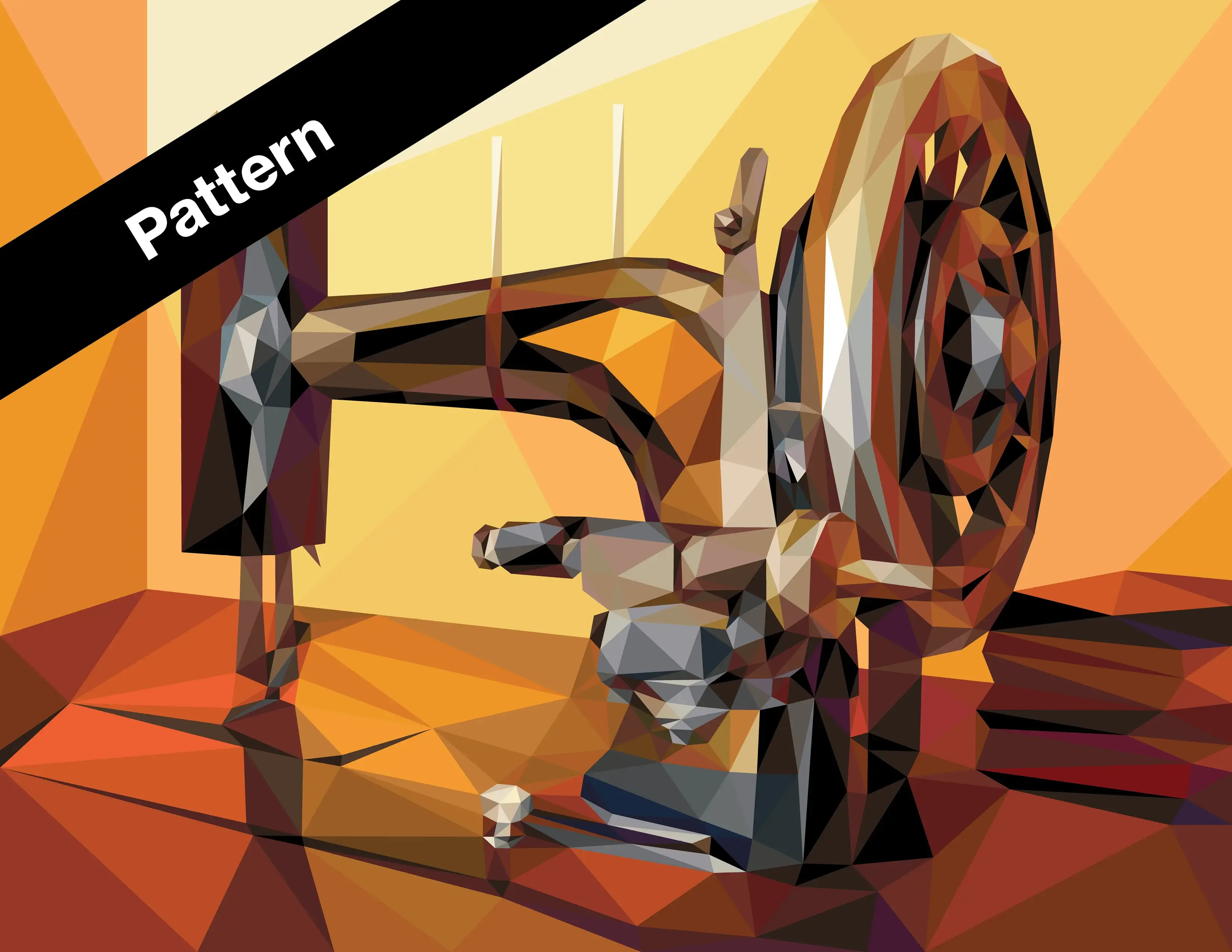
Each kit comes with exactly what a maker needs to build a massive, stunning piece of fabric art. A standard package includes detailed color maps, assembly guides, full patterns printed on foundation paper, and generous cuts of premium Robert Kaufman Kona Cotton in various shades.
Because their designs are so complex, a single quilt top might require between 50 to 100 different specific shades of solid color.
By packaging everything together, Legit Kits removes the frustration of fabric sourcing and makes advanced quilting accessible to total beginners and seasoned pros alike.
| Feature | Details |
|---|---|
| Industry | Arts, Crafts & Textiles |
| Founded Year | 2020 |
| Core Product | Foundation Paper Piecing Quilt Kits |
| Target Audience | Novice to expert quilters, textile artists, and hobbyists |
| Retail Price Range | Ranges from $89.00 to $399.00+ |
Who is the Founder of Legit Kits?
The creative mind behind Legit Kits is Mike O'Dell. Surprisingly, Mike does not come from a traditional textile or retail background. By trade, he is a full-time Certified Registered Nurse Anesthetist (CRNA) based in Oklahoma City.
His demanding day job requires precision, deep focus, and an analytical mind—traits that transferred surprisingly well into the world of pattern making.
Mike's journey into the craft space was entirely accidental. When his wife took up quilting as a hobby, Mike found himself fascinated by the mechanics of it. He saw the potential to create large-scale, vivid imagery using fabric. Despite having no formal training in the craft, he started drawing patterns by hand.
He developed a unique technique of breaking down highly complex images into small, manageable paper blocks. This made the patterns much easier to print and, more importantly, much easier for a customer to sew together.
What started as a passionate creative outlet quickly gained traction. Crafters noticed the striking visual quality of Mike's designs—which range from vibrant animals to stunning landscapes—and began demanding kits of their own. Even while working his demanding medical shifts, Mike turned his artistic side hustle into a real, scalable business.
Legit Kits Shark Tank Journey & Pitch
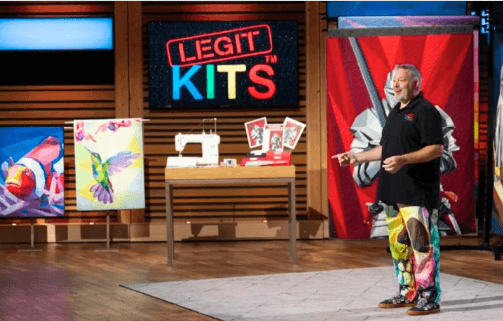
Mike walked into the Shark Tank during Season 16, Episode 9, which aired in January 2025. He brought a wave of energy, a good sense of humor, and several massive, eye-catching quilts to display to the panel. He was seeking $150,000 in exchange for 5% equity, placing the valuation of Legit Kits at a solid $3 million.
The sharks were immediately blown away by the visual appeal of the products, but as always, the conversation quickly shifted to the numbers. Mike laid out his impressive growth story. In his first year of business in 2020, he did $30,000 in sales. The next year, sales jumped to $140,000. By 2022, they had climbed to $400,000, and in 2023, Legit Kits crossed the magic million-dollar mark, bringing in $1 million with an 8.7% profit margin.
However, Mike was honest about his current financial situation. He admitted that in 2024, the business was revenue-neutral. He had reinvested heavily into scaling the company, moving into a brand-new facility and holding roughly $350,000 worth of inventory on his warehouse racks. He also revealed that he had over 60 active product SKUs.
This inventory-heavy strategy immediately raised red flags for the panel. Guest shark Jamie Kern Lima voiced her concerns that Mike was holding too much inventory without enough data to justify keeping 60 different designs in stock. Lori Greiner agreed, advising Mike that he needed to trim down his offerings to just his top 10 or 20 bestsellers to free up his cash flow. Because of the inventory risks, Lori dropped out. Jamie quickly followed suit.
Mark Cuban stated that the business simply wasn't in his wheelhouse, so he passed. Real estate mogul Barbara Corcoran told Mike she really liked him as an entrepreneur, but she couldn't connect with the product itself, making her the fourth shark to drop out.
That left Kevin O'Leary. Mr. Wonderful saw the potential in the high-ticket price point (large kits sell for nearly $400) and the massive margins. He offered Mike exactly what he asked for—$150,000 for 5% equity—but attached his signature royalty structure. Kevin wanted a $10 royalty on every single unit sold in perpetuity. After a brief moment of consideration, Mike happily accepted the deal.
| Shark Tank Details | Data |
|---|---|
| Initial Ask & Valuation | $150,000 for 5% Equity ($3 Million Valuation) |
| Sharks in the Room | Mark Cuban, Barbara Corcoran, Kevin O'Leary, Lori Greiner, Jamie Kern Lima |
| Shark Offers | Kevin O'Leary: $150,000 for 5% equity + $10 royalty per unit sold in perpetuity |
| Final Accepted Deal | Kevin O'Leary's exact offer |
What Happened to Legit Kits After Shark Tank?
The immediate aftermath of appearing on national television is often called the "Shark Tank effect," and Legit Kits certainly felt it. Their website saw a massive surge in traffic, and the quilting community rallied behind the brand. For many niche hobbyists, seeing a specific, high-end craft supply company get validation on mainstream television was a huge moment.
To handle the sudden influx of orders and to make good on his promise to scale the business safely, Mike utilized his expanded warehouse. The company doubled down on their production, printing patterns and cutting thousands of yards of fabric to keep up with the new customers discovering the brand.
Mike also took some of the sharks' advice to heart, though he did not entirely abandon his large catalog of designs. Instead, he focused heavily on marketing his proven bestsellers, like "Big G the Giraffe" and his intricate floral designs, while continuing to introduce new products through strategic drops.
He also expanded the business model by introducing a "Block of the Month" subscription. This recurring revenue model gives quilters smaller, manageable pieces of a larger project every month, keeping cash flow steady and keeping customers engaged over a long period.
Is Legit Kits Still in Business?
Yes, Legit Kits is absolutely still in business and is performing better than ever. The company has fully settled into a facility that is three times larger than their original workspace. This expansion was critical for housing their massive inventory of Kona cotton and their in-house pattern printing operation.
Today, they offer nearly 50 active designs on their website. They have also branched out into selling "Patterns Only" for quilters who prefer to source their own fabric, as well as standalone "Fabric Packs." By offering these separate components, Legit Kits has smartly captured different segments of the market, from the crafter who wants a premium, all-in-one box, to the budget-conscious maker who just wants Mike's brilliant designs.
Furthermore, the brand has heavily invested in community building. They have launched a network of certified Legit Kits instructors. These teachers hold classes at local quilt shops and conventions across the United States, guiding new makers through Mike's specific foundation paper piecing techniques. This boots-on-the-ground approach has been a massive driver for customer acquisition.
What is the Valuation & Net Worth of Legit Kits?
Estimating the exact financial footprint of a private craft company requires looking at their stated pitch numbers and their current trajectory. During his late 2024 pitch, Mike valued the company at $3 million, a number that Kevin O'Leary agreed to when he took 5% for $150,000.
Given that Legit Kits achieved $1 million in sales in 2023 and experienced the massive Shark Tank bump in early 2025, it is highly likely that their annual revenue is now sitting comfortably between $1.5 million and $2 million. Because they manufacture and cut their kits in-house, their margins remain strong once the initial fabric inventory is purchased.
The estimated valuation of Legit Kits sits around $3.5 million to $4 million. The estimated net worth of founder Mike O'Dell is likely hovering around $1.5 million to $2 million, combining the value of his majority equity in the booming craft business with his steady, high-earning career as a CRNA.
Where to Buy & Are the Reviews Good?
If you are looking to get your hands on one of these massive fabric art projects, the best place to buy them is directly through the official Legit Kits website. Purchasing direct ensures you get their customer service guarantees, such as their famous "UFO (Unfinished Object) Protection Plan."
If you accidentally cut a piece of fabric wrong or lose a section of your pattern, the company is known for generously mailing out replacement pieces to ensure you can finish your project. Additionally, because of their growing instructor network, you can now find Legit Kits stocked in select local, independent quilt shops across the country.
Are Legit Kits Reviews Actually Good?
The reviews for Legit Kits within the hardcore crafting and Reddit quilting communities are overwhelmingly positive, though they do come with a few caveats. Customers absolutely rave about the final results. Makers report that the instructions are incredibly clear, and the feeling of accomplishment after finishing a 100-color piece is unmatched. Fans highly recommend buying the full kit rather than just the pattern, as sourcing 70 different shades of cotton on your own often ends up costing more money and takes hours of frustrating retail hunting.
However, the main critique of the product is simply the price tag. With large kits costing upwards of $300 to $400, it is a serious financial commitment for a hobbyist. Some users also note that because the designs are so complex, repeating the same pattern twice can be mentally exhausting. But for crafters looking for a "wow" factor and a project that will keep them busy for months, Legit Kits delivers on every single promise.

Madhav Kushwaha
SEO Analyst & Digital Marketer
Madhav analyzes complex business pitches and provides high-level updates for tech startups and reality television ventures. Specializing in advanced organic search strategies, he brings clarity to the rapidly evolving digital landscape.