Table of Contents
Walking into the Shark Tank with a multi-million dollar valuation and almost zero shipped product is a bold move. Doing it with a luxury watercraft that costs as much as a new car is a recipe for reality television drama.
When the founders of Pelagion rolled their futuristic Hydroblade onto the set in Season 17, they promised to revolutionize the multi-billion-dollar marine industry. They pitched a silent, emissions-free, flying jet ski that looked like it was ripped straight out of a sci-fi movie.
But looking cool doesn't automatically secure a deal from some of the tightest wallets in venture capital. The Sharks loved the ride, but the financial reality of building heavy, electric-powered marine vehicles quickly sunk the presentation.
Fast forward to today, and the company has completely pivoted its funding strategy to prove the celebrity investors wrong. Here is the full breakdown of how Pelagion was built, what really happened inside the Tank, and where the luxury watercraft brand stands today.
What is Pelagion Hydroblade?

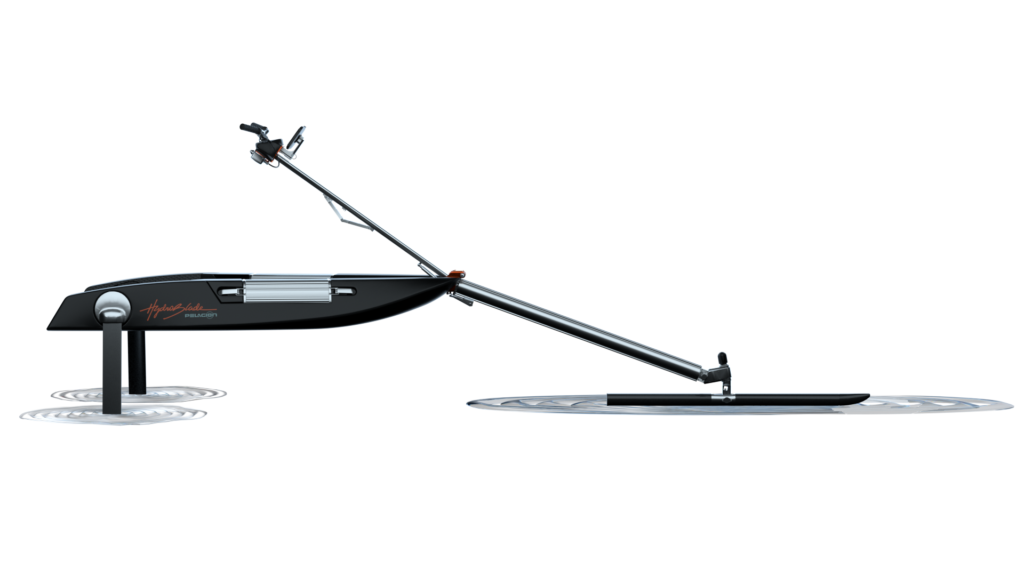
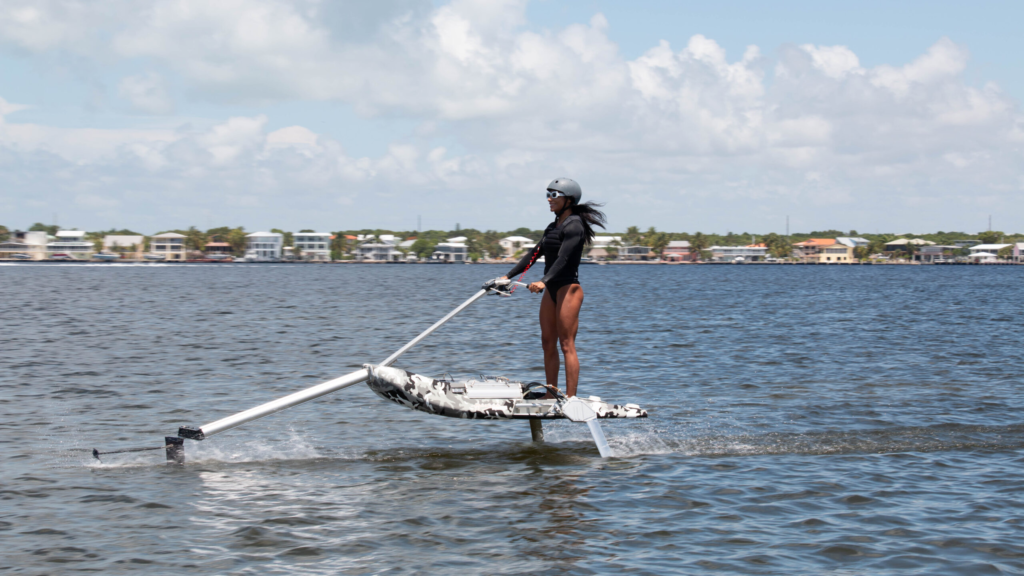
The Pelagion Hydroblade is the world's first stand-up, fully steerable electric hydrofoil. If you combine the familiar, upright handling of a traditional jet ski with the silent, levitating technology of an e-foil surfboard, you get the Hydroblade.
Traditional personal watercraft are notoriously loud, bulky, and reliant on gas, which limits their use in ecologically sensitive coastal zones and quiet lakes. Standard e-foil boards solve the environmental problem, but they require the rider to balance like a surfer, shifting their body weight to turn, a steep learning curve for the average weekend warrior.
Pelagion bridged this gap. The Hydroblade features intuitive handlebar steering connected directly to the rudder and motor, meaning if you know how to ride a bicycle, you can ride a Hydroblade.
Powered by a 16kW electric propulsion system and a massive proprietary battery pack, the board lifts entirely out of the water at speed. This cuts drag significantly, allowing for up to four hours of silent, smooth riding above the chop. A digital screen integrated into the handlebars displays real-time battery life, ride time, and distance.
| Product Overview | Details |
|---|---|
| Product Name | Pelagion Hydroblade |
| Industry | Marine / Electric Watercraft |
| Core Feature | Stand-up, steerable electric hydrofoil |
| Target Audience | Luxury watersports enthusiasts, yacht owners |
| Manufacturing Cost | $12,500 |
| Retail Price | $25,000 |
Who is the Founder of Pelagion Hydroblade?
The Hydroblade is the brainchild of Jamie Schlinkmann, an engineer with a deep nostalgia for the water. The original inspiration sparked from an old 1970s Kawasaki stand-up jet ski that Schlinkmann kept in his garage.
Even though the gas-guzzling machine no longer ran, he distinctly remembered the thrill of standing upright and carving through the water as a kid. He wanted to recreate that exact physical sensation but without the exhaust fumes, the roaring engine noise, and the heavy environmental footprint.
Schlinkmann wasn't just a dreamer with a sketchpad; he had the heavy industrial backing to make it happen. Since the 1990s, he has run Automatic Manufacturing Systems (AMS), a highly successful Florida-based parent company. AMS builds high-precision manufacturing equipment and automation systems for major Fortune 500 clients, including tech giants like Tesla and SpaceX.
Because his 75,000-square-foot facility in Odessa, Florida, was already equipped with CNC machines, injection molding tools, and an army of mechanical and software engineers, Schlinkmann had a massive unfair advantage. He poured roughly $2,047,000 of his own money into research and development.
Alongside his colleague and co-presenter Mike Terry, they designed, prototyped, and tested the Hydroblade in their own on-site water tanks before taking it to the public.
Pelagion Shark Tank Journey & Pitch
Jamie Schlinkmann and Mike Terry brought the Hydroblade to national television during the Season 17 premiere, which aired in September 2025. They walked onto the carpet looking for a massive capital injection to kickstart their commercial manufacturing line.
Right out of the gate, the initial ask raised eyebrows. They requested $800,000 in exchange for just 4% of the company. This instantly pegged Pelagion at a $20 million valuation, a staggering number for a company that had yet to ship a single consumer unit.
Kevin O'Leary immediately drilled into the numbers, demanding to know about sales and production. The founders admitted that the Hydroblade was still in the pre-order phase. They had successfully secured 19 pre-orders for the 2025 season.
When Lori Greiner asked about the pricing structure, the real hurdle was revealed: the Hydroblade costs $12,500 to manufacture, and Pelagion sells it direct-to-consumer for a staggering $25,000.
The Sharks were visibly shocked by the price tag. Robert Herjavec was quick to jump in, calling the $25,000 retail price unrealistic, pointing out that competitor e-foils usually retail between $5,000 and $15,000.
Guest Shark Rashaun Williams dissected the business model. He noted that hardware startups, especially large, electric marine vehicles, are notoriously capital-intensive. Building out supply chains, managing battery logistics, and executing global marketing campaigns burn through cash rapidly. Because Pelagion was essentially pre-revenue on this specific product and asking for a $20 million valuation, Williams officially bowed out.
Guest Shark Kendra Scott followed suit, noting that the $800,000 they were asking for was merely a drop in the bucket compared to what it would actually cost to scale a manufacturing business of this size.
With the panel universally concerned about the high barrier to entry for consumers and the massive cash burn required to build the company, Pelagion left the Tank without a deal.
| Pitch & Offers | Details |
|---|---|
| Season & Episode | Season 17, Episode 1 (September 2025) |
| Initial Ask | $800,000 for 4% Equity |
| Valuation | $20,000,000 |
| Sharks in the Room | Kevin O'Leary, Lori Greiner, Robert Herjavec, Kendra Scott, Rashaun Williams |
| Final Deal | No Deal |
What Happened to Pelagion After Shark Tank?
Leaving the Tank empty-handed is often a death knell for startups, but Pelagion used the prime-time exposure exactly as they needed to: as a nationwide commercial. The "Shark Tank Effect" drove massive traffic to their website, introducing the brand to thousands of wealthy water sports enthusiasts who weren't scared away by a $25,000 price tag.
Instead of courting traditional venture capitalists who were afraid of hardware logistics, Schlinkmann and his team took their fundraising directly to the people. They launched a community equity round on Wefunder.
They heavily marketed their Shark Tank appearance alongside viral features from major automotive influencers like Supercar Blondie and physical appearances at the Consumer Electronics Show (CES) in Las Vegas and the Palm Beach International Boat Show.
By targeting yacht owners and luxury early adopters, the strategy worked. Following the show, Pelagion successfully pushed past the $500,000 mark in paid pre-orders, proving to investors that a market existed for a premium, stand-up electric hydrofoil.
Is Pelagion Still in Business?
Yes, Pelagion is very much in business and actively ramping up its manufacturing capabilities. Because the brand operates as a subsidiary of Automatic Manufacturing Systems, they are insulated from the typical supply chain collapses that kill most hardware startups.
They are currently utilizing the existing 75,000-square-foot AMS facility in Florida to handle final assembly, CNC machining, and quality control. Pelagion has set an estimated production capacity of 400 Hydroblades for the year.
They are also actively developing their own intellectual property, filing patents for their proprietary battery cooling technology and their unique stand-up steering design.
What is the Valuation & Net Worth of Pelagion?
Because Pelagion did not take a deal on Shark Tank, the founders preserved 100% of their equity. Through their active Wefunder campaign, the company set a pre-money valuation ranging between $22.5 million and $25 million. While this is slightly higher than the $20 million valuation they pitched to the Sharks, they now have over half a million dollars in pre-orders to back it up.
When discussing the net worth of the founders and the business, it is vital to separate the startup (Pelagion) from the parent company (AMS). Pelagion itself is still in its infancy, carrying a heavy debt load from its $2 million+ R&D phase and relying on pre-order revenue.
However, the parent company backing it is a financial powerhouse. AMS boasts over $300 million in lifetime revenue, averages roughly $6 million in annual revenue, and operates with a highly lucrative 50% profit margin.
Because Schlinkmann owns and operates AMS, his personal net worth and business backing provide Pelagion with an incredibly long financial runway that most startups never get to enjoy.
Where to Buy Pelagion Hydroblade?
Currently, the Pelagion Hydroblade is strictly a direct-to-consumer product. It is not available in big-box marine stores or general sporting goods retailers. Interested buyers must secure a production slot directly through the official Pelagion website.
The brand is rolling out the product via a "Founder's Club Series," which includes exclusive cosmetic finishes, custom Hydroblade skins, and invitations to private VIP lifestyle events in global destinations like the Bahamas. This go-to-market strategy mirrors luxury automotive rollouts, focusing on high-net-worth individuals rather than mass-market consumers.
Pelagion Hydroblade Price & Alternatives
At $25,000, the Hydroblade is one of the most expensive personal electric watercraft on the market. For context, a brand new, top-of-the-line gas-powered Sea-Doo or Yamaha Waverunner tops out around $20,000.
If the price tag is too steep, the market is currently dominated by two major alternatives in the e-foil space:
- Fliteboard & Lift Foils: Both of these companies produce premium electric surfboards that retail between $5,000 and $15,000 depending on the battery size and carbon fiber construction.
However, neither of those alternatives offers the primary selling point of the Pelagion: handlebars. Fliteboards and Lift Foils require the user to balance and carve like a surfer. The Hydroblade charges a massive premium specifically for its intuitive, bicycle-style steering and its massive 16kW motor, aiming directly at older riders or beginners who want the thrill of flying over the water without spending weeks learning how to balance on a wet piece of carbon fiber.