Table of Contents
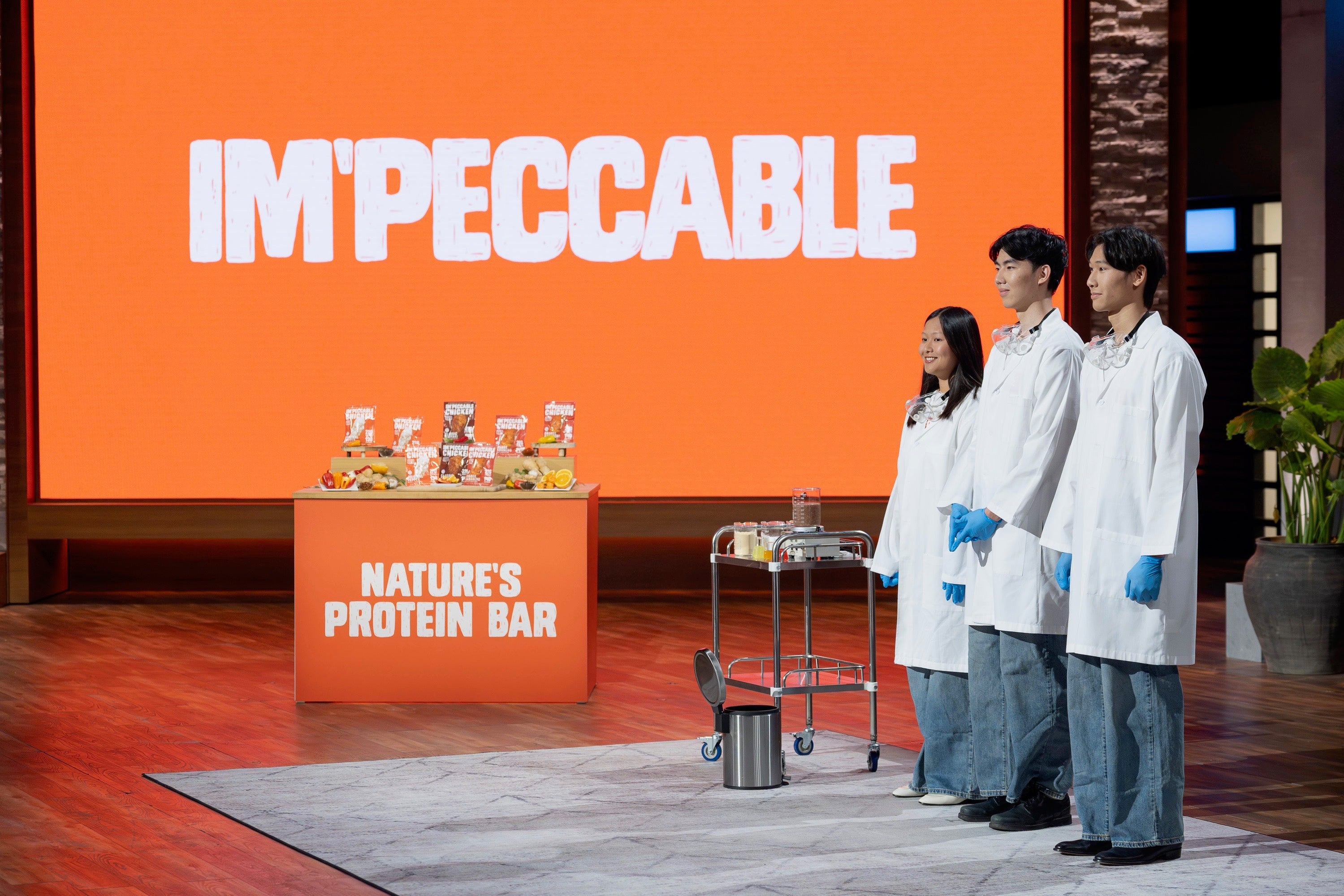
Walking into the Shark Tank is intimidating for seasoned business veterans, let alone a trio of college students pitching a concept completely foreign to the American snack market. But when Melina Chang, Riley Yen, and Nick Hsu stepped onto the stage in Season 17, they brought a product that ignited one of the fiercest bidding wars of the year.
Their pitch for Im'peccable Chicken, a vacuum-sealed, ready-to-eat chicken breast pouch, challenged the multibillion-dollar protein bar industry.
With a dramatic weight-loss backstory, an operational factory in California, and a product that tasted like a homemade meal rather than a chalky supplement, the young entrepreneurs forced all five Sharks to empty their wallets. Now, months after their primetime television debut, the real work has begun.
What is Im'peccable Chicken?
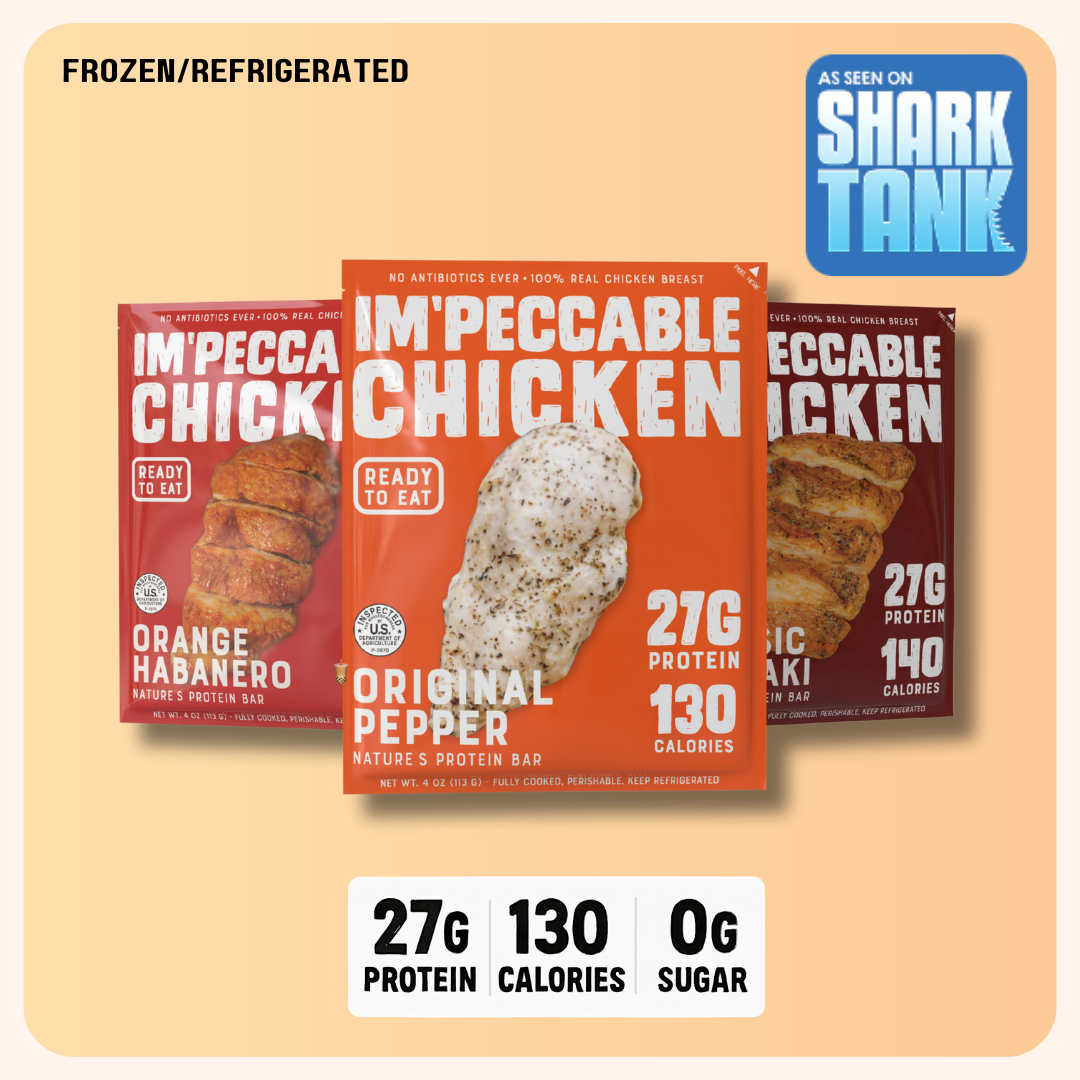
Im'peccable Chicken is a health-focused food company that produces ready-to-eat, vacuum-sealed chicken breast snacks. Designed as a direct replacement for highly processed protein bars and sugary shakes, the product offers athletes, busy professionals, and dieters a clean, whole-food alternative to traditional on-the-go snacks.
The concept borrows heavily from the convenience store culture of Asia, particularly Taiwan, where lightly seasoned, high-protein chicken pouches are as ubiquitous as candy bars. Im'peccable Chicken takes fresh, boneless chicken breasts and cooks them using a sous vide method to lock in moisture. The meat is then seasoned and vacuum-sealed, requiring absolutely no meal prep, cooking, or even utensils.
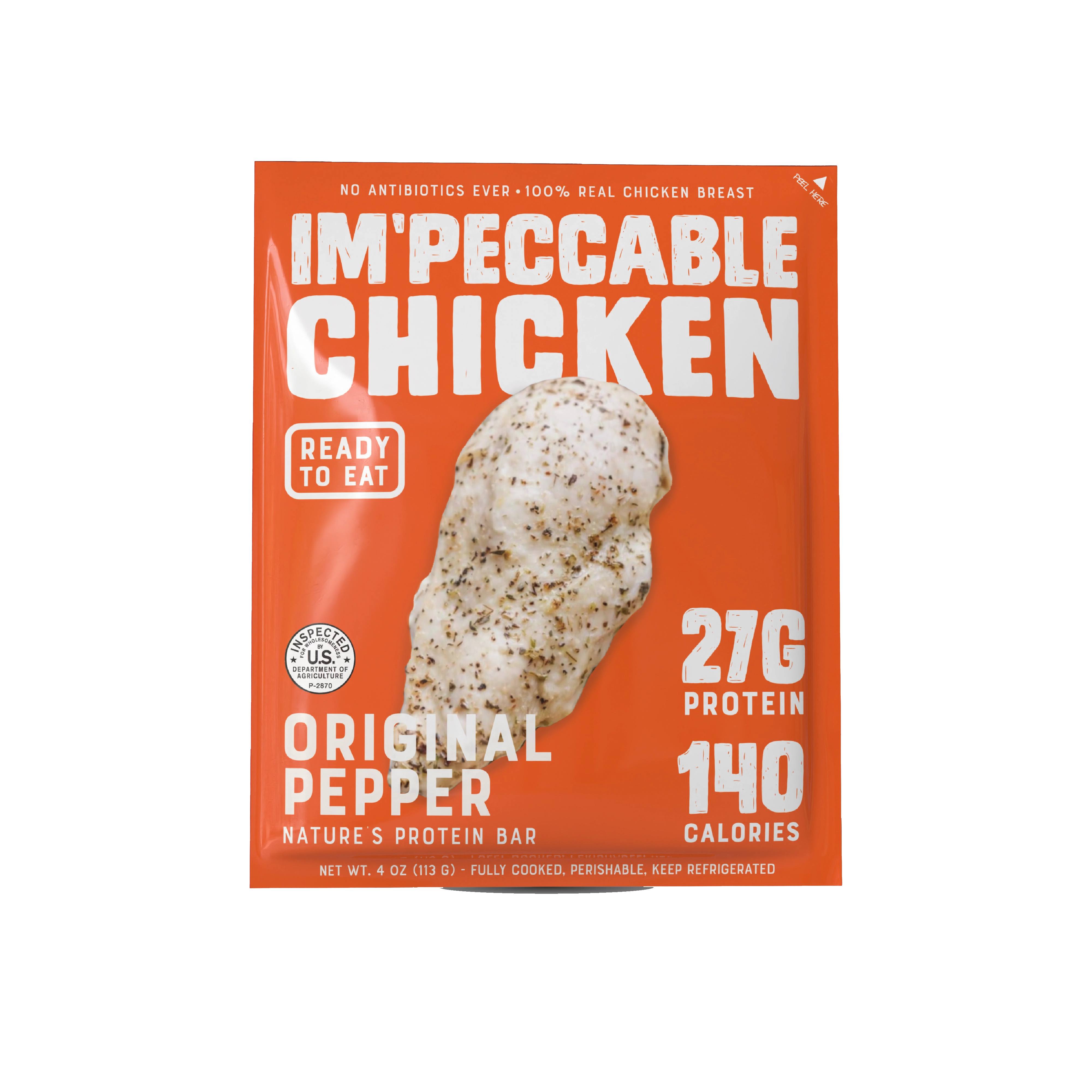
Customers simply rip open the pouch and eat. Every serving boasts roughly 27 grams of lean protein while keeping the calorie count at a remarkably low 140 calories. Furthermore, the brand prides itself on a "Zero B.S." ingredient list. There are no artificial preservatives, no fillers, and absolutely no inflammatory seed oils. The chicken is currently available in three core flavors: Original Pepper, Classic Teriyaki, and Orange Habanero.
| Product Overview | Details |
|---|---|
| Business Name | Im'peccable Chicken |
| Founded Year | 2024 |
| Core Product | Vacuum-sealed, ready-to-eat chicken breast pouches |
| Target Audience | Fitness enthusiasts, dieters, busy professionals |
| Key Nutritionals | 27g protein, 140 calories per pouch |
| Retail Price | Approx. $5.40 per pouch (Sold in bulk packs) |
| Website | impeccablechicken.shop |
Who is the Founder of Im'peccable Chicken?
Im'peccable Chicken was founded by three University of Southern California (USC) students: Melina Chang, Riley Yen, and Nick Hsu. However, the true heartbeat of the company belongs to Melina Chang's deeply personal health journey.
Growing up, Chang struggled severely with her weight and body image. During the peak of the COVID-19 pandemic lockdowns, her health rapidly deteriorated, and her weight climbed to 250 pounds. Desperate for a change, she began looking for sustainable ways to improve her diet without entirely giving up the convenience of quick meals.
Her life-changing moment occurred when she discovered packaged, ready-to-eat chicken breast snacks originating from Taiwan. By substituting heavily processed snacks and fast food with these clean, protein-packed chicken pouches, Chang lost a staggering 130 pounds over just eight months. The transformation completely altered the trajectory of her life.
When Chang returned to the United States and walked the aisles of local grocery stores, she realized there was a massive gap in the market. American shelves were flooded with chalky protein powders and sugar-laden bars, but there was zero representation for the savory, whole-food chicken snacks that had saved her life.
She shared the concept with her USC classmates. Riley Yen, who had recently completed a solo cycling trip across Taiwan, had seen firsthand how massive the vacuum-sealed chicken industry was overseas. Recognizing the billion-dollar potential of bringing the concept stateside, Chang made the bold decision to drop out of business school at age 21 to pursue the venture full-time. Nick Hsu joined the team shortly after to handle operations and logistics.
Lacking the capital to hire outside agencies, the trio did everything themselves—from shooting product photography to driving forklifts. To secure their supply chain, Chang approached her parents, who run a successful food distribution business in Taiwan. With a $340,000 loan, the young founders accomplished something most food startups never do: they bypassed third-party co-packers and built their own manufacturing facility from scratch in Commerce, California.
Im'peccable Chicken Shark Tank Journey & Pitch
Entering the Tank during Season 17, Episode 2, Melina, Riley, and Nick were seeking a $75,000 investment in exchange for 5% equity, valuing their fledgling chicken company at $1.5 million.
They kicked off the pitch by handing out samples of their Original Pepper, Teriyaki, and Orange Habanero flavors. The taste test was an immediate home run. Lori Greiner praised the juicy texture, while guest Shark Michael Strahan, a former NFL superstar who knows a thing or two about protein, called the chicken clean and incredibly flavorful.
With the Sharks hooked on the taste, the questioning quickly pivoted to the business metrics. Kevin O'Leary questioned the consumer appeal. Why would someone pay a premium for packaged chicken when they could simply pan-fry a breast at home for a fraction of the cost?
Riley Yen smoothly defended the price point, explaining that at $5.40 a pouch, they were selling convenience and time. Furthermore, their landed production cost was an impressive $1.70 per unit, leaving plenty of room for healthy margins.
Barbara Corcoran pressed the team on their sales data. The founders revealed they had generated $85,000 in revenue in just seven months, strictly through their direct-to-consumer website. Riley explained that with the $75,000 investment, they planned to scale production from 10,000 units a month to 30,000 units, which would immediately slash their production costs by 20%. When asked about maximum capacity, Riley confidently stated their Commerce facility could handle up to 250,000 units a month.
Impressed by the numbers, the proprietary factory, and the founders' hustle, a complete Shark frenzy ensued. Kevin O'Leary kicked off the negotiations, and soon every single Shark had put an offer on the table.
The young founders, realizing they held all the cards, cleverly asked if any of the Sharks would be willing to team up for a syndicate deal. Michael Strahan and Robert Herjavec immediately joined forces, offering $200,000 for 15% equity. Not wanting to be left out, Kevin O'Leary and Lori Greiner matched the exact same terms.
Faced with two heavyweight duos, the USC trio huddled up. Ultimately, they decided that Lori's retail expertise and Kevin's sheer marketing power were the perfect recipe for scale. They accepted the deal with Lori Greiner and Kevin O'Leary.
| Pitch & Offers | Details |
|---|---|
| Initial Ask & Valuation | $75,000 for 5% ($1.5M valuation) |
| Sharks in the Room | Kevin O'Leary, Lori Greiner, Barbara Corcoran, Robert Herjavec, Michael Strahan |
| Kevin O'Leary's Offer | $75k for 15% (Later revised to $100k for 9.4%) |
| Barbara Corcoran's Offer | $100,000 for 10% |
| Michael Strahan's Offer | $100,000 for 9.5% |
| Lori Greiner's Offer | $75,000 for 10% |
| Robert Herjavec's Offer | $75,000 for 7% |
| Syndicate Offer 1 | Michael & Robert: $200,000 for 15% |
| Syndicate Offer 2 | Kevin & Lori: $200,000 for 15% |
| Final Deal Accepted | Kevin O'Leary & Lori Greiner for $200,000 for 15% equity |
What Happened to Im'peccable Chicken After Shark Tank?

The moment the episode aired on ABC, Im'peccable Chicken experienced the legendary "Shark Tank effect." Their Shopify store was flooded with traffic, and their direct-to-consumer sales skyrocketed overnight.
To capitalize on the massive influx of new customers, the company rapidly expanded its purchasing options. They introduced bulk purchasing tiers, allowing customers to buy in packs of 16, 24, 32, and 48, offering steeper discounts the more a customer purchased.
More importantly, they rolled out a robust subscription model. Because their product is meant to be consumed daily by dieters and fitness enthusiasts, securing recurring revenue was a critical step for long-term survival.
The subscription model allows customers to auto-replenish their stock at a discounted rate, dramatically improving the company's customer lifetime value (LTV) and retention metrics.
Is Im'peccable Chicken Still in Business?
Yes, Im'peccable Chicken is highly operational and experiencing rapid growth. The brand has surpassed major milestones, publicly stating on their website that they have sold over 50,000 chicken breasts to a loyal base of over 10,000 customers.
While they built their early foundation through word-of-mouth on college campuses and targeted social media ads showing their actual factory operations, they are now transitioning into their next phase of growth: retail distribution.
Currently, the brand operates primarily as a direct-to-consumer (DTC) business. However, the founders have confirmed they are in active talks with major grocery chains. Pitching to the category buyers at Sprouts, Bristol Farms, Whole Foods, and H-Mart, Im'peccable Chicken is fighting to secure prime refrigerated shelf space. Getting into retail requires a masterclass in logistics, as shipping refrigerated meat is notoriously difficult and expensive, but their Commerce, California factory gives them a distinct logistical advantage on the West Coast.
What is the Valuation & Net Worth of Im'peccable Chicken?
When Melina, Riley, and Nick accepted Kevin and Lori's joint offer of $200,000 for 15% equity, it placed the on-air valuation of Im'peccable Chicken at approximately $1.33 million. That valuation has undoubtedly climbed.
The company reported achieving 100% month-over-month revenue growth for four consecutive months leading into their television appearance. Furthermore, they own their manufacturing facility outright. By controlling the means of production, they avoid the crippling fees associated with co-packers, ensuring their impressive margins remain intact.
While private companies are not required to disclose exact revenue figures, conservative industry estimates place Im'peccable Chicken's valuation between $3 Million and $5 Million.
The estimated net worth of the business is heavily anchored by the physical assets of their Commerce factory, which is capable of churning out a quarter of a million units per month. If the team successfully lands nationwide retail placement in Whole Foods or Sprouts, this valuation will easily double by the end of the fiscal year.
Where to Buy Im'peccable Chicken?
The absolute best place to purchase Im'peccable Chicken is directly through their official website, impeccablechicken.shop. Buying direct allows consumers to take advantage of bulk discounts and their automated subscription service.
Because the product requires specific temperature controls during shipping to maintain freshness, buying directly from the manufacturer ensures the product hasn't been sitting idle in a secondary warehouse.
While the brand is actively negotiating with major supermarkets like Whole Foods and 99 Ranch Market, they have not yet announced a nationwide retail rollout.
Are Im'peccable Chicken Reviews Good?
Consumer response to Im'peccable Chicken has been highly polarizing, which is entirely expected when introducing a foreign food concept to the American market.
On platforms like Reddit's r/sharktank, traditionalists have voiced skepticism regarding the price point. Many argue that paying upwards of $5.00 for a single chicken breast is too expensive when a consumer could buy raw chicken in bulk and meal prep it on a Sunday afternoon. Others have pointed out that eating a cold, vacuum-sealed chicken breast from a pouch is a strange textural experience for those accustomed to hot meals.
However, within the fitness and weight-loss communities, the reviews are overwhelmingly positive. Customers consistently praise the extreme convenience and the surprisingly juicy texture provided by the sous vide cooking method.
For busy professionals who do not have the time to meal prep, the ability to consume 27 grams of clean protein in 30 seconds without dirtying a single dish is viewed as a game-changer. It is a premium product built for a specific, convenience-driven demographic, and that demographic is buying it by the truckload.
Im'peccable Chicken Alternatives
While Im'peccable Chicken claims to be the first ready-to-eat chicken breast snack in the US market, they are competing in the broader protein space. Their main alternatives aren't other chicken pouches, but traditional protein sources:
- Premium Protein Bars (e.g., Quest, RXBAR): These are shelf-stable and cheaper, but often contain artificial sweeteners, whey isolates, and high carbohydrate counts.
- Pre-Cooked Grocery Chicken (e.g., Tyson Grilled & Ready): These are widely available in supermarket freezers, but usually require microwave heating, lack the portability of a single-serving pouch, and often contain higher sodium and preservative levels.
- Beef Jerky & Biltong: Highly portable meat snacks, but they lack the moisture and filling volume of a whole chicken breast, and frequently contain heavy sugar marinades.