Table of Contents
Imagine running the most important race of your life. You are breaking away from the pack, your breathing is perfectly paced, and suddenly, you feel the dreaded "flop, flop, flop" against your ankle. An untied shoelace. It is a minor, everyday annoyance for the average person walking down the street, but for an elite athlete, it can mean a devastating, career-ending injury. This exact scenario is what pushed two college students to completely reinvent a tool that hasn't seen real innovation in centuries: the humble shoelace.
Enter BRCĒ (pronounced "brace"). When the founders stepped onto the Shark Tank stage in Season 17, they didn't bring another flashy fashion accessory or a simple elastic band. They brought a patented material science breakthrough.
The Sharks are used to evaluating snacks, clothing lines, and software apps. But a polymer-composite shoelace that boasts incredible tension control and is stronger than steel? That immediately commanded the room's attention. But having a great prototype is only half the battle. Did these college entrepreneurs secure a massive investment, or did the Sharks untie their dreams? Let's dive into the full BRCĒ Shark Tank update.
What is BRCĒ Shoelaces?
BRCĒ is a performance materials technology company that manufactures highly durable, slip-resistant shoelaces designed specifically to prevent untying during intense physical activity. Billed by the company as the "shoelaces that NEVER QUIT," the product targets competitive athletes, runners, and sports teams who require absolute reliability from their gear.
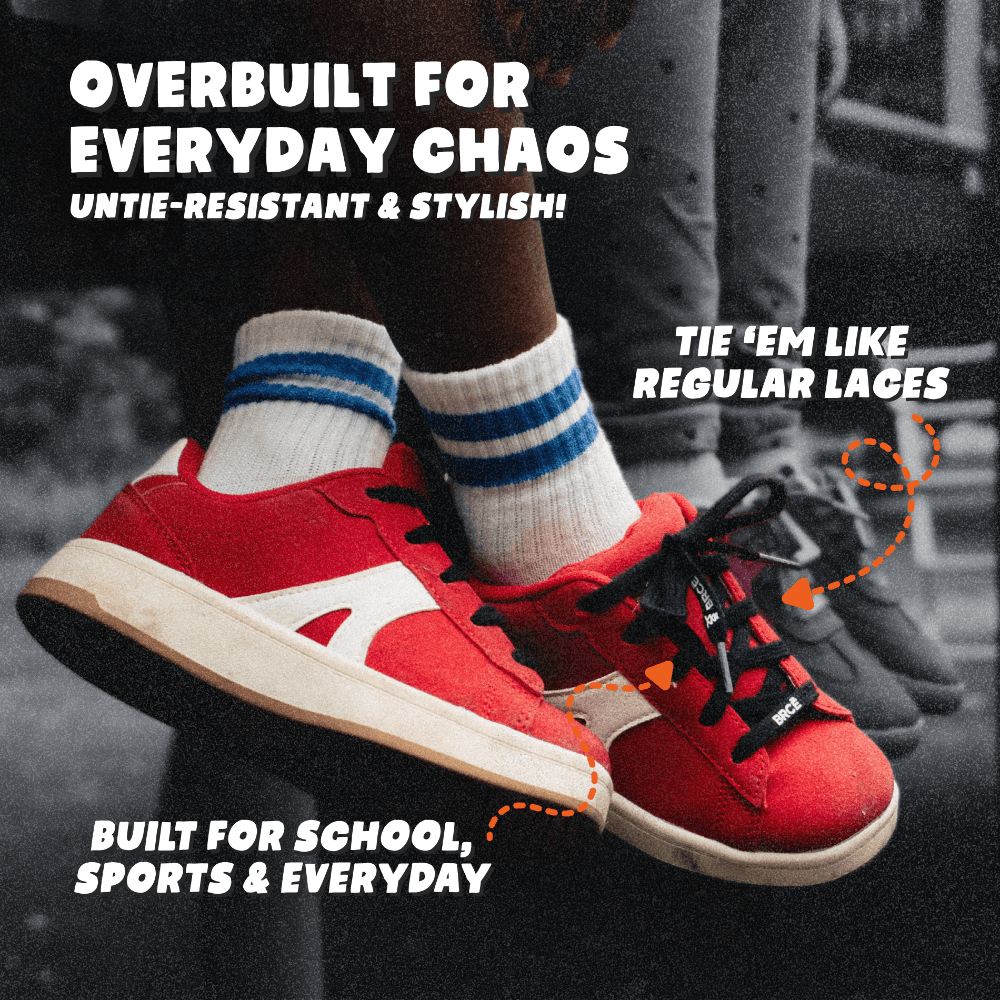
The secret to their success lies in the company's patented polymer-composite material. If you look at standard smooth laces, they constantly loosen over time due to the natural motion, impact, and flexion of the human foot.
BRCĒ laces fix this by utilizing micro-scale ridges and hooks woven directly into the fabric. When you pull the laces tight and tie a standard knot, these microscopic structures catch against each other. This creates a powerful locking effect and directional friction that holds the knot securely under tension.
Despite this intense, lock-tight grip while in motion, the laces remain incredibly easy to untie by simply pulling the lace ends as you normally would. At a retail price of $19.99, BRCĒ is positioned not as a cheap replacement string, but as a premium piece of essential athletic safety equipment.
| Business Overview | Details |
|---|---|
| Business Name | BRCĒ (Pronounced "Brace") |
| Industry | Material Science & Sporting Goods |
| Founded Year | 2023 |
| Core Product | Patented polymer-composite shoelaces |
| Target Audience | Athletes, runners, and active individuals |
| Retail Price | $19.99 |
Who is the Founder of BRCĒ Shoelaces?
BRCĒ was founded by Madhav Aggarwal and Tanvi Gadamsetti, two highly ambitious engineering students from Michigan State University (MSU). Aggarwal studied computer science with minors in business and supply chain management, while Gadamsetti focused her studies on applied engineering sciences.
Their entrepreneurial journey started unexpectedly during a freshman class project in the spring of 2023. The assignment gave students a grueling 36 hours to brainstorm and develop a viable startup concept. Surprisingly, the initial judges rejected their high-tech shoelace idea. However, Aggarwal and Gadamsetti refused to let the concept die in the classroom. Both founders were former competitive athletes whose own sports careers had been derailed by highly preventable injuries. Through their research, they discovered that roughly 45% of sports-related injuries involve the ankle, and inadequate equipment, specifically poor footwear lockdown, was a massive contributing factor.
While running shoes had evolved with carbon fiber plates, responsive space-age foam, and breathable mesh, shoelaces were essentially the same as they were a hundred years ago.
Leveraging the deep entrepreneurial ecosystem at MSU, including the Burgess Institute, the duo dove headfirst into material science. They tested early prototypes with MSU kinesiology staff and dozens of collegiate athletes. The result was a polymer-composite material that was fire-resistant and stronger than steel. Impressively, their breakthrough technology was granted a utility patent in just 62 days, breaking records for speed in the material science sector.
BRCĒ Shoelaces Shark Tank Journey & Pitch
In Season 17, Episode 12 (which aired on March 4, 2026), Aggarwal and Gadamsetti confidently walked into the Shark Tank seeking an investment of $300,000 in exchange for 10% equity in their company. This initial ask implied a company valuation of $3 million.
The young founders delivered a highly energetic and visual pitch. To prove the strength, durability, and grip of their patented polymer, they tied a BRCĒ shoelace to a heavy 25-pound kettlebell. They proceeded to drag the massive weight across the studio floor using just the tension of the lace, proving that the knot held flawlessly under extreme stress.
The Sharks were genuinely impressed by the college students' undeniable hustle and the lightning-fast patent approval. However, the $19.99 price point for a single pair of shoelaces raised some immediate concerns.
Kevin O'Leary dug into the patent's true defensibility in a crowded market. Robert Herjavec voiced strong concerns about scalability. Herjavec believed that giant footwear conglomerates might be too stubborn to switch their massive, deeply entrenched supply chains over to a premium external lace supplier, making it incredibly difficult for BRCĒ to secure lucrative B2B licensing deals. Because of this hurdle, Herjavec dropped out.
| Pitch & Offers | Details |
|---|---|
| Initial Ask & Valuation | $300,000 for 10% equity ($3M Valuation) |
| Sharks in the Room | Mark Cuban, Kevin O'Leary, Lori Greiner, Robert Herjavec, Daniel Lubetzky, Fawn Weaver |
| Specific Offers | Daniel Lubetzky & Fawn Weaver: $300,000 for 20% |
| Final Deal Accepted | $300,000 for 20% with Daniel Lubetzky & Fawn Weaver |
Despite the skepticism from some of the panel, Guest Shark Fawn Weaver (CEO of Uncle Nearest Premium Whiskey) and Daniel Lubetzky (founder of KIND Snacks) saw the raw potential in both the product and the founders. They loved the grit Aggarwal and Gadamsetti displayed.
Weaver and Lubetzky decided to join forces, offering the requested $300,000, but demanding 20% equity instead of the initial 10%. Recognizing the immense value of having two powerhouse consumer-goods experts in their corner, the founders eagerly accepted the deal.
What Happened to BRCĒ Shoelaces After Shark Tank?
The famous "Shark Tank effect" hit BRCĒ like a tidal wave. While the founders mentioned having around $100,000 in early sales during the filming of their pitch, that number skyrocketed by the time the episode hit television screens in March 2026. The company reported that total revenue had surged to an impressive $1.6 million prior to the broadcast, and the national television exposure only poured gasoline on the fire.
The strategic investment from Weaver and Lubetzky opened massive doors. BRCĒ was rapidly accepted into the Techstars accelerator program in Baltimore, providing them with elite mentorship, supply chain optimization, and operational guidance. They also secured additional financial backing from Oregon Sports Angels, signaling strong, continued confidence from the athletic investment community.
The most exciting post-show development came straight from the professional gridiron. BRCĒ caught the attention of major sports organizations and entered a rigorous testing phase with the University Hospitals Haslam Sports Innovation Center.
Consequently, the Cleveland Browns signed on to test BRCĒ laces as part of their official team equipment during the upcoming 2026–2027 NFL season. This type of professional-grade validation is exactly what the brand needs to prove their technology works at the highest level of human performance and safety.
Is BRCĒ Shoelaces Still in Business?
Yes, BRCĒ is thriving and expanding its footprint rapidly. The founders are currently scaling their operations and are in the process of moving the company's official headquarters from their college town in East Lansing, Michigan, to the bustling manufacturing hub of Detroit.
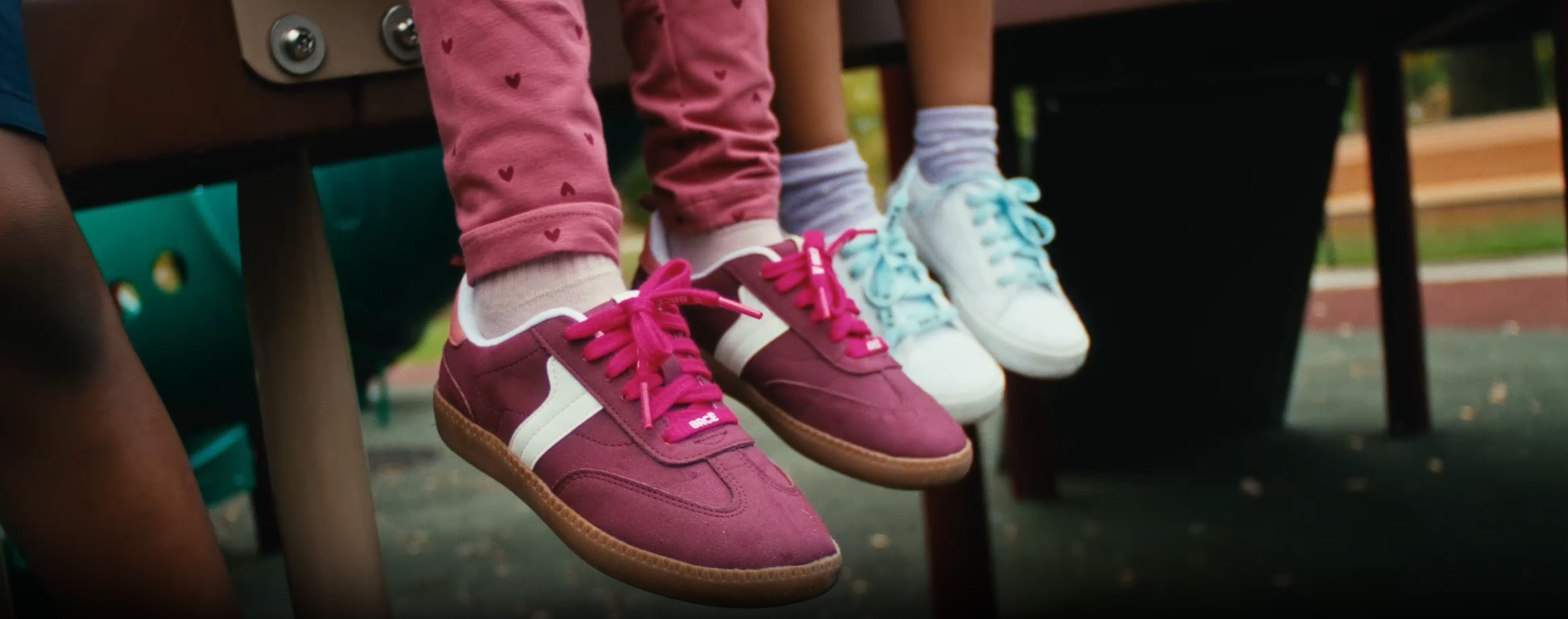
Their product line has expanded heavily to include sport-specific designs tailored specifically for running, basketball, hockey, tennis, and American football. They are also developing a dedicated children's line of laces to help parents who are tired of constantly bending down to re-tie their kids' shoes on the playground.
BRCĒ is actively building an athlete ambassador program, sponsoring high school, collegiate, and professional athletes, as well as fitness influencers who swear by the product's reliability.
What is the Valuation & Net Worth of BRCĒ Shoelaces?
When Aggarwal and Gadamsetti entered the Shark Tank, they valued their company at $3 million. By accepting the joint offer from Daniel Lubetzky and Fawn Weaver ($300,000 for 20%), the company's on-screen valuation officially shifted to $1.5 million.
However, a massive amount has changed since filming wrapped. With over $1.6 million in confirmed lifetime sales generated by early 2026, massive ongoing media exposure, and a potential NFL equipment integration, the company's actual market value has multiplied significantly. Today, the estimated valuation of BRCĒ sits comfortably between $4 million to $5 million.
The founders' combined estimated net worth is actively tied to their remaining 80% equity in the company, placing their business-driven net worth at an estimated $3.2 million to $4 million. For two college students who started with a rejected 36-hour class project, that is an incredible financial triumph.
Where to Buy BRCĒ Shoelaces?
Currently, the most reliable place to purchase BRCĒ laces is directly through their official e-commerce website, brce.shop. Buying direct ensures that you are receiving the authentic, patented polymer laces and gives you access to the full spectrum of sport-specific designs, colors, and varying lengths.
The company has also established a retail presence in campus stores around Michigan State University and is aggressively expanding its physical retail footprint in select sporting goods stores across the Midwest. You can also find select stock occasionally promoted through their official Instagram shop, where they run targeted ad campaigns for athletes.
BRCĒ Shoelaces Alternatives
While BRCĒ is heavily pioneering the high-friction, no-slip tied lace market, there are several other notable competitors in the specialty shoelace industry, each taking a slightly different approach to footwear security:
-
U-Lace: Another highly successful Shark Tank alumni (Season 5), backed by Mark Cuban. U-Lace focuses on modular, elastic segments that span across eyelets to turn any lace-up sneaker into a customized, no-tie slip-on.
-
The Original Stretchlace: A popular brand offering elastic laces that stretch dynamically with the foot. These are highly favored by individuals with mobility issues, parents of young children, or those seeking maximum everyday comfort rather than extreme athletic tension.
-
Lock Laces: A highly popular elastic lacing system that utilizes a sliding plastic locking mechanism rather than a traditional knot. This system is widely used by triathletes, marathon runners, and obstacle course racers for quick adjustments on the fly.