The Truth About Growing Your Dumpster Rental Business
Running a dumpster rental service is a straightforward business, but the hassle of empty bins sitting in your yard is just annoying. It is fine if you are fully booked during the spring rush, but during the slow months, idle equipment is a burden on your cash flow. Luckily, there is omnichannel paid advertising, a savior for local service providers.
A balanced omnichannel strategy is a larger marketing system with extra capacity that you can rely on to drive consistent bookings. Paid ads are handy, fast, and can target all the necessary customers who require a roll-off container for their next project. Right now, waste management companies are struggling with rising Cost-Per-Acquisition (CPA) on Google and lower quality leads on social media.
The old method of throwing money at a single search engine is no longer secure. Almost all successful rental companies now use a mix of search intent and social awareness. If you plan to get more dumpster rental leads, you should take these omnichannel considerations to secure your equipment schedule and stop wasting money on bad clicks.
💡 The Marketing Trifecta
While PPC delivers instant leads, it should always be supported by strong organic search and community presence. Ensure you read our Complete Dumpster Rental SEO Guide to capture free local traffic, and implement our Dumpster Rental Social Media Strategy to foster trust and community engagement!
📊 The Current Omnichannel Ads Landscape for Dumpster Rental
If you are an operator who just wants to rent out containers fast, you need to understand how modern media buying works. People do not rent a dumpster for fun; they rent one because they have a specific, urgent problem. They are clearing out an estate, handling a messy renovation, or managing a commercial job site. This means capturing intent on Google Search is your primary goal. When someone types in "roll off container near me," they have their credit card ready.
However, relying only on Google Search creates a problem. Click costs are getting more expensive, and you are competing with massive national brokers who have deep pockets. This is where social media platforms like Meta (Facebook and Instagram) and TikTok come into play.
Social media helps you build demand before the customer even searches on Google. By showing a local homeowner a time-lapse video of a driveway-safe dumpster delivery, you plant the seed. When they finally start their garage cleanout a week later, they bypass the search engines and look for your specific brand. The modern advertising landscape requires a perfect balance: you capture the active buyers on Google, and you build cheap, local awareness on Meta to feed your future pipeline.
What is the best advertising for a dumpster business?
The best advertising for a dumpster rental business is a layered strategy that meets customers exactly where they are. You cannot rely on a single channel anymore. You must start with Google Local Services Ads (LSAs) and high-intent Google Search campaigns to capture the people who need a bin dropped off tomorrow. Then, you layer in Meta Lead Generation ads featuring before-and-after project transformations.
If you just run Google ads, you will miss out on the homeowners planning a weekend DIY project. If you just run Meta ads, you will miss the contractors who need an emergency swap-out right now. The secret is connecting these platforms. When someone clicks your Google Ad but leaves your website without booking, your Meta retargeting ads will follow them around with a discount offer. This integrated loop is exactly how local waste management companies are dropping their acquisition costs and keeping their yards empty.
The 10 Step PPC Marketing Blueprint for Dumpster Rental
I. Omnichannel Synergy
If your packing is lightweight, you can travel easily, but if your advertising budget is isolated, you will struggle to move forward. The biggest problem dumpster rental companies face is running their Google Ads and Meta Ads in completely separate silos.
A homeowner might see your Facebook video, remember your truck colors, and then search for you on Google. If your tracking systems are not talking to each other, Google gets all the credit, and you end up turning off a profitable Facebook campaign because it looked like a failure on paper.
The solution is to build a centralized omnichannel reporting structure. You need to assign UTM tracking parameters to every single ad you run across Meta, TikTok, and LinkedIn. This allows your analytics software to read exactly where a customer first saw your brand and where they finally booked. You should also align your messaging so the offer they see on social media matches the headline they click on the search results page.
The value of this synergy is a massive reduction in wasted ad spend. When your platforms work together, you stop paying double for the same customer. You can lower your Google Search bids because your brand awareness from Meta is already doing the heavy lifting, making your local market dominance highly profitable.
II. Search Campaign Architecture
Are Google Ads worth it for dumpster rentals? Wasting money on bad clicks is the fastest way to ruin your marketing budget. In Google Ads, many dumpster companies make the mistake of using broad match keywords like "dumpster." Because of this, their ads show up when people search for "dumpster diving rules" or "how to build a dumpster enclosure." You end up paying $15 for a click from a teenager researching a school project, draining your daily budget before lunchtime.
To fix this, you must structure your Search campaigns using exact match and phrase match keywords with high commercial intent. Create separate ad groups for specific services, such as "10 yard dumpster rental," "construction debris removal," and "residential roll off." Then, build a massive negative keyword list to block words like "cheap," "free," "diving," "job," and "salary." Furthermore, tighten your geographic targeting to the exact zip codes you can service profitably, ensuring you do not pay for clicks from a town two hours away.
By restructuring your search architecture, Google Ads becomes entirely worth it. Your cost-per-click might remain the same, but your conversion rate will skyrocket. Instead of buying random website traffic, you are buying highly qualified local phone calls.
III. Paid Social Audience Targeting
If you blindly target everyone in your city on Facebook, your ads will be ignored. Dumpster rental is a niche need. Showing an ad for a 30-yard construction bin to a college student living in an apartment is useless. Many businesses waste their social media budgets by treating Meta and TikTok like traditional billboards, hoping the right person happens to look at the screen.
The proper strategy involves creating highly specific audience segments. On Meta, use the Advantage+ targeting system combined with your customer lists. Upload a list of past renters to create a Lookalike Audience; Meta will find other local homeowners with similar property data and purchasing habits. You should also target life events, such as people who recently bought a home or users showing interest in home improvement and landscaping. On LinkedIn, target local construction managers, roofers, and real estate developers for your B2B commercial accounts.
The real value here is getting cheaper leads by finding your exact buyers before they even search. When you target the right homeowners and contractors, your ads feel helpful rather than annoying.
IV. Automated Bidding Strategies
Manual bidding is a thing of the past, but handing full control to an algorithm without proper guardrails is dangerous. Many rental owners try to manage their bids manually, adjusting the cost-per-click every day. This takes too much time and often results in losing out on premium ad placements during peak morning hours. Conversely, turning on "Maximize Conversions" without setting a target limit can cause Google to spend $100 on a single lead just to spend your daily budget.
You must switch your campaigns to algorithmic bidding strategies like Target Cost-Per-Acquisition (tCPA) or Target Return on Ad Spend (tROAS). First, you need to know your numbers. If you know you can afford to pay $40 for a booked dumpster, set your tCPA to $40. The Google and Meta algorithms will then analyze thousands of data points—like the user's device, location, and past search history—to automatically adjust your bid in real-time.
Using automated bidding correctly frees up your time and improves your performance. The algorithms are smarter and faster than any human media buyer. They keep your cost per booking stable and predictable.
V. Ad Copy & Creative Testing
Using the exact same text for every ad across all platforms is a massive mistake. A customer browsing Instagram is in a totally different mindset than a customer actively searching on Bing. If your Meta ad just says "Dumpster Rentals in Your City - Call Now," people will scroll right past it. Boring, text-heavy creative does not capture attention in a feed full of entertaining videos.
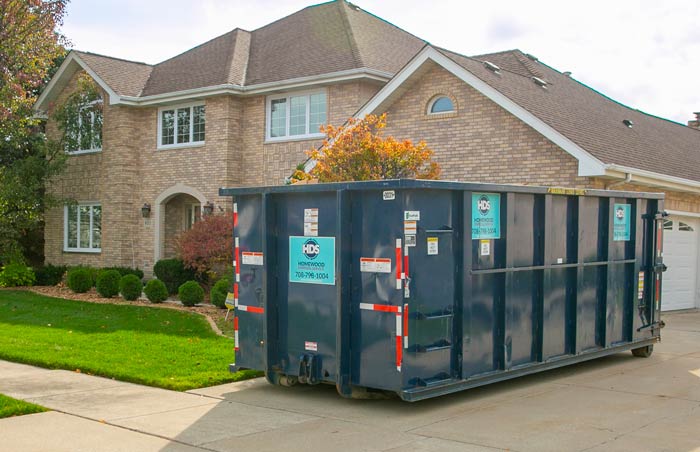
You must adapt your creative to the platform. For Google Search, your text must be direct and answer the user's specific problem. Use headlines like "Same-Day Dumpster Delivery" or "Driveway-Safe 15-Yard Bins." For Meta and TikTok, you need video content. Shoot a quick, 15-second mobile phone video showing a clean truck dropping off a bin on a driveway without scratching the concrete. User-generated content (UGC), where a happy homeowner talks about how easy their garage cleanout was, performs incredibly well on social media.
VI. Landing Page CRO
How to get more dumpster rental leads? If you send expensive ad traffic to a slow, confusing homepage, you are burning your money. Many dumpster companies run great ads but link them to a generic website where the user has to hunt for a phone number or guess the pricing. If a customer clicks an ad for a roofing dumpster and lands on a page talking about porta-potties, they will hit the back button immediately.
To get more leads, you must practice Conversion Rate Optimization (CRO) by building dedicated landing pages. If your ad promises a 20-yard dumpster, the landing page must explicitly show a 20-yard dumpster, its dimensions, what fits inside it, and a clear price. Include a massive "Call Now" button that is easily clickable on mobile phones, and a simple web form that asks for the delivery zip code and requested date. Remove all other distracting menu links so the user only has two choices: book the bin or leave.
VII. Cross-Platform Retargeting Sequencing
Most people do not rent a dumpster the exact second they visit your website for the first time. They might get distracted by a phone call, or they might need to check their budget. If you let those visitors leave and forget about you, you have wasted the money it cost to get them there. Relying on them to remember your brand name a week later is a losing strategy.
The solution is to implement a cross-platform retargeting sequence. When a user visits your pricing page but does not fill out the form, you must track that action. For the next three days, show them a Google Display ad reminding them of your fast delivery. If they still do not book by day four, show them a Meta video ad offering a $25 discount code for their first rental. If they are a commercial contractor, run a LinkedIn retargeting ad highlighting your dedicated account management and volume discounts.
Retargeting is the most cost-effective form of advertising because you are only spending money on people who already showed interest.
VIII. Server-Side Tracking/Attribution
Relying on old browser pixels to track your conversions is no longer safe. With new privacy updates, ad blockers, and mobile operating system restrictions, the standard Meta Pixel or Google tag often misses up to 30% of your actual sales. If your advertising platforms cannot see which ads are generating bookings, their automated bidding algorithms will break down and start making bad decisions.
To fix this, you must upgrade to Server-Side Tracking, specifically using the Facebook Conversions API (CAPI) and Google Enhanced Conversions. Instead of relying on the user's web browser to send tracking data, server-side tracking sends the conversion data directly from your website's server to the advertising platform's server. This creates a secure, unbreakable connection that accurately reports exactly which keyword or video ad produced the sale.
IX. Local Service Ads (LSAs) Integration
Ignoring Google Local Services Ads is a critical error for any local home service business. Standard text ads are great, but they show up below the highly trusted Google Guaranteed section. If you only run regular search ads, you are missing out on the very top spot of the search results page. Customers trust the green checkmark, and not being there makes your business look less established.
You must apply for and integrate Local Services Ads (LSAs) into your mix. The setup requires background checks and insurance verification, but it is entirely worth it. LSAs operate differently than regular pay-per-click; you only pay for valid leads (phone calls or messages), not just clicks.
The value of LSAs is high-quality, low-cost lead generation. Balancing LSAs with your traditional search campaigns ensures you dominate the entire top half of the search results page, giving competitors zero room to breathe.
X. Competitor Conquesting
How to market a roll-off dumpster business? Relying solely on your own brand searches leaves money on the table. In a competitive market, customers often search directly for your biggest competitors by name. If you are not showing up when they search for the national chain or the big local guy, you are missing a chance to steal a customer who is actively looking to rent.
To market a roll-off business aggressively, you should deploy competitor conquesting campaigns. On Google Search, bid on the exact brand names of your local rivals. When someone searches for "Big Blue Dumpsters," your ad will appear right above or below them. Your ad copy must provide a clear reason to choose you instead, such as "Don't Wait on Big Blue - We Deliver Same-Day" or "Better Pricing, Local Service."
This strategy is highly effective for stealing market share. By offering a better, faster, or more affordable alternative at the exact moment of search, you can siphon off their leads.
The Essential 5-Tool Paid Media Stack 🛠️
If you plan to execute this omnichannel strategy, you need the right gear. Here are the five essential tools for managing a highly profitable dumpster rental paid ads system.
1. Google Ads Editor
A free, downloadable desktop application that allows you to work on your campaigns offline and make massive bulk changes rapidly.
- •Bulk editing tools and offline access.
- •Easy copying and pasting of ad groups.
- •Rapid find-and-replace text tools.
- ✓Saves hours of manual work.
- ✓Prevents lagging browser issues when managing hundreds of zip codes.
- ✗Highly complex interface resembling an airplane dashboard.
- ✗Requires a steep learning curve for beginners.
2. Triple Whale
A centralized tracking and attribution platform that uses first-party data to show you exactly which ads are driving revenue.
- •Pixel tracking and server-side tracking integration.
- •Unified dashboard for all ad spend.
- •Clear ROAS (Return on Ad Spend) visualization.
- ✓Gives absolute clarity on your numbers.
- ✓Solves iOS privacy tracking issues flawlessly.
- ✗The software is a premium product with a high monthly cost.
- ✗Might be tough to justify for a brand-new, single-truck operator.
3. Unbounce
A dedicated landing page builder designed specifically to create fast, high-converting pages without needing a web developer.
- •Drag-and-drop builder with mobile-responsive templates.
- •Deep A/B testing capabilities.
- •Dynamic text replacement to match the user's exact search term.
- ✓Extremely easy to build fast, high-converting pages in hours.
- ✓No coding or graphic design knowledge required.
- ✗Requires a separate monthly subscription.
- ✗You must set up custom subdomains for your links.
4. ClickCease
A click fraud protection software that monitors your ad traffic and blocks malicious IP addresses and competitors.
- •Real-time IP blocking and advanced bot detection.
- •Competitor click recording.
- •Detailed reports for Google refund claims.
- ✓Instantly stops budget waste by blocking fake clicks.
- ✓Ensures your ads are only shown to real, potential customers.
- ✗Requires paying an additional monthly fee.
- ✗May occasionally block a legitimate user if they are using an unusual VPN.
5. CallRail
A call tracking software that uses dynamic number insertion to trace every phone call back to the exact keyword and campaign.
- •Dynamic number insertion to track individual traffic sources.
- •Call recording and automated transcriptions.
- •Direct integration with Google Ads for offline conversion tracking.
- ✓Bridges the gap between digital clicks and offline phone calls.
- ✓Provides perfect attribution for local businesses to optimize ad spend.
- ✗Requires managing a pool of different phone numbers.
- ✗Can slightly confuse returning customers if they save a tracking number to their phone.
Case Study 1: How Hometown Dumpster Rental Scaled ROAS on Google Ads
Hometown Dumpster Rental was facing a major issue. Their Google Ads budget was draining by noon every day, but their trucks were still sitting idle. They were paying an average CPA of $120, which left them with terrible profit margins. The problem was their broad match keyword strategy; they were paying for clicks from people looking for "city dump hours" and "free trash pickup."
Action The Execution:
The solution involved a complete teardown of their search architecture. They removed all broad keywords and implemented strict exact match terms like "15 yard dumpster rental" and "roll off container prices." They tightened the geographic radius strictly to areas they could reach within a 30-minute drive. Finally, they integrated CallRail to track which specific keywords were generating booked phone jobs, allowing them to turn off the expensive, non-converting terms.
📈 The Results:
The results were incredible. Within two months, Hometown Dumpster Rental saw a 9x ROAS. They reduced their CPA from $120 down to $35. By saving money on wasted clicks, they were able to reinvest in their daily budget and dominate the top of the search results for high-intent buyers, adding over $150,000 USD in tracked revenue for the quarter.
Case Study 2: How Mobiledumps Slashed Acquisition Costs with Paid Social
Mobiledumps operates a unique, mobile dumpster trailer service, and they needed to generate awareness fast. Because their product is visually different from a standard roll-off bin, relying only on Google Search was not enough. People did not know to search for a "dumpster trailer." Their challenge was educating the local market while keeping acquisition costs low.
Action The Execution:
They deployed a heavy Paid Social strategy on Meta. The team created engaging video ads showing the trailers being parked easily in tight driveways and residential streets. They used Advantage+ targeting to reach local homeowners, DIY renovators, and property managers. Furthermore, they set up a dedicated retargeting loop, offering a 10% discount to anyone who watched at least 50% of the video but did not visit the website.
📈 The Results:
This social-first approach was a massive success. The visual demonstration built instant trust and awareness. Mobiledumps reached over 3,600 highly qualified local prospects in their target zones and generated leads at a fraction of the cost of standard Google search clicks, achieving a 6% overall bump in total franchise lead volume.
Future-Proofing Your Ad Campaigns
The advertising world is changing rapidly, and what works today might be obsolete tomorrow. Privacy laws are becoming stricter, and third-party cookies are disappearing, making it harder to track customers around the web. To survive, dumpster rental companies must take control of their own data.
You must focus on collecting first-party data. Every time a customer rents a bin, ensure you capture their email address and phone number in a secure CRM system. This allows you to upload customer lists directly to advertising platforms to build Lookalike audiences without relying on browser cookies.
Furthermore, you must embrace artificial intelligence in your ad platforms. Feed the algorithms clean, server-side data, and let the machine learning handle the bidding. By building a strong brand and controlling your tracking, your business will stay fully booked no matter what the big tech companies change.